The Wildlife Conservation Society snagged a camera trap photo of a Wolverine recently. No word on where in Montana it was photographed. Here’s the original image and press release . . .
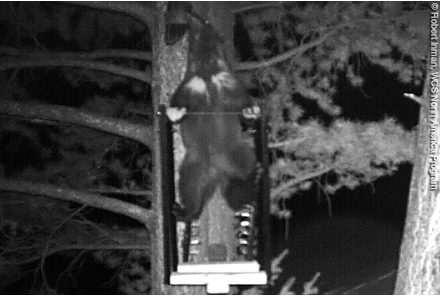
BOZEMAN (February 29, 2012) – A baby bear on stilts, perhaps? Nope. Conservationists with the Wildlife Conservation Society recently released this camera-trap photo of a wolverine retrieving bait placed in a tree in Montana. The frame upon which the animal climbs is designed so that the unique markings on the underside of the wolverine are revealed to the motion-sensing camera. Scientists use these markings to identify individual animals and document their distribution and range. WCS’s eight-year study of wolverines in the Greater Yellowstone Ecosystem has led to a better understanding of wolverine ecology and will help inform conservation strategies so that this rare species can survive despite the 21st century conservation challenges it faces. An estimated 250-300 wolverines remain in the “lower 48,” where they occupy about half of their former range in high alpine peaks of the western United States.