Tag Archives: wolverine research

The Phantom of the Rockies

Roaming wolverine - USFWS
Roaming wolverine – USFWS

Great article about wolverines from the Mountain Journal . . .

Mist rises off the river, wetting our faces as we ford with chunks of slush bouncing off our waders. Stabbing the riverbed with ski poles, Mike Schadell and I struggle through the swift current, trying to find purchase on slimy river cobblestones. Our packs are weighed down by skis, dangling boots, three days of gear and a deer’s hindquarter.

We’re in Glacier National Park for an ongoing, multiyear, parkwide, noninvasive citizen science wolverine study in January 2010. Biologists had gathered data to estimate how many wolverines reside within the protected area’s boundaries. We each carry deer hindquarters to lure the largest mustelids to a post where steel wool brushes snag the animal’s hair, which we will gather and use to collect DNA.

Once across the river, we ski the undulating terrain through a mosaic forest of burnt black lodgepole pine, Douglas-fir and still-living, needleless larch trees. A fire raged through here years ago charring most of the woods. Deer, moose and wolf tracks punctuate the snow. A pine marten, a smaller member of the mustelid family, scampers from behind a tree. Its curiosity outweighs its elusive nature for a moment before it darts back into a dark hole at the base of an upturned root wad.
Continue reading . . .

US officials say climate change not a threat to wolverines

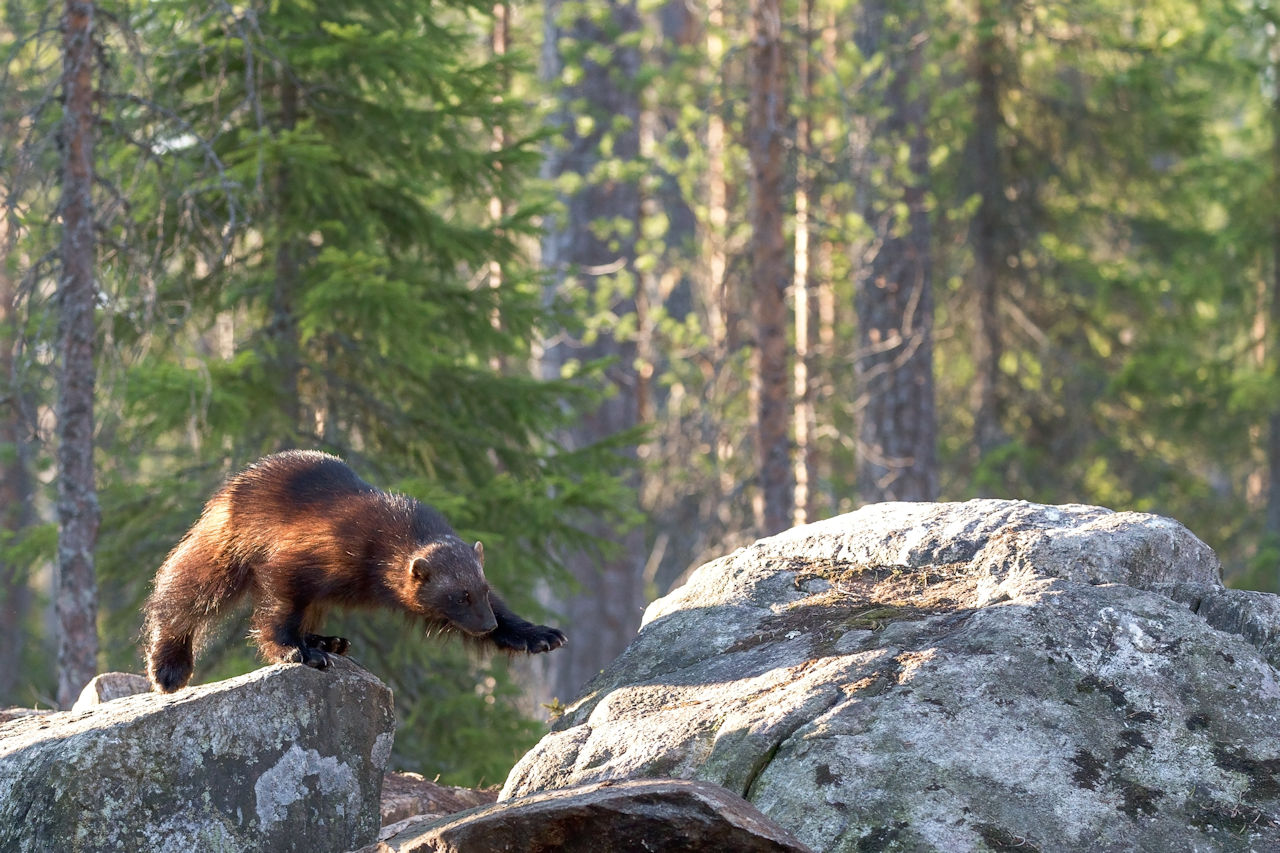
Wolverine on rocks - Photo by Hans Veth on Unsplash
Wolverine on rocks – Photo by Hans Veth on Unsplash

Here we go again . . .

U.S. wildlife officials are withdrawing proposed protections for the snow-loving wolverine after determining the rare and elusive predator is not as threatened by climate change as once thought.

Details on the decision were obtained in advance by The Associated Press and expected to be announced formally on Thursday.

A federal judge four years ago had blocked an attempt to withdraw protections that were first proposed in 2010, pointing to evidence from government scientists that wolverines were “squarely in the path of climate change. But years of additional research suggest the animals’ prevalence is expanding, not contracting, U.S. Fish and Wildlife officials said. And they predict that enough snow will persist at high elevations for wolverines to den in mountain snowfields each spring despite warming temperatures.

Wildlife advocates said they are likely to challenge the move in court.

Read more . . .

Helping wolverines by tracking humans

Wolverine on rocks - Photo by Hans Veth on Unsplash
Wolverine on rocks – Photo by Hans Veth on Unsplash

Wait. What? . . .

Wolverines don’t make themselves easy to study. In addition to being able to gnaw their way out of log-cabin-like traps, they’re shaped kind of like a traffic cone. Even if you catch one, the radio collar tends to slip off.

So how do you study what snowmobiling and skiing do to wolverine habitat? Collar the humans.

“This was the biggest radio-collar project with wolverines ever,” said University of Montana wildlife biologist Mark Hebblewhite, one of the study co-authors. “The part I didn’t think would work was collaring humans. A friend tried this in Canada, and everyone was, ‘Get out of my face.’ But we wound up with better data on the humans than on the animals.”

Read more . . .

Multi-state wolverine monitoring project underway

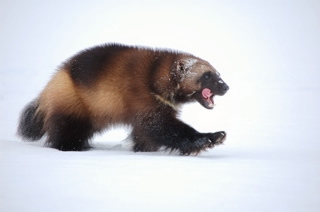
Wolverine in snow - Steve Kroschel
Wolverine in snow – Steve Kroschel

Here’s a follow-up on last May’s announcement of a multi-state wolverine study . . .

One of the rarest animals in Montana gets a fresh look as Montana Fish, Wildlife and Parks reports new efforts to conserve the wolverine.

Bob Inman of FWP says the agency will produce the first ever documentation of where wolverines presently occur in the lower 48 states.

“They are fierce. They are an animal that a lot of people find interesting. There’s mystery to them because they are so rare and so little had been learned about them,” Inman said.

Read more . . .