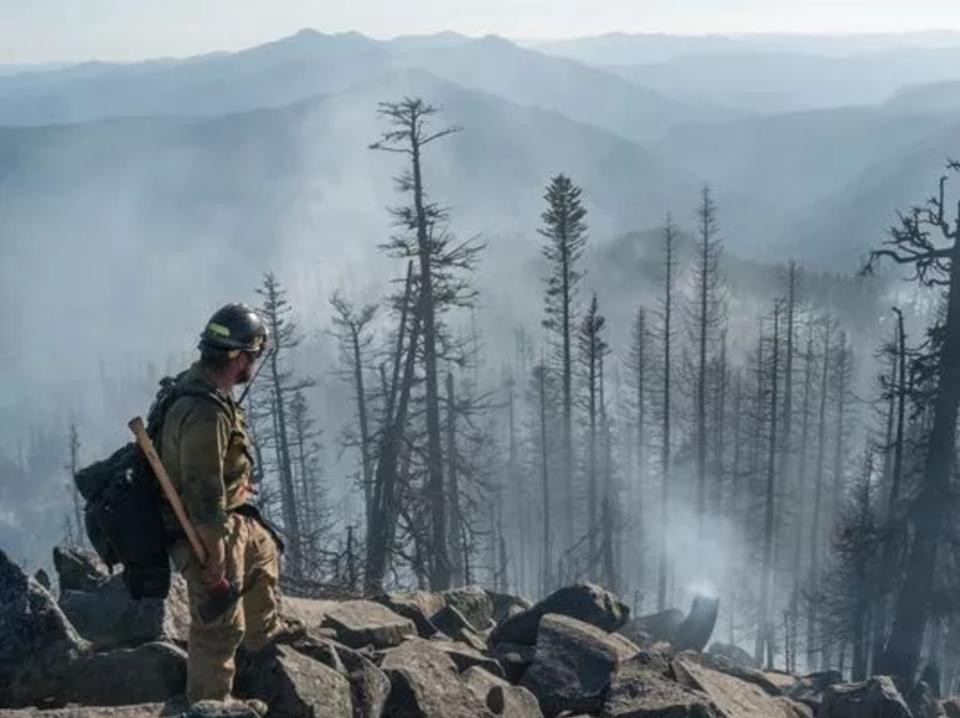
Whitewater Fire, 2017 – Willamette National Forest
The tone is a little overwrought, but this article has some good points about the risks of large crowds gathering along the solar eclipse path during peak wildfire season . . .
At the peak of wildfire season, all it takes is one errant spark to start a blaze, potentially leading to wildfires engulfing thousands of acres. It isn’t just the fire itself that’s dangerous, but also the smoke, the degraded air quality, and the potential closures of roads. In Oregon, in particular, over a million people are expected to travel to the seventy-mile-wide path of totality, in the heart of the hottest, driest part of the year. The entire pacific northwest, including parts of Oregon, Idaho, and Wyoming, has active wildfires going right now, threatening the air, roads, and general safety of residents and tourists alike…
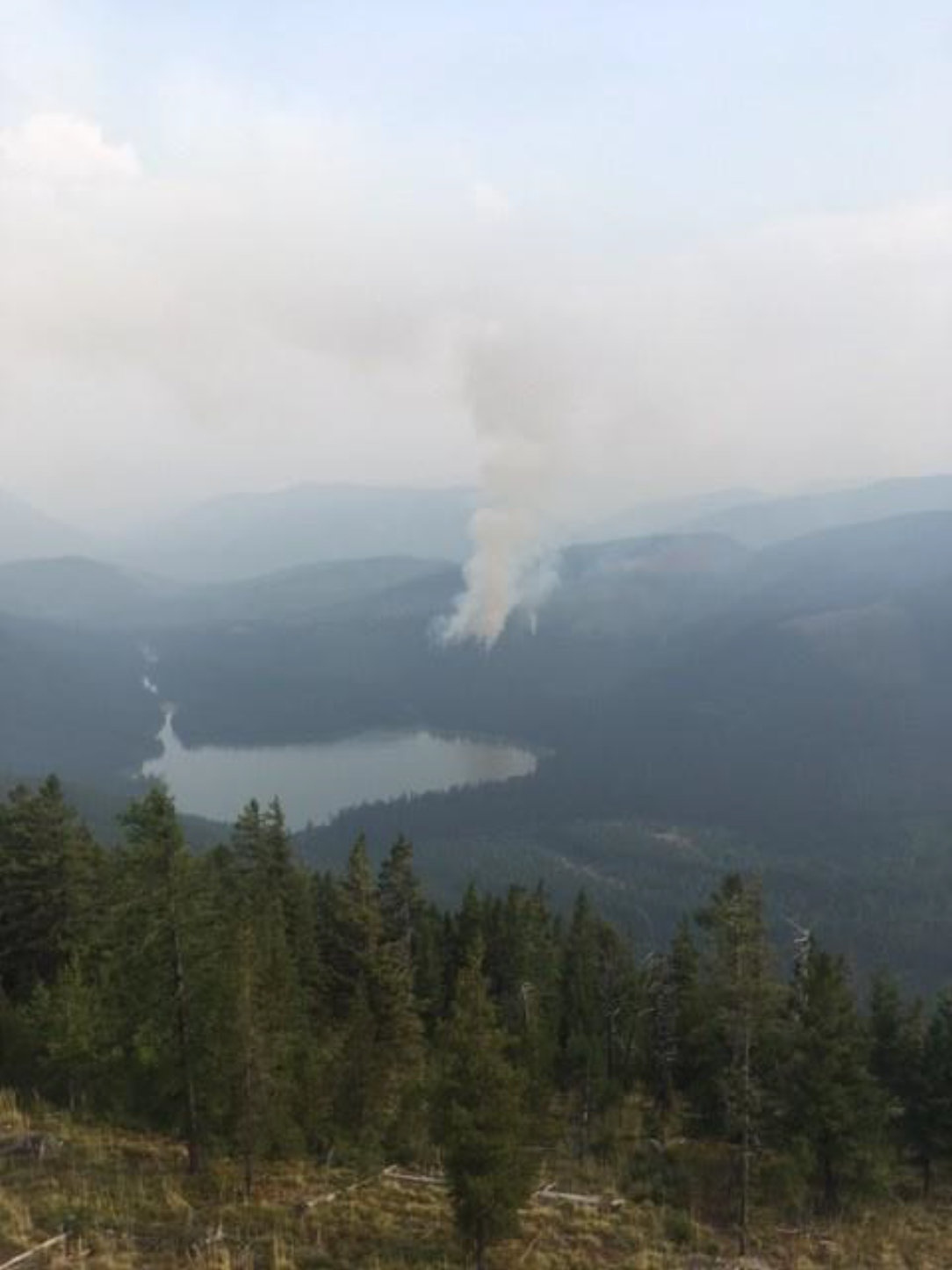
The Flathead National Forest just released the following information report on the Cyclone Lake Fire. To view the original document (PDF format) click here. . . .
Location: 23 miles north of Columbia Falls, MT, in the Coal Creek State Forest. Detected: August 12, 2017, 4:30 p.m. Cause: Lightning Legal Description: NE, Section 21, T34N, R21W; Lat/Long: Lat. 48° 41’ 72”, Long. 114° 18’ 045” Current size: 36 acres Containment: 10% Resources on the fire: Crews: Two 20-person; Engines: 4 plus crew members; Water Tenders: 3; Dozers: 1; Helicopters: 2 Ownership: Montana Department of Natural Resources, Stillwater State Forest; Jurisdiction: Flathead National Forest; Other cooperators: Border Patrol, Flathead County.
FIRE SUMMARY: The Cyclone Lake Fire is burning in the Coal Creek State Forest in the North Fork area; the Flathead National Forest is responsible for wildfire response in that area. This fire is being managed with full suppression tactics, with fire fighter and public safety as a priority, in cooperation with Montana DNRC managers. The fire is burning in heavy timber, and in pockets of previously burned areas in 2000 and 2001, with dead and down fuels. There are no evacuation warnings in place.
CURRENT SITUATION:
August 12, when the fire was first detected by Cyclone Lookout, initial attack resources responded to the fire, including 4 engines, 1 dozer, 3 helicopters performing water drops, and retardant drops from air tankers. Extreme fire behavior was observed, including running, torching, and spotting. The Border Patrol assisted by securing the Forest Road #909.
Yesterday, August 13, dozer line was constructed around the fire where possible, and hand crews began building fire line to connect between the dozer lines. Water hoses with pumps were set up and used to cool the edges of the fire and mop up. A helicopter was also used to perform water drops. Fire behavior moderated with the cooler weather, with intermittent torching, creeping, and smoldering.
Today, plans are to continue constructing fire line with hand crews and do mop up work. The public is asked to not travel on Forest Road #909 from the junction with Forest Road #317 to the Cyclone Lookout Trailhead junction, as fire traffic is concentrated in that area.
The forest will share updated fire information if significant fire activity occurs.
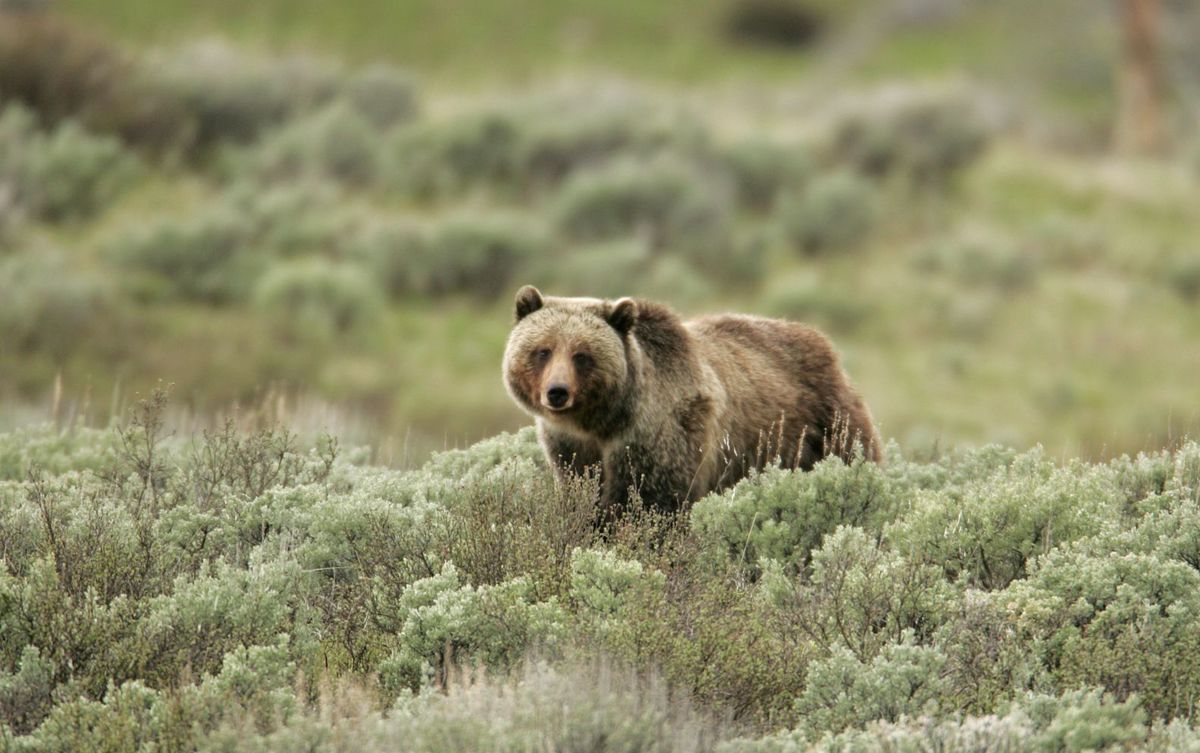
Montana Fish, Wildlife and Parks’ biologists have confirmed a grizzly bear sighting on a ranch in the northern Big Belt Mountains.
The sighting is the second in the Big Belts this summer and is likely two separate bears.
The first sighting was 3-year subadult male northwest of White Sulphur Springs, confirmed through photos taken by FWP trail cameras.
The second sighting was confirmed from a video of the bear on private land in the area between the Missouri River and Hound Creek, south of Cascade. The bear also is a subadult male.
No conflicts with the bear have been reported.
This is the third grizzly bear sighting this year in areas the species has not been present for, perhaps, a century.
In June, a pair of grizzlies apparently came down the Teton River from the Rocky Mountain Front and ended up near Stanford, east of Great Falls. The young bears were captured and euthanized after they preyed on livestock.
In recent years, bears have traveled the river corridors – Sun, Marias, Dearborn and Teton – east from the Rocky Mountain Front looking for natural foods. But the animals can also be attracted to unprotected opportunistic foods, like grain, livestock feed, beehives, livestock, garbage and pet food.
Afternoon Update – Multiple Fires in Park Following Storm
Fire personnel conducted a detection flight over the park midday today.
Three fires were confirmed following yesterday afternoon’s storm.
The Sprague Fire is currently estimated at 10 acres. A Type 1 and Type 2 helicopter are being used to drop water on this priority fire. Heli- rappel crews have been inserted to support fire suppression activities, and additional crews will be responding this afternoon.
The Rogers Fire is currently estimated at two acres, though little to no smoke was seen on the fire during the overflight.
A new start was detected near Howe Lake that is estimated at less than .1 acre.
Air resources working on the Sprague Fire will assist with the Rogers and Howe Lake fires as available. Additional field personnel will also assist from the ground. Helicopters dropped water on the Rogers Fire yesterday while also responding to the Vaught Fire.
No new fire activity was detected for the Vaught Fire or for previous smoke reports on Apgar Mountain or in the Nyack area, however there was low visibility in the Nyack area due to fog. Closures will remain in effect for all of these areas while the park continues to monitor conditions.
The response team will conduct another detection flight later this afternoon and will release an update with flight findings, overnight fire behavior, and an update on closures in the morning.
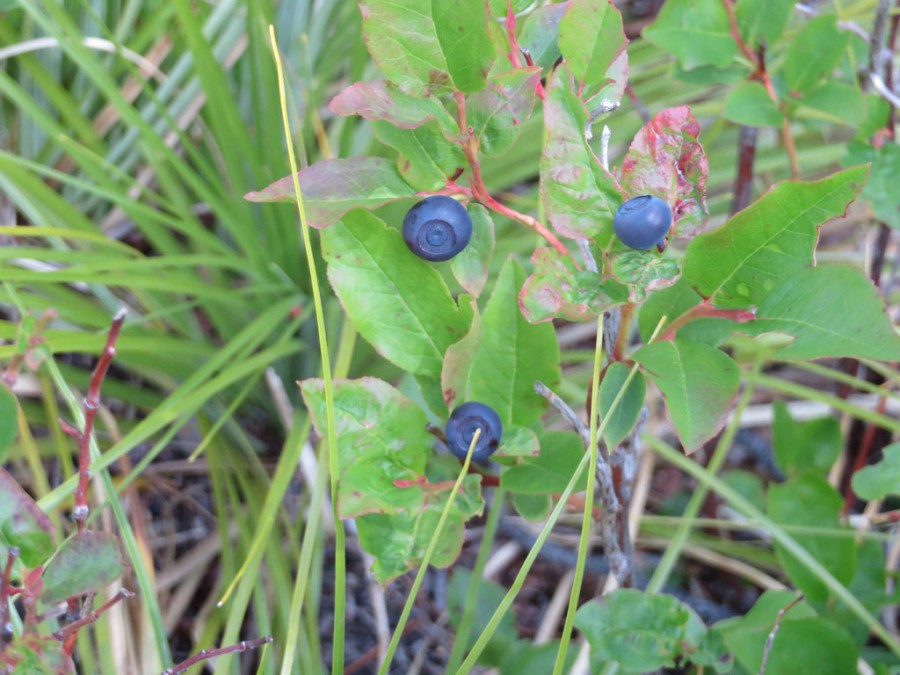
Huckleberries on Moran Creek Trail (T2) in Flathead NF – W. K. Walker
Here’s a pretty good overview on huckleberries from NPR . . .
Starting in late summer, national forests in Northwestern states like Oregon, Washington, Montana, and Idaho fill with eager berry hunters hoping to find a cache of dark maroon huckleberries. It’s common for demand to exceed supply, leading to conflicts between Native Americans who have certain reserved picking areas, commercial pickers, and families hoping to continue their summer traditions.
Related to both blueberries and cranberries, the fruit is so juicy that it has to be dried, processed, or eaten soon after picking – which makes huckleberry season feel especially fleeting, when it often only lasts from August through September. They were once a major food for local Native Americans like the Yakama, who helped huckleberry crops flourish through an annual burning at the picking grounds, and even sometimes moved to stay close to prime picking locations.
Throughout history, finding and picking huckleberries has been hard work, yet for people who love them, the effort is worth it.
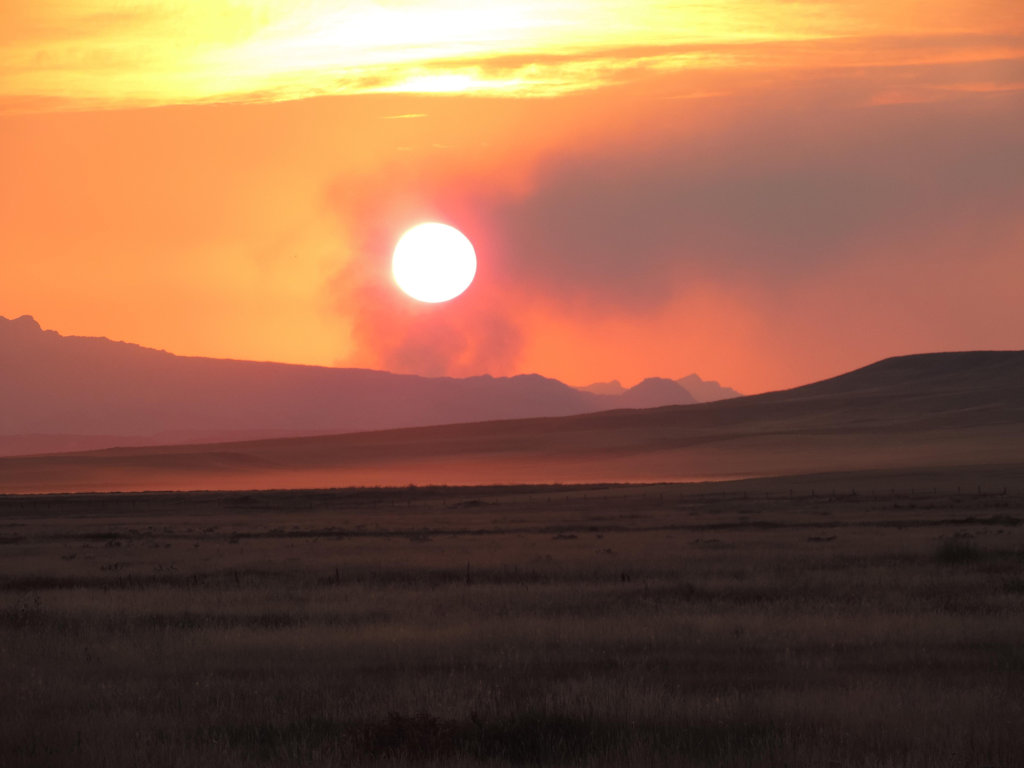
A column of smoke from the Glacier National Park Thompson Fire could be seen rising over the Rocky Mountain Front at sunset Aug. 12, 2015. (Photo by Jonathan Moor)
Glacier Park has had several lightening triggered fires over the past week or so. Most are along the west face of the Continental Divide in the North Fork and most are pretty small. There are trail closures in several areas, including the Quartz Lake Loop and the Logging Lake drainage. The Hungry Horse News has a good summary . . .
Glacier National Park has closed some trails and a portion of the Inside North fork Road from Polebridge down to Logging Creek as it battles several small fires in the region.
The fires aren’t large, about a tenth of an acre or so, but there is one at Grace, Logging, Cummings Meadow and Quartz Lake.
Small fires at Bowman Creek and Big Prairie have been put out. Firefighters were also working on a small blaze on Snyder Ridge. Yesterday, a helicopter made water dumps on the fire, scooping water out of Lake McDonald. Visitors could also see helicopters getting water out of the North Fork of the Flathead…
Zebra Mussel Shells Cover a Lake Michigan Limestone Beach in Door County Wisconsin – PJ Bruno
The Daily Inter Lake has an interesting article on a device invented to provide fast, sensitive and mobile detection of invasive mussels . . .
The pristine waters of Flathead Lake that have supported local residents’ way of life for centuries are being threatened by invasive species that have devastated lakes and waterways across the country.
The arrival of the first documented zebra and quagga mussels in Montana could mark the beginning of the end for the crown of the continent’s signature landscape, according to experts at the Flathead Lake Biological Station (FLBS).
These invasive species have infested lakes in almost every state in the U.S., corrupting indigenous ecosystems, clogging drainage and irrigation systems and crashing the economical and recreational value of beaches and harbors.
Here’s a good piece by Chris Peterson of the Hungry Horse News on the progress in grizzly bear management over the last few decades . . .
While tragic, Glacier Park’s Night of the Grizzlies did much to change grizzly bear and human backcountry use. “It was a lightning rod to the core of the Park Service,” said Glacier Park biologist John Waller.
While the Wilderness Act had been passed three years before that tragic night in 1967, there was no Leave No Trace ethic — leaving or burying garbage was common in bear country. Even Roy Ducat and July Helgeson buried the remains of their sandwiches before they camped for the night, a Hungry Horse News story noted.
Philosophy toward bear management changed quickly after the incident. Grizzlies were not nearly as common in Glacier in the late 1960s as they are today. They also weren’t protected, Waller said. The Endangered Species Act was passed in 1973 and grizzlies were listed as threatened in 1975.
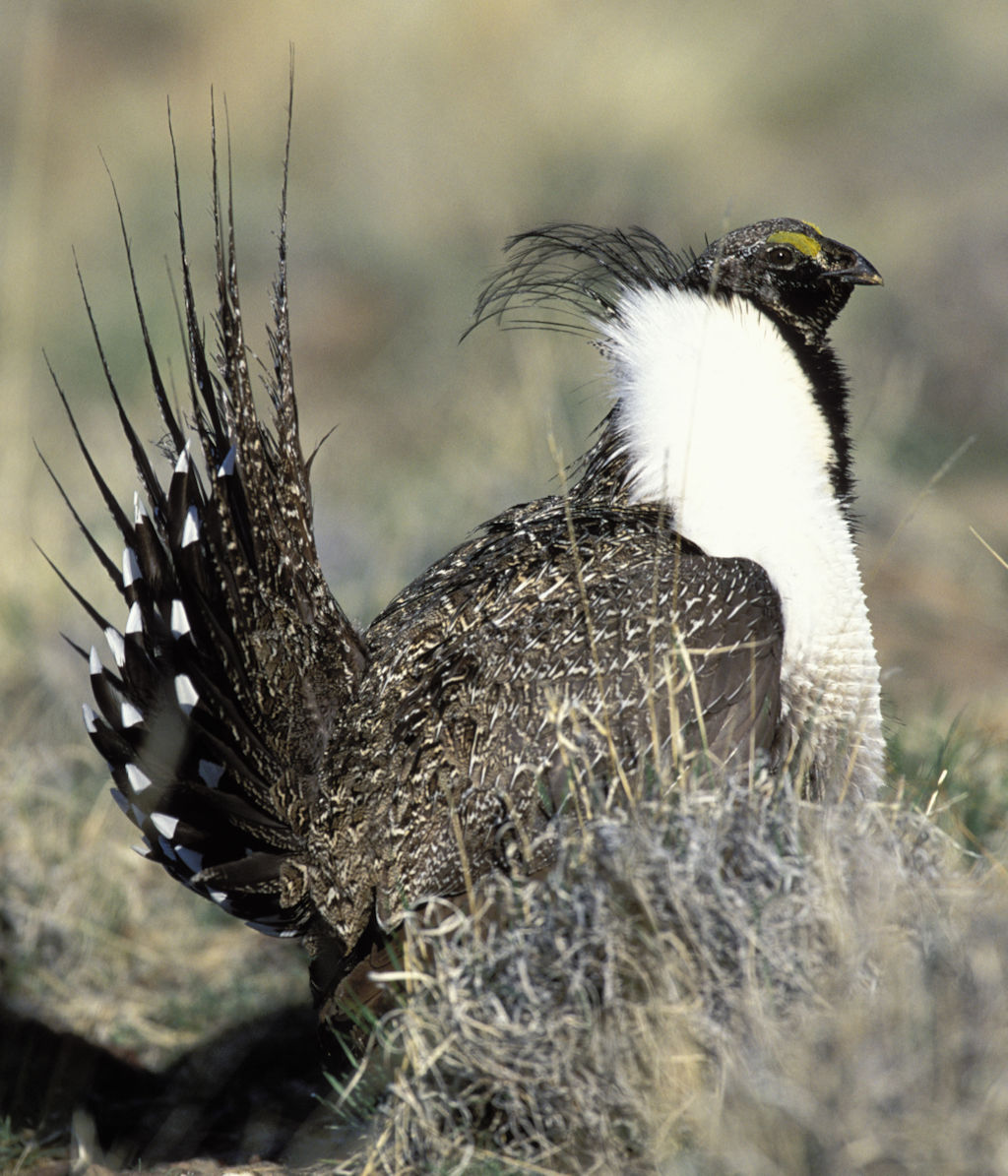
Here’s a pretty good write-up on the Interior Department’s revisions to the sage grouse conservation plan put into place a couple of years ago . . .
A task force is recommending changes that could loosen protections for the greater sage grouse, a Western bird species renowned for its elaborate mating dance.
The report comes out of a review by the Trump administration of a massive Obama-era conservation plan for the bird which is imperiled by loss of habitat.
The administration says the revisions are aimed at giving states more flexibility. But critics argue that the changes favor mining and petroleum companies and could hurt the bird’s long-term prospects.
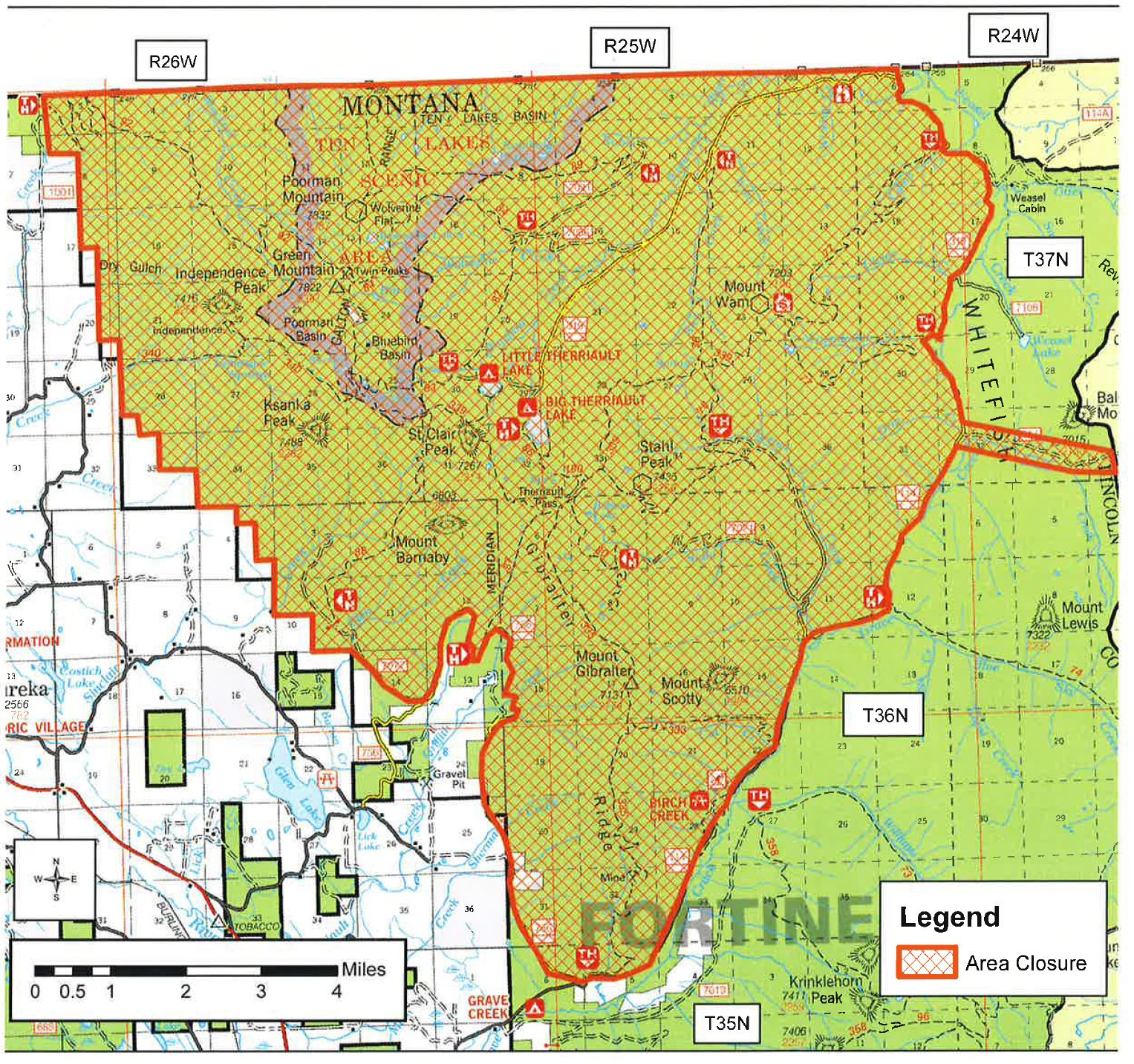
A closure order was issued this afternoon in the Kootenai National Forest as a result of the Gibraltar Ridge Fire in the Eureka area.
This closure affects travel from the North Fork over Trail Creek into the Kootenai. The Forest Service is posting signs at the North Fork Road/Trail Creek Road junction, and at the Tuchuck Trailhead.
This also affects the Pacific Northwest Trail (PNT). Notifications are going up at strategic trailheads for the PNT in both the Kootenai and Flathead Forests.