Wildlife biologist and local author Doug Chadwick will speak of his experiences exploring ecosystems from Siberia to the Congo, and Canada to Northwest Montana at the Museum at Central School, 124 Second Avenue East in Kalispell, on Sunday, Feb. 22, starting at 2:30 p.m. Chadwick received a master’s in wildlife biology from the University of Montana. He is the author of 11 books and produced hundreds of articles for publications for National Geographic, Reader’s Digest and the New York Times Review of Books. Tickets are $9 available at the museum or at the door. For more information, call 756-8381.
Ed McNeil, known in the North Fork as “Mac,” died February 8. Those who moved to the North Fork in the last ten years or so did not have the pleasure to meet him as he has been ailing for a long time. He and his wife Cecily bought land in the North Fork some fifty-five years ago which made them some of the earliest of the summer residents.
I have known Ed for thirty-five years, but did not fully know his accomplishments until I read the obituary below. He was a private kind of person. His wife Cecily was a board member of NFPA for a long time during the early years of that organization. Their son Alan is on the current NFPA board.
John Frederick
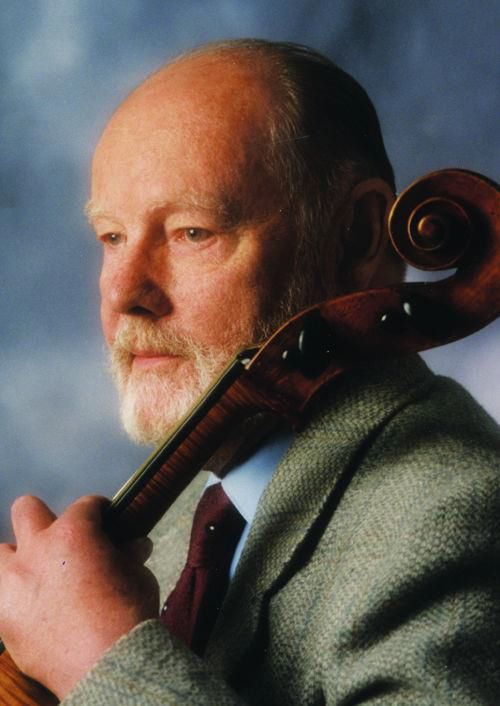
Edward Bowen McNeil
Edward Bowen McNeil, 93, passed away Feb. 8, 2015, in Kalispell.
Edward was born in Chicago on May 11, 1921. His parents were Grace Barr Bowen of Logan, Ohio, and Dr. Claude Perkins McNeil of Mansfield, Ohio. The family lived in Whiting, Indiana, where Dr. McNeil, a chemist, was head of the Asphalt Division of Standard Oil of California. Edward’s siblings were Robert McNeil and Jean McNeil.
Edward attended the Whiting Public Schools from elementary through high school. From childhood, music was important in his life; he studied cello from an early age, was first desk in the national award-winning Whiting High School Orchestra and was also in the All-Chicago chorus. In 1939 he entered Miami University in Oxford, Ohio, majoring in physics. He was a member of Sigma Nu fraternity, Phi Beta Kappa and several societies on campus: the French Club, Phi Mu Alpha (music), and Ye Merrie Players. He was active in campus stage and musical productions as stage manager.
In 1943 Edward graduated from college cum laude and was immediately hired by Miami University to teach physics to the V-12s (the Navy Officer Training Program). When he was drafted in 1944 he enlisted in the Navy, which put him in the EDDY program for radar and electronic repair. After he graduated from the EDDY program, the Navy retained him as an instructor and he was stationed at Navy Pier in Chicago, which was one of three national radar/sonar schools. (Radar was new in those days.)
Discharged after World War II ended, Edward obtained an assistantship at the University of Illinois in Urbana, teaching physics. During that time, he met his future wife, Cecily Rideout, of Marin County, California, who was a graduate student in library science at Illinois. They were married in July of 1948 in Ross, California. Two sons were born to the couple, Alan Rideout McNeil and Bruce Bowen McNeil.
Edward became an assistant professor at the University of Illinois before obtaining his doctorate in physics and continued to teach there until 1954. Some time after earning his doctorate, he accepted a position at the University of Illinois in Chicago, which was then at Navy Pier.
Edward taught at the University of Illinois in Chicago for nearly 40 years. More interested in teaching than in research, he was proud to receive the Circle Award from the U of I in Chicago for Excellence in Teaching. He was also proud to be one of the founders of the Illinois State Physics project, which continues to this day.
That project gathers physics teachers of all academic levels once a month to share new information and ideas about teaching, most especially to recharge the enthusiasm of the teachers. It quickly became an important support group for the profession.
For three summers in the 1960s, Edward taught physics teachers in India, under a program sponsored by USAID. At that time he traveled extensively in India — Assam, Calcutta, Madras, Kerala, Bombay, Mysore, Bangalore, Hyderabad, Tanjore.
Edward maintained a keen interest in architecture. Trained by his father to be a skilled carpenter, he was eventually able to realize his dream by building a cabin for his family in the valley of the North Fork of the Flathead. This effort took several summers, and was accomplished without power tools.
He also maintained his interest in music, playing string quartet at least one night a week with competent amateurs in Chicago, and playing cello in the annual performance of “The Messiah” at Orchestra Hall, as well as performing with the orchestra for the Chicago Gilbert and Sullivan group. Interlochen Music Camp has a cello scholarship in Edward’s name.
In 1990, Edward and his wife Cecily retired to Kalispell, where Edward immediately volunteered for the Glacier Orchestra. He was on the board of the orchestra for several years and in 1997 was a Kalispell Chamber of Commerce Volunteer of the Year.
Edward’s grandchildren include Henry Chesna McNeil, Fiona Reed McNeil, U.S. Coast Guard Lt. Anna Crandall McNeil, Ellie Rideout McNeil, and Edward Bowen McNeil II.
Gift’s in his memory may be given to the Glacier Symphony.
Further evidence that this idea of turning federal lands over to state control is a minority view . . .
A nonpartisan survey of Rocky Mountain state voters found 68 percent consider federal public lands as “American places” rather than places that belong to the people of individual states.
“It was striking to see they grasp these are American places by a 2-to-1 margin,” Republican pollster Lori Weigel said of the 2015 Western States Survey released Tuesday. “And there was significant intensity behind that. A greater proportion of people felt strongly about that.”
MWA and Headwaters Montana are recommending additional wilderness segments adjacent to the Bob Marshall Wilderness, mostly in existing roadless areas . . .
Two wilderness groups are recommending additional wilderness in the Mission Mountains, Jewel Basin and Swan Crest areas adjacent to the Bob Marshall Wilderness Complex.
The Montana Wilderness Association and Headwaters Montana recently released two reports on their recommendations for the Flathead National Forest, which includes 147,315 acres in the Swan Range.
Here’s a good write-up on Brad Blickhan, winner of this year’s Jack Potter Glacier National Park Stewardship Award . . .
In 1987, a young Brad Blickhan came to Glacier National Park to drive a Red Bus. His uncle had drove the historic tour buses and said it was a good summer job for a college student. Like many others before him, Blickhan fell in love with the place, and never left…
In 1992, Blickhan tried to land a job on the Park’s trail crew. It was tight budget year with no openings so he took a post at the Park’s dispatch center, which got him involved with ranger staff. A few years later, he was a seasonal ranger at Two Medicine. By the early 2000s, he became the permanent Lake McDonald area ranger.
For his conservation efforts over the course of his 20-year Park Service career, the affable Blickhan was awarded the Jack Potter Award by Headwaters Montana, a local conservation group. Potter was the chief of science and management for many years at Glacier Park.
Rick and Susie Graetz (they bring a geography class to the North Fork each year) have a fascinating article in the Hungry Horse News about the Great Burn area in the Lolo National Forest . . .
Stephen Pyne’s vivid description of the summer from hell that visited the forests of the northern Bitterroot Divide on the Montana/Idaho border in 1910 goes like this:
“Winds felled trees as if they were blades of grass; darkness covered the land; firewhirls danced across the blackened skies like an aurora borealis from below; the air was electric with tension, as if the earth itself was ready to explode into flames. And everywhere people heard the roar, like a thousand freight trains crossing a thousand steel trestles.”
From May through August of that year, little rain fell and the snow had disappeared from southern slopes by April. Vegetation was rendered tinder dry. In July, hundreds of fires, some lightning caused but most by careless people, were burning.
The Ravalli Republic has a pretty interesting article, with photos, on a wolverine research project in the Bitterroot National Forest. Their setup collects both hair samples for DNA data and photographic evidence, allowing them to identify individuals without waiting for DNA analysis . . .
It seemed like the perfect spot for a wolverine to visit.
A couple of miles back from the nearest road and surrounded by the kind of thick timber that offers a wary critter a good bit of security, the little nook selected by a crew of Bitterroot National Forest researchers to set their first long-term photographic monitoring site had all the makings a good place to rendezvous with wolverines.
“After awhile, you just kind of know what to look for,” said Chris Fillingham. “You go with your gut and what you’ve seen works before.”
John Bergenske posted a lengthy, rather sad article to the Wildsite website discussing the problems recovering mountain caribou herds in the southern Selkirk Mountains in Canada. (South of the border, the Selkirks shelter the sole remaining woodland caribou population in the U.S.)
Sometimes, there are just no good solutions . . .
I have been involved with mountain caribou since the 1970’s and as Wildsight since the 90’s when we first sponsored caribou research in the Purcell Mountains. It has been clear since that time that there are no simple solutions or easy answers to mountain caribou recovery.
There is a rally at noon on President’s Day, Monday, February 16, in Helena to protect access to public lands. The immediate trigger for this event is a movement within Montana to give up federal lands to state control. Such a move would mean a sharp increase in the state bureaucracy, a hefty bump in the tax burden and, more than likely, lead to much of the land being sold off to private interests to help finance the whole mess. Everyone from traditional hunting and fishing groups, to motorized recreation outfits to old-line enviros is pretty wound up about this.
Oregon wolves, including the famous wandering wolf OR-7, have reached sufficient numbers to be considered for delisting as an endangered species in Oregon . . .
Wolves in Oregon have hit the threshold for consideration of taking them off the state endangered species list.
The Oregon Department of Fish and Wildlife announced Tuesday the latest wolf census confirms at least seven breeding pairs — six in northeastern Oregon and one, led by the famous wanderer OR-7, in the southern Cascades.
The state wolf management plan calls for a status review once there have been four breeding pairs producing pups that survive a year for three years running. That review will be presented to the state Fish and Wildlife Commission when it meets April 24 in Bend. The earliest a decision could be made would be at the commission’s June 5 meeting in Salem.