All posts by nfpa

Glacier names Yellowstone chief ranger as new deputy superintendent

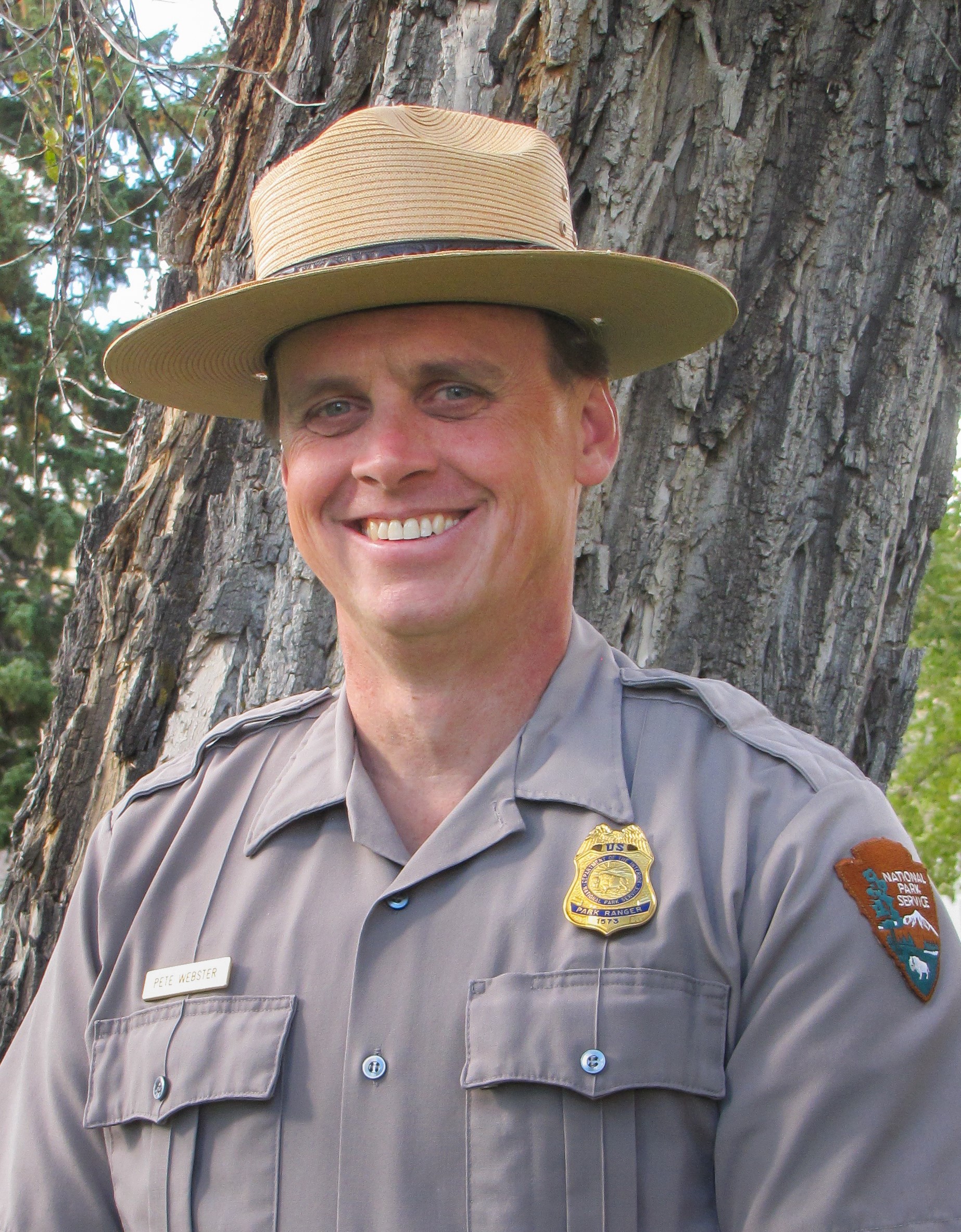
Pete Webster, Glacier National Park deputy superintendent

From the official press release . . .

Glacier National Park Superintendent Jeff Mow has selected Pete Webster to be the park’s new deputy superintendent.

Webster will be responsible for leading the park’s division chiefs in identifying park priorities, addressing complex operational challenges, and long-range planning. In recent years the park has faced numerous challenges related to rising visitation, invasive species threats, and wildfires among others.

He has served as the chief ranger at Yellowstone National Park since 2015.

“Pete has proven himself to be an exceptional leader in the National Park Service,” said Superintendent Jeff Mow. “We are very fortunate he’s accepted this new post to offer expertise on some of our most challenging operations.”

Webster and his family have strong ties to the Glacier region. While still in college, he first moved to St. Mary in 1986-87 for a summer job at a local hotel. Webster returned to Glacier as an intern in 1988, as a seasonal park ranger from 1991-93, and as the sub-district ranger in St. Mary from 2004-08.

A native of the Detroit, Michigan area, Webster holds a Bachelor of Science degree from Michigan State University. He and his wife Dawn will live in the Flathead Valley with their youngest son, who will enter high school in the fall.

He replaces Eric Smith who moved to Texas last fall to serve as superintendent of Lake Meredith National Recreation Area and Alibates Flint Quarries National Monument.

Roland Cheek reflects on a lifetime in the backcountry

Here’s a fascinating interview with Roland Cheek, a local writer and long-time outfitter in the Bob Marshall Wilderness . . .

Roland Cheek clung to his dream even when his tenacity caused marital strife, threatened his family’s financial stability, lodged him crosswise with the U.S. Forest Service and pushed him to the edge of exhaustion.

Adversity made regular visits during his early years as an outfitter and guide in the Bob Marshall Wilderness.

Roland embraced tenacity again later when he decided to become a writer, even though he had limited formal education and had twice flunked English in high school.

Read more . . .

In Badger-Two Medicine, Interior to defend Solonex cancellation, but lets Moncrief lease ride

Badger-Two Medicine Region

This is likely not as bad as it sounds. The feds are going to dig in and fight the Solonex lease in the Badger-Two Medicine region. The Moncrief lease doesn’t even have a permit to drill and would require a huge battle just to get past that step. I’d guess the government made the pragmatic determination to concentrate their resources on the larger threat. If they win against Solonex, the Moncrief lease is probably toast, too.

Anyway, here’s the write-up . . .

In a dramatic change of course, attorneys representing the U.S. Department of the Interior filed paperwork announcing they will not defend the cancellation of one of the last remaining oil and gas leases on the 130,000-acre Badger-Two Medicine, an area flanking Glacier National Park that holds cultural and ecological significance to members of the Blackfeet Nation.

Former Interior Secretary Ryan Zinke, a Whitefish native, had previously said he would defend the lease cancellations.

While members of the Blackfeet Nation expressed disappointment and frustration in the Interior’s decision not to fight an appeal by lease-owner W.A. Moncrief Jr, the Interior Department is expected to defend the cancellation of a second lease held by Solenex LLC of Baton Rouge, which is also being fought on appeal.

Read more . . .

Enjoy those huckleberries? Thank a bumblebee

A very interesting article by Chris Peterson of the Hungry Horse News about the importance of bumblebees to the huckleberry crop . . .

The next time you grab a handful of huckleberries, you just might want to thank the bees — bumblebees that is. Research by Montana State University and the U.S. Geological Survey has found that there’s about six species of bumblebee and one Andrenidae species of bee that pollinate Montana’s huckleberry bushes.

Prior to 2014, researchers weren’t sure what insects exactly were pollinating the iconic bush, USGS scientist Tabitha Graves said during a talk last week at the Flathead Chapter of the Montana Native Plant Society.

The bees are critical to berry production. Experiments in the field have shown that bushes that are isolated from bees make a fraction of the fruit compared to plants that are pollinated by their fuzzy friends.

Read more . . .

Yellowstone grizzly meetings to focus on reducing conflict, mortality

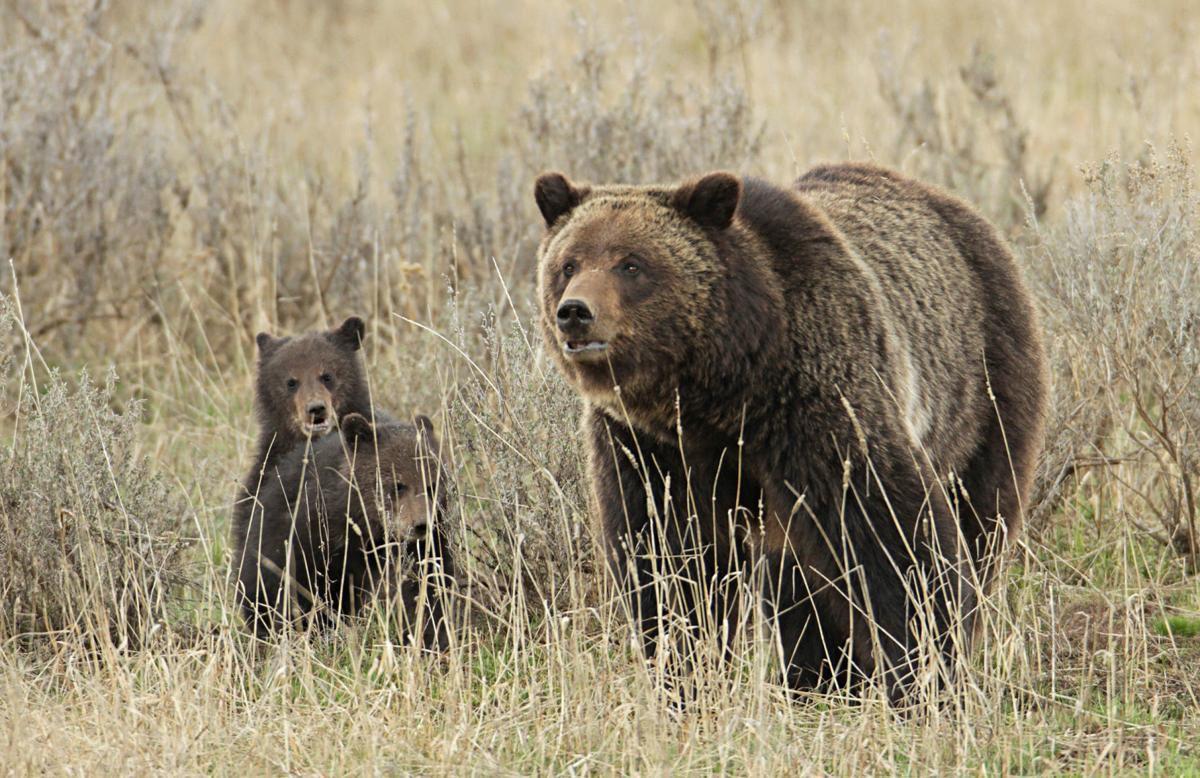
Grizzly sow and cubs near Fishing Bridge in Yellowstone National Park - Jim Pesco, NPS
Grizzly sow and cubs near Fishing Bridge in Yellowstone National Park – Jim Pesco, NPS

Kudos to Debo Powers for spotting this piece in the Bozeman Daily Chronicle . . .

Wildlife managers will talk this week about preventing run-ins between grizzly bears and humans, a discussion that comes after environmental groups pushed officials to reconsider a decade-old report that lined out measures meant to reduce those conflicts.

The Yellowstone Ecosystem Subcommittee of the Interagency Grizzly Bear Committee, meeting in Bozeman on Wednesday and Thursday, will consider grizzly bear death trends and the effectiveness of efforts to avoid people-grizzly conflicts that often end with bears being killed by government officials.

It will be the first time the panel of state and federal government officials from Idaho, Wyoming and Montana has met since a coalition of six environmental groups urged it to reconsider a 2009 report that included a few dozen recommendations to prevent those encounters.

Read more . . .

As public lands access funding dwindles, local communities pitch in

Several Types of Public Lands
Several types of public lands: Flathead National Forest is in the foreground, left and right; Montana’s Coal Creek State Forest, including Cyclone Lake, is in the middle distance; Glacier National Park stretches across the background.

As public lands management funding decreases, visitation continues to increase. NPR posted an interesting article about local efforts to deal with this issue . . .

Across the western U.S., towns surrounded by public lands are facing an increasing bind: They’re seeing a huge surge in visitors coming to play in the forests and mountains surrounding them, which is leading to an economic boom. But, at the same time, federal funding to manage these lands has been drying up.

“There are these dramatic increases in recreational uses of public lands, and at the same time dramatic declines in recreational budgets,” says Megan Lawson, a researcher at the Montana-based think tank Headwaters Economics.

A recent analysis [PDF; 15.8MB] by the group showed that visitation to U.S. Forest Service and Bureau of Land Management land has risen by about 15 percent over the last decade, while budgets for programs that support recreation in those agencies has fallen by a similar amount.

Read more . . .

Op-ed: The Flathead Forest Plan a win for conservationists

Flathead National Forest

Appearing in the Flathead Beacon yesterday, was a thoughtful op-ed by Chris Ryan and Kathleen McAllister in favor of the recently completed Flathead National Forest Plan, written by a couple of folks who should know quite a bit about it . . .

The U.S. Forest Service recently completed a new management plan for the Flathead National Forest (FNF) that will guide decisions on the forest for the next 20 to 30 years or more. The plan addresses a dizzying array of management issues – including municipal watersheds, wildlife habitat, protected lands, outdoor recreation, and much more – over 2.4 million acres that cover the Mission Mountains, the Swan Range, and the Whitefish Range.

Those of us in the conservation community have focused our attention on the places the FNF plan recommends for Wilderness designation. This recommendation means the Forest Service will protect these places until either Congress designates them as Wilderness or at least until the agency completes its next FNF plan.

The FNF plan represents a vast improvement over the previous plan, which recommended around 98,000 acres for Wilderness. The new plan recommends over 190,000 acres, nearly double the previous recommendation. That increase is worth celebrating.

The plan is by no means ideal for conservationists. Wilderness-worthy lands such as Bunker and Sullivan Creeks and low-elevation, critical habitat adjacent to the Mission Mountains Wilderness did not, unfortunately, receive the Forest Service’s Wilderness recommendation. The Jewel Basin recommended Wilderness was reduced in size under the new plan, a significant loss for a landscape that would have been designated Wilderness had Reagan not pocket vetoed the 1988 Montana Wilderness Bill.

Continue reading Op-ed: The Flathead Forest Plan a win for conservationists

It’s that time again: As bears awaken, the usual precautions are in order

Grizzly bear near Trail Creek in North Fork Flathead region, Montana. April 11, 2017 - by Diane Boyd
Grizzly bear near Trail Creek in North Fork Flathead region, Montana. April 11, 2017 – by Diane Boyd

Spring has sprung. The snow is melting. The birds are returning. The potholes are propagating. And the bears are coming out of hibernation . . .

They’re back.

Black bears tend to den at lower elevations than their grizzly cousins and have made appearances in the region on the cusp of April.

For example, black bears have been seen feeding on road-killed deer. Bear tracks also have been spotted on the road to Bowman Lake in Glacier National Park.

Both black bears and grizzlies will be actively seeking food in the days and weeks to come after months of hibernation.

Read more . . .