Columbia Falls had quite an event last Tuesday in support of public lands and the part they play in the economy . . .
Montana’s public lands and outdoor recreation provide 71,000 jobs in the state and $7.1 billion in consumer spending, Montana Sen. Jon Tester told a capacity crowd at the Last Best Outdoor Fest Tuesday night in Columbia Falls.
The fest celebrated Montana’s abundance of public lands and was also a political rally to oppose any measures to sell them off.
With a host of public lands at its doorstep and a river running through it, Columbia Falls is becoming the place to live for those who love the great outdoors.
A judge has ruled that the isolated grizzly bear population in the Cabinet-Yaak area can be treated as endangered . . .
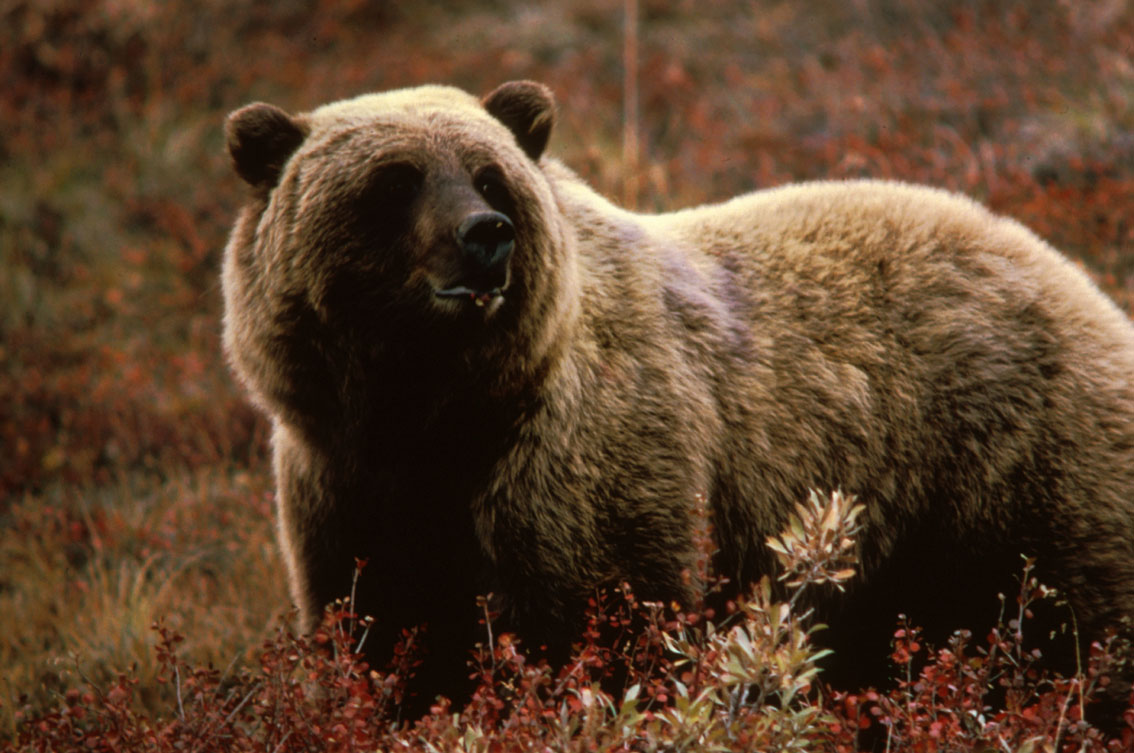
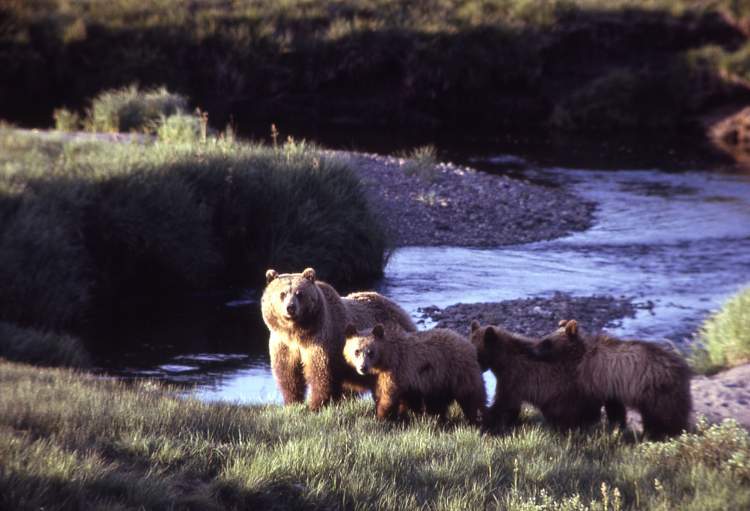
Animals and plants can be considered endangered even if they are not on the brink of extinction, a judge ruled in overturning the U.S. government’s re-classification of a small population of grizzly bears living in the forests of Montana and Idaho near the Canada border.
Tuesday’s ruling by U.S. District Judge Dana Christensen said that the U.S. Fish and Wildlife Service is prohibited from narrowing the definition an endangered species in its future decisions without explaining why it wants to make the policy change.
The federal Endangered Species Act defines an endangered species as one that is “in danger of extinction throughout all or a significant portion of its range.”
NPR’s “All Things Considered” did a segment on efforts by wildland firefighters to prevent their operations from spreading invasive species . . .
Wildland firefighters in the West are using precious time to clean equipment in order to avoid bringing invasive species into sensitive areas. It’s an attempt to avoid billions of dollars in damage.
This is significant. The Forest Service has chosen the replacement for long-time Spotted Bear District Ranger Deb Mucklow. Among other duties, this ranger oversees more than one million acres within the Bob Marshall Wilderness Complex.
From the press release . . .
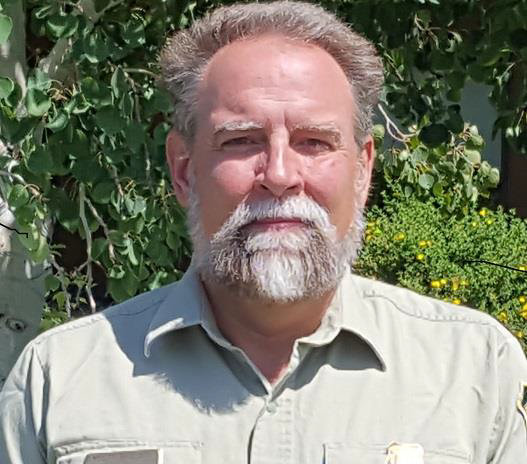
With the retirement of long-time District Ranger Deb Mucklow earlier this year, the Flathead National Forest is pleased to announce the selection and appointment of Scott Snelson as the new Spotted Bear District Ranger. Snelson will start his tenure on December 10, 2017.
“Snelson brings a wealth of leadership, knowledge and skills to the Forest,” stated Forest Supervisor, Chip Weber. “His background is a wonderful fit for this diverse and complex district.”
Snelson serves as the Deputy Forest Supervisor, for the 3.4 million -acre Beaverhead-Deerlodge National Forest in Dillon, Montana.
Before moving to Dillon, Snelson was the District Ranger for the Laurentian District of the Superior National Forest in the Arrowhead Region of Northern Minnesota. As District Ranger on the Superior he oversaw the 400,000 -acre District, which was actively engaged in large scale vegetation management and restoration programs. Scott is an avid believer in collaboration, and helped catalyze the formation of the Laurentian Divide Collaborative to help guide management on the three west zone districts of the Forest.
Snelson moved to the Superior NF from the White River NF of Colorado where he served as District Ranger for the Aspen and Sopris Districts. There he oversaw a complex mix of wilderness, restoration, vegetation management, mining, gas and oil permitting and several high profile ski hill operations for one of the Nation’s most visited Districts.
He also served as the Forest Staff Officer for Fish, Wildlife, Watershed and Soils and Subsistence on the Tongass National Forest. In this capacity, he oversaw programs for the Nation’s largest National Forest, guiding resource protection and restoration for the 17 million acre temperate rainforest.
Snelson spent 16 years in Montana where he earned both his Bachelor and Master of Science degrees from Montana State University in Biological Sciences. Early in his career he worked as a US Forest Service trail crew foreman in the Bob Marshal Wilderness, out of Spotted Bear and Big Prairie, and as a fire fighter.
Snelson’s wife Heidi is a Montana native, having grown up the daughter of a District Ranger in Northwest Montana. Heidi is an avid hiker and outdoor enthusiast and served special needs children as a para-professional with the Sitka School District as well as working as a botany technician for the Forest Service in Colorado. The couple has two adult daughters, the oldest is a Forestry graduate from the University of Montana in Missoula, and the youngest currently works in Virginia City for the Montana Heritage Commission.
“Thankfully, we’ve had some great leaders step up and fill in as the acting Spotted Bear District Ranger,” said Weber. “Seth Carbonari, the Spotted Bear Fire Management Officer just finished a four month detail and Gordon Ash, from the Beaverhead Deerlodge National Forest will be filling in for the next few months until Scott arrives.”
This is encouraging news. A search at one of the first places in Montana to test positive for invasive mussels last year turned up no evidence of adult mussels last week.
Divers searched for adult aquatic invasive mussels at Tiber Reservoir last week, but found none.
The five divers involved in the effort were from the U.S. Fish and Wildlife Service and coordinated by Montana Fish, Wildlife and Parks. The primary search area was Tiber Dam up to a depth of about 35 feet.
With its rock structure, the dam is good habitat for the invasive mussels, which prefer solid substances, like rocks, to attach to. However, deeper than 35 feet, silt reduced the habitat significantly.
The divers are part of FWP’s monitoring plan for Tiber Reservoir after water samples last year came back positive for aquatic invasive mussel larvae. The monitoring plan also includes an increased frequency of water sampling at the reservoir.
The divers also searched rock outcroppings around Turner Point at Tiber Reservoir. No adult invasive mussels were discovered.
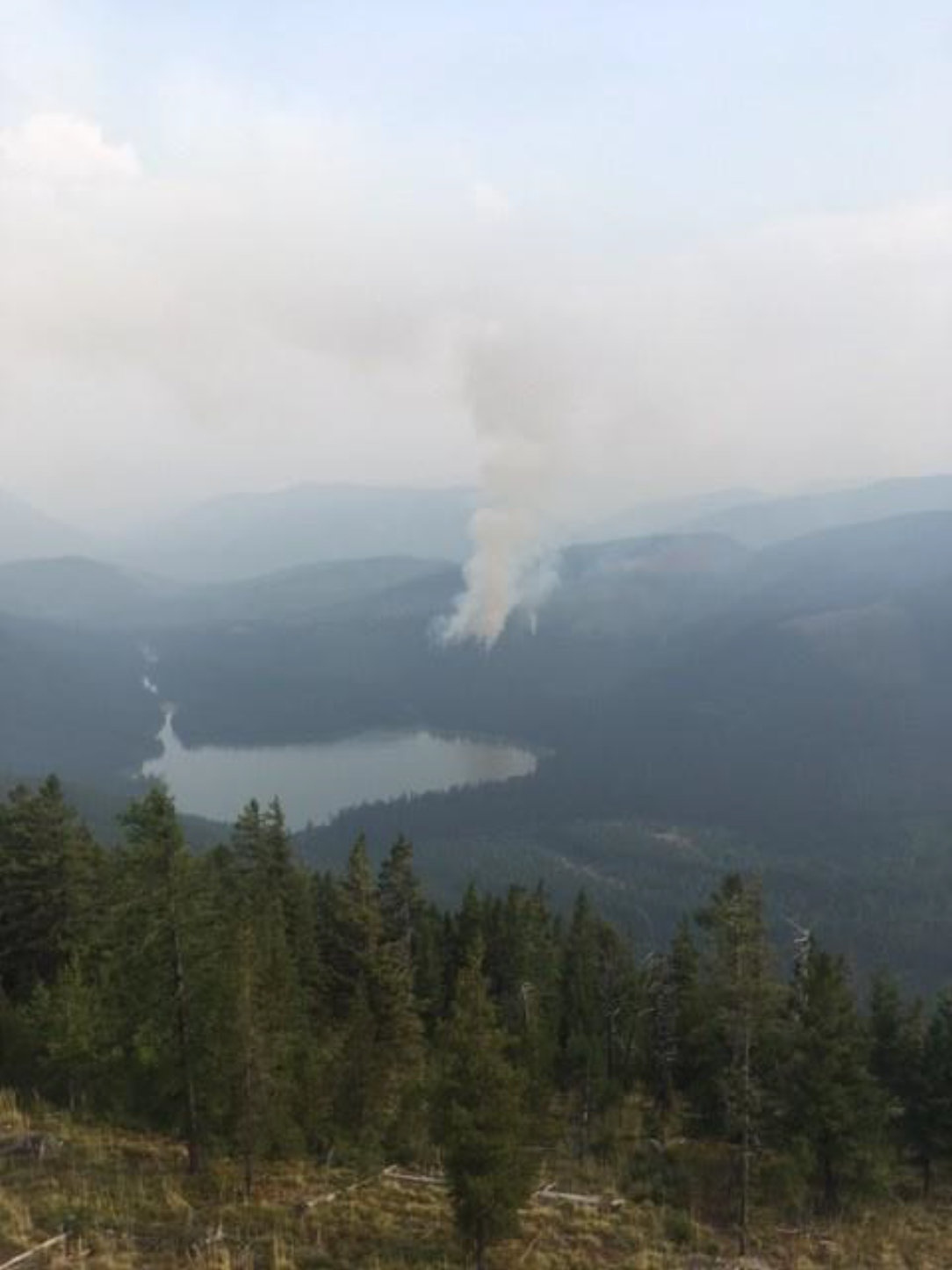
Here’s the latest from the U.S. Forest Service on the Cyclone Lake Fire as of August `19, 2017 at 3:00pm. Note, by the way, that Forest Road 909 is now open from the intersection with Hay Creek Road (Rd 376) to the Cyclone Lookout trailhead.
QUICK FACTS: Location: 23 miles north of Columbia Falls, MT, in the Coal Creek State Forest. Detected: August 12, 2017, 4:30 p.m. Cause: Lightning Legal Description: NE, Section 21, T34N, R21W; Lat/Long: Lat. 48° 41’ 72”, Long. 114° 18’ 045” Current size: 36 acres Containment: 90% Resources on the fire: Crews: Two 20-person; Engines: 2 plus crew members; Water Tenders: 1 Ownership: Montana Department of Natural Resources, Stillwater State Forest; Jurisdiction: Flathead National Forest; Other cooperators: Border Patrol, Flathead County.
FIRE SUMMARY: The Cyclone Lake Fire is burning in the Coal Creek State Forest in the North Fork area; the Flathead National Forest is responsible for wildfire response in that area. This fire is being managed with full suppression tactics, with firefighter and public safety as a priority, in cooperation with Montana DNRC managers. The fire is burning in heavy timber, and in pockets of previously burned areas in 2000 and 2001, with dead and down fuels. There are no evacuation warnings in place nor any structures threatened. August 12, when the fire was first detected by Cyclone Lookout, initial attack resources responded to the fire, including 4 engines, 1 dozer, 3 helicopters performing water drops, and retardant drops from air tankers. Extreme fire behavior was observed, including running, torching, and spotting. The Border Patrol assisted by securing Forest Road #909.
Cyclone Like Fire, Aug 2017 – Martin City water tender filling port-a-tanks, with Forest Service engine pumping water into hoses along the fire perimeter
CURRENT SITUATION:
Over this past week, firefighters have worked to construct fire line around the entire perimeter of the fire, as well as construct a water hose system with pumps. Mop up has continued, with only a few smokes found in the interior today. Firefighters will continue mopping up and searching for any smokes or hot spots. The public is asked to not travel on Forest Road #909 from the junction with Forest Road #317 to the Cyclone Lookout Trailhead junction, as fire traffic is concentrated in that area.
The forest will share updated fire information if significant fire activity occurs.
BC is banning trophy hunting of grizzlies. Interestingly, it’s not that too many bears are being killed, but because societal norms no longer favor this type of activity . . .
In a win for conservationists and environmental groups, British Columbia says it will no longer allow the trophy hunting of grizzly bears in the Canadian province starting on Nov. 30.
The new policy blocks all hunting of grizzlies in the Great Bear Rainforest but still allows people to hunt them for food elsewhere in British Columbia.
Of the approximately 15,000 grizzlies in British Columbia, about 250 are killed by hunters annually, according to government figures.
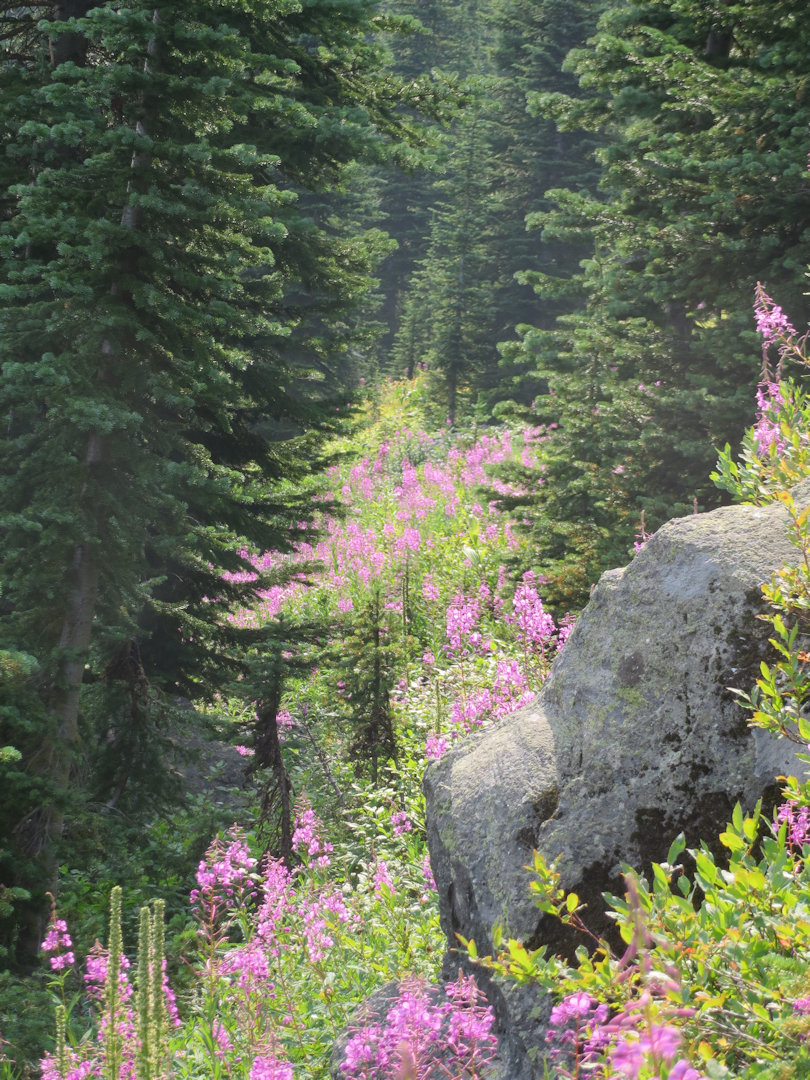
Fireweed below Nasukoin Lake, Aug 12, 2017 – W. K. Walker
We’re getting there, with a near-final version of the Flathead National Forest’s revised forest plan due out in October. Barring any significant further delays, the final version of the whole package should be released around March 2018.
The Flathead National Forest release of the final environmental impact statement and draft records of decision for the revised forest plan and forest plan amendments is now slated for October due to the need to coordinate schedules with the Washington, D.C., headquarters of the U.S. Forest Service.
In addition to addressing the effects of the Flathead National Forest revised forest plan, the final environmental impact statement includes discussion of the environmental consequences of the forest plan amendments to incorporate habitat-related management direction for the Northern Continental Divide Ecosystem grizzly bear population on the Helena-Lewis and Clark, Kootenai, and Lolo National Forests.
The final environmental impact statement and draft records of decision will be subject to a pre-decisional administrative review process, commonly referred to as the objection process. The Forest Service’s objection process provides an opportunity to have any unresolved concerns reviewed by the Forest Service prior to a final decision by the responsible official. Objections will be accepted only from those who have previously submitted substantive formal comments during an opportunity for public participation provided during the planning process and attributed to the individual or entity providing them.
For more information, please call Joe Krueger, plan revision team leader, at 406-758-5243 or visit www.fs.usda.gov/goto/flathead/fpr.
Also, here is a related letter from Chip Weber, Flathead National Forest Supervisor, explaining the reasons behind the delay in this stage of the forest plan revision . . .
Hello,
I would like to update you on the status of the final environmental impact statement for the revised forest plan and the draft records of decision. In addition to addressing the effects of the Flathead National Forest revised forest plan, the final environmental impact statement includes discussion of the environmental consequences of the forest plan amendments to incorporate habitat-related management direction for the Northern Continental Divide Ecosystem grizzly bear population on the Helena-Lewis and Clark, Kootenai, and Lolo National Forests.
We had planned to have the documents out for the pre-decisional administrative review process, commonly referred to as the objection process, in August but because of the need to coordinate schedules with the Washington, D.C., headquarters of the U.S. Forest Service, we now plan to release the documents in October. The schedule on our webpage has been updated to reflect this change.
I appreciate your patience and continued interest in the revised forest plan for the Flathead National Forest as well as the forest plan amendments for the Helena-Lewis and Clark, Kootenai, and Lolo National Forests. I greatly appreciate the commitment of the interested participants who have provided important contributions toward the development of the revised forest plan and amendments.
For further information about the project, contact Joe Krueger, plan revision team leader, at 406-758-5243. Thank you for your continued interest in the management of your public lands.
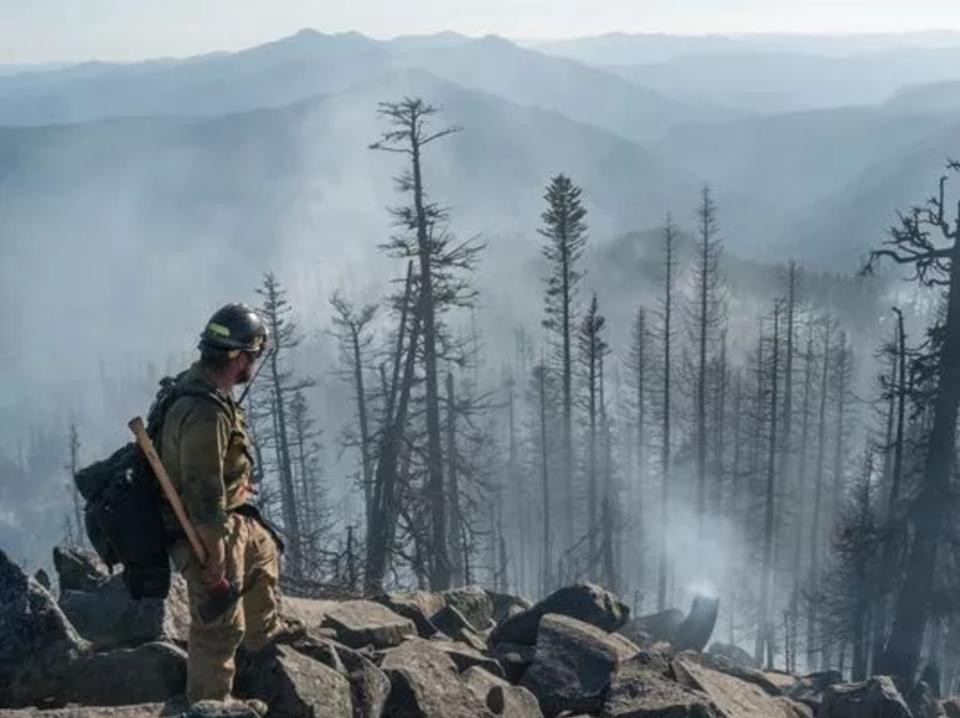
Whitewater Fire, 2017 – Willamette National Forest
The tone is a little overwrought, but this article has some good points about the risks of large crowds gathering along the solar eclipse path during peak wildfire season . . .
At the peak of wildfire season, all it takes is one errant spark to start a blaze, potentially leading to wildfires engulfing thousands of acres. It isn’t just the fire itself that’s dangerous, but also the smoke, the degraded air quality, and the potential closures of roads. In Oregon, in particular, over a million people are expected to travel to the seventy-mile-wide path of totality, in the heart of the hottest, driest part of the year. The entire pacific northwest, including parts of Oregon, Idaho, and Wyoming, has active wildfires going right now, threatening the air, roads, and general safety of residents and tourists alike…
The Flathead National Forest just released the following information report on the Cyclone Lake Fire. To view the original document (PDF format) click here. . . .
Location: 23 miles north of Columbia Falls, MT, in the Coal Creek State Forest. Detected: August 12, 2017, 4:30 p.m. Cause: Lightning Legal Description: NE, Section 21, T34N, R21W; Lat/Long: Lat. 48° 41’ 72”, Long. 114° 18’ 045” Current size: 36 acres Containment: 10% Resources on the fire: Crews: Two 20-person; Engines: 4 plus crew members; Water Tenders: 3; Dozers: 1; Helicopters: 2 Ownership: Montana Department of Natural Resources, Stillwater State Forest; Jurisdiction: Flathead National Forest; Other cooperators: Border Patrol, Flathead County.
FIRE SUMMARY: The Cyclone Lake Fire is burning in the Coal Creek State Forest in the North Fork area; the Flathead National Forest is responsible for wildfire response in that area. This fire is being managed with full suppression tactics, with fire fighter and public safety as a priority, in cooperation with Montana DNRC managers. The fire is burning in heavy timber, and in pockets of previously burned areas in 2000 and 2001, with dead and down fuels. There are no evacuation warnings in place.
CURRENT SITUATION:
August 12, when the fire was first detected by Cyclone Lookout, initial attack resources responded to the fire, including 4 engines, 1 dozer, 3 helicopters performing water drops, and retardant drops from air tankers. Extreme fire behavior was observed, including running, torching, and spotting. The Border Patrol assisted by securing the Forest Road #909.
Yesterday, August 13, dozer line was constructed around the fire where possible, and hand crews began building fire line to connect between the dozer lines. Water hoses with pumps were set up and used to cool the edges of the fire and mop up. A helicopter was also used to perform water drops. Fire behavior moderated with the cooler weather, with intermittent torching, creeping, and smoldering.
Today, plans are to continue constructing fire line with hand crews and do mop up work. The public is asked to not travel on Forest Road #909 from the junction with Forest Road #317 to the Cyclone Lookout Trailhead junction, as fire traffic is concentrated in that area.
The forest will share updated fire information if significant fire activity occurs.