Think conservation threats to the trans-boundary Flathead drainage have settled down? Maybe not…
The leader of one of four Ktunaxa First Nations in B.C. says she’s lost confidence in ongoing discussions between the nations and the federal and provincial governments over land management and potential conservation measures in the Elk and Flathead valleys.
“It boils down to trust,” Yaq̓it ʔa·knuqⱡi’it First Nation Nasuʔkin (Chief) Heidi Gravelle said in an interview. “We definitely do not have that sense of trust right now with how this process has broken down.”
Recent discussions have centred on two parcels of land known as the Dominion coal blocks, which together cover 200 square kilometres in the Elk and Flathead valleys in Ktunaxa Nation territory in southeast B.C. The Flathead Valley, in particular, is an area where Gravelle wants to see Indigenous-led conservation.
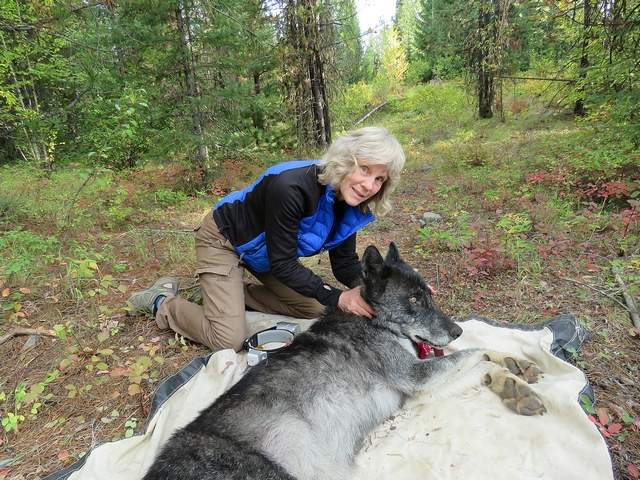
Biologist Diane Boyd with a tranquilized wolf in the field
Our own Diane Boyd got some more ink, this time in a long-form article with lots of photos published in ‘Nautilus’…
Diane Boyd walked along the North Fork of the Flathead River. It was a clear blue summer day, and the wolf biologist relished being in this Rocky Mountain valley in northwestern Montana. She set foot here 45 years ago to track the first known gray wolf to wander into the western continental United States from Canada in decades. Humans had exterminated the last of them in the 1930s.
The river wove through pine, aspen, and willow trees that rose along the edge of a sprawling grass meadow. The mountain peaks in the distance were topped with snow. Boyd grew up in suburban Minnesota, where she was the neighborhood kid who could be found at the wild edges of the subdivision putting caterpillars in jars.
“I always wanted to go more and more wild in my life—wildlife, wild places—and it doesn’t get a lot wilder than here,” Boyd said to me last summer, as we walked through the quiet meadow.
At age 69, dressed in jeans, running shoes, and a T-shirt picturing a dog lazing on a lake pier, Boyd seemed very much the innately independent biologist who settled here at age 24. She spoke with a directness that had little room for sentimentality. The meadow area is called Moose City and was originally a 1910s homesteader ranch with six log cabins. Boyd lived alone in one of the tiny cabins without electricity or running water for 12 years.
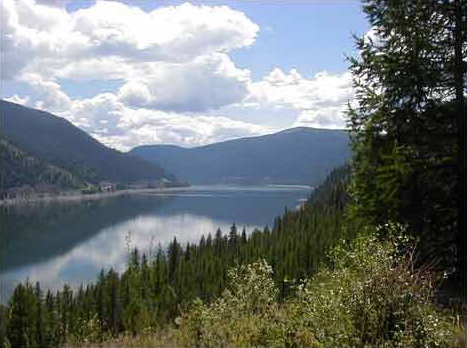
Lake Koocanusa – Ryan Fosness (Idaho Water Science Center)
Here’s some good news to start the week. The Elk-Kootenai watershed cross-border water pollution from Teck Resources’ coal mining operations has finally been referred to the International Joint Commission (IJC). The Flathead Beacon has excellent coverage . . .
Federal governments in Canada and the U.S. have agreed to ask the International Joint Commission (IJC) to study and take steps to mitigate the inflow of mining pollution to the Elk-Kootenai River watershed through a joint reference, signaling a breakthrough in bilateral talks that have stalled for years, even as the company that owns the mines expands its footprint along the border with Montana.
The agreement was announced Monday by tribal and First Nation governments in Montana, Idaho and British Columbia (B.C.) who cheered the development after years of intensifying pressure on the U.S. and Canada. The reference means that an independent governance body representing both nations will convene to craft solutions to address the contaminants spilling into a watershed that crosses the international boundary at Lake Koocanusa and spans traditional Aboriginal territory.
The federal governments of both U.S. and Canada also confirmed the reference on Monday and issued a joint statement from the Ambassador of Canada to the United States, Kirsten Hillman, and the Ambassador of the United States to Canada, David L. Cohen. According to Pierre Cuguen, a spokesperson for Global Affairs Canada (GAC), both countries “have reached an Agreement-in-Principle (AIP) on next steps to further bilateral cooperation to reduce and mitigate the impacts of water pollution” in the transboundary watershed.
Katy Spence of the Montana Environmental Information Center (MEIC) recently published a wonderful interview with Roger Sullivan, who happens to be a board member of both MEIC and our own NFPA. Roger has also been involved with the NFPA from the very beginning.
This piece was originally published in the MEIC’s quarterly Down to Earth publication and is used here with permission. To see the article in full context and with better formatting, you can download the entire newsletter here.
Roger Sullivan questions witnesses at the Held v. State of Montana trial in June. Photo via Roger Sullivan.
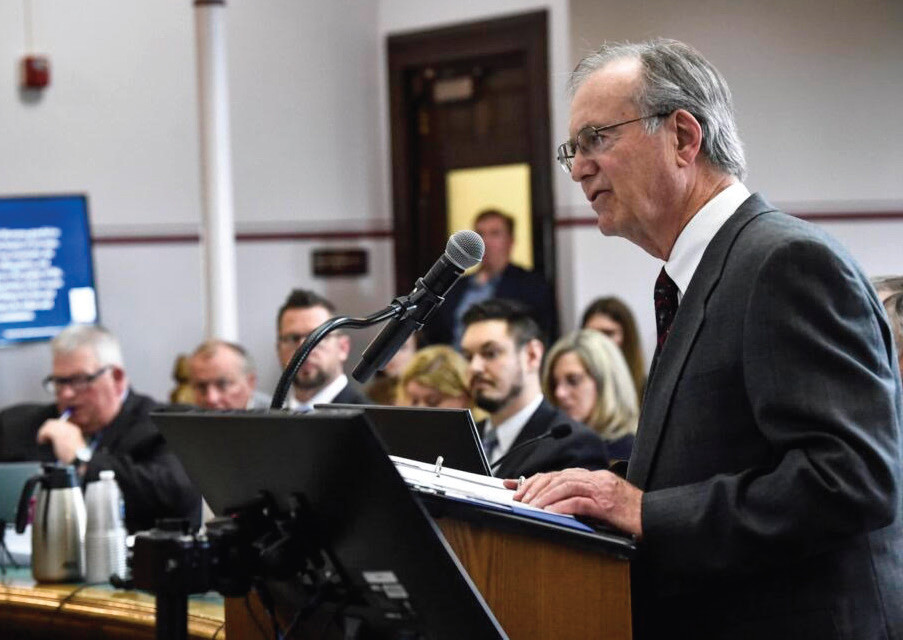
MEIC is fortunate to have a number of friends and allies that we can call upon for support, encouragement, or assistance. This year, we feel especially fortunate to know our board member, mentor, and friend Roger Sullivan. Roger has a deep history in Montana environmental law and justice. For more than 35years, Roger has advocated for Montanans and our constitutional right to a clean and healthful environment. He has successfully represented dozens of Libby residents sickened by exposure to asbestos from the W.R. Grace mining operations. Most recently, Roger was one of the attorneys in the landmark youth climate trial Held v. State of Montana.
Roger has served on MEIC’s board multiple times and has represented MEIC and other public health and environmental groups in innumerable cases. He tirelessly advises and mentors young environmental lawyers in the state, including many of whom have worked with (or still work with) MEIC. Continue reading Extraordinary hope: a conversation with Roger Sullivan→
The expected result, but still good to know for certain . . .
Flathead County did not receive federal funding for an environmental analysis to look at paving a portion of the North Fork Road, county public works director Dave Prunty confirmed Monday.
The county sought Federal Lands Access Program monies to do a National Environmental Policy Act review of improving the road from just north of Glacier Rim to the Camas Road entrance to Glacier National Park earlier this year, but the analysis wasn’t funded.
NFPA board member Roger Sullivan was involved in this case . . .
The Montana Supreme Court has halted an expansion of a Westmoreland-operated mine that supplies the Colstrip power plant with coal. The court’s decision vacated an 8-year-old permit that allowed Westmoreland to pull 12 million tons of coal from the Rosebud Mine located in southeastern Montana.
The environmental concern at issue related to water quality impacts to the East Fork of Armells Creek, an intermittent stream that flows into the Yellowstone River. The Montana Environmental Information Center and the Sierra Club argued that allowing strip-mining operations in AM4, a 49-acre parcel in Area B of the mine, would result in material damage to the waterway by increasing the creek’s salinity to the detriment of one of its established beneficial uses: the support of aquatic life.
The order, authored by Chief Justice Mike McGrath and signed by the court’s six other justices, largely affirmed a lower court’s ruling. It nullifies the AM4 permit, disallowing mining in that area. Prior to arriving at the Montana Supreme Court, DEQ’s decision in 2015 to approve the expansion had been weighed by the Board of Environmental Review (a quasi-judicial, governor-appointed body) and the Sixteenth Judicial District Court.
When Rich Janssen flips through the 2023 calendar, he sees months of missed opportunities to tackle a multi-national environmental crisis that has united tribal and First Nation governments spanning the U.S.-Canada border as few causes have before.
Last year’s calendar isn’t much different. Neither is the year before that.
For decades, open-pit coal mines located in the Elk Valley of southeast British Columbia (B.C.) have leached selenium, nitrate, and sulphate into the Elk and Kootenai rivers. Since 2012, Indigenous leaders from the Ktunaxa Nation, the Confederated Salish and Kootenai Tribes (CSKT) and the Kootenai Tribes of Idaho (KTOI) have been urging Canada and the U.S. to address the water quality crisis.
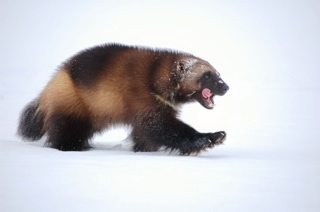
The North American wolverine will receive long-delayed federal protections under a Biden administration proposal released Wednesday in response to scientists warning that climate change will likely melt away the rare species’ snowy mountain refuges.
Across most of the U.S., wolverines were wiped out by the early 1900s from unregulated trapping and poisoning campaigns. About 300 surviving animals in the contiguous U.S. live in fragmented, isolated groups at high elevations in the northern Rocky Mountains.
In the coming decades, warming temperatures are expected to shrink the mountain snowpack wolverines rely on to dig dens where they birth and raise their young.
The decision Wednesday by the U.S. Fish and Wildlife Service follows more than two decades of disputes over the risks of climate change, and threats to the long-term survival of the elusive species. Officials wrote in the proposal that protections under the Endangered Species Act were needed “due primarily to the ongoing and increasing impacts of climate change and associated habitat degradation and fragmentation.”
Tristan Scott at the Flathead Beacon posted an excellent write-up on this winter’s set of special use permit proposals for the Flathead National Forest.
The Flathead National Forest is processing a flurry of requests for outfitting and shuttle services this winter, with proposals ranging from guided snow-bike, snowmobiling, skiing and snow-shoe tours to therapeutic “forest bathing.”
Officials with the Flathead National Forest (FNF) are soliciting public input on requests for nine temporary special-use permits authorizing outfitting and guiding activities from approximately Dec. 1, 2023, through May 15, 2024. According to a news release announcing the proposals, each request meets the criteria to receive a special-use permit under a categorical exclusion, which is the least-intensive form of environmental review.
Eight of the proposed special uses have been approved for one-year permits in the past; however, each proposal requires approval on an annual basis. One new proposal by Glacier Nordic Club is also under review.