The U.S. plans to propose removing Montana’s grizzlies from endangered species act protection this fall . . .
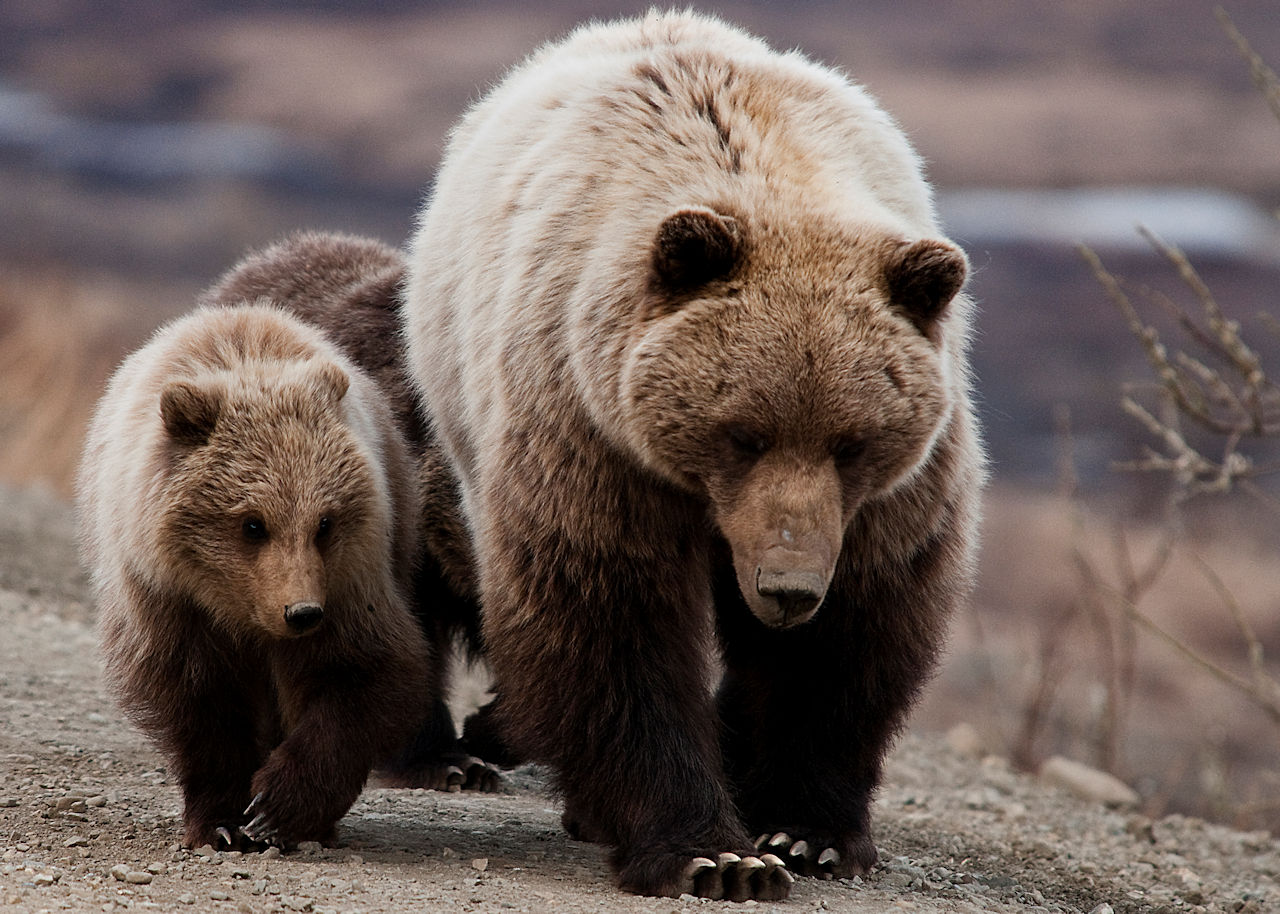
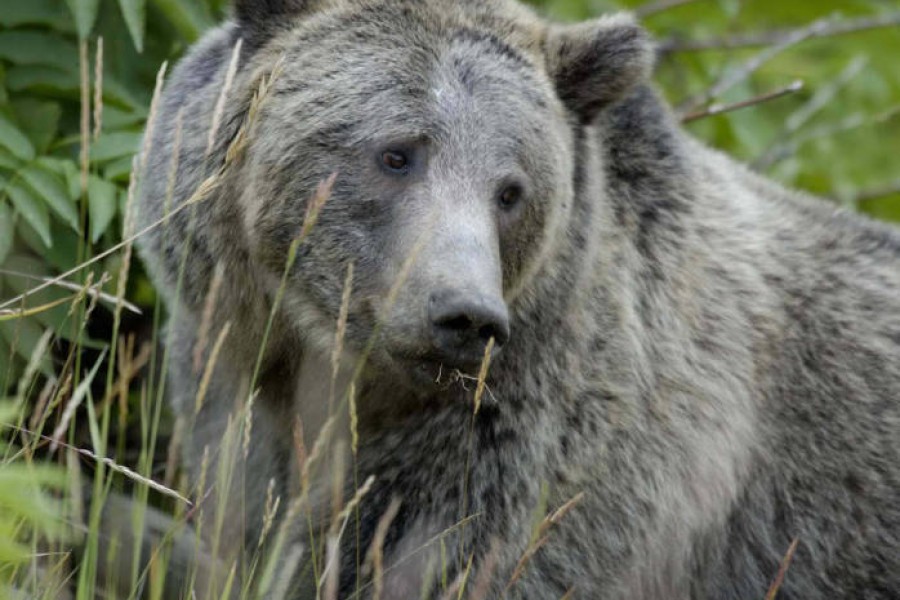
U.S. officials expect to release a proposal this fall that would remove federal protections for grizzly bears in northwestern Montana, home to the largest grizzly population in the Lower 48.
The plan was released Wednesday as part of the U.S. Interior Department’s regulatory agenda for coming months.
An estimated 1,000 bears occupy at least 22,000 square miles in northwestern Montana centered on Glacier National Park.
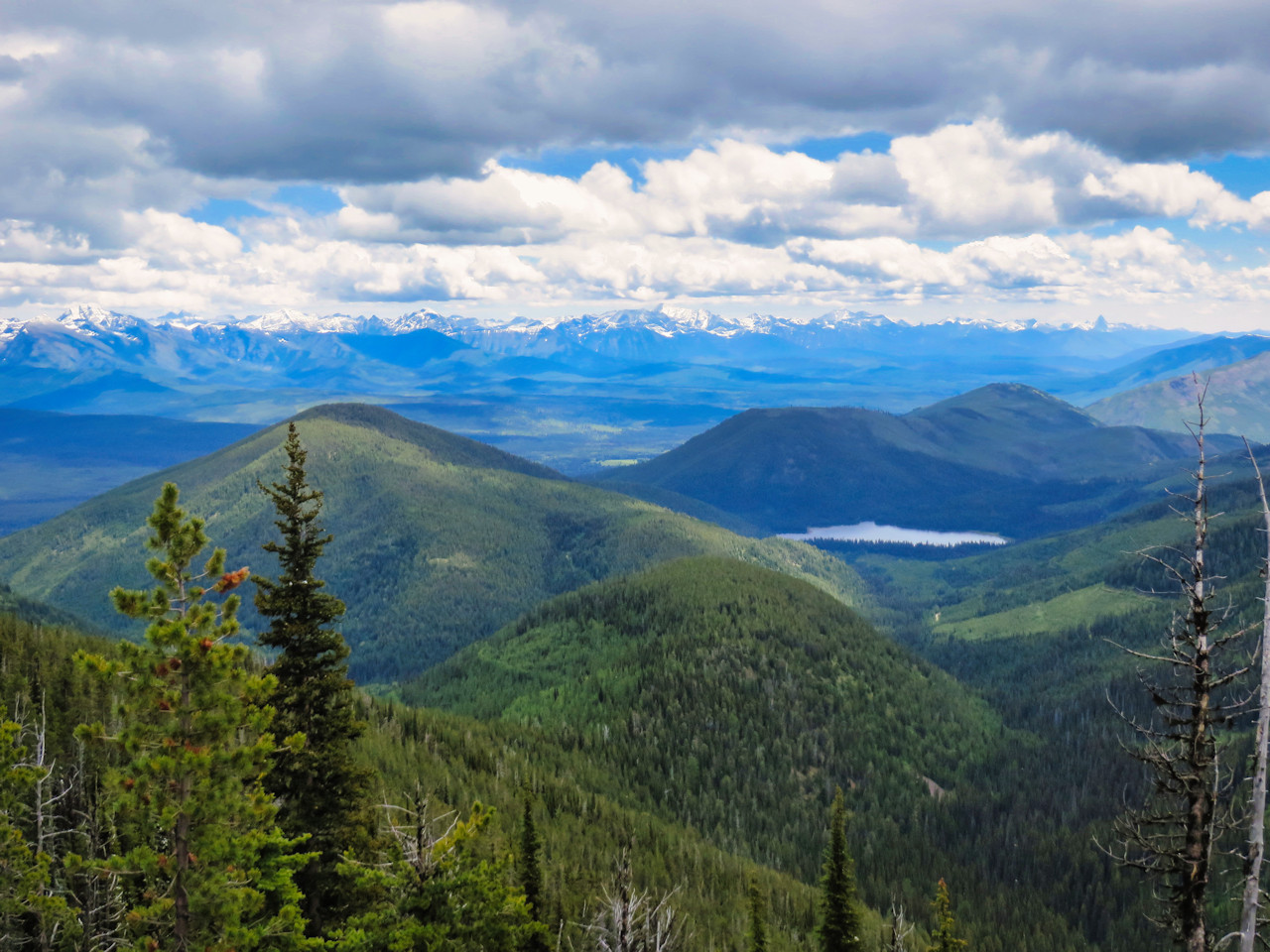
Three types of public lands: Flathead National Forest is in the foreground, left and right; Montana’s Coal Creek State Forest, including Cyclone Lake, is in the middle distance; Glacier National Park stretches across the background.
No surprises here. A pretty well-designed survey by the University of Montana revealed that people who live in Montana really like their public lands.
But, in a related story, Sen. Steve Daines and Rep. Greg Gianforte say they don’t believe it because “they had the support of local county commissions” for legislation to close down several wilderness study areas (WSA’s). You just can’t make this stuff up.
Anyways, here’s the lead-in for a good article on the survey. A link for the WSA issue follows . . .
The University of Montana 2018 Public Lands Survey showed wide, bipartisan appreciation for the state’s wild places.
“The takeaway for me is, support for policy to protect public land is going up, not down,” said Rick Graetz, director of UM’s Crown of the Continent Greater Yellowstone Initiative, which commissioned the survey. “That’s true on both sides of the aisle. Democrats, Republicans and Independents all see the value of it. That wasn’t true even 10 years ago when we started our program.”
The poll found four out of five Montanans considered public lands an economic benefit to the state, while just 3 percent said their presence hurt the economy.
The next in a series of meetings on developing a comprehensive river management plan for the three forks of the Flathead River is scheduled for May16. It will be held from 6:00pm to 8:00pm, at the at the Heaven’s Peak room in the Cedar Creek Lodge, Columbia Falls.
Flathead Wild and Scenic River: Comprehensive River Management Plan Meeting to Discuss Water Quality
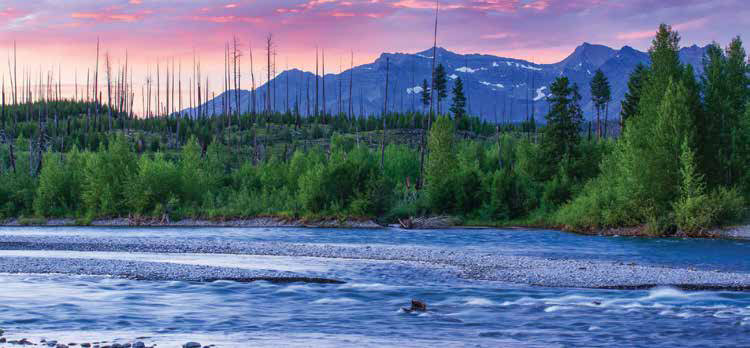
Kalispell, MT. May 3, 2018- The Flathead National Forest, in coordination and partnership with Glacier National Park, is in the process of preparing a comprehensive river management plan (CRMP) for the 3-forks of the Flathead River.
A series of resource-focused public meetings will be held over the next six months, beginning on May 16th. This meeting will focus on water quality conditions, management, and concerns as part of the efforts to develop the CRMP. The meeting will be held at the Heaven’s Peak room in the Cedar Creek Lodge, Columbia Falls, Montana. The meeting will be from 6 pm to 8 pm and include presentations on current water quality information and facilitated discussion on how water quality should be addressed in the CRMP. For those new to the comprehensive river management plan process, an introductory presentation on the Wild and Scenic Rivers Act will begin at 5:45 pm. Future meeting topics and a preliminary schedule will be posted on the Flathead National Forest website.
The CRMP will address the current status of the river and the surrounding resources, outline goals and desired conditions, determine user capacity and create a monitoring plan for the next 15 to 20 years. In order to reflect the diverse users of the river and surrounding lands, the public is encouraged to help craft the future management of this designated wild and scenic river to ensure the river and its outstanding resources are maintained and protected.
Caribou in Jasper National Park, Canada -Photo by Annie K on Unsplash
From the New York Times comes another object lesson on the effects of unbalanced industrial development . . .
The battle to save the so-called gray ghosts — the only herd of caribou in the lower 48 states — has been lost.
A recent aerial survey shows that this international herd of southern mountain caribou, which spends part of its year in the Selkirk Mountains of northern Idaho and Washington near the Canadian border, has dwindled to just three animals and should be considered “functionally extinct,” experts say.
The Selkirk herd had been disappearing for the last several years.
A provision in the recent federal budget bill requires the EPA to get off the dime and work with U.S. and Canadian agencies to do something about mining waste in the Kootenai Watershed . . .
Stemming the flow of dangerous mining contaminants spilling from Canada into the Kootenai River watershed was listed as a priority in the 2,232-page government-spending bill signed by President Donald Trump, marking a hard-won victory for advocates of the endangered river and the communities it supports.
Inclusion of the beleaguered river system in the massive spending bill is another in a recent series of significant steps toward tackling a decade-long problem brewing in the transboundary Kootenai River watershed, where toxic contaminants leaching from upstream Canadian coal mines in the Elk River Valley of British Columbia continue to threaten Montana’s prized aquatic ecosystems.
Spearheading the latest charge to bring attention to the Kootenai is U.S. Sen. Jon Tester, D-Montana, who helped draft the annual budget bill as a member of the powerful Senate Appropriations Committee, and who for years has been mounting pressure on the U.S. and B.C. governments to develop a bilateral water quality standard for mining contaminants, including selenium, sulfates and nitrates.
Here’s a well-researched piece by New Yorker staff writer Carolyn Kormann discussing U.S. Secretary of the Interior Ryan ZInke’s efforts to open up more public lands for resource development. Kudos to Debo Powers for spotting this one . . .
Not long ago, the Bureau of Land Management, an agency within the U.S. Department of the Interior, began distributing “vision cards” to its employees. The front of each card features the B.L.M. logo (a river winding into green foothills); short descriptions of the Bureau’s “vision,” “mission,” and “values”; and an oil rig. On the flip side is a list of “guiding principles,” accompanied by an image of two cowboys riding across a golden plain. Amber Cargile, a B.L.M. spokeswoman, told me that the new cards are meant to reflect the agency’s “multiple-use mission on working landscapes across the West, which includes grazing, energy, timber, mining, recreation, and many other programs.” Individual employees, she added, can opt to wear or display the cards at their own discretion. But, according to the advocacy group Public Employees for Environmental Responsibility, which obtained photos of the cards and shared them with the Washington Post, supervisors in at least two B.L.M. field offices have been verbally “advising that employees must clip them to their lanyards.” Some workers, speaking to the Post anonymously, said that they felt they had no choice but to comply.
Hecla Mining wants to dig a couple of mines along the edge of the Cabinet Mountains Wilderness. Montana wants reimbursed for cleaning up an old mess first. Hecla is challenging this in court . .
An Idaho mining company was due in a Montana courtroom on Thursday to challenge its designation by state officials as an industry “bad actor” because of pollution tied to its CEO.
Hecla Mining Co. wants a judge to block the Montana Department of Environmental Quality from suspending permits for two new silver and copper mines the company has proposed beneath the Cabinet Mountains Wilderness, a remote, 147-square mile (380-square kilometer) expanse of glaciated peaks near the Idaho border.
[April 12,] State District Judge Matthew Cuffe scheduled afternoon arguments in the case.
The Coeur d’Alene-based company and its president and CEO, Phillips S. Baker, Jr., were issued violations letters last month because of ongoing pollution at mines operated by Baker’s former employer.
Blue Joint Wilderness Study Area in western Montana – photo by Zack Porter
Amy Robinson, Northwest Montana field director for the Montana Wilderness Association, has a well-written piece in the Flathead Beacon on Wilderness Study Areas . . .
Lately we’ve heard a lot from our politicians about public lands and specifically Wilderness Study Areas. I’ve worked on public lands challenges, and wilderness protection, for nearly six years in Northwest Montana. This is a topic I know something about.
What are these Wilderness Study Areas? These areas are the headwaters for our communities, our backyard playgrounds, our open, quiet, wildflower-filled prairies, buttes, breaks and badlands. In some places, grizzlies dig for army cutworm moths, wolverines roam free, wildlife graze on winter range, and people hunt, fish, hike, climb, ski, backpack and generally find opportunity for rejuvenation. These areas were protected by Congress in 1977.
What’s it all about? Three bills were recently introduced to Congress. One by Sen. Steve Daines and two by Rep. Greg Gianforte. Together, these bills remove protection from 29 different areas totalling over 800,000 acres across our state. These are public lands that are managed either by the U.S Forest Service or Bureau of Land Management. All of these areas have historically been recognized as special and worthy to be considered, and managed, for future Wilderness designation. These protections do matter and are above and beyond the roadless rule. This is something we should all care about and pay attention to.
Forests do a great deal of good for the planet — from purifying our air, to providing habitat for wildlife, protecting watersheds, preventing soil erosion, and more.
For International Day of Forests this year, we wanted to celebrate the beauty and magnitude of forests across the entire globe. So we embarked on downloading imagery of all forests captured by our fleet of Dove satellites over the course of a single day.
Grizzly Bear – U.S. Fish and Wildlife Service-Terry Tollefsbol, NPS
NFPA member Carol “Kelly” Edwards has had an op-ed published in several local and regional papers advocating against hunting of grizzly bears . . .
Letter written to Gov. Matt Mead of Wyoming…
As a neighboring Montana citizen, I am so proud of my state wildlife officials for having resisted pressure from “special interest groups” that somehow believe that they should have the right to shoot the very creatures that the rest of us are all spending our tax dollars to save. We want them, and the places they need in order to survive and thrive, protected. If you like all of your bears stuffed, hanging on walls, or in captivity, then you belong in a museum, a zoo, or a bar. You don’t belong in charge of live bears or their living conditions.
Our states can continue to thrive and expand our economic opportunities if we just take care of these critters and keep the things and places that live only in our northwest Rocky Mountain areas alive and healthy. They are a magnificent heritage.
These bears amaze people. Visitors come from all over the world for a chance to see one of these magnificent creatures. They, in themselves, not to mention our other magnificent top predators, and all those who form the chain of wildlife, create a base for an ever-increasing economy for those states that still enjoy their presence. You, of all people know that by far the large majority of our state earnings come from out of state visitors, and people who move here for the “quality of life” (read: clean air, water, beautiful scenery and access to the awesome public lands, natural parks and wildlife that live in them). It is a fiction that we have to sell “kill permits” to rich hunters, in order to keep wildlife around. This is just robbing Peter to pay Paul, a silly strategy no matter where it’s applied.
Think of our states and their traditional economies: mining, timber, hunting and some cattle and sheep ranching. Any way, you see it, no matter whose fault it is or isn’t, the climate and the shortage of water, especially in the west of the country, is making agriculture and animal husbandry very difficult to impossible, and it’s getting worse all the time. What happens when all the ore, oil, gas, forests and grazing and water for the animals are gone? Are we all just going to up and leave the stubble and rubble and poisoned water?
Our state needs a modern economy, a sustainable economy. It’s time to help the rest of us preserve a valuable resource that belongs to, and can earn a living for, all of us here in Montana, Wyoming and Idaho. Don’t kill the golden goose, er, bear.