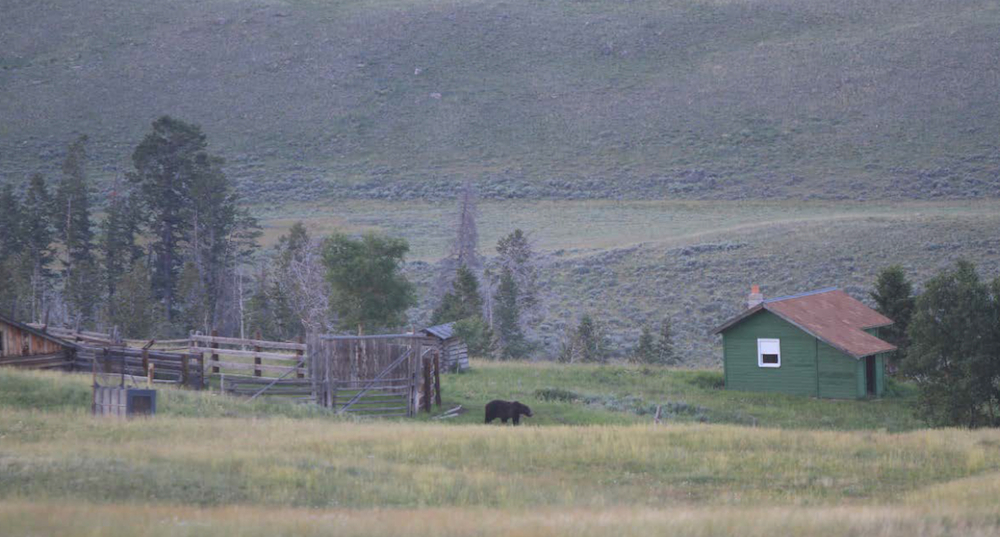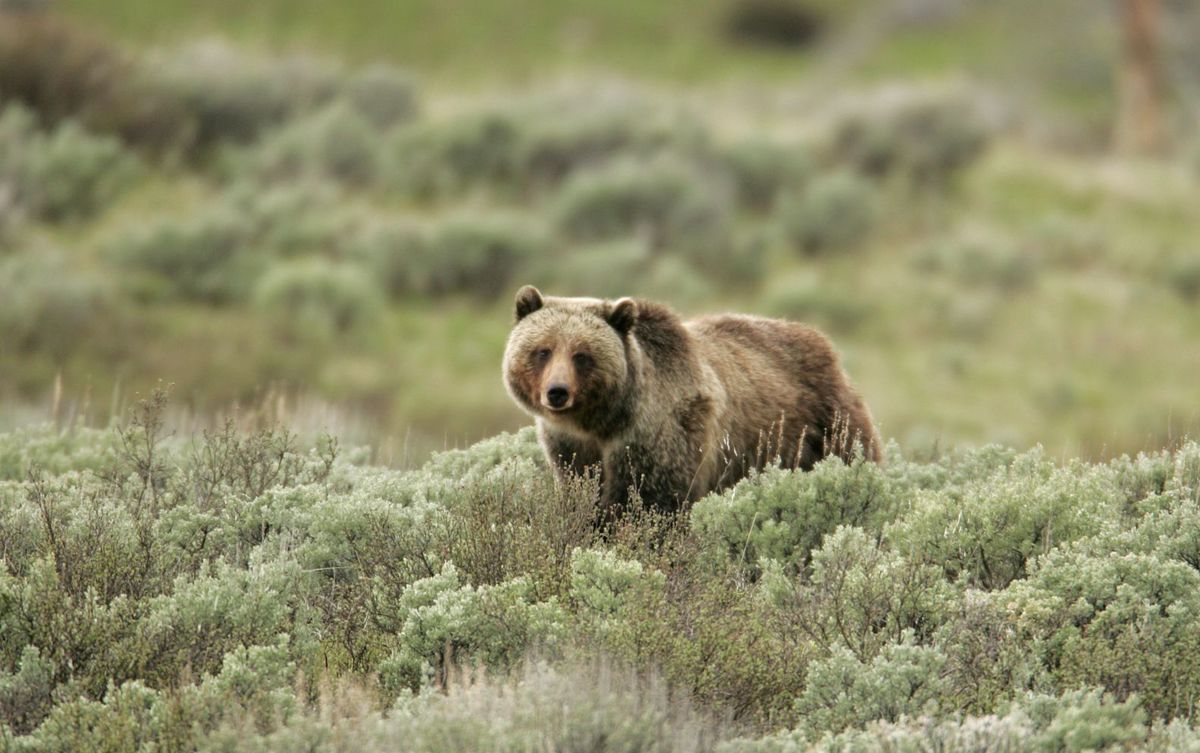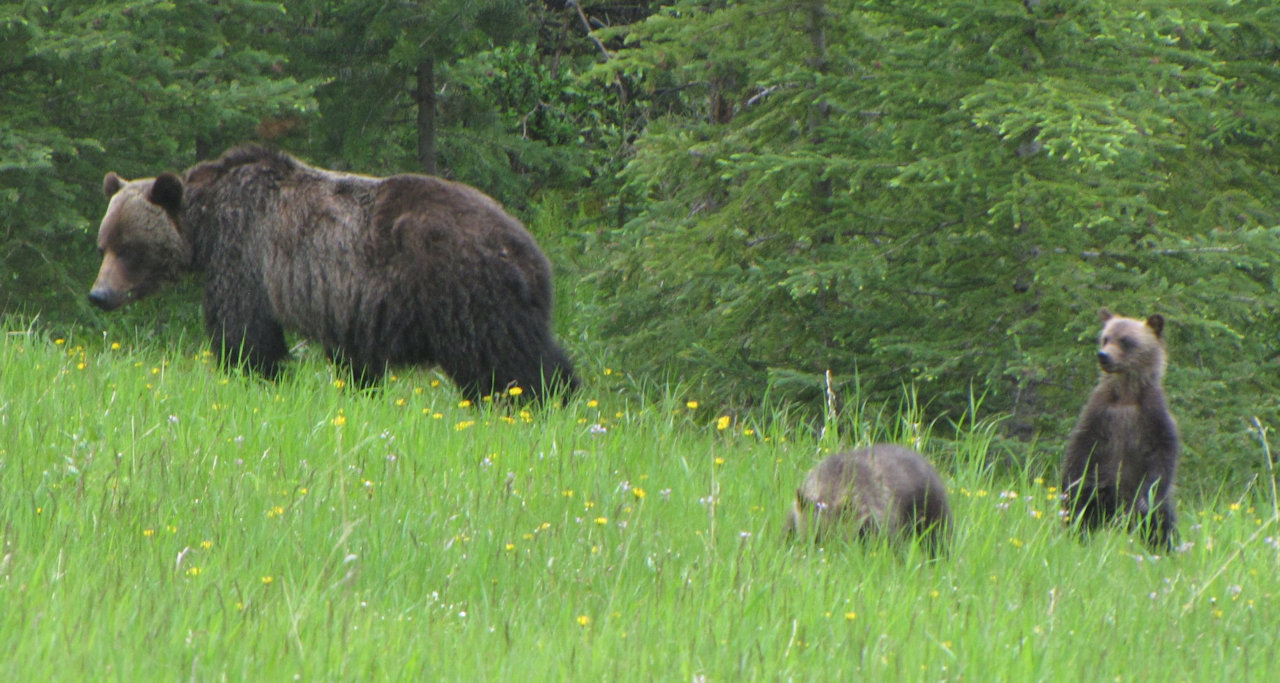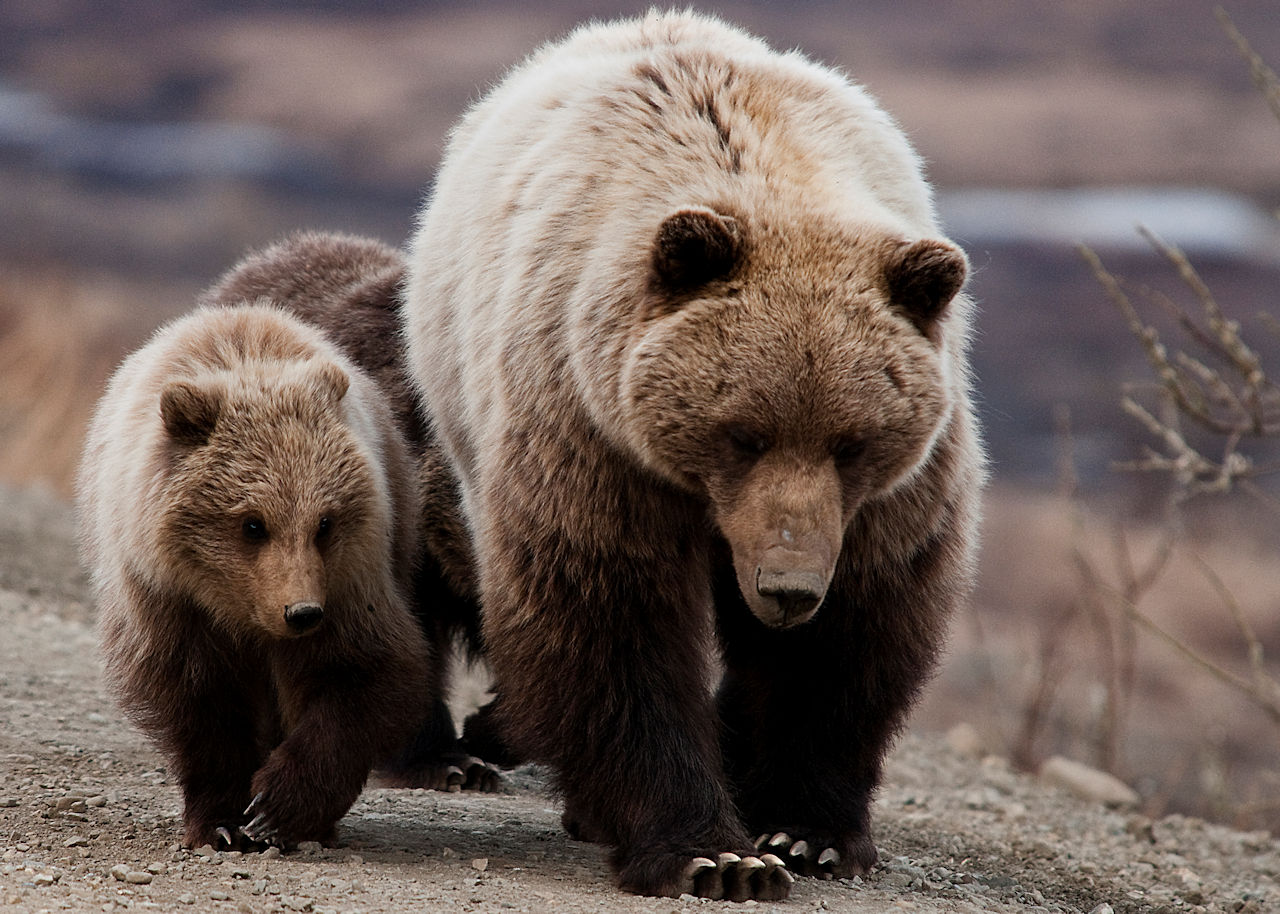
Here’s a pretty good overview of Wyoming’s recently approved grizzly bear hunt . . .
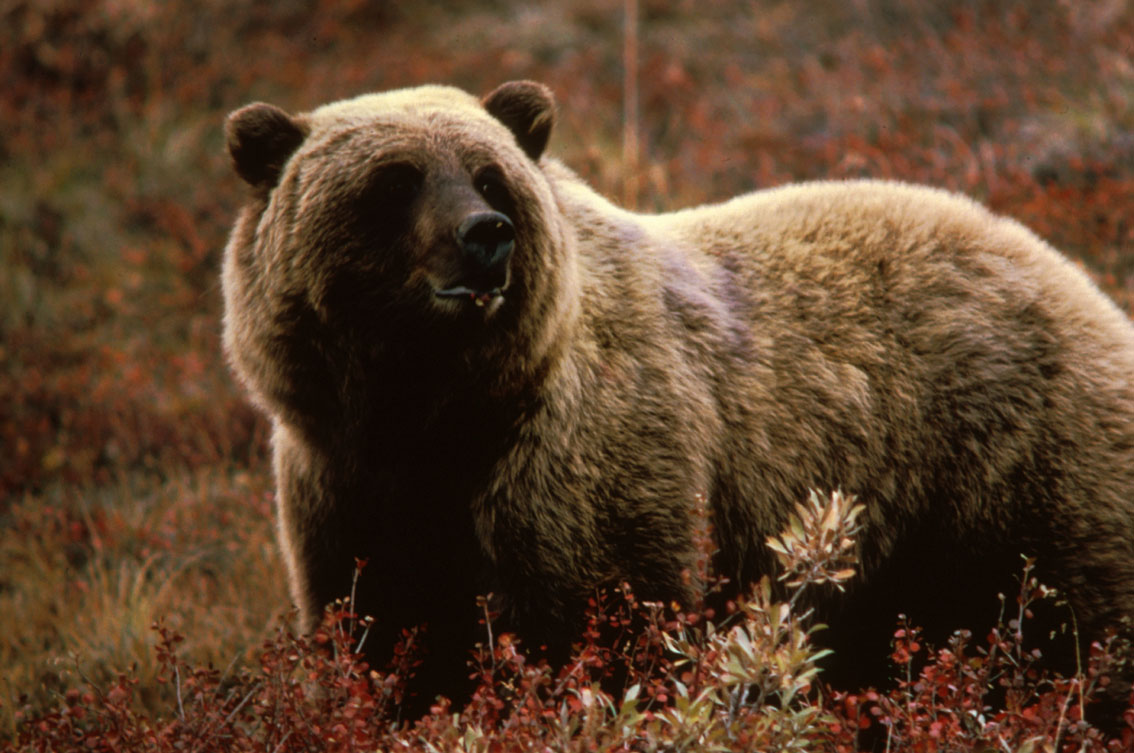
A debate over whether the Yellowstone ecosystem’s grizzly bear population can thrive while being hunted will be put to the test this fall after Wyoming officials on Wednesday approved the state’s first grizzly hunt in 44 years.
The hunt, approved 7-0 by the Wyoming Game and Fish Commission, could allow as many as 22 grizzlies to be killed in a wide area east and south of Yellowstone and Grand Teton national parks.
Hunt proponents and opponents made last-minute pleas before the commission, which held several public meetings on the hunt around the state and tweaked the hunt rules in response to some previous comments.
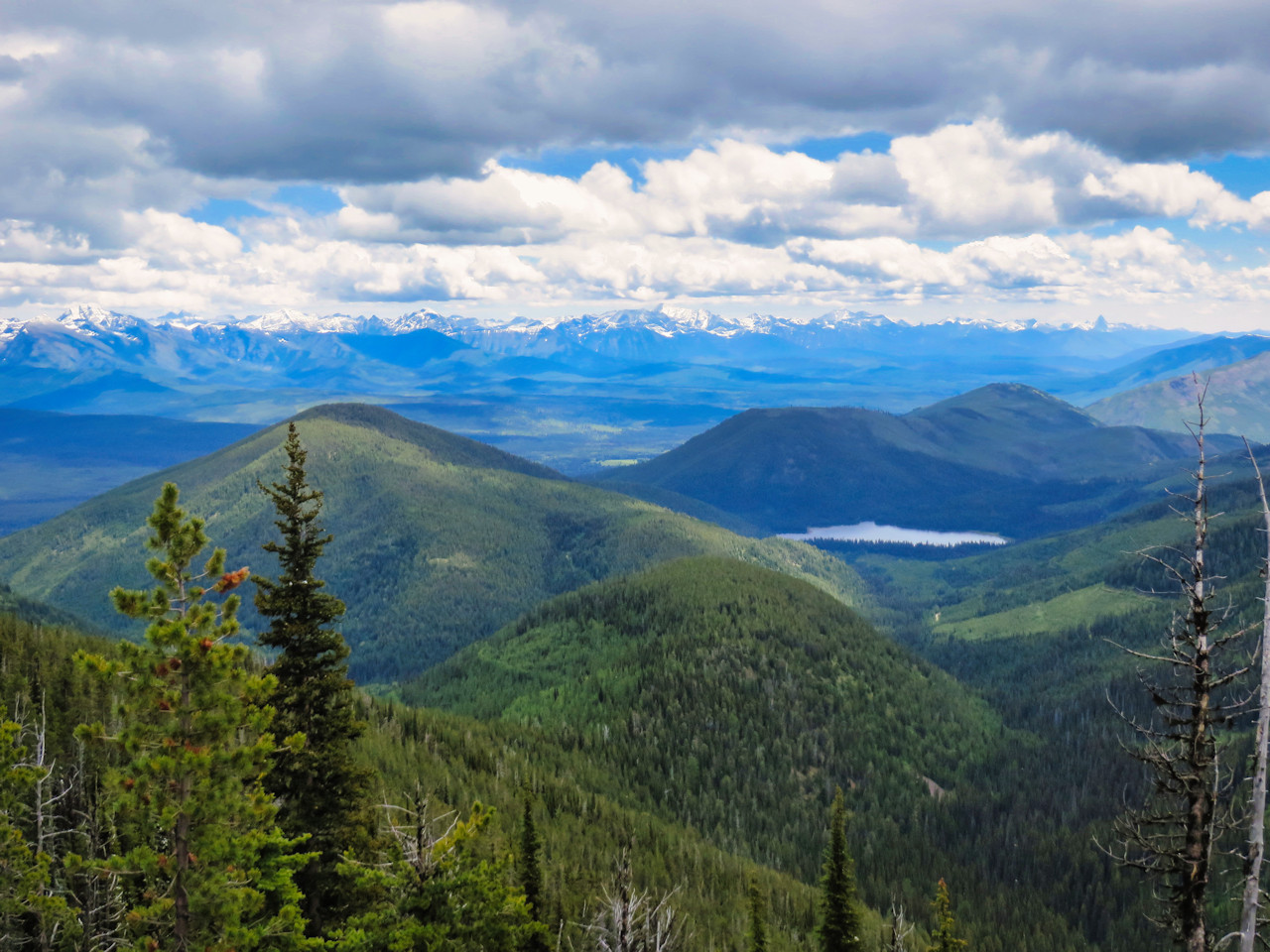
Three types of public lands: Flathead National Forest is in the foreground, left and right; Montana’s Coal Creek State Forest, including Cyclone Lake, is in the middle distance; Glacier National Park stretches across the background.
The Flathead Beacon has posted a couple of excellent, well-reasoned op-eds over the past week.
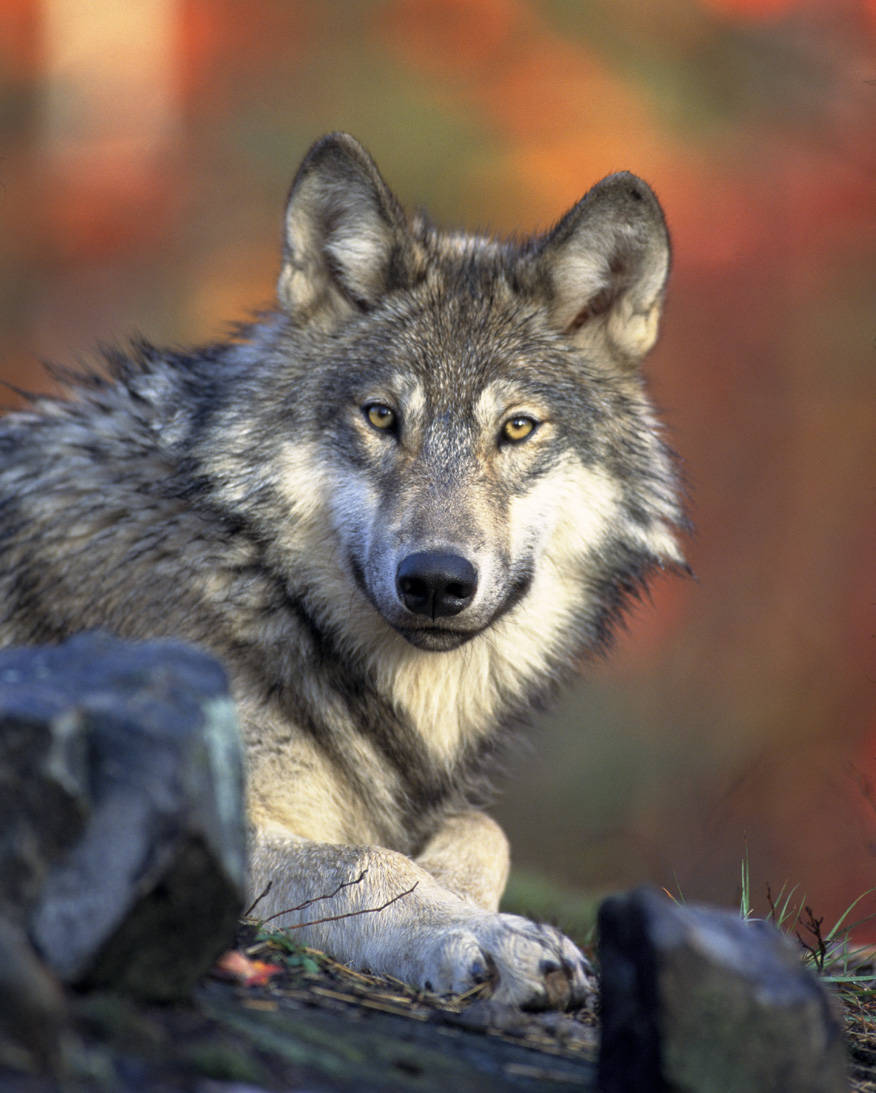
Montana Fish, Wildlife and Parks released its annual wolf population estimate recently. Short version: They think there are abut 900 wolves in the state now, up from 851 a year earlier . . .
There are roughly 900 wolves in Montana according to the 2017 Montana Gray Wolf Program Annual Report, the 13th consecutive year that Montana has exceeded wolf recovery goals.
FWP now estimates wolf numbers using a method called Patch Occupancy Modeling. The old way of trying to count wolves from an airplane became a less accurate picture of wolf numbers as the wolf population grew beyond the agency’s ability to count them. Additionally, the old method was expensive and took a lot of staff time.
FWP has used POM estimates along with the old minimum counts for several years. POM uses wolf sightings reported to FWP during annual deer hunter surveys, known wolf locations, habitat variables and research-based wolf territory and pack sizes to estimate wolf distribution and population size across the state. The most recent POM estimates were 961 wolves in 2015 and 851 in 2016. Data has been gathered for 2017 estimates and analysis will take place during summer 2018.
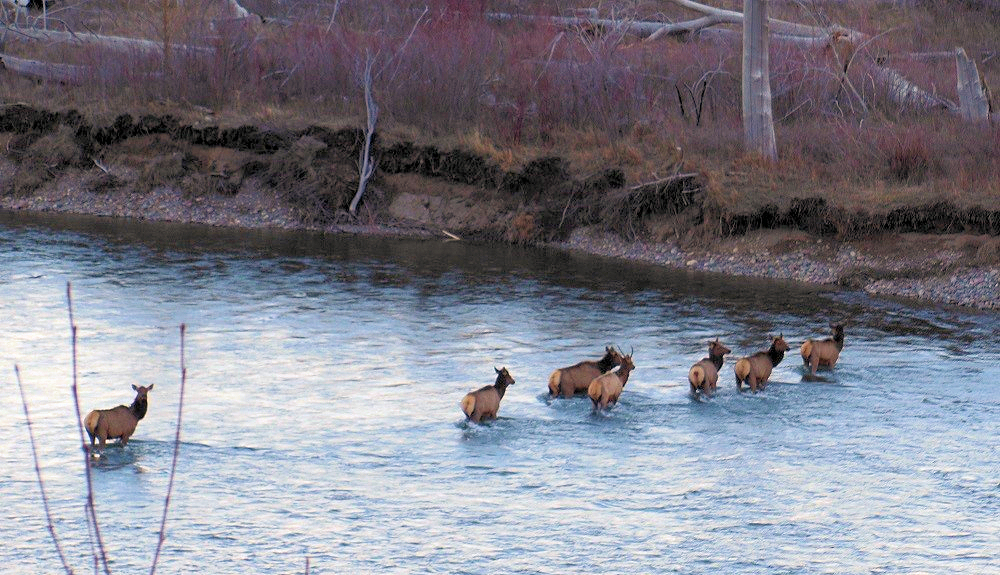
Elk Crossing North Fork of Flathead River, north of Camas Bridge, March 4, 2016 – Greg Evans
The Flathead Beacon has a good article on conservation project funding in the valley . . .
A slate of conservation projects are nearing completion or recently came to fruition in the Flathead Valley, underscoring the importance of private donations and a federal program that funds a suite of conservation projects, including land acquisition and grants to state and local entities for everything from conservation easements to municipal parks.
Recently, the Land and Water Conservation Fund helped complete the next phase of a 13,400-acre conservation easement northwest of Whitefish Lake, providing $2 million for the final piece of the multi-phased Whitefish Lake Watershed Project, which helps protect wildlife, promote timber production, and allow public access for hunting, fishing, hiking, mountain biking, and other outdoor pursuits.
The conservation and recreation community has praised the easement because it protects critical fish and wildlife habitat and provides continued public access for outdoor recreation, while also securing the city of Whitefish’s water supply, 20 percent of which is drawn from Whitefish Lake.
The Flathead Beacon has a good story on the plans to remove grizzly bears from the Endangered Species List in this corner of Montana . . .
The U.S. Fish and Wildlife Service is expected to announce plans this September to delist grizzlies from the federal Endangered Species Act in the Northern Continental Divide Ecosystem, the rugged chunk of Northwest Montana that includes Glacier National Park, parts of five national forests and two reservations.
It’s also believed to be home to the largest population of grizzly bears in the lower 48 states.
The strategy to move grizzlies from federal to state control has long been in the works, and bear managers are now coordinating the scientific and policy research necessary to propose a delisting rule.
“We have believed this population has likely met the demographic recovery goals for many years now,” Hillary Cooley, U.S. Fish and Wildlife Service (USFWS) grizzly bear recovery coordinator, said. “We’ve met our recovery goal and we’re probably well above it, so this is a good time to start evaluating it formally.”
Elk Crossing North Fork of Flathead River, north of Camas Bridge, March 4, 2016 – Greg Evans
The next in a series of meetings on the Flathead River Comprehensive Management Plan is on Wednesday, May 16 at the Heaven’s Peak Room of Cedar Creek Lodge in Columbia Falls from 6 to 8 p.m. . . .
On the 50th anniversary of the Wild and Scenic Rivers Act, the Flathead National Forest, in coordination with Glacier National Park, is seeking public input as it develops a comprehensive management plan for the three forks of the Flathead River.
A series of six public meetings are scheduled over the next six months. The first meeting, on May 16 [actually, the first meeting was in March], will focus on water-quality conditions, management and concerns on the Middle, South and North forks of the Flathead River. It will be held at the Heaven’s Peak Room of Cedar Creek Lodge in Columbia Falls from 6 to 8 p.m.
The meeting will include presentations on current water-quality information, as well as “facilitated discussion on how water quality should be addressed” in the comprehensive river management plan (CRMP), according to the U.S. Forest Service. A brief introductory presentation to the Wild and Scenic Rivers Act will begin at 5:45 p.m.
The U.S. plans to propose removing Montana’s grizzlies from endangered species act protection this fall . . .
U.S. officials expect to release a proposal this fall that would remove federal protections for grizzly bears in northwestern Montana, home to the largest grizzly population in the Lower 48.
The plan was released Wednesday as part of the U.S. Interior Department’s regulatory agenda for coming months.
An estimated 1,000 bears occupy at least 22,000 square miles in northwestern Montana centered on Glacier National Park.
Three types of public lands: Flathead National Forest is in the foreground, left and right; Montana’s Coal Creek State Forest, including Cyclone Lake, is in the middle distance; Glacier National Park stretches across the background.
No surprises here. A pretty well-designed survey by the University of Montana revealed that people who live in Montana really like their public lands.
But, in a related story, Sen. Steve Daines and Rep. Greg Gianforte say they don’t believe it because “they had the support of local county commissions” for legislation to close down several wilderness study areas (WSA’s). You just can’t make this stuff up.
Anyways, here’s the lead-in for a good article on the survey. A link for the WSA issue follows . . .
The University of Montana 2018 Public Lands Survey showed wide, bipartisan appreciation for the state’s wild places.
“The takeaway for me is, support for policy to protect public land is going up, not down,” said Rick Graetz, director of UM’s Crown of the Continent Greater Yellowstone Initiative, which commissioned the survey. “That’s true on both sides of the aisle. Democrats, Republicans and Independents all see the value of it. That wasn’t true even 10 years ago when we started our program.”
The poll found four out of five Montanans considered public lands an economic benefit to the state, while just 3 percent said their presence hurt the economy.
The next in a series of meetings on developing a comprehensive river management plan for the three forks of the Flathead River is scheduled for May16. It will be held from 6:00pm to 8:00pm, at the at the Heaven’s Peak room in the Cedar Creek Lodge, Columbia Falls.
Flathead Wild and Scenic River: Comprehensive River Management Plan Meeting to Discuss Water Quality
Kalispell, MT. May 3, 2018- The Flathead National Forest, in coordination and partnership with Glacier National Park, is in the process of preparing a comprehensive river management plan (CRMP) for the 3-forks of the Flathead River.
A series of resource-focused public meetings will be held over the next six months, beginning on May 16th. This meeting will focus on water quality conditions, management, and concerns as part of the efforts to develop the CRMP. The meeting will be held at the Heaven’s Peak room in the Cedar Creek Lodge, Columbia Falls, Montana. The meeting will be from 6 pm to 8 pm and include presentations on current water quality information and facilitated discussion on how water quality should be addressed in the CRMP. For those new to the comprehensive river management plan process, an introductory presentation on the Wild and Scenic Rivers Act will begin at 5:45 pm. Future meeting topics and a preliminary schedule will be posted on the Flathead National Forest website.
The CRMP will address the current status of the river and the surrounding resources, outline goals and desired conditions, determine user capacity and create a monitoring plan for the next 15 to 20 years. In order to reflect the diverse users of the river and surrounding lands, the public is encouraged to help craft the future management of this designated wild and scenic river to ensure the river and its outstanding resources are maintained and protected.
Caribou in Jasper National Park, Canada -Photo by Annie K on Unsplash
From the New York Times comes another object lesson on the effects of unbalanced industrial development . . .
The battle to save the so-called gray ghosts — the only herd of caribou in the lower 48 states — has been lost.
A recent aerial survey shows that this international herd of southern mountain caribou, which spends part of its year in the Selkirk Mountains of northern Idaho and Washington near the Canadian border, has dwindled to just three animals and should be considered “functionally extinct,” experts say.
The Selkirk herd had been disappearing for the last several years.