Here’s a scary wake-up call regarding invasive mussels . . .
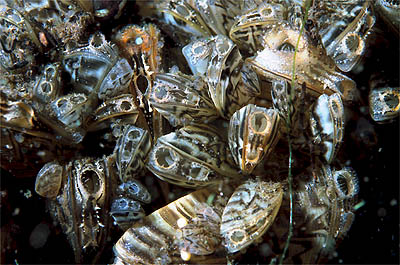
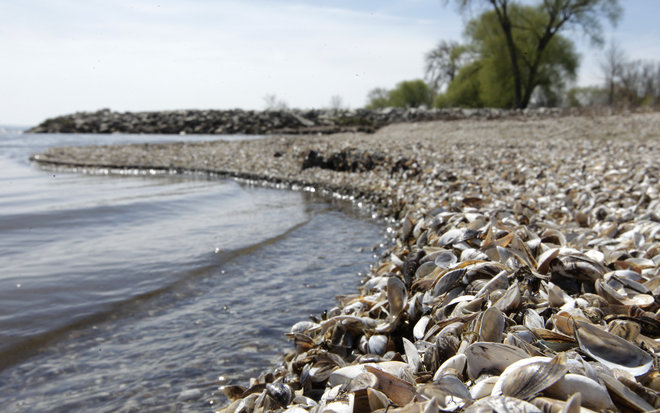
They don’t look like much, but it’s hard to overstate the threat posed by aquatic invasive species like zebra and quagga mussels to Montana’s public waterways – and all the waterways downstream in other states. “It’s terrifying,” explained Heidi Sedivy, the program manager for the Flathead Basin Protection Fund.
During an informational talk at the nonprofit Clark Fork Coalition Wednesday, Sedivy said the Columbia River watershed is the last watershed in the lower 48 states that is currently free from nonnative zebra and quagga mussels, which originated in Eastern Europe.
Western Montana represents the headwaters of the Columbia watershed, and alarm bells all over the state were raised when mussels were detected in the Tiber Reservoir in north-central Montana late last year – meaning the entire Missouri River watershed is essentially doomed.