Category Archives: Science

Bear hibernation linked to changes in gut microbes

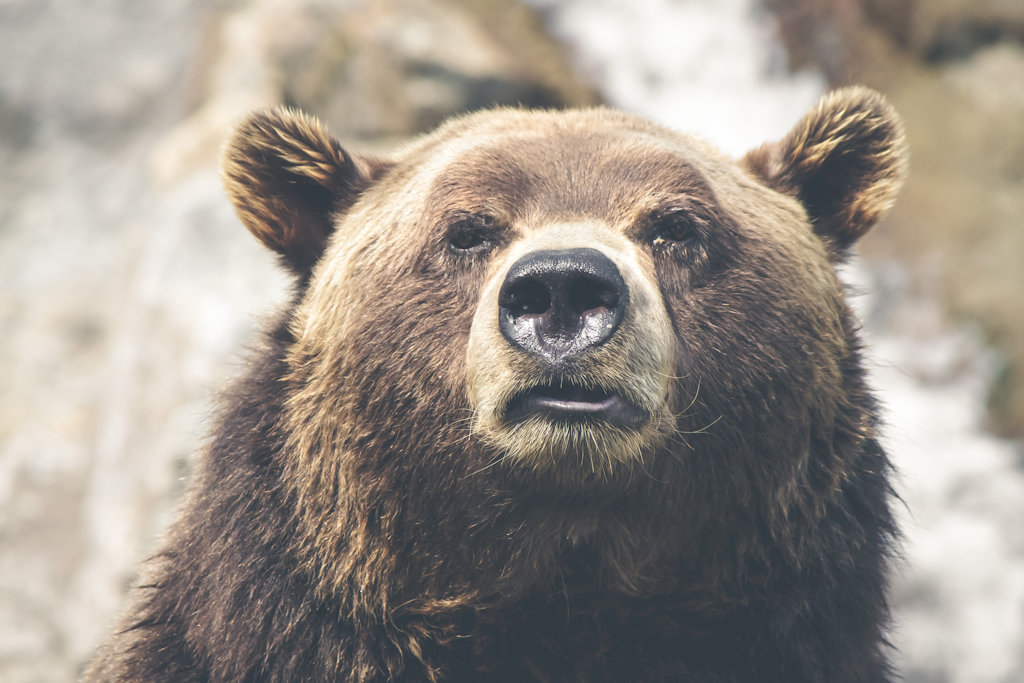
Grizzly Bear - Thomas Lefebvre, via Unsplash
Grizzly Bear – Thomas Lefebvre, via Unsplash

Two years ago, we mentioned the weird stuff that goes on when bears hibernate. Here’s another article along those lines . . .

Each year, bears hibernate for the winter. They gorge themselves on food to pack on fat, but somehow avoid health consequences. Now, scientists have found that the bears’ shifting metabolic status is associated with significant changes in their gut microbes.

“The restructuring of the microbiota into a more avid energy harvester during summer, which potentially contributes to the increased adiposity gain without impairing glucose metabolism, is quite striking,” said Fredrik Backhed, one of the researchers, in a news release.

The composition of gut microbiota can influence the amount of energy harvested from the diet. In fact, microbiota shifts in people who are obese and in those with type 2 diabetes.

In this latest study, the researchers collected fecal samples from wild bears during hibernation and in the active period. Then, the researchers analyzed the microbes living within these sample. The scientists found reduced diversity in the hibernation microbiota…

Read more . . .

A still-growing El Niño set to bear down on U.S.

Global view of El Niño 2005 compared to El Niño 1997

Here’s the latest from NASA on the looming El Niño weather pattern building in the Pacific . . .

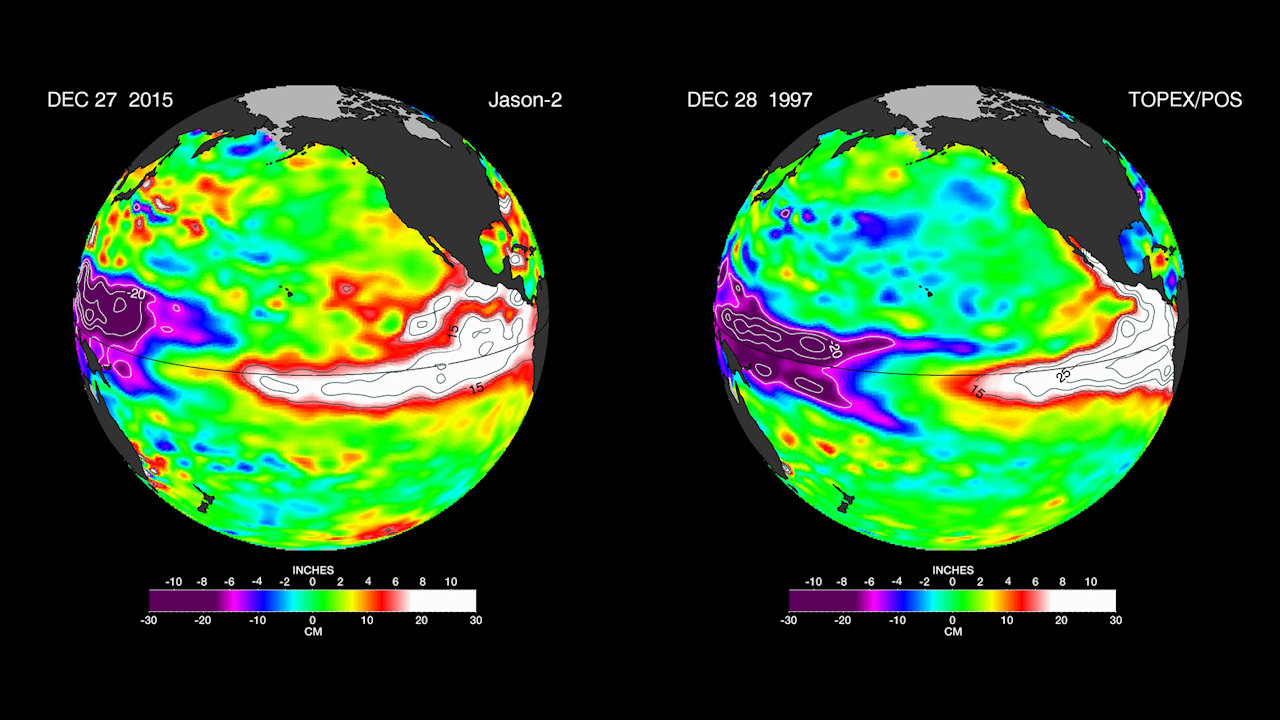
The current strong El Niño brewing in the Pacific Ocean shows no signs of waning, as seen in the latest satellite image from the U.S./European Ocean Surface Topography Mission (OSTM)/Jason-2 mission.

El Niño 2015 has already created weather chaos around the world. Over the next few months, forecasters expect the United States to feel its impacts as well.

The latest Jason-2 image bears a striking resemblance to one from December 1997, by Jason-2’s predecessor, the NASA/Centre National d’Etudes Spatiales (CNES) Topex/Poseidon mission, during the last large El Niño event. Both reflect the classic pattern of a fully developed El Niño…

Read more . . .

North American ecosystem shift 6,000 years ago caused by humans

Terraced Farming

I’m not sure if the study referenced in this review has a solid statistical basis or not, but the findings certainly are fascinating. Researchers claim to have found evidence for an abrupt ecosystem shift in North America (!) triggered by the arrival of humans dependent on agriculture . . .

For the past 6,000 years, human beings have been having an extreme effect on the distribution of animals and plants across the globe, some of which had been in place for up to 300 million years, to the point that some species are more segregated from others than they have ever been. A research team from the Evolution of Terrestrial Ecosystems (ETE) program, led by S. Kathleen Lyons, performed a study that looked deeper into plants’ and animals’ distribution across the landscapes of the planet through fossil records.

The shift has been so dramatic that the team discovered that the consequences of a shift like this could usher in a new stage in global evolution equivalent to that of the evolution of complex organisms from single-cell microbes, according to Smithsonian Magazine.

The team decided to focus on locating patterns among plants and animals, filtering out the relationships that could be classified merely as chance. They looked at two types of relationships – pairs and segregations – to find these patterns. Pairs would include animals that occur together, like cheetahs and giraffes, which are often found in the same areas, while segregations would include animals that are not present when another is.

Read more . . .

‘When it comes to El Niños, there are no identical twins’

1997 vs 2015 El Niño Conditions

Here is a nuanced, informative discussion of the looming 2015 El Niño from NASA’s Jet Propulsion Laboratory . . .

El Niño: An unusually warm pool of water off the west coast of South America, usually arriving around Christmas time, linked with complex, large-scale interactions between the atmosphere and ocean in the Pacific.

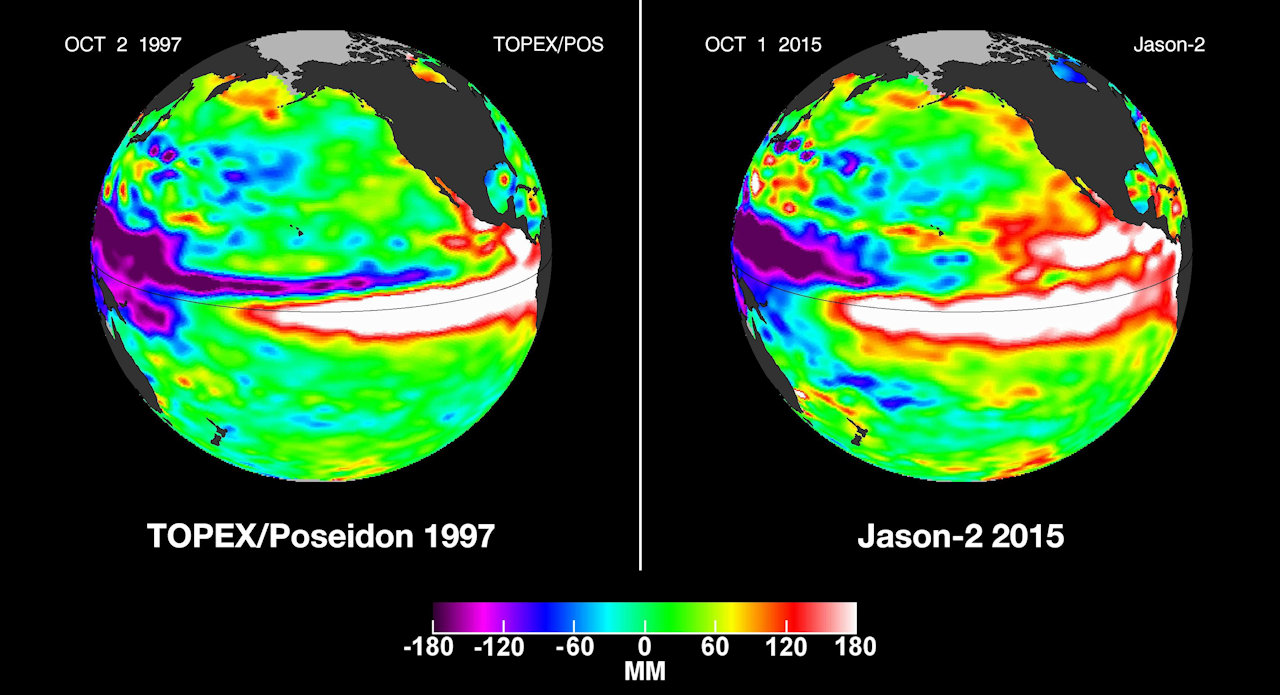
If you live anywhere El Niño has important impacts, you’ve heard forecasters say this year’s event looks just like the monster El Niño of 1997-98. NASA satellite images of the Pacific Ocean in November 1997 and November 2015 show almost identical, large pools of warm water in the eastern equatorial Pacific. The National Weather Service has forecast that impacts this winter will resemble those in 1997, when California and the South suffered floods, mudslides and tornadoes, while residents of the Upper Midwest saved $2 billion to $7 billion in heating costs throughout their unusually warm winter.

When it comes to El Niños, however, there are no identical twins. This year’s event hasn’t always resembled the ’97 one. Satellite observations from early ’97 and early ’15 show conditions in the Pacific Ocean that were, well, oceans apart.

Read more . . .

Genetic research gives insight into Greater Yellowstone foxes

Here’s some interesting research about foxes which, I was surprised to learn, are relatively recent arrivals on this continent . . .

Blame the snow and cold.

Thanks to nasty winters, the Greater Yellowstone Ecosystem, including the Beartooth Mountains, have become a genetic island for Rocky Mountain red foxes.

That’s one of the findings from research that Patrick Cross conducted over two years while spending finger-numbing winter days in the Beartooth Mountains trapping the native high-elevation foxes. Cross, a University of Montana graduate student in systems ecology, was working with the Yellowstone Ecological Research Center. For his research, Cross had hypothesized that the foxes may be genetically different from those found in nearby Yellowstone National Park. Instead, he found that the two populations are related.

Read more . . .