Global study on habitat fragmentation shows widespread problems

Some more support for the importance of biological and botanical corridors and other efforts to reduce habitat isolation . . .

An extensive study of global habitat fragmentation — the division of habitats into smaller and more isolated patches — points to major trouble for a number of the world’s ecosystems and the plants and animals living in them.

The study shows that 70 percent of existing forest lands are within a half-mile of the forest edge, where encroaching urban, suburban or agricultural influences can cause any number of harmful effects — like the losses of plants and animals.

The study also tracks seven major experiments on five continents that examine habitat fragmentation and finds that fragmented habitats reduce the diversity of plants and animals by 13 to 75 percent, with the largest negative effects found in the smallest and most isolated fragments of habitat.
Read more . . .

Park biologists say they’re getting ahead of the lake trout problem in Quartz Lake

Looks like Glacier Park is seeing success in eliminating non-native lake trout from Quartz Lake . . .

Since 2009, biologists from the U.S. Geological Survey and Glacier National Park have been netting non-native lake trout from Quartz Lake to help preserve one of the Park’s last remaining strongholds for endangered bull trout. The effort, biologist Carter Fredenberg was pleased to report last week, appears to be working.

Last fall, biologists counted an historic high 66 bull trout redds in the upper stretches of drainage. Redds are spawning beds fish make in the stream bottoms. The more redds, the better the population is doing.

“That is extremely positive,” Fredenberg said during a public talk last week.

Read more . . .

First open house for revised Forest Plan draws a crowd

The first open house for the Flathead National Forest’s revised Forest Plan drew a pretty good crowd, including several North Forkers . . .

A good compromise, it’s been said, leaves everyone equally unhappy.

But despite some dismay among people at an open house Tuesday hosted by the Flathead National Forest to discuss its proposed forest plan revision, others said the agency had struck a reasonable balance between competing uses, particularly where wildlife is concerned.

“I heard from some folks tonight that this is the best plan we’ve come up with since the ’80s,” said Joe Krueger, a forest planner with the agency and the project team leader. “But I also heard concerns that it goes too far to the wilderness side.”

Deb Mucklow talks about overseeing the Bob

Sounds like Deb Mucklow, the Spotted bear District Ranger, gave an interesting presentation about managing the Bob Marshall Wilderness . . .

From the remote Spotted Bear Ranger Station, District Ranger Deb Mucklow spends each summer overseeing more than one million acres within the Bob Marshall Wilderness Complex.

The Lower 48’s third-largest wilderness complex has become a star attraction for Northwest Montana.

But as the Spotted Bear District ranger, Mucklow emphasized the difficulty in balancing human activities with the integrity of the primeval area during a recent presentation hosted by the Bob Marshall Wilderness Foundation.

Aquatic invasive species still a threat

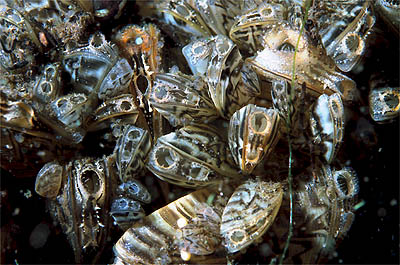
Zebra mussels
Zebra mussels – via Wikipedia

Montana FWP’s Aquatic Invasive Species Program is holding the line, but still worried about the introduction to the state of a number of aquatic invasive species . . .

The bad news is that inspection crews are turning up illegal live fish and nonnative species across Montana. The good news is no evidence of zebra mussels has yet been found.

Montana Fish, Wildlife and Park’s aquatic invasive species liaison, Linnaea Schroeer, reported this news in an annual message on FWP’s Aquatic Invasive Species Program.

FWP operated 20 seasonal watercraft inspection stations across the state, along with roving crews. More than 34,000 boats were inspected in 2014, and thousands of people were educated about the impacts of invasive species, she said.

Read more . . .

Forum on Wild & Scenic Rivers to be held this summer in the North Fork – July 17

NFNews announced an upcoming public meeting on Wild and Scenic Rivers and related issues . . .

Montanans for Healthy Rivers will be hosting a public forum in the North Fork of the Flathead this summer and would like you to attend to provide your input on present and future river conservation efforts in the North Fork.

Montanans for Healthy Rivers is a coalition of conservation organizations, watershed groups, recreation groups, business owners and landowners from across Montana who know that clean water and free-flowing rivers are important to our economy and our way of life…

Continue reading at NFNews . . .

MT House passes invasive species bills

Despite a few distracting shenanigans, Montana’s House and Senate sessions are getting some real work done . . .

Two bills aimed at protecting Montana from aquatic invasive species were passed in the House by unanimous 100-0 votes on Feb. 26 and passed on to the Senate Natural Resources Committee on March 6.

Sponsored by Rep. Mark Nolan, R-Bigfork, and supported by many of the Flathead’s legislators, the two House bills would support the state’s aquatic invasive species program through a trust fund while strengthening the program’s network of check stations that inspect boats, trailers and watercraft. Neither bill requires a fiscal note at this time.

Read more . . .

Flathead Forest Plan proposal: First ‘open house’ meeting scheduled for March 17

The Flathead National Forest has a series of public ‘open house’ meetings scheduled to provide information about the proposed Forest Plan revision. The first is on March 17, 5:30-7:30 p.m., at the Flathead NF Supervisors Office, 650 Wolfpack Way, Kalispell MT 59901.

These “community meetings are planned to provide additional information and address questions related to the Flathead NF plan revision and the amendment proposed action. The open houses will provide an opportunity for you to meet with subject matter specialists (wildlife biologist, forester, recreation specialist, fish biologist) and ask questions about the proposed management direction. There will not be any formal presentations at the open houses so stopping by at any time between 5:30 and 7:30 is fine.”

Here’s the full list of meetings:

Date/ Time Community Location

March 17, 5:30-7:30pm

Kalispell

Flathead NF Supervisors Office, 650 Wolfpack Way, Kalispell MT 59901

March 19, 5:30-7:30pm

Eureka

Riverstone Family Lodge, 6370 US Hwy 93N, Eureka, MT 59917

April 7, 5:30-7:30pm

Seeley Lake

Seeley Lake Community Center, Seeley Lake, MT 59868

April 8, 5:30-7:30pm

Missoula*

Fort Missoula Pavilion, Missoula, MT 59804

April 9, 5:30-7:30pm

Superior*

Superior Ranger Station Conference Room, Superior, MT 59872

April 14, 5:30-7:30pm

Lincoln*

Lincoln Community Hall, 404 Main St., Lincoln, MT 59639

April 15, 5:30-7:30pm

Choteau*

Stage Stop Inn, 1005 Main Ave. North, Choteau, MT 59422

*Primary focus is NCDE Grizzly Bear Amendment

Flathead Forest Plan proposal: Where to get it

As befits a document that will have quite an impact on this little corner of Montana, the proposed Flathead National Forest Plan revision is big — some 499 pages of text and figures. The grizzly bear amendment, describing how the forest will coordinate grizzly bear management with other agencies and jurisdictions across the entire Northern Continental Divide Ecosystem (NCDE), adds another 64 pages to the pile.

If you’re the sort of person who likes to go straight to the source documents, here’s how to get them:

Flathead Forest Plan proposal: What to read first

If you wish to read the entire Flathead National Forest Plan proposal, including the grizzly bear amendment, you’ll have to wade through better than 550 pages of text and figures. If you’d prefer to start with something easier to digest, the recent press coverage offers a pretty good overview of the main points . . .