Ed McNeil, known in the North Fork as “Mac,” died February 8. Those who moved to the North Fork in the last ten years or so did not have the pleasure to meet him as he has been ailing for a long time. He and his wife Cecily bought land in the North Fork some fifty-five years ago which made them some of the earliest of the summer residents.
I have known Ed for thirty-five years, but did not fully know his accomplishments until I read the obituary below. He was a private kind of person. His wife Cecily was a board member of NFPA for a long time during the early years of that organization. Their son Alan is on the current NFPA board.
John Frederick
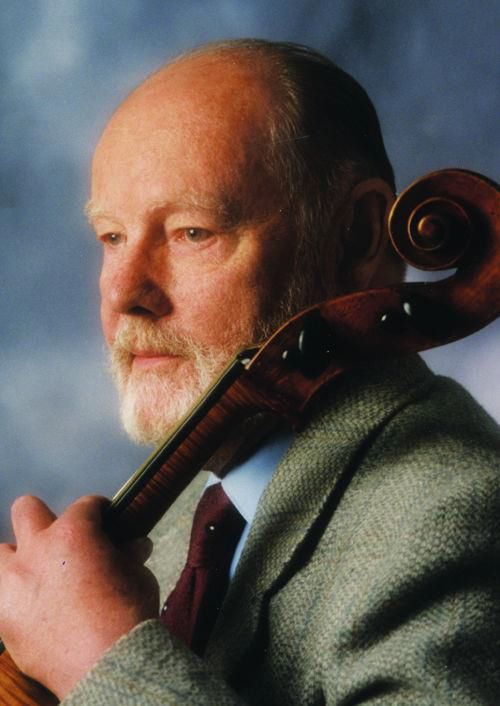
Edward Bowen McNeil, 93, passed away Feb. 8, 2015, in Kalispell.
Edward was born in Chicago on May 11, 1921. His parents were Grace Barr Bowen of Logan, Ohio, and Dr. Claude Perkins McNeil of Mansfield, Ohio. The family lived in Whiting, Indiana, where Dr. McNeil, a chemist, was head of the Asphalt Division of Standard Oil of California. Edward’s siblings were Robert McNeil and Jean McNeil.
Edward attended the Whiting Public Schools from elementary through high school. From childhood, music was important in his life; he studied cello from an early age, was first desk in the national award-winning Whiting High School Orchestra and was also in the All-Chicago chorus. In 1939 he entered Miami University in Oxford, Ohio, majoring in physics. He was a member of Sigma Nu fraternity, Phi Beta Kappa and several societies on campus: the French Club, Phi Mu Alpha (music), and Ye Merrie Players. He was active in campus stage and musical productions as stage manager.
In 1943 Edward graduated from college cum laude and was immediately hired by Miami University to teach physics to the V-12s (the Navy Officer Training Program). When he was drafted in 1944 he enlisted in the Navy, which put him in the EDDY program for radar and electronic repair. After he graduated from the EDDY program, the Navy retained him as an instructor and he was stationed at Navy Pier in Chicago, which was one of three national radar/sonar schools. (Radar was new in those days.)
Discharged after World War II ended, Edward obtained an assistantship at the University of Illinois in Urbana, teaching physics. During that time, he met his future wife, Cecily Rideout, of Marin County, California, who was a graduate student in library science at Illinois. They were married in July of 1948 in Ross, California. Two sons were born to the couple, Alan Rideout McNeil and Bruce Bowen McNeil.
Edward became an assistant professor at the University of Illinois before obtaining his doctorate in physics and continued to teach there until 1954. Some time after earning his doctorate, he accepted a position at the University of Illinois in Chicago, which was then at Navy Pier.
Edward taught at the University of Illinois in Chicago for nearly 40 years. More interested in teaching than in research, he was proud to receive the Circle Award from the U of I in Chicago for Excellence in Teaching. He was also proud to be one of the founders of the Illinois State Physics project, which continues to this day.
That project gathers physics teachers of all academic levels once a month to share new information and ideas about teaching, most especially to recharge the enthusiasm of the teachers. It quickly became an important support group for the profession.
For three summers in the 1960s, Edward taught physics teachers in India, under a program sponsored by USAID. At that time he traveled extensively in India — Assam, Calcutta, Madras, Kerala, Bombay, Mysore, Bangalore, Hyderabad, Tanjore.
Edward maintained a keen interest in architecture. Trained by his father to be a skilled carpenter, he was eventually able to realize his dream by building a cabin for his family in the valley of the North Fork of the Flathead. This effort took several summers, and was accomplished without power tools.
He also maintained his interest in music, playing string quartet at least one night a week with competent amateurs in Chicago, and playing cello in the annual performance of “The Messiah” at Orchestra Hall, as well as performing with the orchestra for the Chicago Gilbert and Sullivan group. Interlochen Music Camp has a cello scholarship in Edward’s name.
In 1990, Edward and his wife Cecily retired to Kalispell, where Edward immediately volunteered for the Glacier Orchestra. He was on the board of the orchestra for several years and in 1997 was a Kalispell Chamber of Commerce Volunteer of the Year.
Edward’s grandchildren include Henry Chesna McNeil, Fiona Reed McNeil, U.S. Coast Guard Lt. Anna Crandall McNeil, Ellie Rideout McNeil, and Edward Bowen McNeil II.
Gift’s in his memory may be given to the Glacier Symphony.