Feds won’t fund North Fork Road paving study

The expected result, but still good to know for certain . . .
Flathead County did not receive federal funding for an environmental analysis to look at paving a portion of the North Fork Road, county public works director Dave Prunty confirmed Monday.
The county sought Federal Lands Access Program monies to do a National Environmental Policy Act review of improving the road from just north of Glacier Rim to the Camas Road entrance to Glacier National Park earlier this year, but the analysis wasn’t funded.
Montana Supreme Court revokes Rosebud Coal Mine Expansion
NFPA board member Roger Sullivan was involved in this case . . .
The Montana Supreme Court has halted an expansion of a Westmoreland-operated mine that supplies the Colstrip power plant with coal. The court’s decision vacated an 8-year-old permit that allowed Westmoreland to pull 12 million tons of coal from the Rosebud Mine located in southeastern Montana.
The environmental concern at issue related to water quality impacts to the East Fork of Armells Creek, an intermittent stream that flows into the Yellowstone River. The Montana Environmental Information Center and the Sierra Club argued that allowing strip-mining operations in AM4, a 49-acre parcel in Area B of the mine, would result in material damage to the waterway by increasing the creek’s salinity to the detriment of one of its established beneficial uses: the support of aquatic life.
The order, authored by Chief Justice Mike McGrath and signed by the court’s six other justices, largely affirmed a lower court’s ruling. It nullifies the AM4 permit, disallowing mining in that area. Prior to arriving at the Montana Supreme Court, DEQ’s decision in 2015 to approve the expansion had been weighed by the Board of Environmental Review (a quasi-judicial, governor-appointed body) and the Sixteenth Judicial District Court.
(A tip of the hat to Debo Powers for spotting this one.)
Tribes set end-of-year ultimatum for U.S. and Canada to address transboundary mining crisis in Elk-Kootenai drainage

Their patience has run out . . .
When Rich Janssen flips through the 2023 calendar, he sees months of missed opportunities to tackle a multi-national environmental crisis that has united tribal and First Nation governments spanning the U.S.-Canada border as few causes have before.
Last year’s calendar isn’t much different. Neither is the year before that.
For decades, open-pit coal mines located in the Elk Valley of southeast British Columbia (B.C.) have leached selenium, nitrate, and sulphate into the Elk and Kootenai rivers. Since 2012, Indigenous leaders from the Ktunaxa Nation, the Confederated Salish and Kootenai Tribes (CSKT) and the Kootenai Tribes of Idaho (KTOI) have been urging Canada and the U.S. to address the water quality crisis.
Wolverines to receive federal protection

Well, now. Here’s some good news . . .
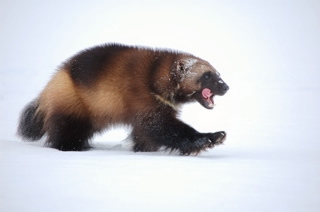
The North American wolverine will receive long-delayed federal protections under a Biden administration proposal released Wednesday in response to scientists warning that climate change will likely melt away the rare species’ snowy mountain refuges.
Across most of the U.S., wolverines were wiped out by the early 1900s from unregulated trapping and poisoning campaigns. About 300 surviving animals in the contiguous U.S. live in fragmented, isolated groups at high elevations in the northern Rocky Mountains.
In the coming decades, warming temperatures are expected to shrink the mountain snowpack wolverines rely on to dig dens where they birth and raise their young.
The decision Wednesday by the U.S. Fish and Wildlife Service follows more than two decades of disputes over the risks of climate change, and threats to the long-term survival of the elusive species. Officials wrote in the proposal that protections under the Endangered Species Act were needed “due primarily to the ongoing and increasing impacts of climate change and associated habitat degradation and fragmentation.”
Court limits wolf trapping season over threat to grizzlies

Wolf trapping in Montana got curtailed in those areas with grizzly bear populations . . .
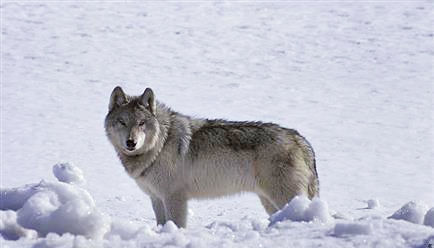
A federal judge in Missoula issued an order late Tuesday afternoon that will limit Montana’s wolf trapping season to Jan. 1 to Feb. 15 next year in hunting Regions 1 through 5 and three counties along the north-central border, citing the possibility that threatened grizzly bears get caught in wolf traps or snares.
U.S. District Court Judge Donald Molloy’s order granting a preliminary injunction in the case came less than 30 hours after he heard arguments from the plaintiffs – the Flathead-Lolo-Bitterroot Citizens Task Force and WildEarth Guardians – and the state over whether he should grant the injunction. The State of Montana, Gov. Greg Gianforte, and Fish and Wildlife Commission Chair Lesley Robinson are the named defendants in the suit.
In his order, he sided with the plaintiffs on most of the points raised at Monday’s hourlong hearing, saying the traps could indeed injure a grizzly, that any capture of a grizzly is considered an illegal “take” under the Endangered Species Act, and that limiting the wolf trapping season to those six weeks would also limit the potential for any grizzlies to be caught in traps.
Flathead Forest invites public comment on winter recreation special use permit proposals

Tristan Scott at the Flathead Beacon posted an excellent write-up on this winter’s set of special use permit proposals for the Flathead National Forest.
Details of these proposals can be found here: https://www.fs.usda.gov/project/flathead/?project=65150 . . .
The Flathead National Forest is processing a flurry of requests for outfitting and shuttle services this winter, with proposals ranging from guided snow-bike, snowmobiling, skiing and snow-shoe tours to therapeutic “forest bathing.”
Officials with the Flathead National Forest (FNF) are soliciting public input on requests for nine temporary special-use permits authorizing outfitting and guiding activities from approximately Dec. 1, 2023, through May 15, 2024. According to a news release announcing the proposals, each request meets the criteria to receive a special-use permit under a categorical exclusion, which is the least-intensive form of environmental review.
Eight of the proposed special uses have been approved for one-year permits in the past; however, each proposal requires approval on an annual basis. One new proposal by Glacier Nordic Club is also under review.
Steve Gniadek: Public Must Demand Accountability by BNSF
NFPA member Steve Gniadek had a letter published in the Flathead Beacon today calling out the BNSF Railway for not fulfilling its promises to help reduce train-caused grizzly bear deaths . . .
Thanks to Tristan Scott for shining a spotlight on continuing train-caused grizzly bear mortalities (Flathead Beacon, Oct. 4, 2023). The late Dr. Charles Jonkel first raised the alarm in the 1980s when he learned that grain spills were attracting grizzlies that were subsequently killed on the tracks. In the early ‘90s I represented Glacier National Park on a working group that resulted in the establishment of the Great Northern Environmental Stewardship Area (GNESA), with the goal of reducing the risk to grizzlies and other wildlife. BNSF provided funding for a state bear management position, and other mitigation measures. There seemed to be progress with the development of a Habitat Conservation Plan (HCP). So, I was shocked and disappointed to learn there has been little recent progress, and that BNSF has not committed to funding the measures identified over 20 years ago. The HCP is long overdue, and BNSF needs to make a permanent funding commitment to mitigate the impacts from train traffic. Some have argued that BNSF is foot-dragging until the grizzly is delisted and protective provisions are no longer required. Chuck Jonkel used to speak about the million-dollar grizzly, that each bear was worth that much to the state (in tourism revenue and iconic status). Even with an expanded population since the 1980s, the per bear value is probably well more than a million today. Regardless of ESA protections, grizzly bears are a significant natural, cultural and spiritual resource, part of our identity as Montanans. The public must demand accountability by BNSF and a commitment to minimize mortality and the management of a healthy and sustainable population of grizzly bears and other wildlife.
Steve Gniadek
Columbia Falls
Book recommendation – Crossings: How Road Ecology Is Shaping the Future of Our Planet
When did “road ecology” become a thing? It certainly sneaked up on some of us.
Anyway, anyone who is paying attention realizes that the North Fork’s ability to maintain a balance between people living on the landscape and its unique, healthy variety of native species is coming under increasing pressure, especially during tourist season. The North Fork Road, the primary corridor for the bulk of the visitor traffic, is part of this experience — and not always in a good way. As the traffic load increases, it’s not just suspensions, tires and air filters that suffer, it also impacts the local animal population, changing their behavior, challenging them with new risks and, especially as traffic increases, forming an actual physical barrier across the landscape.
Turns out, there are ways to modify roadways to alleviate many of these problems. If you want to learn more about the subject, Ben Goldfarb’s new book, Crossings: How Road Ecology Is Shaping the Future of Our Planet, is a good place to start.
(Kudos to Suzanne Hildner for bringing this one to our attention.)
Feds draft plan to bring grizzlies back to the North Cascades

Here’s a good update on the status of grizzly bear reintroduction in the North Cascades. (Kudos to Randy Kenyon for passing this one along.)
The federal government has drafted plans to bring grizzly bears back to Washington state’s North Cascades, the next step toward reintroducing the threatened species to a region where it was eliminated by hunters decades ago.
Bringing them back would be the culmination of a decades-long effort to restore grizzly bears to the ecosystem, one of six spots in the country where federal biologists have aimed to recover decimated populations.
mastodon test