Monthly Archives: January 2016

Glacier Institute rolls out 2016 winter courses

The Glacier Institute’s tracking course will be in the North Fork again this winter . . .

The Glacier Institute, a public educational leader in the Crown of the Continent, will kick off 2015 with a course Jan. 9 in animal tracking and sign interpretation. A longtime favorite, the course will return to the North Fork region for the second year after some 20 seasons of exploring in West Glacier.

“There’s awesome tracking along the North Fork—aquatic, riparian, and terrestrial species,” said Director of Education Justin Barth. “There’s a lot of action. If they’re really lucky, they could see rare carnivore tracks, maybe wolves or wolverines. Or [tracks from] a grizzly bear out taking a break from his nap.”

Brian Baxter, a wildlife researcher with years of experience tracking and trapping, will lead the field course, as he has for many years. He’ll lead participants along four or so miles of eastern shore of the North Fork, teaching them to observe the evidence of nature.
Read more . . .

‘Twenty-five grizzly bears a year die in Yellowstone Park, but this one had a name’

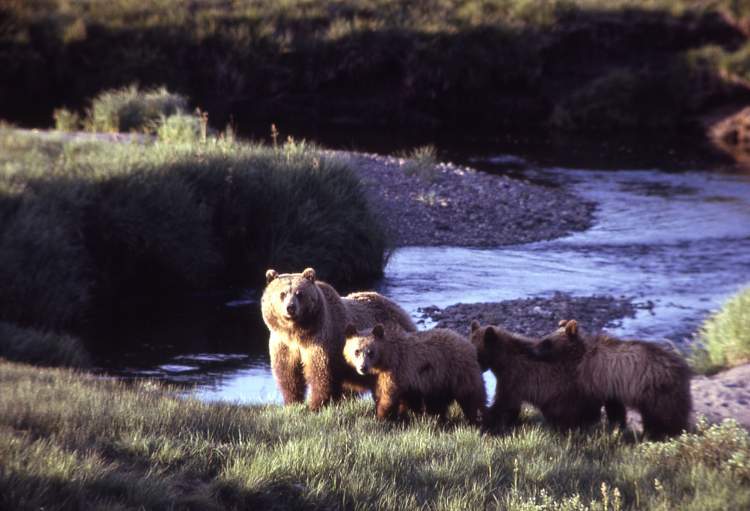
Grizzly bear sow with three cubs

Here’s an interesting article that picks up social media’s impact on bear management and runs with it . . .

When a grizzly bear killed a hiker in Yellowstone National Park last year, millions of people took it personally.

“The public response was 100 percent different than two years ago,” said Kerry Gunther, Yellowstone’s bear manager. “Twenty-five grizzly bears a year die in Yellowstone Park, but this one had a name.”

Her name was Blaze, according to the outpouring of outrage on Facebook, Twitter and other social media outlets that appeared within a day of the Aug. 11 incident. Gunther and other park officials still aren’t sure it was that particular, often-photographed sow with two cubs (there were four such females with two cubs in the area). But they are sure their decisions, and all future debate about managing grizzly bears in the Rocky Mountain West, are under a new level of scrutiny.

Read more . . .

Cameras, video give new insights into bear behavior

Grizzly bear sow with three cubs

Bear bathtubs? Who knew? . . .

It takes a hike over high ridges and numerous toppled lodgepole pine trees to find the small pool of fresh water in Yellowstone National Park.

This is not some out-of-the-way hot springs that adventurous tourists seek out to soak in. Instead, the well-worn trails marked by tracks leading to the site attest to its use as a “bear bathtub.”

The first of these pools was discovered more than a decade ago by Yellowstone bear researchers as they searched for a tracking collar that had fallen off one of the bears they were studying, according to an article in the recently released issue of the journal Yellowstone Science. The signal sent by the collar led them to the small pond at the end of a narrow gully surrounded by forested hills, according to the article’s lead author, Kerry Gunther, Yellowstone’s bear manager.

Read more . . .

‘Wild and Free: Photographs of North American Wildlife’ until Jan 21

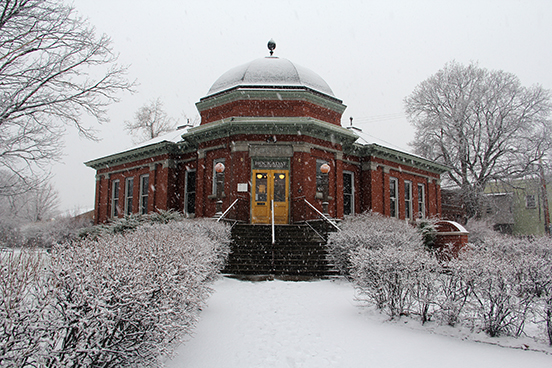
Hockaday Museum of Art in Winter

The Hockaday has a wildlife photography exhibit worth a visit . . .

One of Montana’s most prolific and published photographers will head up an entire day of discussions and stories about his work at the Hockaday Museum of Art in Kalispell.

Donald M. Jones, who lives in Troy, is known nationally and internationally primarily for his work shooting photographs of wildlife, particularly the creatures inhabiting North America. Jones has tallied more than 600 magazine covers as part of his legacy, along with clients like Field and Stream magazine, Time, Outdoor Life, Newsweek, Sports Illustrated, Columbia Sportswear, L.L. Bean, and more.

And now, his photographs have a new life at the Hockaday Museum of Art, where 27 of them are on display in the exhibit, “Wild and Free: Photographs of North American Wildlife,” until Jan. 21.

Read more . . .