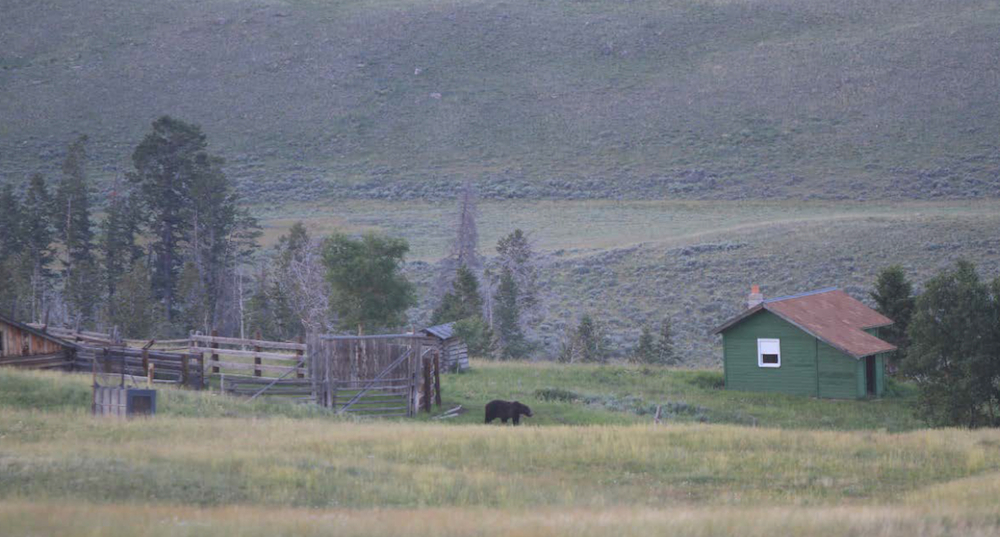
Grizzly on ranch east of Yellowstone – Wyoming Game and Fish Department
This article really should have been longer; there’s a lot to think about here. Still, it’s worth reading . . .
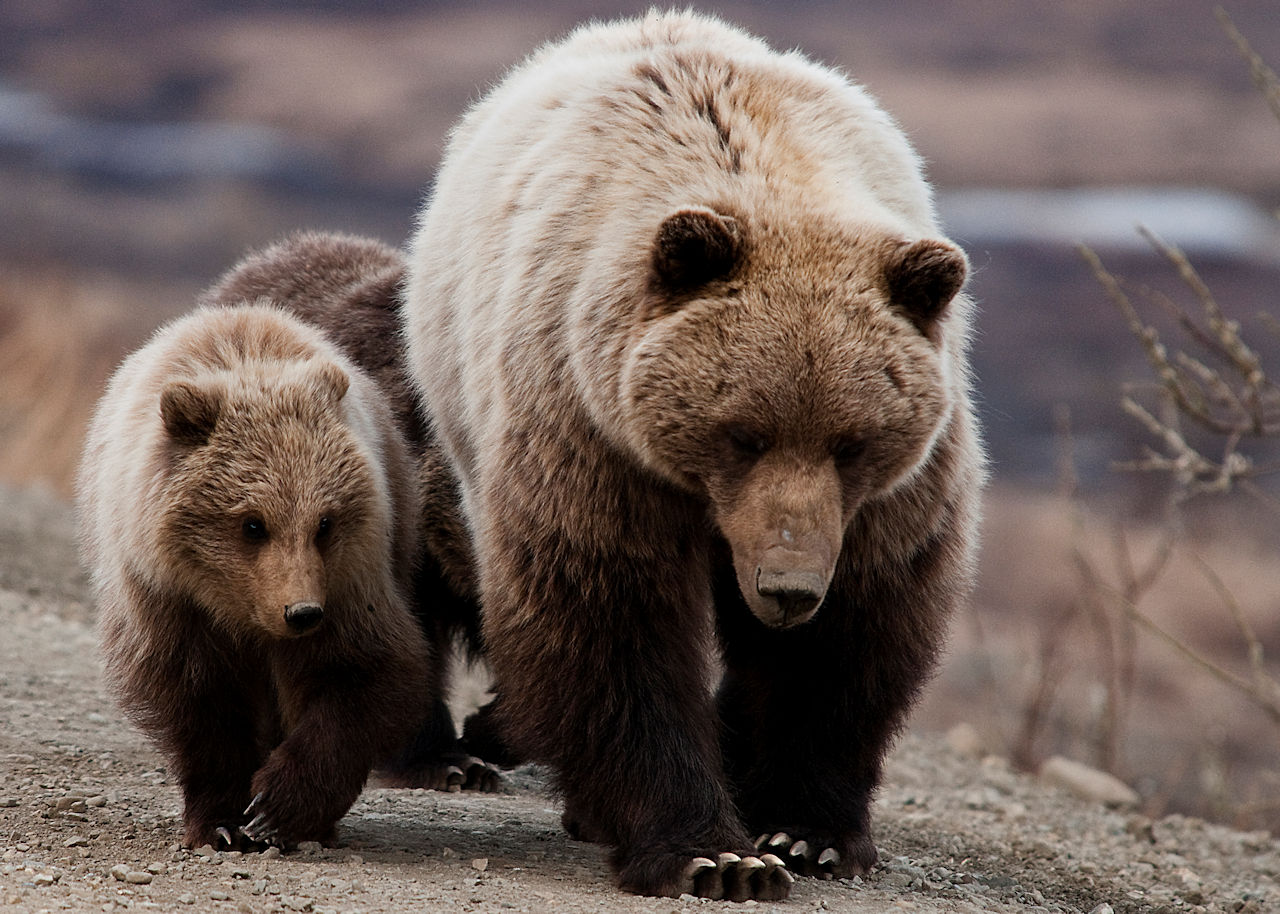
Grizzly bears continue to expand their range amid an ongoing effort to turn over management of the bears from the U.S. Fish and Wildlife Service to the states of Wyoming, Montana and Idaho, a federal official said.
“We’ve seen an 11 percent change in increasing range in just a couple of years,” Frank van Manen, head scientist of the Interagency Grizzly Bear Study Team, said last week at a meeting in Jackson.
Since coming under the protection of the Endangered Species Act, grizzlies have steadily expanded their habitat outward from the population’s core in Yellowstone National Park.
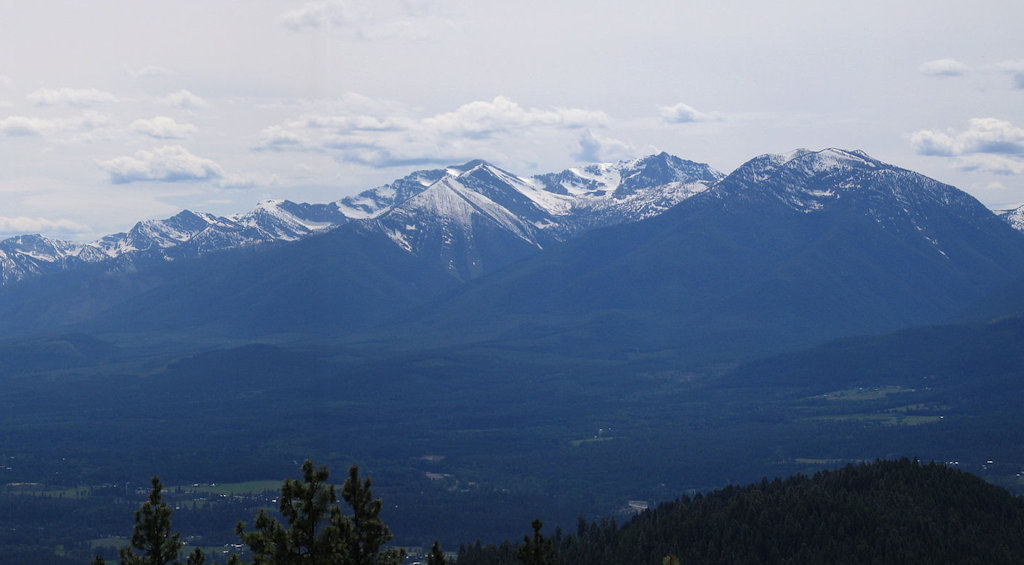
Southern Cabinet Mountains, as seen from Swede Mountain, near Libby
It’s not over yet. This past week saw another court hearing challenging the development of the Montanore copper and silver mine on the edge of the Cabinet Mountains Wilderness . . .
The question of whether a proposed mine on the edge of the Cabinet Mountains Wilderness should be judged on its predicted impact or its ongoing development went before a federal judge Thursday.
“If this is not the point where the (U.S. Fish and Wildlife) Service has to determine the straw that breaks the camel’s back, where is it?” Earthjustice attorney Timothy Preso asked U.S. District Judge Don Molloy. “By then, we’re in a world where it’s far too late to do anything about it.”
Montanore Minerals Corp. attorney Mark Stermitz retorted that the whole point of a permitting process was to evaluate a project’s impact over time, as new information develops.
The Trump administration’s attempt to lift the existing moratorium on new coal leases triggered an immediate lawsuit on behalf of the Northern Cheyenne Tribe, Sierra Club, and Center for Biological Diversity . . .
Environmental groups that vowed to fight President Donald Trump’s efforts to roll back his predecessor’s plans to curb global warming made good on their promises Wednesday, teaming up with an American Indian tribe to ask a federal court to block an order that lifts restrictions on coal sales from federal lands.
The Interior Department last year placed a moratorium on new coal leases on federal lands to review the climate change impacts of burning the fuel and whether taxpayers were getting a fair return. But Trump on Tuesday signed a sweeping executive order that included lifting the moratorium, and also initiated a review of former President Barack Obama’s signature plan to restrict greenhouse gas emissions from coal-fired power plants.
Environmentalists say lifting the moratorium will worsen climate change and allow coal to be sold for unfairly low prices.
A timely reminder from Montana Fish, Wildlife and Parks . . .
Grizzly and black bears are emerging from dens, based on radio collar locations, track reports, and observations.
Males tend to emerge earlier than females; with the warming weather and increasing day length, more bears will be emerging in the coming weeks. As grizzly and black bears emerge, they will be moving to lower elevations to take advantage of the green-up of vegetation.
After a bear emerges, it takes a few weeks for its digestive system to get back to normal; the bear has been in the den for four to five months. The stomach and digestive system is empty so the bear starts out eating dry grass or roughage to activate the digestive system. Bears will be attracted to anything that smells like food.
By April 1, residents in bear country should take down bird feeders, secure garbage inside a closed garage or secure shed, feed pets inside, clean up chicken and livestock feed, and in general remove all odorous substances that can draw bears. Instead of putting out hummingbird feeders we recommend putting up hanging baskets of flowers instead.
A properly installed and maintained electric fence is an excellent way to protect livestock, poultry, beehives, rabbits, fruit trees, and gardens from bears. FWP has brochures and a webpage where you can get additional information on electric fencing at: http://fwp.mt.gov/fishAndWildlife/livingWithWildlife/beBearAware/bearAwareTools.html.
Hikers, mountain bikers, hunters, and other recreationalists should carry bear spray, keep it readily available for use, and know how to use it.
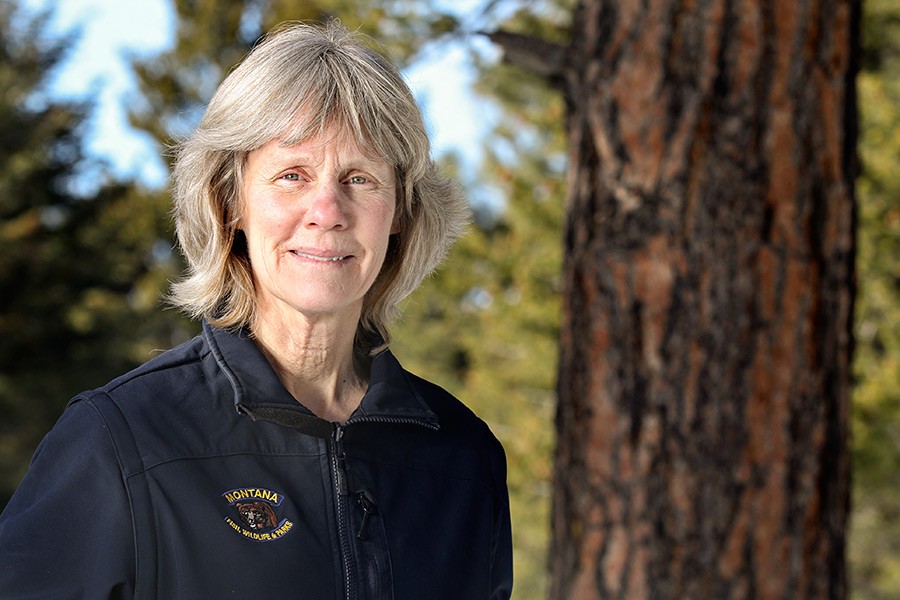
Diane Boyd, Lone Pine State Park, Feb. 13, 2017 – Greg Lindstrom, Flathead Beacon
Wow! North Forker and NFPA member Diane Boyd has a very nice write-up in the Flathead Beacon titled “The Jane Goodall of Wolves” . . .
In 1979, Diane Boyd left her native Minnesota and headed west to begin tracking the first radio-collared gray wolf from Canada to recolonize the Western U.S., where humans had effectively eliminated the species by the 1930s through hunting, poisoning and habitat loss. Boyd, a 24-year-old wildlife biology graduate student at University of Montana, was fueled by optimistic idealism and boundless energy. When she pulled up to her new home, deep in northwestern Montana’s rugged North Fork Flathead River valley, it was apparent she would need both.
“It was like, ‘Wow,’” Boyd recalls of seeing the cabin, which had no plumbing, electricity or means of communicating with the outside world. “I’d spent a lot of time outdoors, but this was true isolation.”
Though wolves had been extirpated statewide, reports of sightings and shootings started trickling in during the 1960s and ‘70s, leading University of Montana professor Bob Ream to launch the Wolf Ecology Project in 1973, the same year that Northern Rocky Mountain gray wolves were listed under the Endangered Species Act. It was through the Wolf Ecology Project that researcher Joe Smith trapped a female wolf, dubbed Kishinena, on April 4, 1979 in the North Fork drainage along the northwestern edge of Glacier National Park.
NFPA member Steve Gniadek received a well-deserved Conservation Achievement Recognition award from the Flathead Audubon Society recently. There’s a nice write-up on their web site, where you’ll likely learn some things about Steve you never knew . . .
We are excited to present our first 2017 Conservation Achievement Recognition to Steve Gniadek who is clearly one of the most dedicated conservation-minded people in the Flathead. Steve, who has assimilated extensive and diverse wildlife experiences throughout his career, is now a happily retired wildlife biologist living in the Flathead Valley. But Steve is no ordinary retiree, he is one of those passionate and committed individuals who believes that his fortunate and exciting life of public service requires that he continue to give back his time and energy to the local community.
Wildfire plays an important and integral role in our forested ecosystems. Local fire history records show that our forests have evolved with fire for thousands of years. We have successfully suppressed 98% of wildfires in the greater Flathead Area since approximately 1930, and the resulting accumulation of fuel creates an environment conducive to large fire growth. It’s important for our community to understand wildfire and promote a proactive approach to mitigating impacts to our communities; private property, airshed, watersheds and forest ecosystems.
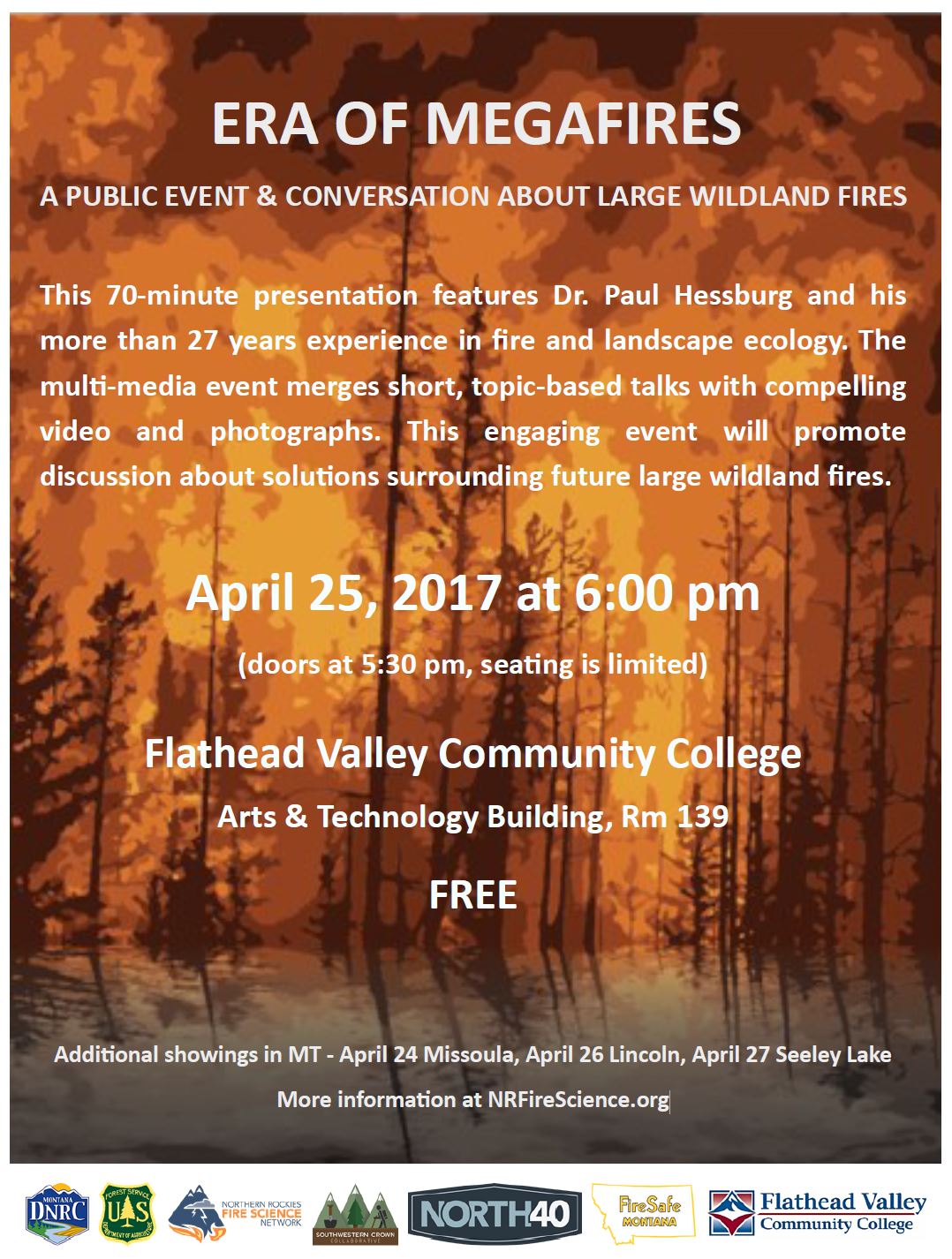
On April 25th, the community is invited to a public event and conversation at the Flathead Valley Community College, Arts and Technology Building Room 139 at 6:00 p.m., for an “Era of Megafires” presentation. This 70-minute multi-media traveling presentation by Dr. Paul Hessburg, will help our community understand the issues surrounding Megafires, so collectively we can move toward solutions that can change the way we receive wildfire and related smoke. Dr. Hessburg has conducted fire and landscape ecology research for more than 27 years.
The “Era of Megafires” presentation will be followed by a question and answer session around topics that are relevant to the community in order to identify local challenges and local actions. Typically, different communities face different obstacles when it comes to wildfire preparedness and resilience.
The intent of this presentation is to significantly reduce the amount of loss we are experiencing by developing a collective understanding of fire, approaches to wildfire management, and how landowners can engage.
The “Era of Megafires” is brought to you by Flathead Area FireSafe Council, Northern Rockies Fire Science Network; Southwestern Crown Collaborative, Montana DNRC/Kalispell Unit; Flathead National Forest, Flathead Valley Community College and FireSafe Montana. For more information, contact Mike West, Flathead National Forest at 758-3939, or Ali Ulwelling, MT DNRC at 751-2270.
Walking Bear Comes Home: The life and work of Chuck Jonkel – A production of the Great Bear Foundation and Caribou Crossing
World premiere screening April 20th, 2017 at 5:00 PM 40th International Wildlife Film Festival Roxy Theater, Missoula, Montana
Please join us for a reception to honor Dr. Jonkel at: 400 PM at the Roxy, followed by the screening at 5:00. After the film, we’ll celebrate with the launch of Great Bear Cider at Western Cider from 7:00-9:00, with 10% of the proceeds benefiting the Great Bear Foundation.
Here’s an excellent guest column in the Flathead Beacon by George Wuerthner discussing the importance of reserving wilderness areas and listing several in this corner of Montana still in need of protection . . .
The announcement by Montana Sen. Jon Tester that he would be introducing legislation to protect approximately 80,000 acres in the Blackfoot Clearwater area adjacent to the Bob Marshall Wilderness is to be commended. I have personally hiked all the areas included in this legislation and can attest to its important to the ecological integrity of the larger Bob Marshall Wilderness Complex.
The Monture drainage with its wonderful larch forests that glow golden in the autumn, and the North Fork of the Blackfoot with its deep emerald pools holding exceptional bull trout and cutthroat trout populations are both critical gateways to the larger Bob Marshall complex.
The Grizzly Basin portion of the Swan is the critical scenic backdrop to the Seeley-Swan highway and the West Fork of the Clearwater segment is a needed wildlands connection corridor between the Mission Mountains and Swan Range.
What Tester, and those supporting the legislation, recognize is that Montana’s wildlands are of global significance. These patches of self-willed landscapes are critical to ensuring the continued survival of many wildlife species, carbon storage, watershed protection, and the source for inspiration.
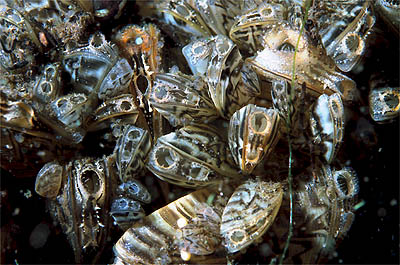
Glacier Park has decided to allow small, hand-propelled watercraft on their lakes this season, as long as they are inspected for invasive mussels. Anything with a motor or big enough to require a trailer, is prohibited while the park further evaluates the danger posed by invasive mussel species.
Possibly in response to some points raised at last month’s Interlocal Meeting, “local users who live in more remote locations” (i.e., North Forkers) can get their equipment inspected at the “nearest ranger station.”
Here is the full press release, including a useful Q&A section. It’s followed by a link to a good summary article in the Hungry Horse News . . .
Date: March 16, 2017
Contact: Office of the Superintendent, 406-888-7901
WEST GLACIER, MT. – Glacier National Park announced today that hand-propelled, non-trailered watercraft including kayaks, canoes, and paddleboards will be permitted in the park with mandatory inspection beginning May 15 for Lake McDonald and the North Fork and June 1, 2017 for all remaining areas of the park. Last November, park waters were closed to all boating as a precaution after invasive species of non-native mussels were detected in two popular Montana reservoirs east of the park.
Hand-powered boat users will be required to have their craft certified mussel-free (“clean, drained, and dry”) by Glacier staff under a new inspection program with stations in four popular locations in the park. (Local users who live in more remote locations will be directed to the nearest ranger station for inspection.) This is a change from last season, when hand-propelled watercraft required visitors to complete an AIS-free self-certification form before launching into Glacier’s lakes.
Privately owned motorized and trailered watercraft brought into the park will not be allowed to operate on Glacier’s waters this summer while a comprehensive assessment of the threat from mussels is underway. Among other measures, this will include comprehensive testing of waters in the park and elsewhere in Montana for the presence of quagga and zebra mussels. These non-native mollusks reproduce quickly and can wreak havoc with lake environments, water quality, native wildlife, lake infrastructure, and cause significant economic harm to infested regions.