As expected, the new Flathead Forest Plan is drawing fire from some groups. An article by Chris Peterson of the Hungry Horse News does a good job of explaining the background and events leading up to a pending lawsuit . . .
Two environmental groups announced Monday that they have filed a 60-day notice of an intent to file a lawsuit against the Flathead National Forest over its new Forest plan, claiming it violates the Endangered Species Act.
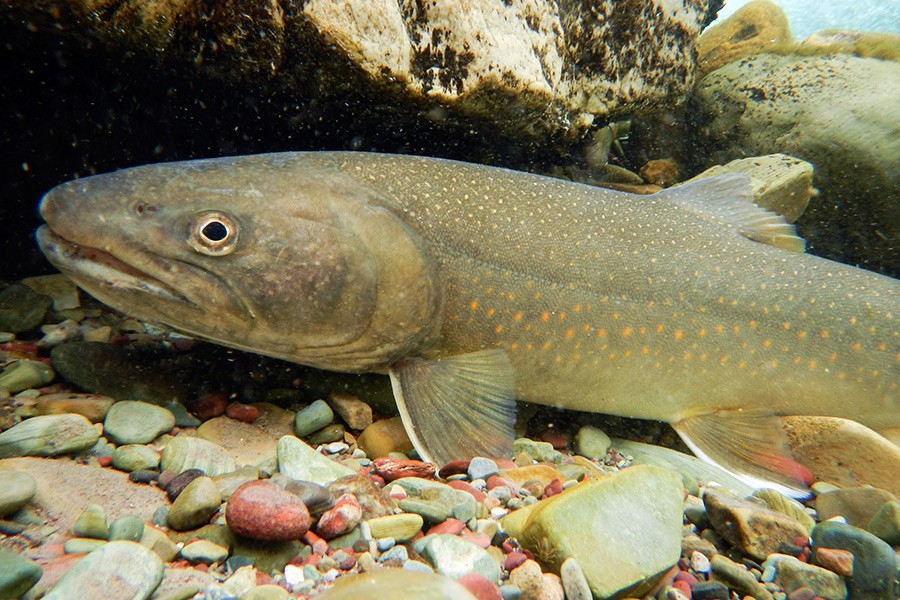
The notice of intent does not come as a surprise — the two groups have previously maintained that new plan doesn’t do enough to secure grizzly bear and bull trout habitat.
They claim the new plan, just days old, is worse than the old 1986 plan because it no longer adheres to a provision in the old plan called Amendment 19. Under Amendment 19 of the previous plan, open road densities across the forest were trimmed substantially. Roads, quite literally, were purposely destroyed by the Forest Service, making them impassable to motorized use.
Here’s an interesting peek behind the curtain at the problems Montana Fish, Wildlife and Parks faces in covering a large state with a fairly small staff . . .
Management of grizzly bears, mountain lions, wolves, bison and wildlife diseases require more manpower in Montana.
That’s the case Ken McDonald, Wildlife Division administrator for the Department of Fish, Wildlife and Parks, made Tuesday. McDonald’s presentation to the Joint Subcommittee on Natural Resources and Transportation in Helena was one of many hearings that FWP’s proposed 2020-21 budget will face . . .
Looks like the wolf population in Washington State may be doing better then anyone thought . . .
The number of wolves in Washington state is likely much higher than previously thought, according to a University of Washington researcher who spent two years studying the animals using scat-sniffing dogs.
Samuel Wasser said his dogs detected 95 wolves in one area of Stevens and Pend Oreille counties, in the rural northeast corner of the state, during the 2016-17 season. That approached the total number of wolves wildlife officials estimated for the entire state.
The state Department of Fish and Wildlife a year ago estimated Washington had a minimum of 122 wolves, grouped in at least 22 packs, and 14 successful breeding pairs.
The new Flathead Forest Plan, as well as the associated grizzly bear management amendments, went into effect late last year. Here, delayed by the recent government shutdown, is the official press release announcing them . . .
Flathead National Forest Releases Signed Record of Decisions for the Forest Land Management Plan and NCDE Forest Plan Amendments
Kalispell, MT., February 1, 2019 – After four years of collaborative effort and public input, the Flathead National Forest has released a Record of Decision (ROD) for the Forest’s Land Management Plan (Forest Plan) and associated final environmental impact statement (FEIS). A separate ROD was signed and released for the amendments to the Helena, Lewis and Clark, Kootenai and Lolo National Forests’ land management plans that incorporate the Northern Continental Divide Ecosystem grizzly bear habitat management direction as forest plan direction (NCDE amendments).
“We greatly appreciate the commitment of interested participants who’ve provided important contributions toward the development of the land management plan through their participation in the planning process,” Forest Supervisor Chip Weber said. “We look forward to working with our partners and public in the years ahead in utilizing the vision in this land management plan to reach strategic objectives.”
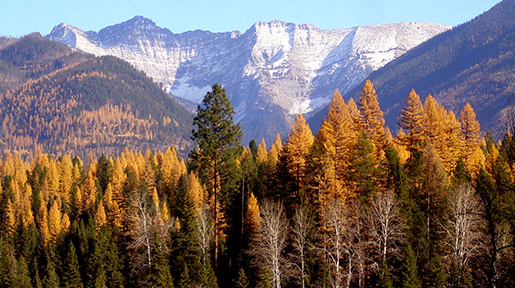
The 2018 Forest Plan replaces the 1986 Plan, updating the long-term strategic vision for managing the Forest’s 2.4 million acres of lands in northwest Montana. The Forest Plan is the second in the nation to implement the Forest Service’s 2012 Land Management Planning Rule (36 CFR 219), which facilitates goals of the U.S. Department of Agriculture in promoting sound land stewardship in partnership with communities.
“We were glad to be part of a robust collaborative process that included a wide range of stakeholders willing to work hard to find space for everyone in our National Forests,” stated Paul McKenzie, the Lands & Resource Manager for F.H. Stoltze Land & Lumber Company. “We feel the collaborative proposal to the USFS was given good consideration in the Forest Planning process. Many elements of the proposal are reflected in the management plan for the North Fork Area. It just goes to show that working together produces better results than working against each other.”
Amy Robinson, Conservation Director for the Montana Wilderness Association added, “The Montana Wilderness Association thanks the Forest Service for including many of the collaborative recommendations the Whitefish Range Partnership offered regarding timber harvest, recreation, and weed management. We are particularly pleased the Forest Service is recommending 80,000 acres of new Wilderness in the northern Whitefish Range. This recommendation will help secure and enhance critical habitat for grizzly bears, lynx, and other wildlife that make this corner of Montana so unique.”
The Notice of Plan Approval was published in the Federal Register on December 27, 2018. The Forest Plan went into effect 30 days after publication and the NCDE amendments went into effect upon publication of the Notice of Plan Approval on December 27, 2018. The Notice of Plan Approval, signed ROD, Forest Plan, and FEIS are available at www.fs.usda.gov/goto/flathead/fpr. The signed ROD for the NCDE amendments, are available at www.fs.usda.gov/goto/flathead/gbamend.
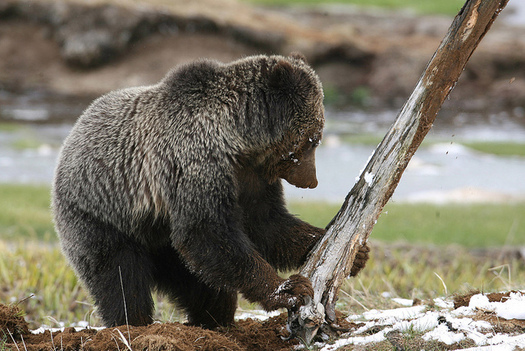
Grizzly bear claws dead tree looking for insects – Jim Peaco-Yellowstone National Park
Another interesting item from Public News Service…
After a record number of grizzly bear deaths in 2018, groups are calling for an update to a decade-old report on conflict prevention.
Six conservation groups have sent a letter to the Interagency Grizzly Bear Committee’s Yellowstone Ecosystem Subcommittee.
They’re urging members to develop new recommendations for avoiding conflict involving bears, people and livestock and also evaluate how well the 2009 report was implemented.
A large majority of Montanans consider themselves outdoor fanatics and believe the state’s natural resources should be protected, according to the ninth annual Conservation in the West Poll from Colorado College.
Eighty percent of respondents in Montana say they are outdoor enthusiasts – the highest number among the eight western states polled.
Montanans also appear to reject the Interior Department’s energy dominance agenda, with 60 percent preferring to protect clean air, water and wildlife habitats, compared to 30 percent who want to pursue more domestic energy sources.
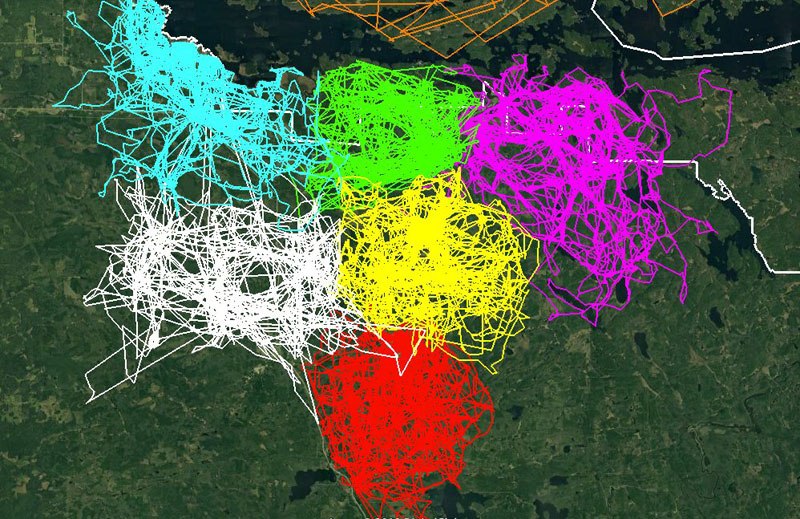
Map Uses GPS Locations to Show How Territorial Wolf Packs Are – map by Voyageurs Wolf Project
Here’s an interesting find by the guy who operates the Twisted Sifter blog . . .
In a recent post by the Voyageurs Wolf Project, they demonstrate how territorial wolf packs are through the mapping of 68,000 individual GPS locations from 7 wolves in different packs from the summer of 2018. They explain:
‘Each wolf’s collar took locations every 20 min (with the exception of the northernmost pack which took locations every 4 hr starting in October) for the duration of the summer. The last photo of the post shows the name and territory of each pack. There are a few packs that we have had collared in the past 2 years that we were not able to get GPS-collars on this year.’
‘This detailed GPS-data is incredibly valuable for understanding pack boundaries and also for our predation research. We visited every spot these wolves spent more than 20 minutes to determine if the wolves made a kill. This required an estimated 5,000 miles of hiking this past summer from our field crew!’
Here’s a reminder that bears aren’t the only critter you should not be baiting onto your property . . .
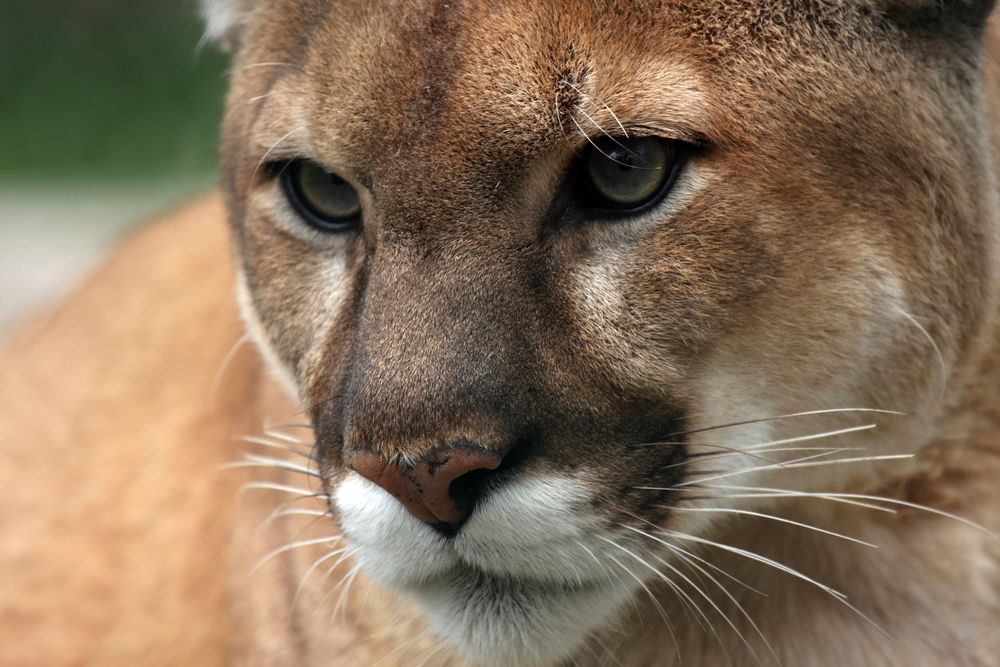
Jamie Jonkel couldn’t help but smile a couple of weeks ago when a report of a trio of mountain lions near a Florence school bus stop hit the news.
The longtime Montana Fish, Wildlife and Parks wildlife management specialist had seen it happen before.
“Those lions at Tie Chute were seen way at the upper end of the road,” Jonkel said. “It wasn’t near a bus stop. The man who made the report had just put his kids on the bus and he was on his way back home when he saw them.”
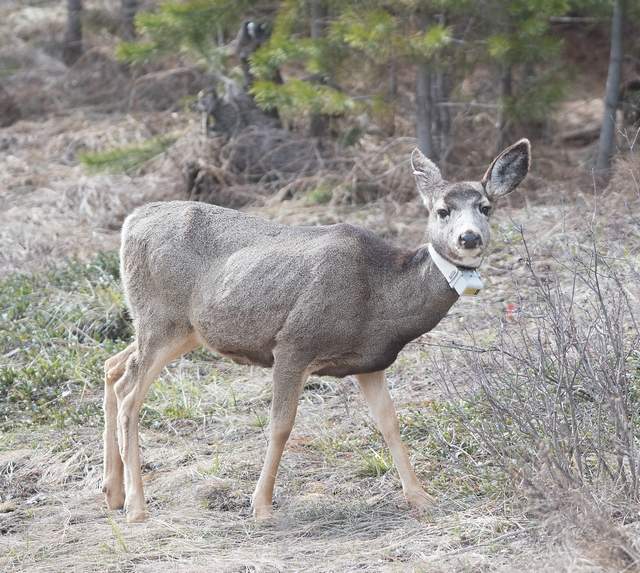
Mule deer with tracking collar, Whitefish Range, Montana
The ongoing mule deer study is turning up some interesting data . . .
Preliminary data from a 2-1/2-year long mule deer study is showing some interesting facets in the animals’ behavior and movement across the landscape in Northwest Montana.
Researchers from the University of Montana in cooperation with Montana Fish Wildlife and Parks, radio collared 44 mule deer on the Rocky Mountain Front near Augusta, 26 in the Fisher River drainage and 31 in the Whitefish range.
Currently, of those deer, 26 are still “on air” along the front, 21 near the Fisher and 19 in the Whitefish Range.