Spotted a North Fork connection in the NPR feed this morning. Dave Chadwick, speaking for the Montana Wildlife Federation, has a problem with a couple of the new Arby’s offerings . . .
At a ranch house in rural Montana, Rick White peels the bun off Arby’s new venison sandwich.
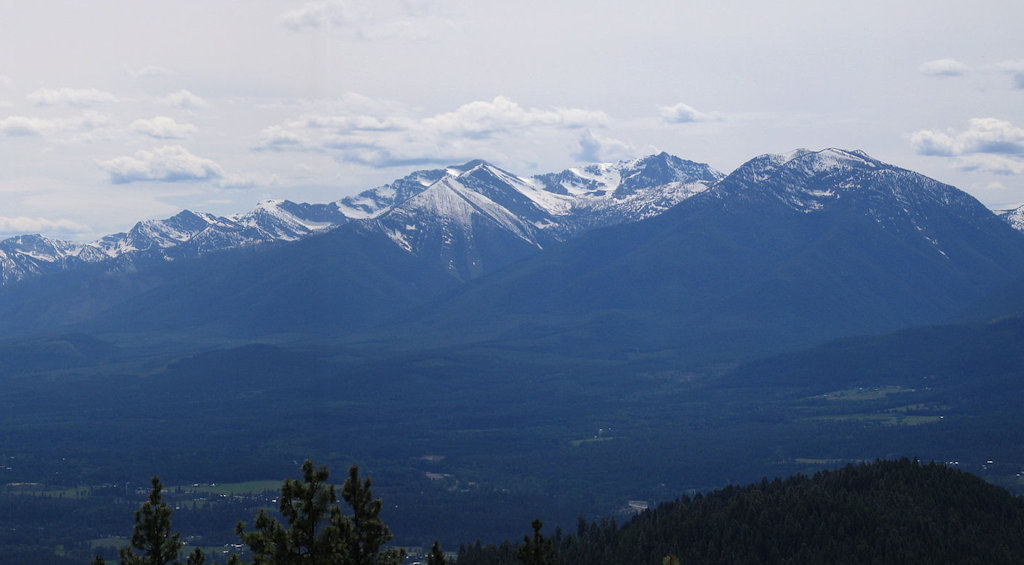
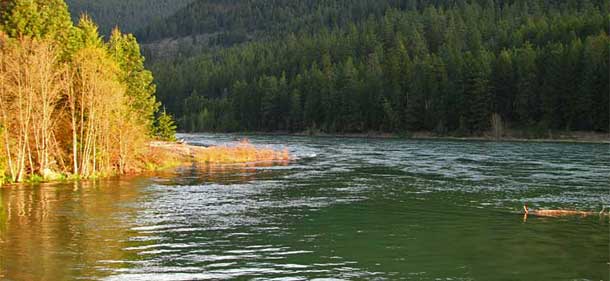
Southern Cabinet Mountains, as seen from Swede Mountain, near Libby
It’s kind of a long shot, but opponents of mining along the edge of the Cabinet Mountains Wilderness are employing “bad actor” law in an attempt to block issuance of mining permits to the Hecla Mining Company . . .
Opponents of Hecla Mining Co’s projects near the Cabinet Mountains Wilderness claim its chief executive officer can’t seek new permits until he accounts for millions of dollars in reclamation work incurred by his previous mining company.
In a letter released Monday, the coalition of environmental groups asked the Montana Department of Environmental Quality to suspend all permitting efforts requested by Hecla CEO Phillips Baker. Baker was formerly chief financial officer of Pegasus Gold Inc., whose bankruptcy in 1998 left the state responsible for at least $33 million in acid mine contamination at the Zortman and Landusky mines between the Fort Belknap Indian Reservation and Malta.
The Pegasus bankruptcy was a major factor in the Legislature updating the Metal Mine Reclamation Act in 2001, with its “bad actor” provision prohibiting officials of uncompleted reclamation efforts from starting new projects.
Dave Hadden of Headwaters Montana passed this along the other day. Conservation organizations concerned about the Kootenai and Idaho Panhandle National Forests chalked up a win last Thursday in their fight to protect recommended wilderness areas in the two forests . . .
Missoula, MT – A federal judge today upheld important protections for some of the last unspoiled areas of the Kootenai National Forest in northwest Montana and the Idaho Panhandle National Forests in northern Idaho.
In a decision issued this morning, U.S. District Judge Dana L. Christensen rejected a challenge by snowmobilers that sought to overturn the U.S. Forest Service’s wilderness recommendations for areas including the Scotchman Peaks and Roderick Mountain in Montana and the Mallard Larkins and Selkirk Range in Idaho. The judge ruled that the Forest Service has broad authority to manage recommend wilderness areas to preserve their wilderness values, including through limiting motorized and mechanized use in these wild and remote areas.
The ruling came in response to a lawsuit filed by the Ten Lakes Snowmobile Club and other off-road vehicle groups in November 2015 that asked the court to open the protected areas to motorized use.
The recommended wilderness areas at issue represent some of the last wild areas in the otherwise heavily roaded Kootenai and Idaho Panhandle forests. These areas provide important habitat for mountain goats, grizzly bears, Canada lynx, wolverines, and a wide variety of other species, including the only remaining population of woodland caribou in the continental United States. And they provide an opportunity for hiking, horse packing, snowshoeing, and backcountry skiing in a wild setting. Continue reading Court upholds protections for recommended wilderness in Northwest Montana and Northern Idaho→
According to this note from Chip Weber, Flathead National Forest Supervisor, the next step in the forest plan revision is going to take just a little longer. They are still on track to wind the whole thing up in early 2018, though . . .
Hello,
I would like to update you on the status of the final environmental impact statement for the revised forest plan and the draft records of decision. In addition to addressing the effects of the Flathead National Forest revised forest plan, the final environmental impact statement includes discussion of the environmental consequences of the forest plan amendments to incorporate habitat-related management direction for the Northern Continental Divide Ecosystem grizzly bear population on the Helena-Lewis and Clark, Kootenai, and Lolo National Forests.
We had planned to have the documents out for the pre-decisional administrative review process; commonly referred to as the objection process in October however we now plan to release the documents in November pending the completion of some of the documents. The schedule on our webpage has been updated to reflect this change. Continue reading Next step in Flathead Forest Plan revision delayed a little longer→
Glacier Park superintendent Jeff Mow discussed climate change challenges during a recent presentation at Flathead Community College . . .
On Sept. 20, Glacier National Park’s iconic Going-to-the-Sun road closed on both sides for very different reasons.
On the west side, the road was closed due to the proximity of the Sprague Fire that already had been burning for more than a month and had gutted one of the park’s most prized structures — the Sperry Chalet’s dormitory.
Coming from the east, smoke and heat weren’t the worry. Instead, officials were forced to close the road because of the snow and ice that had made its annual chilly appearance.
Mussel-sniffing dogs from Alberta combed the shores of Tiber and Canyon Ferry Reservoirs during the past week, but found no evidence of invasive mussels. Montana Fish Wildlife and Parks (FWP) requested the assistance of the dog team in an attempt to identify adult zebra or quagga mussels following larval mussel detections last fall. This was part of a larger effort by FWP and other partners to survey for invasive mussels state-wide. Intensive plankton sampling, diver survey and snorkeling surveys have found no larval or adult zebra or quagga mussels this season in Montana waters.
Intensified survey and watercraft inspection this season was in response to larval mussel detections in Tiber Reservoir and a suspect detection in Canyon Ferry Reservoir last fall. This year FWP inspected more than 74,000 watercraft, with 17 intercepted transporting invasive mussels. Most of the boats intercepted with mussels were coming from the Great Lakes and were headed for Montana or other western states and provinces. The six Montana-bound mussel infested boats were decontaminated. The watercraft not bound for Montana were washed at the inspection station and the destination state was notified to allow for follow up and decontamination. Continue reading Mussel-sniffing dogs find no mussels→
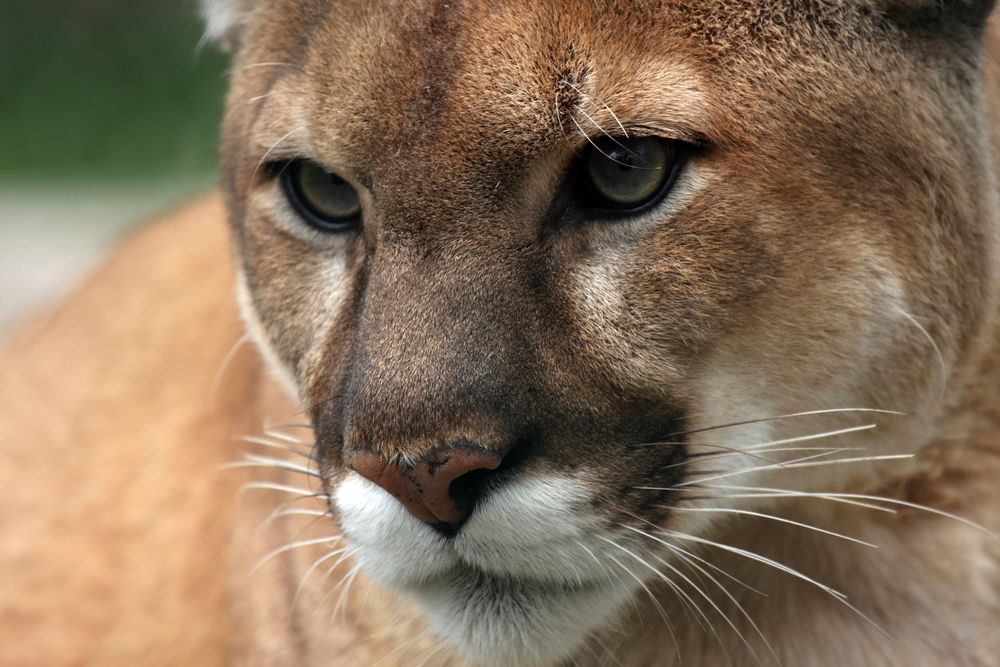
Pumas, mountain lions, cougars, whatever. Anyway, here’s an article pointing out that they may be more social than generally assumed . . .
Supposedly solitary pumas actually hang out with their fellow big cats quite often, frequently coming together and hissing and snarling before settling down to share a delicious elk carcass.
That’s the startling discovery made by scientists who recently tracked 13 pumas — also called mountain lions or cougars — and set up cameras at kill sites. They recorded dozens of peaceful social interactions between these elusive felines.
Pumas can live for more than a dozen years in the wild and have huge home ranges that can stretch for hundreds of miles. Scientists used to think that they lived lonely lives and only came together to mate or fight over territory.
Other than being a cautionary tale of the transboundary effects of coal mining, this item is not directly related to the North Fork. Still, our colleagues to the west in the Kootenai drainage have set up what sounds like some interesting public meetings involving an impressive range of stakeholders . . .
The Kootenai River Network will hold two public meetings in Northwest Montana next week to discuss coal mining operations in British Columbia’s Elk River Valley, and how they could impact Montana water quality.
The Elk River flows for about 220 miles from north to south, beginning at Elk Lake Provincial Park and flowing into the Kootenai River just north of the U.S.–Canada border. Vancouver-based Teck Coal owns five coal mines in its watershed, and environmentalists allege that their pollutants flow downstream to Montana.
Next week’s meetings, which will take place in Kalispell and Eureka with the same content, format, and agenda, will bring together government and industry speakers to discuss these concerns.
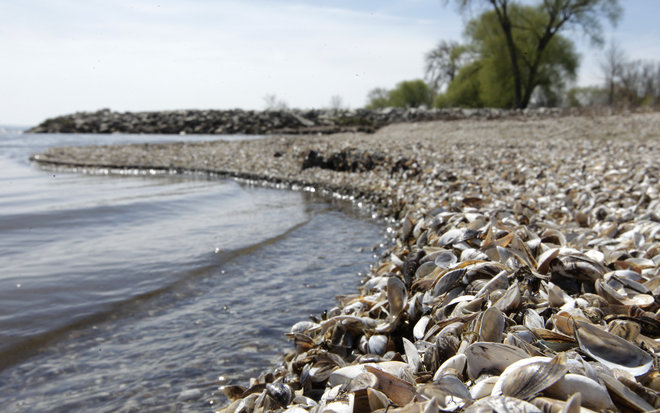
Zebra Mussel Shells Cover a Lake Michigan Limestone Beach in Door County Wisconsin – PJ Bruno
This is an informative article about the issues surrounding invasive mussels in the Flathead Basin. Many of these problems are administrative, but the biggest one is not: DNRC Director John Tubbs wants to grab the money allocated to the Flathead Basin Commission and use it elsewhere . . .
A legislatively mandated pilot program designed to enhance protection from invasive mussels in the Flathead Basin is facing challenges on two fronts.
As part of HB 622, the Legislature gave the Flathead Basin Commission authority to establish and manage the Upper Columbia pilot program. The program would add more certification stations, track vessels that require decontamination, and add the use of automated inspection and detection devices.
The commission also could petition the state’s Fish and Wildlife Commission to adopt rules for the Flathead Basin that would require inspection of all vessels before they launch; prohibit or restrict some vessels, including waterborne airplanes and aquatic weed harvesters; and close waters where invasive mussels have been detected until a containment strategy was implemented.
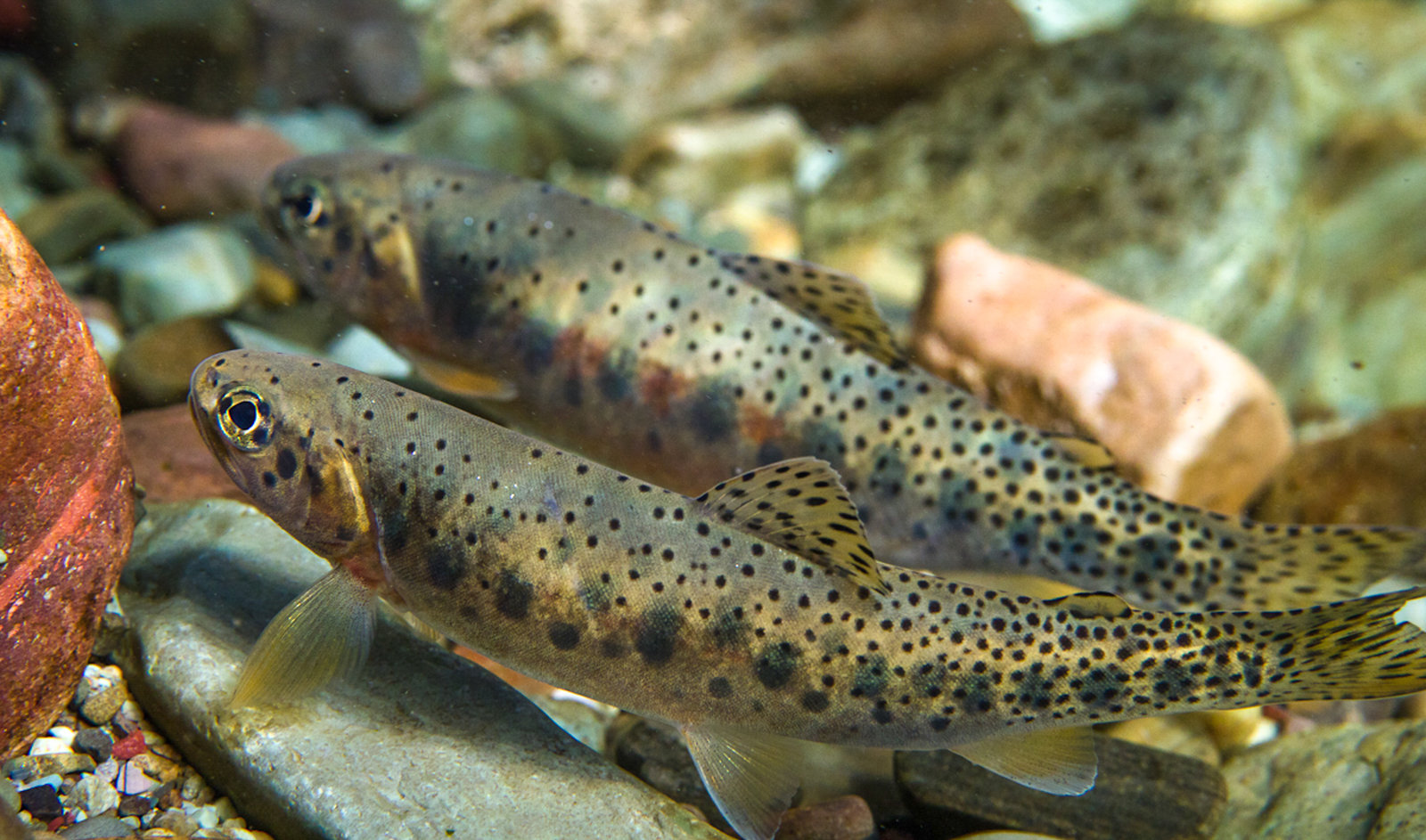
Westslope cutthroat trout in the North Fork of the Flathead River in northwestern Montana – Jonny Armstrong-USGS
FWP fisheries biologists received well-deserved recognition for their efforts to restore the cutthroat trout population in the South Fork Flathead drainage . . .
The largest conservation project in the country aimed at restoring native westslope cutthroat trout has successfully reached its conclusion in the region, replenishing the waters of the South Fork Flathead River drainage upstream of Hungry Horse Dam with genetically pure populations of Montana’s state fish.
In doing so, the architects of the project, a band of dedicated state fisheries experts from the region, earned high honors from Montana’s governor, who this summer had occasion to ply some of the alpine lakes that now contain biologically superior populations of cutthroat.
On Sept. 25, Gov. Steve Bullock presented the Award for Excellence to Montana Fish Wildlife and Park’s Region One fisheries crew for their efforts to protect Montana’s last best stronghold for westslope cutthroat, a massive undertaking that began a decade ago under a cloud of controversy but emerged a resounding success.