Grazing rights attorney Karen Budd-Falen’s presentation last Saturday was not exactly an unqualified success . . .
A controversial land-use attorney drew more than 100 protesters and as many supporters to Hamilton Middle School Saturday, but the topic of her talk with county residents was interpreted differently by people attending the event.
Karen Budd-Falen, the Wyoming-based grazing-rights lawyer leading President Donald Trump’s shortlist for Bureau of Land Management director, presented guidelines on land-use planning to Ravalli County residents.
Protesters characterized Budd-Falen as a supporter of privatizing public land, or at least supporting policies proven to lead to land sell-offs.
Debo Powers, NFPA President, passed along the following information . . .
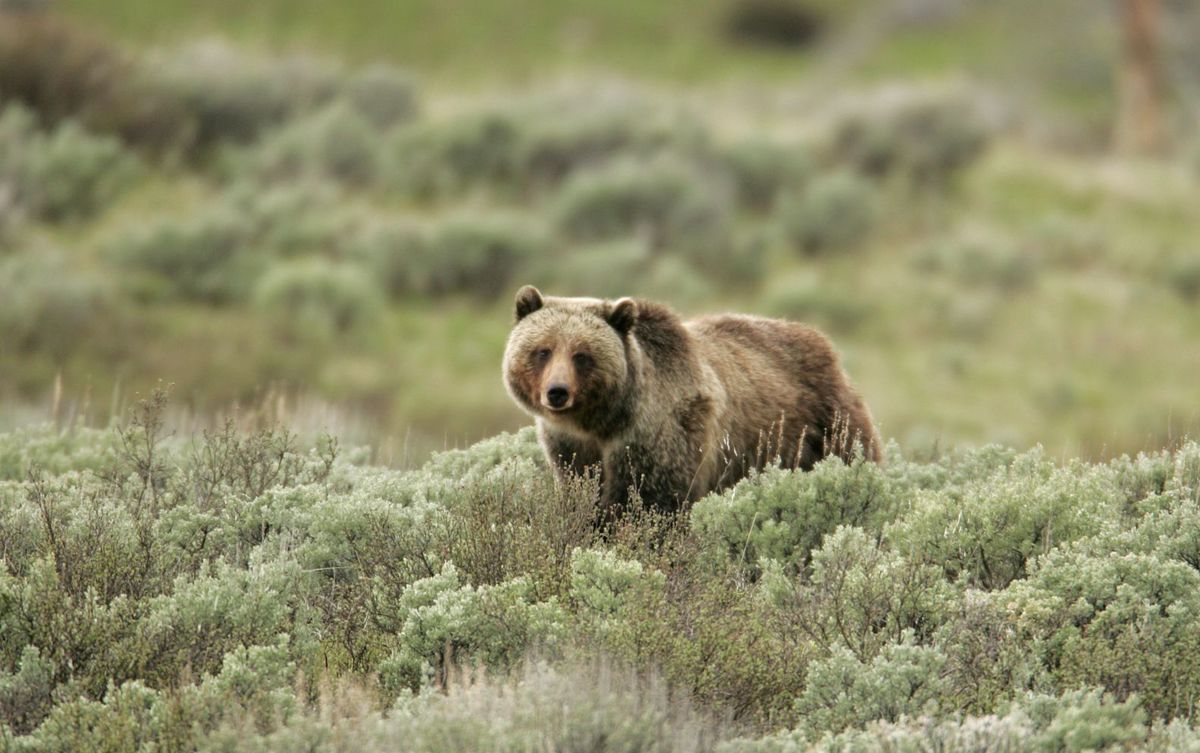
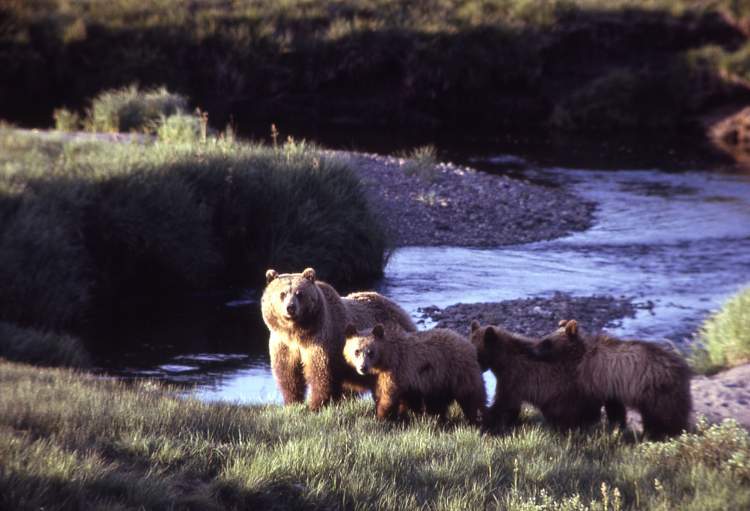
The Northern Continental Divide Ecosystem (NCDE) grizzly bear population is “The Heart of the Grizzly Nation.” This population is crucial to recovery in the rest of the lower 48 populations. As the federal government moves toward delisting these magnificent creatures, we need to become informed.
Dr. David Mattson is building a website intended to bring together much of the information that is known about grizzlies, including demography, diet and habitat, and conservation: https://www.mostlynaturalgrizzlies.org.
There will be a meeting of the NCDE Interagency Grizzly Bear Committee in Missoula on November 29 from 9:00am to 4:00pm. There will be updates from various agencies working on the grizzly bear recovery plan and a time for public comment at the end of the meeting.
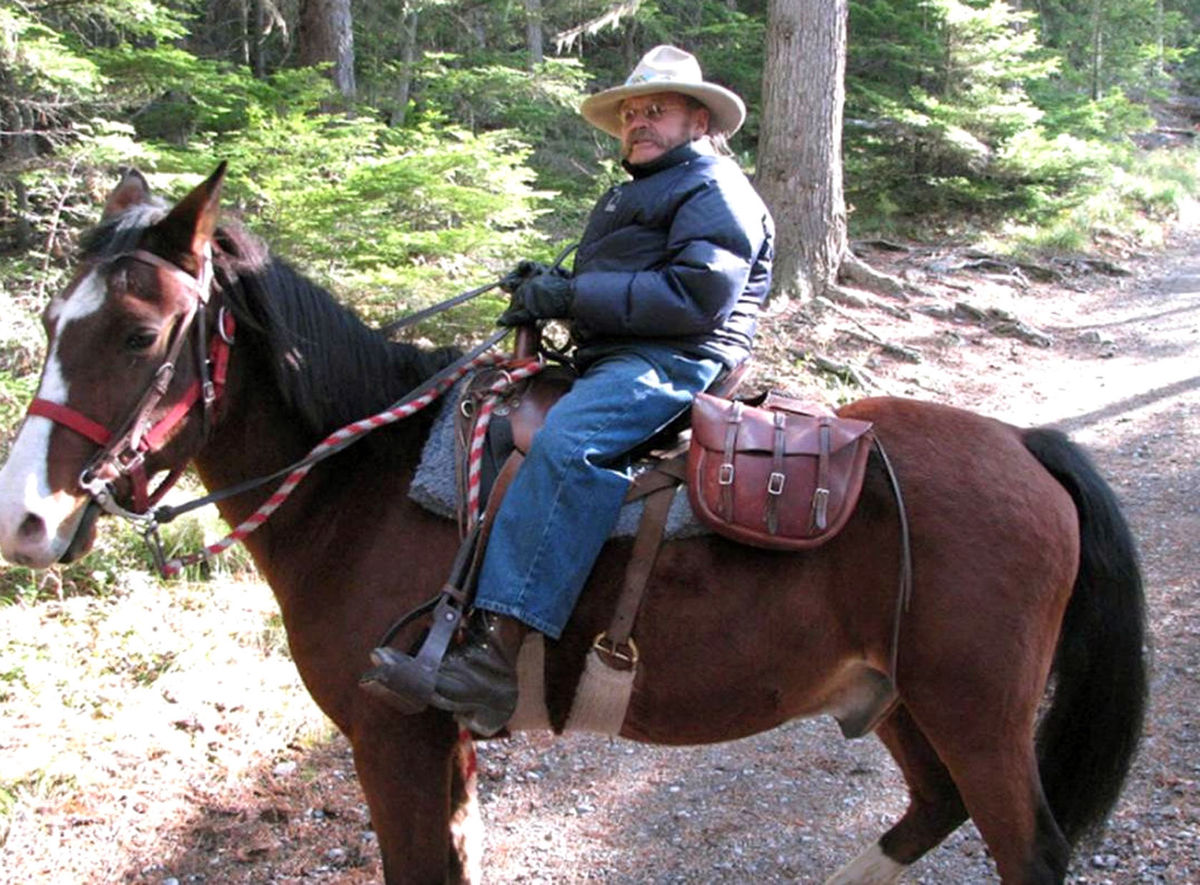
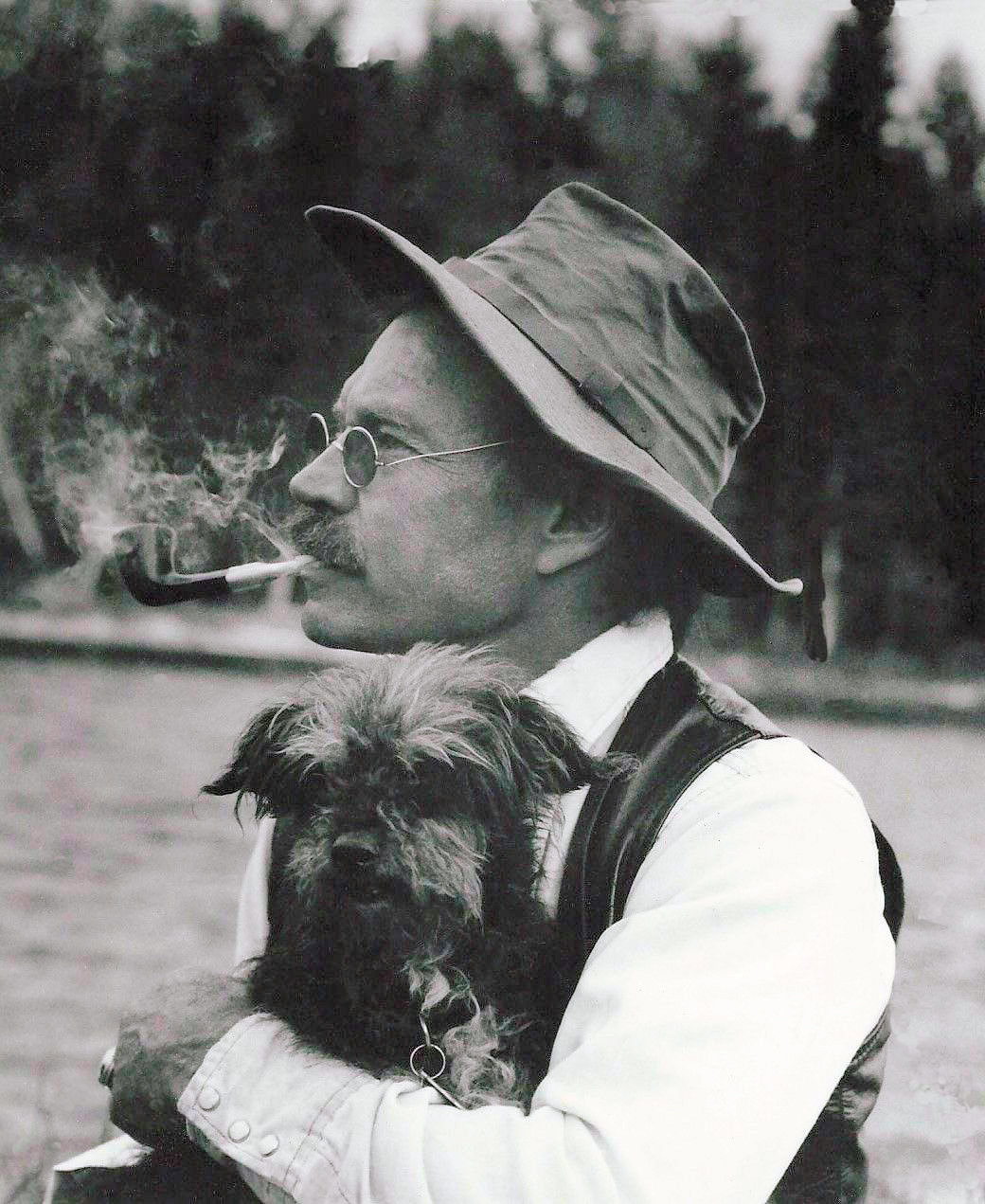
John Frederick on his horse Skippy – photo by Kristian Denny
Rob Chaney of the Missoulian posted an excellent article on yesterday’s passing of John Frederick. Rob put a lot of work into this on very short notice.
Friends of John Frederick mourn the passing of a man equally persuasive with grizzly bears on his screened porch and politicians pestering his beloved Polebridge.
The longtime advocate of all wild things along the North Fork of the Flathead River died of bladder cancer on Nov. 15. He was 74.
“We were friends, notwithstanding our opinions on natural resource things,” frequent debating foe Larry Wilson said Frederick. The two North Fork neighbors were famous for arguing opposite sides at public meetings and then carpooling home together.
John Frederick, a North Fork icon, died on Wednesday morning after a long illness. He was 74.
Frederick, who was often referred to as the “Mayor of Polebridge” was one of the founding members of the North Fork Preservation Association in 1982. The association opposed the paving of the North Fork Road and promoted protection of the North Fork of the Flathead River from proposed coal mining operations in the Canada, a fight that lasted decades. He served as president for more than 30 years.
Frederick was an environmental advocate from an early age. In a 2001 Hungry Horse News interview, he recalled starting a group as a young man in his native Ohio called the “Waste Watchers.”
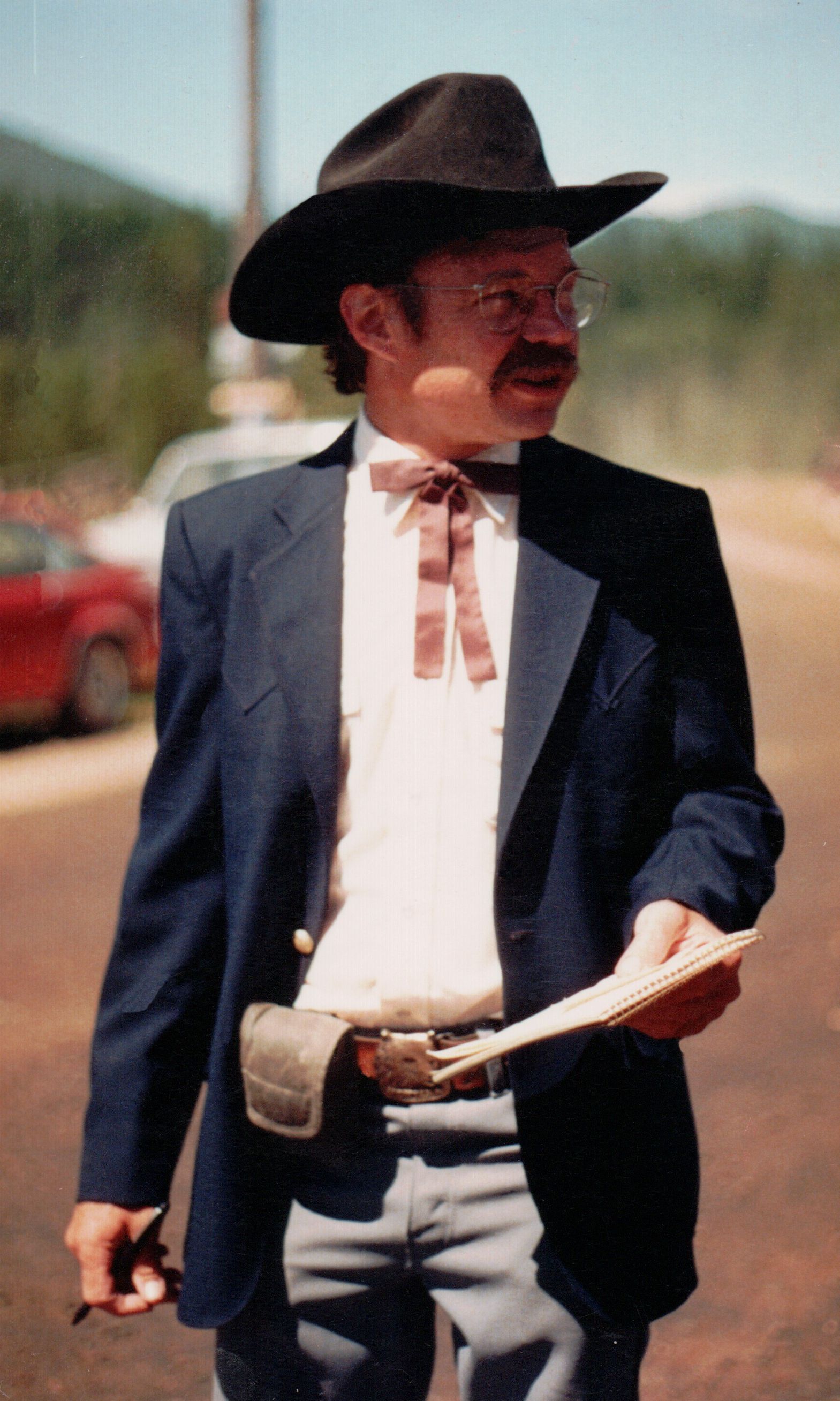
John Frederick at the 1987 Polebridge Forth of July parade
John Frederick, champion of the North Fork and a founder of the North Fork Preservation Association, died today following a long illness. John passed away peacefully, his final weeks filled with the affection, laughter and tears of friends, family and well-wishers.
Here is John’s obituary, written by long-time friend and North Fork historian Lois Walker. We’ll post additional information as it becomes available . . .
Long-time Polebridge resident and champion of the North Fork, John Frederick, Jr., passed away on November 15. He was 74.
He was born in Columbus, Ohio, in 1943, to John and Betty Watson Frederick. He attended school in Marion, Ohio, and graduated with a bachelor’s degree in English from The Ohio State University. He served in the U.S. Army from 1966 to 1969, stationed for almost two years in Alaska.
John moved to Montana in 1976, living first near Olney and then at Rogers Lake. In the fall of 1978, he and his former wife purchased a residence in Polebridge and converted it into the North Fork Hostel. He managed the Hostel with welcoming grace for nearly 30 years, providing comfortable and hospitable lodging for travelers from around the globe and a popular gathering place for North Fork events.
He was an ardent outdoorsman, hiking the trails and camping in Glacier National Park and the Whitefish Range, navigating the lakes and rivers of the area, participating in Mountain Man Rendezvous events, and supporting a wide range of wildlife initiatives and wilderness proposals.
John Frederick with Bernie the Toe-Biter- photo by Carol Vuchetich
In 1982, he founded the North Fork Preservation Association to advocate against paving of the North Fork Road and to promote protection of the North Fork River from proposed coal mining operations in the Canadian Flathead. He served as president of the organization for nearly 30 years. NFPA annual meetings became a fixture of North Fork summer fare, with interesting and educational speakers. The NFPA also supported extensive trail maintenance and fire lookout preservation in the Hungry Horse Ranger District, as well as preservation of the Kishenehn Ranger Station in Glacier National Park.
He served on the board of directors of the North Fork Improvement Association for many years. He was also a member of the North Fork Land Use Advisory Committee and a board member of the former Glacier National Park Associates. He served on the board of Headwaters Montana for many years, participated in the recent Whitefish Range Partnership, and was a member of numerous conservation associations and initiatives.
From 1983-1985 John authored a weekly column about North Fork happenings in the Hungry Horse News. He inevitably served as announcer for the eclectic and unpredictable Polebridge 4th of July parade and earned the well-deserved honorific “Mayor of Polebridge.” He was a long-time member of North Valley Search and Rescue, and also helped found the Polebridge Irregulars fire-fighting team.
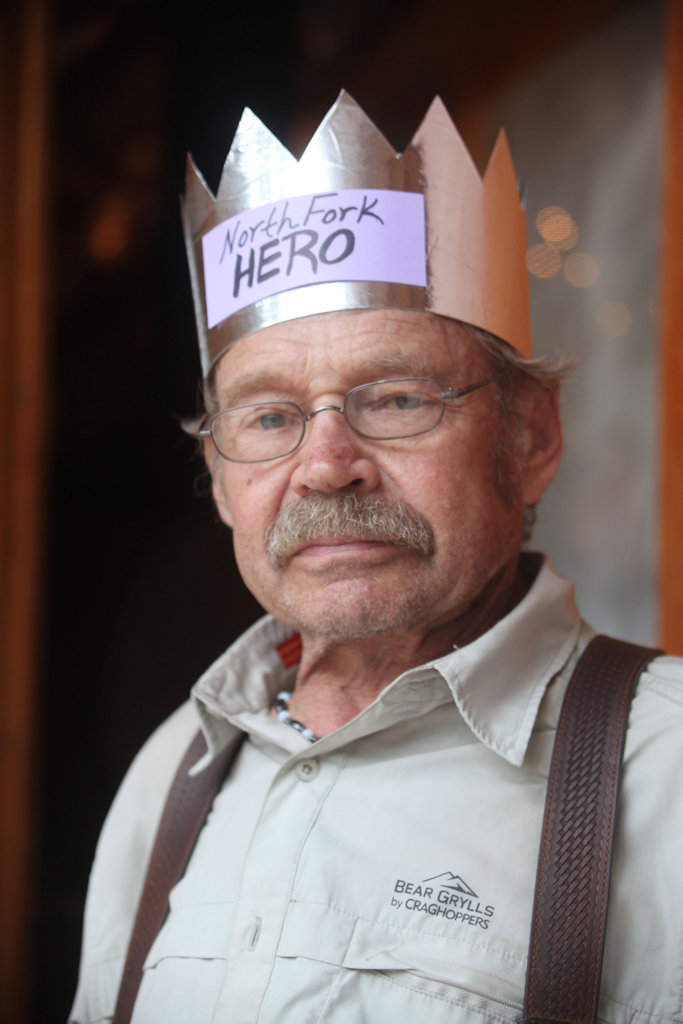
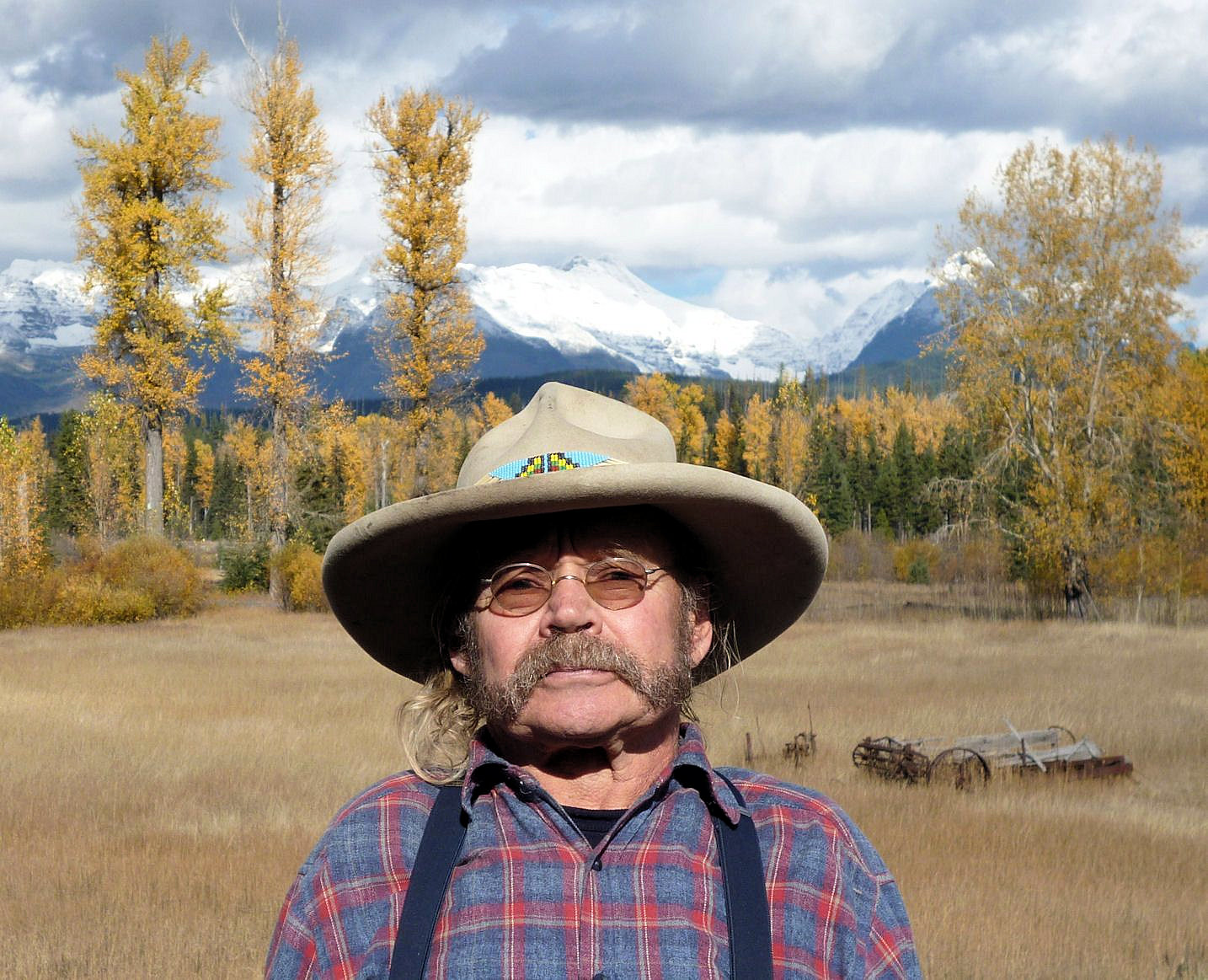
John Frederick at home in October 2011
In 2014 he received a Conservation Achievement Award from the Flathead Audubon Society in honor of his 35-year effort to keep the North Fork wild. He will be long and well remembered for his soft-mannered yet persistent personality, his wry sense of humor, his dedication to environmental consciousness, and his tireless efforts in the interests of wildlife and wilderness conservation.
He is survived by a sister, Bonnie Lee Hankey, of Harveysburg, Ohio, a brother Alfred William Frederick (Imaculada) of Tampa, Fla., and nine nieces, nephews, and grandnieces and nephews.
Burial will be at Woodlawn Cemetery in Columbia Falls. Announcement of a celebration of John’s life will be forthcoming.
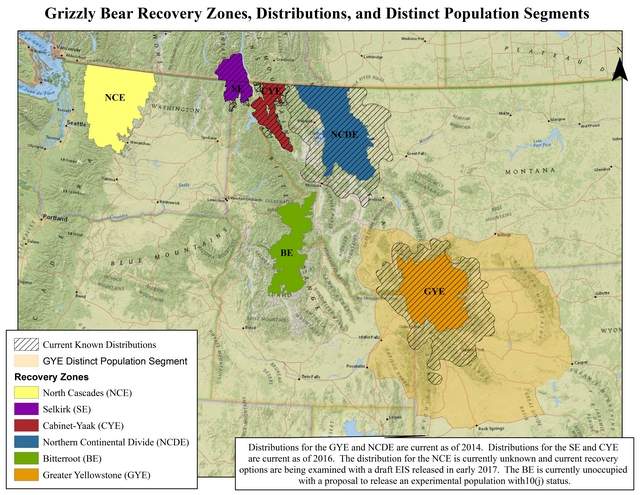
Grizzly bear recovery zones – US Fish and Wildlife Service
Here’s a good overview article from the Daily Inter Lake discussing the complexity of the upcoming decision on delisting grizzly bears in the Northern Continental Divide Ecosystem . . .
For four years, research ecologist Tabitha Graves has studied grizzly bears at the U.S. Geological Survey’s NOROCK West Glacier Field Station.
The hulking ursines bring more than tourists to Northwest Montana. “They have a pretty big role in this ecosystem,” she told the Daily Inter Lake. “We don’t often think about these kinds of details, but they disperse a lot of seeds, [and] they dig a lot,” helping circulate nutrients through the forest floor.
Understanding their benefits requires estimating the number of bears in the region – no easy task in a 16,000-square-mile “demographic monitoring area.” Graves and her colleagues add barbed wire to the tree trunks that bears rub along, then have the hair they collect DNA-sequenced, gaining a sense of which individual bears frequent which spots.
Diane Boyd gave a well-received presentation last Wednesday during a seminar hosted at the University of Montana W.A. Franke College of Forestry and Conservation . . .
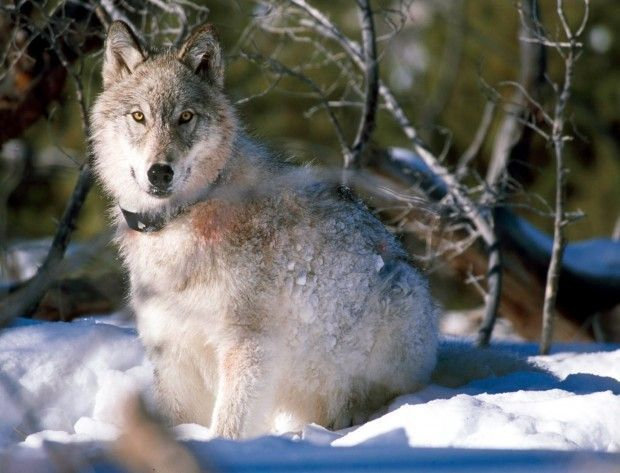
A lot of people talk about the important role federal and state lands play in protecting wolves, but Diane Boyd, a wolf and carnivore specialist, said those public landscapes often are at high elevation and don’t harbor wintering populations of deer and elk.
In fact, the scientist said Wednesday that wolves need both private and public lands protected, and the private swaths are critically important.
“They hold the key, in addition to the federal lands, to maintaining grizzly bears, wolves, elk, deer, everything,” Boyd said.
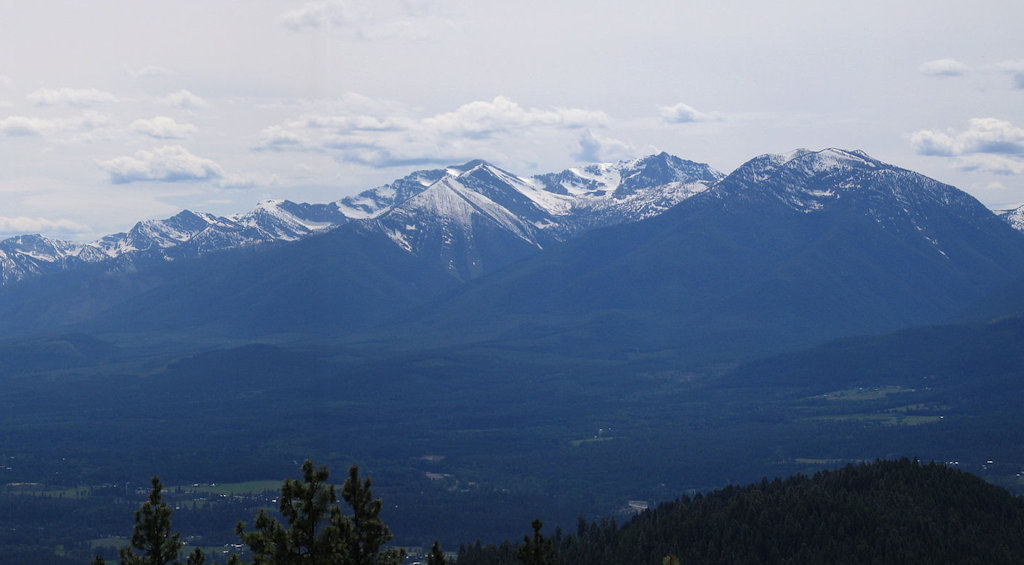
Southern Cabinet Mountains, as seen from Swede Mountain, near Libby
Hecla Mining’s proposed Rock Creek Mine near the Cabinet Mountains Wilderness received partial approval from the US Forest Service — enough to build an adit and do some environmental work. By and large, this is a victory for opposition environmental groups . . .
Opponents and proponents of a proposed copper and silver mine in Sanders County are both celebrating after the U.S. Forest Service announced it would issue only a partial approval for the project in an upcoming Record of Decision.
Conservation groups say that the decision to withhold a full development permit for the Rock Creek Mine proves that a massive industrial project should not be developed beneath a wilderness area for fear that it will dewater the land above. But officials with Hecla Mining Company, the Coeur d’Alene-based mining company heading up the project, said that a phased approval has always been part of the plan.
In a letter dated Oct. 31, Deputy Regional Forester David E. Schmid announced that the final Record of Decision would only approve phase 1 of the Rock Creek Project, allowing the construction of a mine adit and an environmental evaluation of the site, which is located near Noxon.
As grizzlies spread out into their historic habitat, hopes rise that the isolated Yellowstone population will make contact with the more extensive northern population.
To make the plains and mountains safe for the great herds of cattle that were brought to the West at the end of the 19th century, grizzly bears were routinely shot as predators by bounty hunters and ranchers.
Ever since, the bears in Yellowstone National Park, protected from hunting, have been cut off from the rest of their kind. Their closest kin prowl the mountains some 70 miles north, in and around Glacier National Park.
In a new paper, biologists say that as grizzly populations increase in both Glacier and Yellowstone, more adventurous males from both parks are journeying farther to stake out territory, winding up in places where they have not been seen in a century or more.
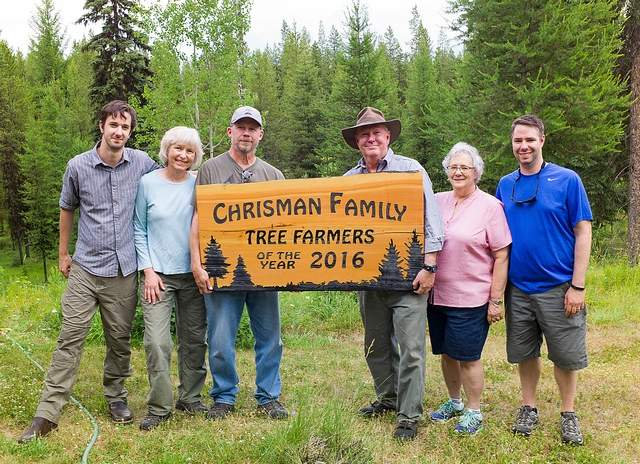
The Chrisman Family Forest gets some more ink, this time in the Fathead Beacon’s ‘Flathead Living’ magazine . . .
To accompany siblings Allen Chrisman and Kari Wiley in the Chrisman Family Forest is less of a nature walk than it is a meander through the woods to meet old friends.
In one section, Allen discussed the family’s logging work to promote growth of certain conifers, while in other areas, he pointed out fuel-reduction projects that have provided new lines of sight from the cabins and other structures on the property.
“You can’t keep trees from growing here — we have wonderful regeneration,” Allen said. “There are opportunities to manage our forest for whatever you want.”