Researching wolverines in the Bitterroot

The Ravalli Republic has a pretty interesting article, with photos, on a wolverine research project in the Bitterroot National Forest. Their setup collects both hair samples for DNA data and photographic evidence, allowing them to identify individuals without waiting for DNA analysis . . .

It seemed like the perfect spot for a wolverine to visit.

A couple of miles back from the nearest road and surrounded by the kind of thick timber that offers a wary critter a good bit of security, the little nook selected by a crew of Bitterroot National Forest researchers to set their first long-term photographic monitoring site had all the makings a good place to rendezvous with wolverines.

“After awhile, you just kind of know what to look for,” said Chris Fillingham. “You go with your gut and what you’ve seen works before.”

Read more . . .

Between a rock and a hard place: mountain caribou in the South Selkirks

John Bergenske posted a lengthy, rather sad article to the Wildsite website discussing the problems recovering mountain caribou herds in the southern Selkirk Mountains in Canada. (South of the border, the Selkirks shelter the sole remaining woodland caribou population in the U.S.)

Sometimes, there are just no good solutions . . .

I have been involved with mountain caribou since the 1970’s and as Wildsight since the 90’s when we first sponsored caribou research in the Purcell Mountains. It has been clear since that time that there are no simple solutions or easy answers to mountain caribou recovery.

Read more . . .

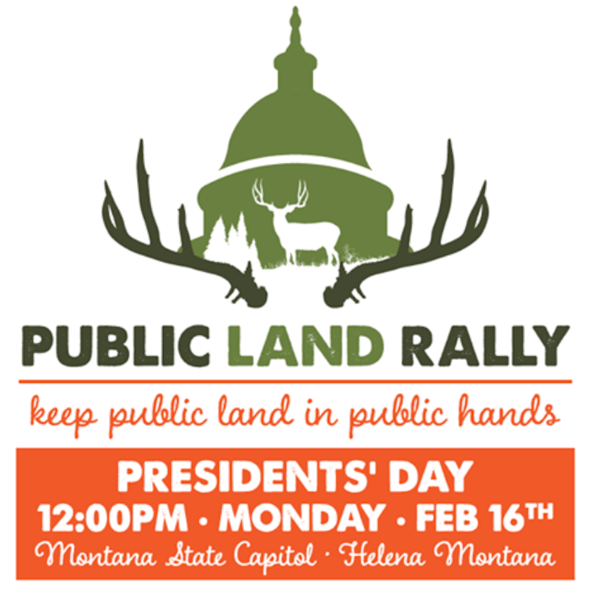
Presidents’ Day rally to protect public lands

Presidents' Day Public Land Rally
Presidents’ Day Public Land Rally

There is a rally at noon on President’s Day, Monday, February 16, in Helena to protect access to public lands. The immediate trigger for this event is a movement within Montana to give up federal lands to state control. Such a move would mean a sharp increase in the state bureaucracy, a hefty bump in the tax burden and, more  than likely, lead to much of the land being sold off to private interests to help finance the whole mess. Everyone from traditional hunting and fishing groups, to motorized recreation outfits to old-line enviros is pretty wound up about this.

For more information, see the Public Lands in Public Hands Facebook page.

Oregon wolf population hits threshold for delisting

Oregon wolves, including the famous wandering wolf OR-7, have reached sufficient numbers to be considered for delisting as an endangered species in Oregon . . .

Wolves in Oregon have hit the threshold for consideration of taking them off the state endangered species list.

The Oregon Department of Fish and Wildlife announced Tuesday the latest wolf census confirms at least seven breeding pairs — six in northeastern Oregon and one, led by the famous wanderer OR-7, in the southern Cascades.

The state wolf management plan calls for a status review once there have been four breeding pairs producing pups that survive a year for three years running. That review will be presented to the state Fish and Wildlife Commission when it meets April 24 in Bend. The earliest a decision could be made would be at the commission’s June 5 meeting in Salem.

Read more . . .

President wants to expand wilderness in Alaska’s Arctic National Wildlife Refuge

President Obama wants to expand the area of Alaska’s Arctic National Wildlife Refuge currently designated as wilderness . . .

President Barack Obama is proposing to designate the vast majority of Alaska’s Arctic National Wildlife Refuge as a wilderness area, including its potentially oil-rich coastal plain, drawing an angry response from top state elected officials who see it as a land grab by the federal government…

The designation would set aside an additional nearly 12.3 million acres as wilderness, including the coastal plain near Alaska’s northeast corner, giving it the highest degree of federal protection available to public lands. More than 7 million acres of the refuge currently are managed as wilderness.

Read more . . .

‘Bill Tracker’ lists good and bad Montana environmental bills

The Montana Environmental Information Center (MEIC) maintains a “Bill Tracker” on their web site. It lists all the environmental bills, both good and bad, being considered by the Montana legislature. Here’s what they have to say about it: “Use MEIC’s Legislative Bill Tracker tool to stay current with the most recent legislative happenings. You can see where a bill is in the process, read facts about different legislative proposals, and contact legislators about specific pieces of legislation.”

MEIC updates their Bill Tracker every day.

If you are trying to keep an eye on Montana’s legislative shenanigans, visiting the Bill Tracker page should be part of your daily routine. It is so useful, in fact, that we’ve added it to our “Related Links” sidebar. Look for “Bill Tracker Tool (MEIC).”

A response to Senator Daines’ resource development letter

Sen. Daines wrote Montanans on December 19, 2014 asking for feedback on “what Congress should do to increase development of traditional and renewable resources in our state while ensuring we remain good stewards of the environment.”  He also sought feedback on what to do about Montana Wilderness Study Areas. Signed by six prominent conservation groups, the following level-headed response was sent to him last Friday. It’s a lengthy letter, but worth the read. (It is also available for download as a PDF.)

LETTER TO SENATOR DAINES ON ENERGY POLICY AND WSAs

January 23, 2015

The Honorable Steve Daines
US Senate
Washington, DC 20510

Dear Senator Daines:

We the undersigned groups are sending this letter in response to your December 19 letter seeking feedback on “what Congress should do to increase development of traditional and renewable resources in our state while ensuring we remain good stewards of the environment.” While we appreciate your effort to seek Montanans’ input, we were discouraged by the one-sided framing of issues in your letter. Presenting current government policies as outdated, burdensome and placing severe limits on all energy development does not accurately describe the status quo in our view, nor is this extreme characterization likely to bring diverse Montanans together behind the “balanced solutions” your letter seeks.

Indeed, Montanans across the political spectrum value outdoor spaces and public lands that preserve our natural heritage and enhance our recreation economy, while also promoting responsible resource extraction. The debate on energy and public lands in Montana has progressed beyond the either/or choice between fossil fuel extraction or conservation and recreation. A 2014 Conservation in the West poll confirms this shift, a majority of Montana voters believe we need a balanced approach between energy development and conservation on public lands compared to 27% who think public lands energy development should be strictly limited and 20% who think public lands should be generally open to drilling.

Since your letter specifically requested perspectives on possible release of Wilderness Study Areas (WSAs), we wanted to make sure you are also aware of the consistent and broad support in the state for our wildest lands. Montanans are outdoors people who are proud of our protected Wilderness Areas — from the Bob Marshall to the Cabinets, Rattlesnake and Beartooth Plateau. In the June 2014, University of Montana state wide poll, 78% of respondents said permanently protecting some public lands in Montana as Wilderness has been a good thing for the state. While 51% support designating additional lands as Wilderness, that support level jumped to 66% in the poll if those designations are “crafted here in Montana with community input and the support of local groups.”

Continue reading A response to Senator Daines’ resource development letter

Bills introduced to protect access to public lands and waters

There are a couple of bills in process at the state level to address a growing problem with private individuals gating off public roads and waterways . . .

The Montana Wildlife Federation and the Public Land/Water Access Association say they are promoting two bills to address the growing problem of people blocking off large tracts of public land by gating public rights of way. The bills seek to improve public access to public lands by keeping public roads open.

Dave Chadwick, executive director of the Montana Wildlife Federation, said the bills have been carefully planned to ensure that they protect both public access to public land and wildlife and private property rights.

“Responsible hunters value private property rights as much as they value public access to wildlife,” Chadwick said. “Our goal is to elevate and protect both of these important Montana values. Our beef is not with landowners — it’s with people who unilaterally decide to close public roads. Law-abiding farmers, ranchers and other property owners should support these bills.”

Read more . . .

Rob Breeding: Hanging by a thread

Rob Breeding talks about the importance of wildlife corridors by contrasting the Northern Rockies with the tenuous situation in California . . .

When we visit my hometown of Riverside, Calif., my daughters and I like to get some exercise running Mount Rubidoux, a semi-famous landmark in this part of the world. In the winter, especially when the smogless skies get an extra scrubbing from the Santa Ana winds, Mount Rubidoux offers unobstructed 360-degree views of Southern California’s Inland Empire.

You can’t quite see the Pacific from here, but that’s because the Santa Ana Mountains get in the way. Those mountains are where one of my old grad school profs, Paul Beier of Northern Arizona University, used radio collars to show how mountain lions use even the thinnest thread of connectivity to move between habitat islands created by encroaching suburbia. Even narrow culverts running beneath urban freeways are used by traveling wildlife.

On a clear day as I run I can see dozens of these habitat islands scattered across the Inland Empire. I distract myself from my workout by recreating in my mind the wildlife wonderland this natural landscape must have been before it became prime human habitat. I know there were valley quail everywhere, which is enough to get my attention.

Read more . . .