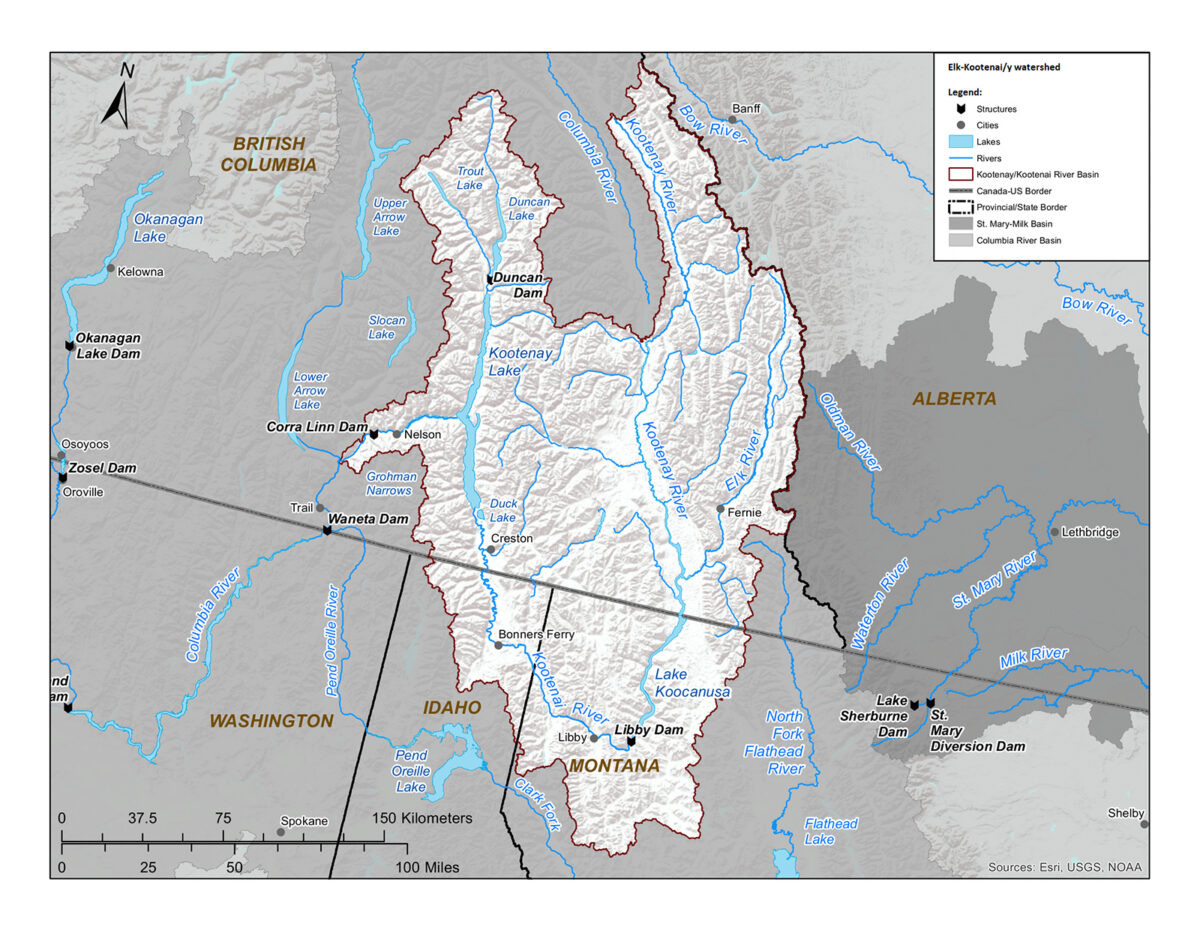
Here’s an excellent, well-researched article by Tristan Scott of the Flathead Beacon on the continuing effort to deal with selenium pollution in the trans-boundary Elk-Kootenai watershed. Recommended reading . . .
Tribal governments from Montana, Idaho and British Columbia (B.C.) are closing ranks to oppose a coal mine expansion project in the shared Kootenai River watershed, describing a proposal to build out the mine’s footprint as short-sighted in light of an ongoing international inquiry into a cross-border pollution problem that has persisted for decades.
The league of Indigenous leaders includes western Montana’s Confederated Salish and Kootenai Tribes (CSKT), whose council last month called on B.C.’s provincial government to suspend its review of the project “until sufficient mitigations are in place to address the historical loads of mine-sourced contaminants in the watershed,” including selenium and nitrates — mining toxins that originate in B.C.’s Elk Valley mines and persist all the way to the confluence of the Kootenai watershed with the Columbia River.
On Thursday, CSKT’s council submitted a formal request to Canada’s Minister of Environment and Climate Change Julie Dabrusin, asking that an independent review panel convene to “more robustly analyze” the Fording River Extension (FRX) coal strip mine project “and its implications for both Canada and the United States.” The governments of the Kootenai Tribes of Idaho and the Ktunaxa Nation in Canada have also called the project’s review phase premature and were expected to sign on to the request for independent oversight.