Category Archives: Environmental Issues

Bike deal adds heartache, hope to wilderness proposal

Grizzly Basin - added to the Bob Marshall Wilderness Area under the Blackfoot Clearwater Stewardship Act - Zack Porter photo
Grizzly Basin – added to the Bob Marshall Wilderness Area under the Blackfoot Clearwater Stewardship Act – Zack Porter photo

The Blackfoot-Clearwater Stewardship Project is back in play in the U.S. Senate, but getting to that point was not at all an easy or comfortable task . . .

Smoke Elser agreed to share his favorite place in the world with his least-favorite pastime, and it nearly broke his heart.

“I will support what we’ve done,” Elser said. “I’m the only one who voted against it. But everyone else agreed. And I want Grizzly Basin. I want that Monture drainage. So I had to compromise. But I’m not going to compromise anymore.”

What the dean of Montana’s horse-packing heritage did was concede to a deal that unified an unprecedented coalition of supporters around an expansion of the Bob Marshall Wilderness Complex. In return for endorsing full federal protection of 80,000 acres, the International Mountain Bicycling Association (IMBA) and two Montana mountain biking groups laid claim to about 3,800 acres for future cycling trails. That’s next to a proposed 2,200-acre recreation management area designated for snowmobile use.

Read more . . .

Harvey Locke leads charge to prevent global-scale extinction

Harvey Locke
Harvey Locke

Many of you will remember Harvey Locke from the 2014 NFPA Annual Meeting as a charismatic orator who thinks in large landscapes. “Large” may be too mild an adjective. The Calgary Herald has the story . . .

Harvey Locke would grimace at the suggestion he’s on a mission to save the world.

But the Calgary native and Banff resident has embarked on a campaign to convince world leaders to preserve 50 per cent of their countries’ land mass to avert what’s seen as the earth’s sixth great extinction event, this one preceded by the disappearance of the dinosaurs.

“It doesn’t lack ambition, that’s for sure, but it’s more feasible than it might appear,” said Locke, a veteran conservationist. “This is the kind of conservation we need if the world is to continue functioning in the way we know it to be.”

Read more . . .

More muscle needed against mussels

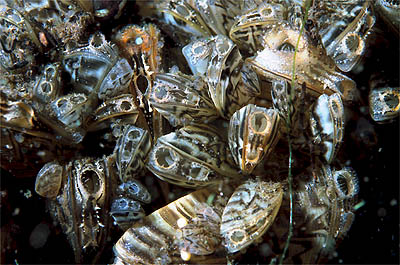
Zebra mussels
Zebra mussels – via Wikipedia

The Flathead Basin Commission wants stepped up protection against invasive mussels for Flathead Lake. (The Hungry Horse News gets credit/blame for the headline pun.) . . .

With the detection of invasive mussels last November in the Tiber Reservoir, Montana lost its status as one of the last few states free of zebra or quagga mussels.

These mussels may be small, but they cause big problems. When they hitch a ride on watercraft or in bilge water and travel between water bodies, they reproduce quickly and have a host of negative effects, including structural damage, water chemistry changes, and algal blooms.

They also rob native species of food and habitat. As the mussels infest water bodies increasingly closer to the Flathead Basin, conservation organizations are scrambling to develop new plans for prevention and management. The current state plan for managing aquatic invasive species includes three links in a “protective tripod,” as Thompson Smith, Chair of the Flathead Basin Commission called it during a meeting last week.

Read more . . .

Trout don’t make healthy mutts

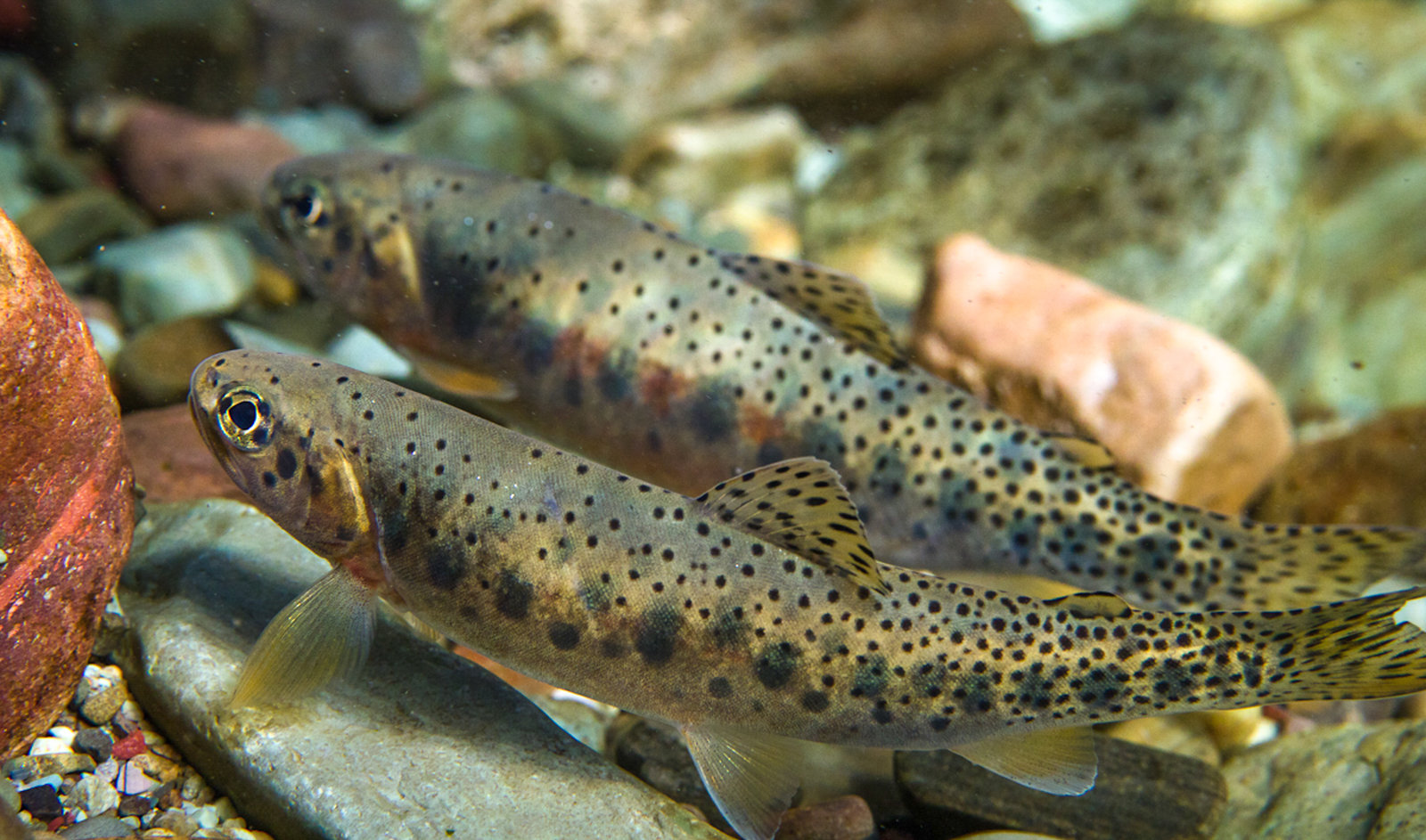
Westslope cutthroat trout in the North Fork of the Flathead River in northwestern Montana - Jonny Armstrong-USGS
Westslope cutthroat trout in the North Fork of the Flathead River in northwestern Montana – Jonny Armstrong-USGS

Here’s a little bit different take on the cutthroat trout report mentioned here a couple of days ago . . .

Unlike dogs, trout don’t make healthy mutts.

Don’t expect hybrid vigor when rainbow trout interbreed with cutthroats in Montana’s high mountain streams. Despite the rainbow’s success as the most widely distributed game fish in the world, and the cutthroat’s remarkable ability to thrive through wildfires and landslides, their co-mingled offspring tend to be too dumb to live long.

That fact leaps out of analysis on one of the largest genetic data sets anywhere of Rocky Mountain cutthroat trout at the University of Montana’s Conservation Genetics Lab. In a recently published paper, the researchers looked at what happened to native trout after decades of artificial stocking in lakes and rivers.

Read more . . .

Reminder: Flathead Earth Day celebration, April 22

Earth Day 2017 PosterFrom the press release . . .

Celebrate Earth Day on April 22nd with a free family-friendly festival in Whitefish!

The third annual Flathead Earth Day Celebration will be at a new location this year, on the lawn at Whitefish Middle School (at the intersection of Second Street and Spokane Avenue in downtown Whitefish – or inside the school in the event of rain). From 11:00 AM until 3:00 PM, explore over 40 booths hosted by local conservation organizations and green businesses. Each booth will feature a different hands-on activity or craft focused on one of four Earth Day pillars: Grow It, Fix It, Save It,and Live It.

Attendees will be able to plant their own seeds, create repurposed art and toys, visit with live raptors, identify local wildlife and plants, learn about local fish and rivers, sort out how to recycle and help paint a community recycle bin, master how to Leave No Trace, meet Woodsy the Owl and Gracie the “Bark Ranger”, see aquaponics and solar power in action, and discover opportunities to keep celebrating Earth Day all year long – just to name a few!

Kids are encouraged to bring their bicycle for the bike rodeo obstacle course to practice important safety skills. There will be free bike safety checks and tire fills available for bicyclists of all ages.

Participants that complete activities at 10 or more booths with their Earth Day Punch Card will receive a complimentary coffee or treat from Montana Coffee Traders, as long as they go green by bringing their own mug!

Between booth activities, festival goers can enjoy live music, guest speakers, and interactive presentations at the Earth Day Stage (schedule below), or reach new heights on the Get-a-Grip rock-climbing wall and jumper, available free of charge. Local food trucks will be dishing out fresh lunch fare and tasty treats.

E-waste recycling will be collected at the event. E-waste includes computers, flat screen monitors,printers, laptops, servers, cell phones, flat screen televisions, stereos, VCRs, and similar electronics.Old tube CRT televisions or monitors cannot be recycled at the event.

This lively, fun-filled event is a chance to celebrate and learn about all things green in the Flathead.The festival is made possible by Citizens for a Better Flathead, Glacier National Park Lodges,Montana Coffee Traders, and Valley Recycling.

Earth Day Stage Schedule:
11:00 AM – Live music by Here to Make Friends
12:00 PM – A Special Welcome from Glacier National Park
1:00 PM – Wild Bird Show with Wild Wings Recovery Center
1:30 PM – Meet Gracie, the Glacier National Park “Bark Ranger”
2:00 PM – Climate Smart Champion Awards Ceremony with Climate Smart Glacier Country

Find more information on Citizens for a Better Flathead’s Facebook page (www.facebook.com/CitizensforaBetterFlathead/) or at www.flatheadcitizens.org.
Climate change spells trouble For cutthroat trout

Westslope cutthroat trout in the North Fork of the Flathead River in northwestern Montana - Jonny Armstrong-USGS
Westslope cutthroat trout in the North Fork of the Flathead River in northwestern Montana – Jonny Armstrong-USGS

NPR has an article about the problems faced by westslope cutthroat trout in the this corner of the country . . .

There’s an unplanned experiment going on in the northern Rocky Mountains. What’s happening is that spring is arriving earlier, and it’s generally warmer and drier than usual. And that’s messing with some of the fish that live there.

The fish is the iconic cutthroat trout. It’s a native North American fish that thrives in cold, small streams. Explorer Meriwether Lewis of Lewis and Clark Expedition fame was among the first European-Americans to catch this spangly, spotted fish. He used deer spleen as bait.

It’s relative rarity now makes it a favorite for catch-and-release anglers. But biologists have now found that it’s in danger. The much more common rainbow trout is invading cutthroat streams and mating with the native fish. Ecologist Clint Muhlfeld says that creates hybrids.

Read more . . .

Study looks at rare critters

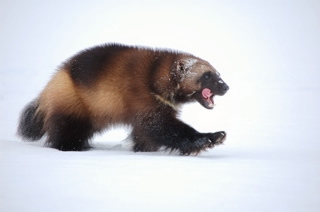
Wolverine in snow - Steve Kroschel
Wolverine in snow – Steve Kroschel

Here’s a pretty interesting article from the Hungry Horse News regarding an effort to study small carnivores in the Swan and Mission valleys . . .

Down in the basement of the Condon work center there’s a wall with paper bags tacked to it, carefully labeled, drying out.

It’s what Adam Lieberg of the Swan Valley Connections Southwestern Crown Collaborative Carnivore Project calls the “wall of scat.”

He used to have the bags in his living room, but it smelled like a very old litter box and his wife-to-be almost left him, he joked.

Read more . . .

Lawsuit challenges cancellation of Badger-Two Medicine oil and gas lease

Badger-Two Medicine Region

“It ain’t over till it’s over.” . . .

A prominent Texas oilman has filed a lawsuit against the federal government alleging it illegally canceled his oil and gas lease in the Badger-Two Medicine region near Glacier National Park and is seeking to reinstate his right to extract mineral resources in an area considered culturally sacred by the Blackfeet Tribe.

The lawsuit, filed April 3 in U.S. District Court in the District of Columbia, names as plaintiff the billionaire oilman W.A. Moncrief Jr., president of one of the nation’s largest family-owned oil and gas businesses. It names as defendants the U.S. Department of the Interior and Jamie Connell, state director of the Montana-Dakotas Office of the Bureau of Land Management.

The legal dispute comes on the heels of the Obama administration’s historic decision in January to cancel the final two remaining leases on the Badger-Two Medicine, marking a hard-fought victory for members of the Blackfeet Nation who have worked to jettison a host of energy leases from their sacred homeland for three decades.

Read more . . .

Wolves ‘best natural defense’ against chronic wasting disease

Gray Wolf
Gray Wolf

Chronic Wasting Disease is a problem for ungulate species in Montana. Wolves may be one good way to control it . . .

Wolves are the perfect animal to help reduce the spread of chronic wasting disease among elk, deer and moose, wolf advocates told the Montana Fish and Wildlife Commission last week during the board’s meeting in Helena.

“And it doesn’t cost us anything,” said Marc Cooke, president of Wolves of the Rockies.

Cooke’s comment Friday was later endorsed by former Fish and Wildlife Commissioner Gary Wolfe, who was once the program leader for the CWD Alliance, which tracks and provides information on the fatal disease.

Read more . . .

Montana to keep wolf hunt quotas stable outside Yellowstone

Montana wants to keep limiting wolf quotas near Yellowstone National Park . . .

Montana wildlife officials are proposing to keep the number of wolves that can be hunted or trapped just outside of Yellowstone National Park at four.

The proposal that went out for public comment Friday would set a quota of two wolves in each of two Montana management areas outside the park.

That was also the limit set in 2016 after the Montana Fish and Wildlife Commission rejected a plan to increase the quota.

Read more . . .