Wildlife managers continue to work on a plan to remove grizzly bears from the Endangered Species List. Meanwhile, there’s evidence of contact between the two main grizzly population centers . . .
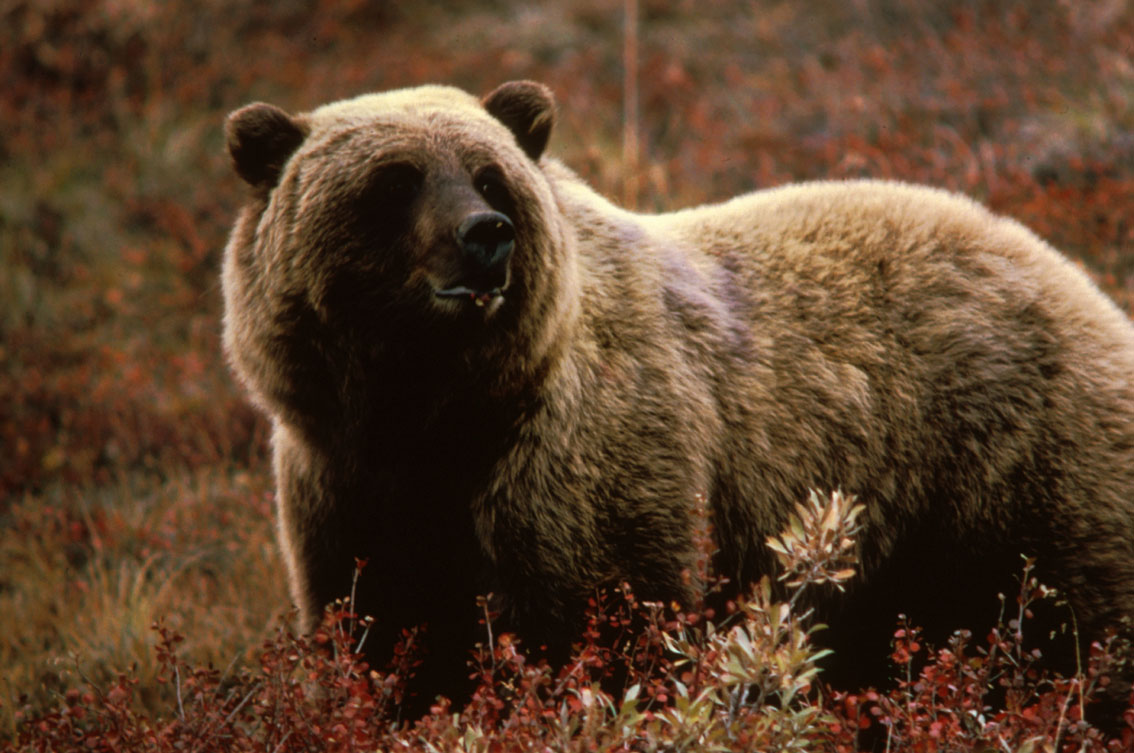
Federal plans to delist the grizzly bear from Endangered Species Act protection will get a second round of public comment.
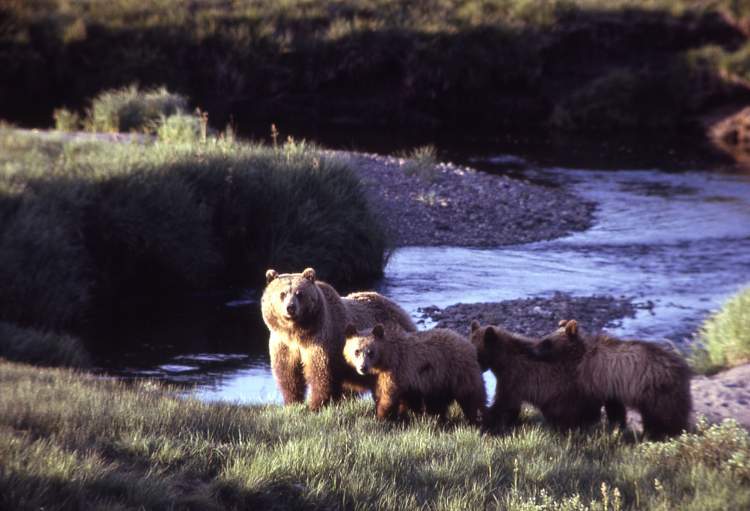
The U.S. Fish and Wildlife Service’s Tuesday announcement follows its release of a peer-review report generally approving its management plan for allowing state management of grizzlies in the Greater Yellowstone Ecosystem. Coincidentally, it also arrives on the heels of reports that Yellowstone grizzlies may be making contact with their fellows in the Northern Continental Divide Ecosystem north of Missoula.
Montana, Idaho and Wyoming state wildlife managers have all proposed plans for both protecting and hunting Yellowstone grizzly bear populations, assuming they leave federal management. Northern grizzlies are considered a separate population, although they are undergoing a similar delisting process that isn’t as far along as the Yellowstone one.
Travelers on the Graves Creek-Trail Creek Road, Forest Road #114, may encounter delays up to an hour or more on Monday, September 12th through Wednesday September 14th, from 8:00 through 5:00 pm.
A retaining wall, approximately 6 miles west of the North Fork Road and 3 miles east of Tuchuck Campground is being repaired and maintained. Crews and equipment will be working to remove mud and debris from the road and wall to ensure that drainage works properly. Please watch for trucks hauling on this narrow road.
For additional information please contact Flathead National Forest Road Manager, Ron Krueger at 406-387-3838.
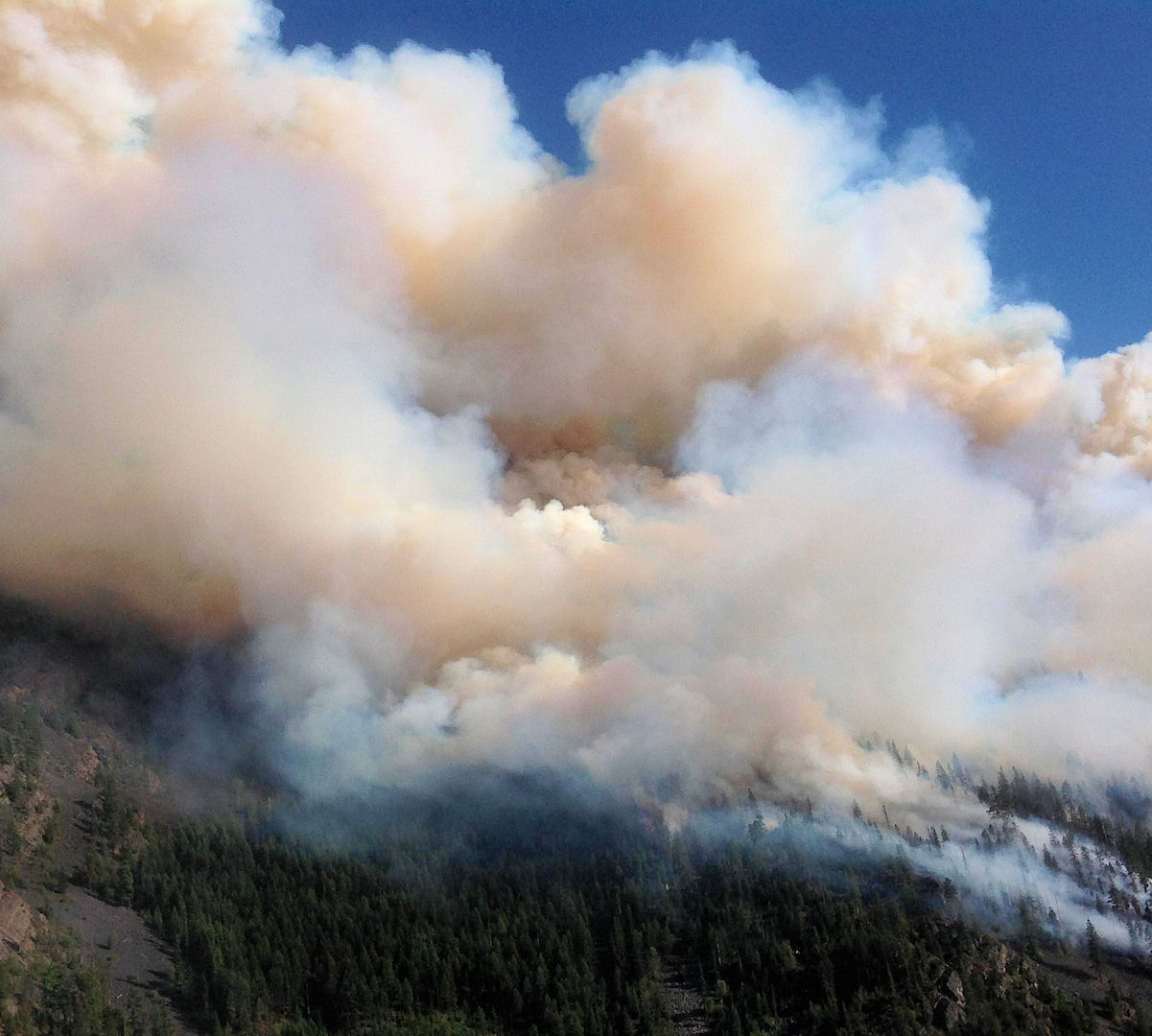
The Copper King Fire makes its initial run on Sunday, July 31, 2016
Locally, the Coal Ridge Fire, a small, 0.2 acre blaze on the south face of Coal Ridge about 6 miles southwest of Polebridge, was declared out yesterday afternoon.
The Flathead Beacon has a good summary of other fires in the Flathead Valley . . .
The storm system that passed through the Flathead Valley earlier this week sparked several new wildfires on the Flathead National Forest in the Swan Lake Ranger District, the agency announced.
Smoke has been visible this week throughout the valley due to the Copper King Fire, which has burned 27,788 acres near Thompson Falls. More than 838 personnel are battling the blaze.
The Cold Lake fire is on the ridge just south of Lower Cold Lake and is approximately 10 acres in size, in sub-alpine fir, and has several small spot fires. There are seven smoke jumpers and a 21-person initial attack crew assigned to the fire. A Type 1 helicopter and a Type 3 helicopter were conducting bucket work to help suppression efforts.
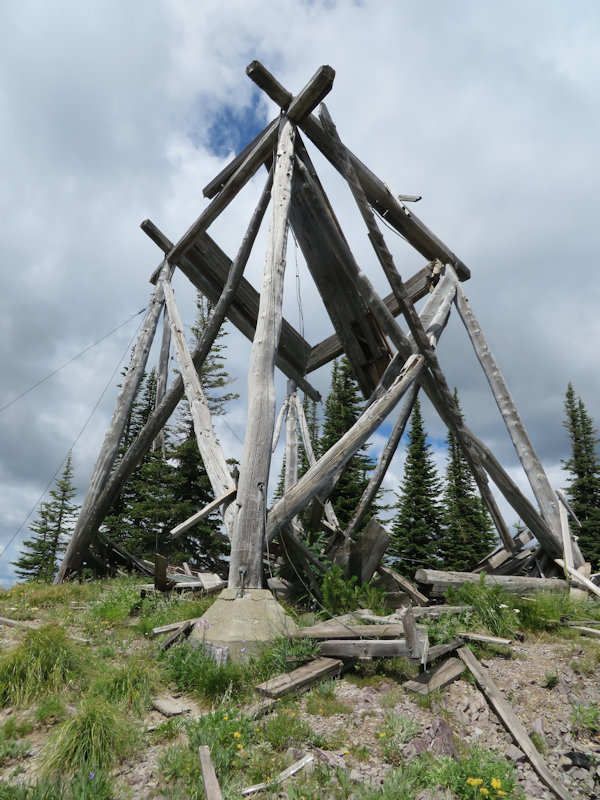
Coal Ridge – remains of old lookout – W. K. Walker
According to a recent report, the Coal Ridge Fire is now “controlled.” It is located 6 miles southwest of Polebridge (or 1.5 miles ESE of the location pictured above), high up on the south face of the ridge above Coal Creek Road.
The 0.2 acre blaze was spotted late Tuesday afternoon. Fire personnel dropped on it the next day.
The Flathead National Forest is having another in a series of open houses on September 8 regarding their “forest plan, plan amendments and draft environmental impact statement.”
This is a fairly big deal. They’re deciding how to manage the forest for the next 20 years or so, including such things as timber management, wilderness, recreation, travel and, in conjunction with surrounding forests, items like how to handle grizzly bear de-listing.
Here’s the announcement . . .
Open House Notice
Flathead National Forest Plan Revision, Plan Amendments, and Draft Environmental Impact Statement
You are invited to attend an open house on the Flathead National Forest draft forest plan, plan amendments, and draft environmental impact statement.
The purpose of the draft forest plan is to provide for long-term sustainability of ecosystems and desired ecosystem services. The draft forest plan describes the Forest’s distinctive roles and contributions within the broader landscape and details forest-wide, management area, and geographic area desired conditions, objectives, standards, and guidelines. The revised forest plan identifies suitable uses of National Forest System lands and estimates of the planned timber sale quantity for the Forest. The draft revised plan identifies priority watersheds for restoration, and includes the evaluation of recommended wilderness areas and eligible wild and scenic rivers. The purpose and need for the four forest amendments for the Helena, Lewis and Clark, Kootenai, and Lolo National Forests, along with the revised forest plan for the Flathead National Forest, is to ensure the adequacy of regulatory mechanisms regarding habitat protection across the national forests in the Northern Continental Divide Ecosystem in support of the de-listing of the grizzly bear.
During the open house the planning team will be available to answer any questions you may have. There will not be a formal presentation. You can plan to stop in at any time during the open house.
Thursday, September 8, 2016, 4:30-7:00 p.m., Flathead National Forest Supervisors Office, 650 Wolfpack Way, Kalispell MT 59901
Documents and maps are available on-line, as well as information about how to comment, at www.fs.usda.gov/goto/flathead/fpr. The comment period ends on October 3, 2016.
State wildlife biologists aren’t ready to say whether the grizzly bear or bears spotted this year in the Upper Big Hole area originated in the Yellowstone ecosystem or traveled from northern Montana.
“We can’t honestly say yet, north or south,” said Fish, Wildlife and Parks biologist Kevin Frey on Monday. “The Big Hole is kind of the gray zone between the two ecosystems.”
The two confirmed grizzly sightings this year are the first in the area in nearly a century. Biologists aren’t certain whether the two sightings, roughly 40 miles apart, were of the same bear. Even though the range makes it entirely possible, Frey has his doubts.
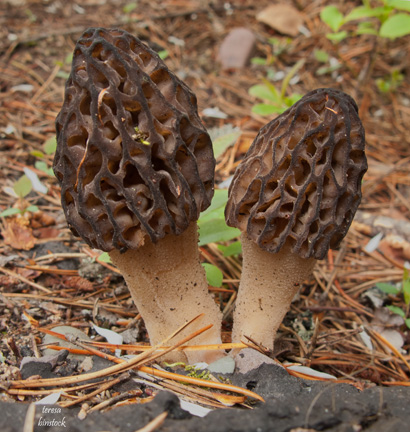
Morel mushrooms near West Glacier, Montana – Cathy McCoy
Yesterday’s (Wed., Aug. 31) NPR “Morning Edition” ran a piece on mushroom pickers in our region . . .
At a campground in northwestern Montana, 30 people are groggily gearing up for a day of mushroom picking.
Most are here because they want an excuse to get outside and taste some of Montana’s more exotic wild mushrooms. But others, like Matt Zaitz from Kansas, are here to turn a profit…
Zaitz can sell a pound of morel mushrooms for about $20. On a good day, which is by no means every day, Zaitz says he can bring in a harvest worth $500. He says there’s potentially millions of dollars to be made off mushrooms in Western public lands, especially in burn zones the summer after a big wildfire.
The Copper King Fire makes its initial run on Sunday, July 31, 2016
All that smoke in the North Fork today is from the Copper King Fire near Thompson Falls in the Lolo National Forest. The blaze has been burning in high, rugged terrain for better than three weeks. Dry, windy conditions added several hundred acres to the fire since yesterday (it’s now at 6908 acres officially) and brought some of the smoke up here.
Bull trout recovery is still a difficult problem . . .
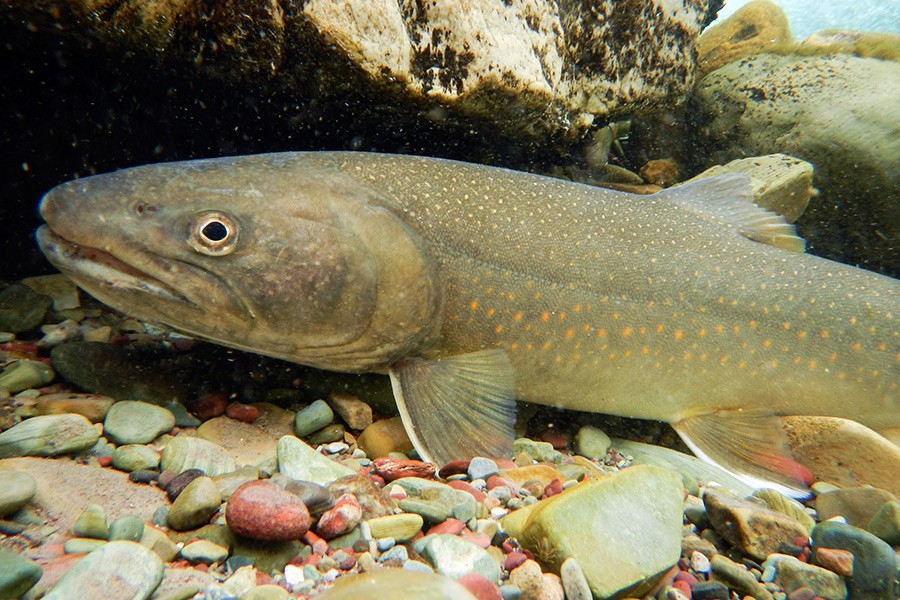
Bull trout numbers in the Flathead River drainage crashed so fast in the 1990s, they wound up on the Endangered Species list.
Their populations haven’t recovered, but the amount we know about a fish considered the “grizzly bear of the freshwater world” has zoomed upward even faster. That’s good news for the consortium of communities charged with keeping bull trout around.
The Northwest Power and Conservation Council’s meeting in Missoula last week got an update on the range of efforts to protect bull trout, from commercial netting of its chief rival in Flathead Lake to tinkering with the water temperature coming out of Hungry Horse Dam.
Representatives of several tribes held a gathering in Glacier Park to speak out in favor of retaining grizzly bear protections . . .
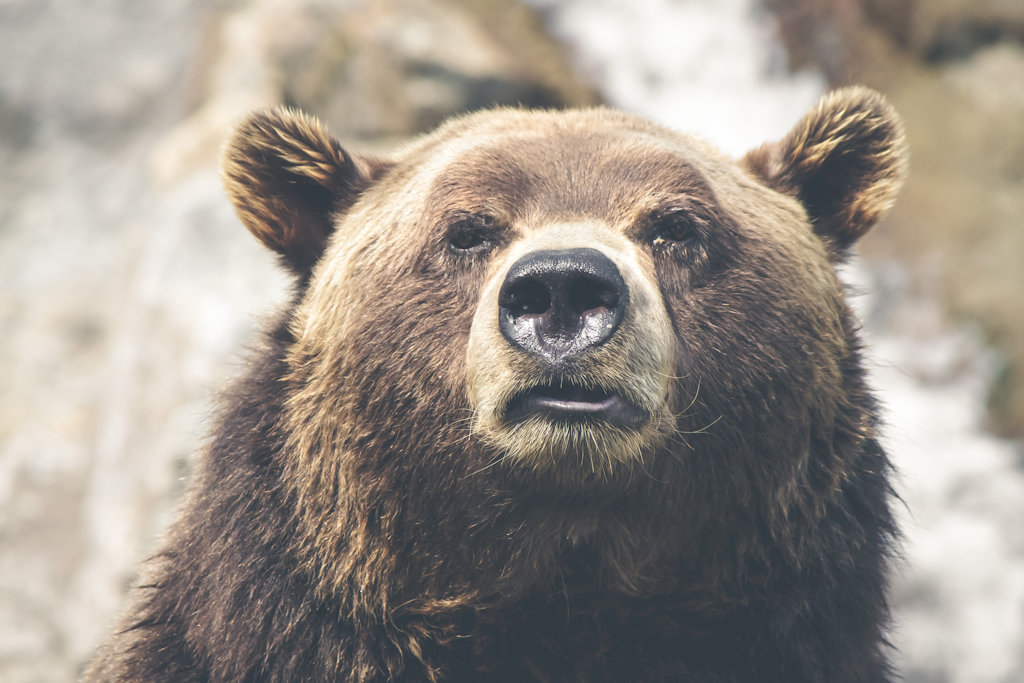
As federal wildlife managers prepare to move grizzly bears off the Endangered Species List in the Greater Yellowstone Ecosystem, opposition to delisting the iconic — and to many, sacred — animal has continued.
Led by several tribal nations, a crowd of roughly 100 people met at the eastern gateway of Glacier National Park on Friday for a “Prayer for the Great Bear” ceremony.
David Bearshield of the Cheyenne Nation sang a prayer in his native language with the shore of St. Mary’s Lake as the backdrop.