Category Archives: News

Glacier Lake Ecology BioBlitz students study in North Fork

An interesting item from the Daily Inter Lake . . .

The Crown of the Continent Research Learning Center in Glacier National Park hosted 45 students for the Glacier Lake Ecology BioBlitz on May 25 and 26.

The students were from Flathead and Columbia Falls high schools in Northwest Montana, De La Salle Collegiate High School from Warren, Michigan, and Luther College from Decorah, Iowa.

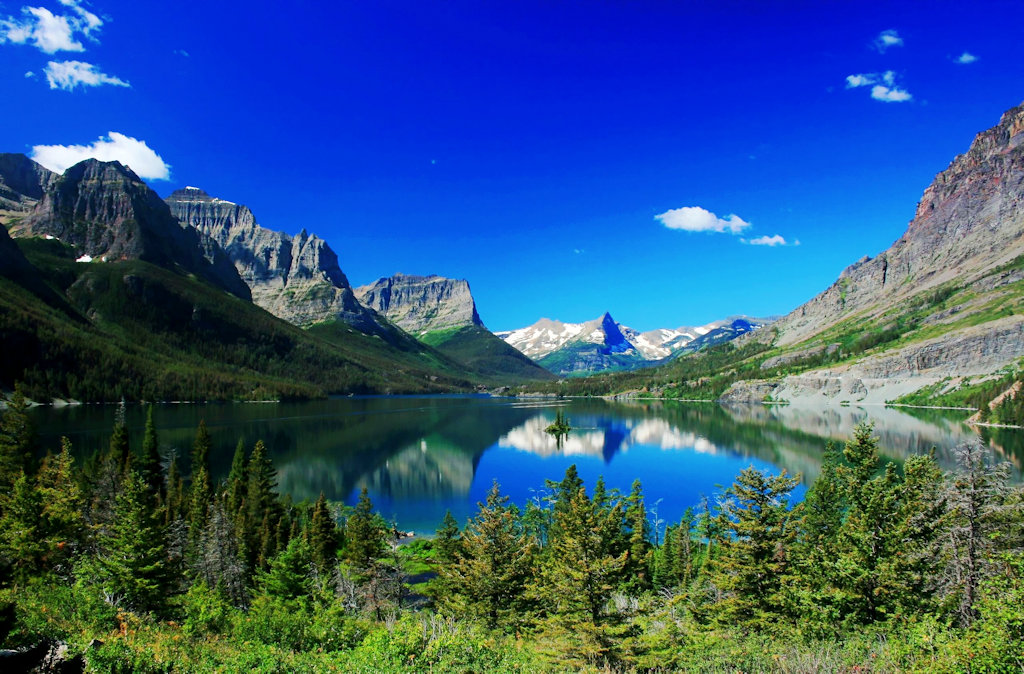
Students observed loons nesting, feeding, calling and interacting on lakes in the North Fork area of Glacier National Park.

Read more . . .

Lisa Bate receives Jack Potter Glacier National Park Stewardship Award for work with birds and bats

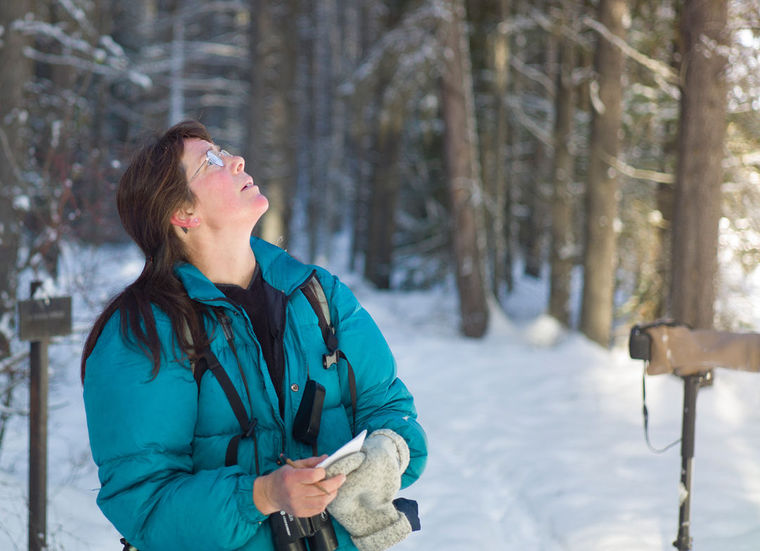
Biologist Lisa Bate counts birds during the annual Christmas bird count in Glacier in 2010.

Lisa Bate recently got some well-deserved recognition for her work with Glacier Park’s birds and bats . . .

While Glacier National Park is known for the grizzlies and goats, Lisa Bate has long been more interested in its birds and bats.

“It’s fun to bring attention to something that’s not a large carnivore,” she said last week. Bate has done groundbreaking work in the Park, most notably studying its harlequin ducks and its diverse, though seldom seen, bat population.

While those two species might not grab headlines, they face just as many threats due to climate change and other factors as the mega fauna species.

“I like the underdogs and I try to give them a voice,” she said.

Read more . . .

Lawsuit challenges Wyoming grizzly delisting plan

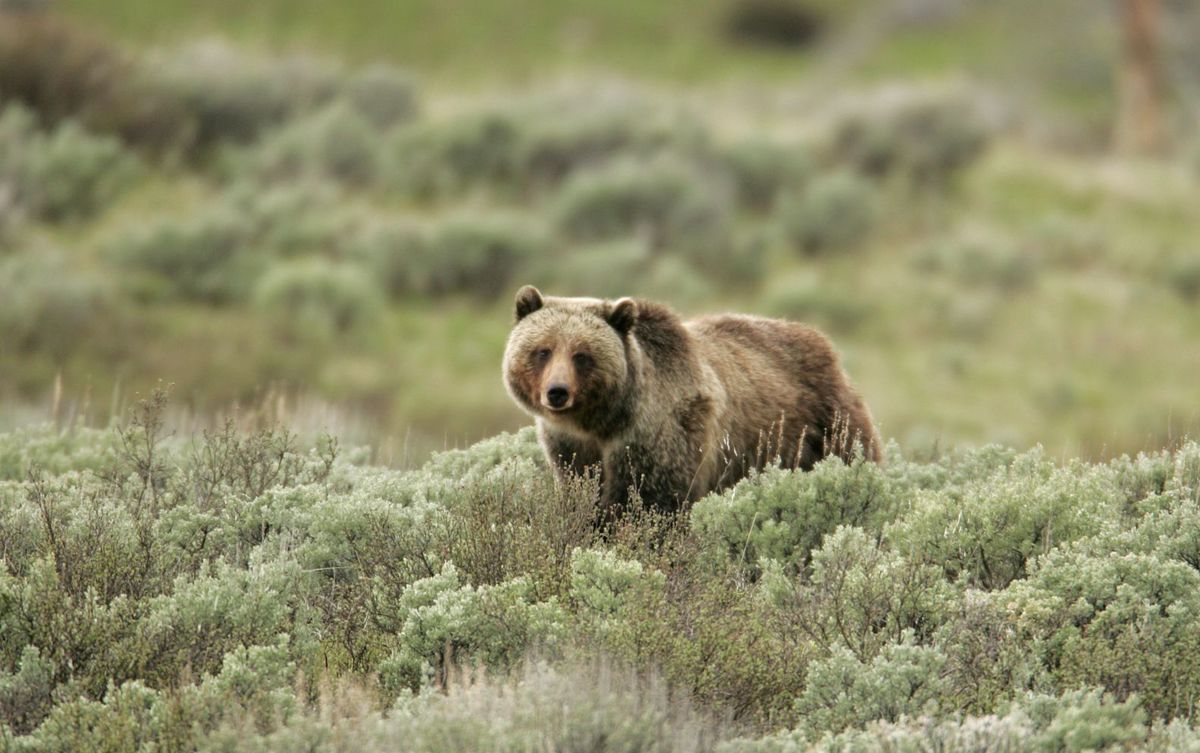
Grizzly Bear - courtesy NPS
Grizzly Bear – courtesy NPS

Yet another challenge to Wyoming’s grizzly delisting plans . . .

Groups are challenging the Wyoming Game and Fish Commission over its recently adopted grizzly bear management rules.

The Humane Society of the United States, the Center for Biological Diversity and Jackson, Wyoming-based filmmaker James Laybourn filed a lawsuit against the commission Friday in state court in Cheyenne.

The lawsuit claims the commission failed to follow public notice and comment requirements before adopting grizzly management rules earlier this year.

Read more . . .

Home Ground Radio interviews Headwaters Montana and Stoltze Lumber

From Dave Hadden at Headwaters Montana . . .

If you’re a regular listener and donor to Montana Public Radio, then you’re familiar with the voice of Brian Kahn, the host and producer of “Home Ground Radio.”  Brian sat down with Paul McKenzie and me to discuss the challenges and successes of finding common ground on national forest management issues.

The interview aired on MTPR last Sunday, May 29, but is available for your listening pleasure anytime by clicking here.

In typical Home Ground Radio style, Brian led the conversation from introductions to a ‘take home message.’

Paul McKenzie works for Stoltze Land and Lumber Company in Columbia Falls, Montana, as the land and resource manager.  It’s been my pleasure to get to know Paul as a sincere, intelligent and committed individual who cares deeply about the forest resources he manages and the people employed at Stoltze’s lumber mill.

Paul and I have sat across the table from one another for several years now as part of the Whitefish Range Partnership, and Kootenai Forest Stakeholder Coalition’s Common Ground” committee.

These conversations have been joined by many other individuals representing other constituencies.  The conversations haven’t always been easy.  However, they have been necessary. Continue reading Home Ground Radio interviews Headwaters Montana and Stoltze Lumber

Gov. Bullock unveils public lands agenda; opposes public lands transfers

Some upbeat news from the Montana Wilderness Association . . .

Today [June 9] was a good day for Montana.

Montana Governor Steve Bullock today unveiled a pro-public lands agenda that not only doubles down on rejecting the transfer of federal lands to the state, but also creates opportunities to expand conservation and recreation on our public lands.

“This is an issue that transcends party politics in Montana,” he said at a public lands event held at Riverfront Park in Billings. “It isn’t about what Democrats or Republicans or Independents want. It’s about doing what’s right for Montanans.”

The agenda includes four major initiatives aimed at increasing access, building Montana’s outdoor recreation economy, and supporting collaborative solutions for natural resource management. They include:

  • Rejecting all effort to transfer our national public lands to individual states or private interests
  • Creating of an Office of Outdoor Recreation
  • Creating a state “public access specialist” position
  • Calling on the legislature to unfreeze and fully restore Habitat Montana

Read more . . .

Northwest tribal leaders condemn oil train risks

Tribal leaders are not happy about oil trains passing through sensitive areas like the Columbia River Gorge . . .

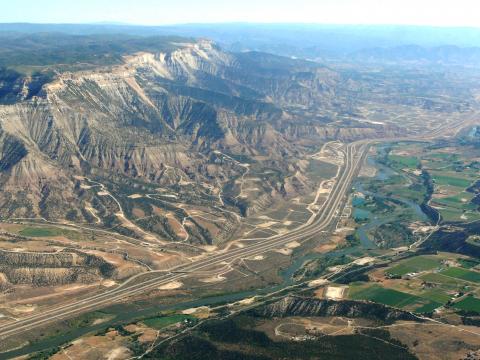
Leaders of several Pacific Northwest tribes gathered Thursday near the site of last week’s fiery oil train wreck in Oregon to condemn the shipping of fossil fuels through the Columbia River Gorge, a scenic homeland and sacred fishing ground for the Yakama Nation and others over the millennia.

“We do not want fossil fuels at all coming through the Columbia River Gorge — at all,” said Yakama Nation Chairman JoDe Goudy. “We truly see what is at hand. … We are sacrificing and putting at risk the long-term benefit and well-being of our nations, our children, our grandchildren, those yet to come.”

A 96-car train carrying volatile crude oil from the Northern Plains’ Bakken region to Tacoma, Washington, derailed June 3 along the Columbia River, which forms most of the boundary between Washington and Oregon. No one was hurt, but four cars caught fire, prompting the evacuation of a nearby school, forcing the closure of an interstate, and enraging local officials and residents. Some of the oil made it to the river, where it was captured by absorbent booms, officials said.

Read more . . .

Water-bottling plant opponents file appeal with county

Opposition to the proposed water bottling plant near Creston grows . . .

Concern over a proposed water-bottling plant near Creston has sprung from a trickle to a flood as 30 nearby water users push the project through an additional layer of state review, while a recently formed organization working to block the plant’s development has asked Flathead County commissioners to issue a moratorium on commercial water bottling operations.

Residents opposed to the bottling plant along the Flathead River say the Montana Department of Natural Resources and Conservation failed to adequately assess the impacts to other water users when it granted a preliminary water right permit earlier this year.

The opposition is centered on Lew Weaver, the owner of Montana Artesian Water Co., who is seeking a water right permit from the state to pump up to 710 acre-feet, or 191.6 million gallons of water annually from an underground aquifer near Egan Slough along the Flathead River.

Read more . . .

Study: There have been no ‘pristine’ landscapes anywhere for thousands of years

Ross Creek Cedars Area, Kootenai NF - W. K. Walker
Ross Creek Cedars Area, Kootenai NF – W. K. Walker

Here’s a mid-week thought piece. I don’t know if it will hold up over the long term, but a study was recently released by a group associated with the University of Oxford claiming that “‘Pristine’ landscapes simply do not exist anywhere in the world today and, in most cases, have not existed for at least several thousand years.” This was based on a study of archeological evidence. Late last year, a research team reached similar conclusions for North America based on species distribution studies.

Personally, the word “study” in this context gives me the itch, but there are some interesting ideas here.

Anyway, here’s the lead-in. Check it out if you wish . . .

‘Pristine’ landscapes simply do not exist anywhere in the world today and, in most cases, have not existed for at least several thousand years, says a new study in the journal, Proceedings of the National Academy of Sciences (PNAS). An exhaustive review of archaeological data from the last 30 years provides details of how the world’s landscapes have been shaped by repeated human activity over many thousands of years. It reveals a pattern of significant, long-term, human influence on the distribution of species across all of the earth’s major occupied continents and islands.

The paper by lead author Dr Nicole Boivin from the University of Oxford and Max Planck Institute for the Science of Human History, with researchers from the UK, US, and Australia, suggests that archaeological evidence has been missing from current debates about conservation priorities. To say that societies before the Industrial Revolution had little effect on the environment or diversity of species is mistaken, argues the paper. It draws on new datasets using ancient DNA, stable isotopes, and microfossils, as well as the application of new statistical and computational methods. It shows that many living species of plants, trees and animals that thrive today are those that were favoured by our ancestors; and that large-scale extinctions started thousands of years ago due to overhunting or change of land use by humans…

Read more . . .

Flathead Forest releases draft Forest Plan environmental impact statement

Lake in Flathead National Forest

Two things here: the official press release (including the humongous, unabbreviated title) and a link to an article in the Hungry Horse News providing an articulate summary . . .

Release of Draft Revised Plan for the Flathead National Forest, the Forest Plan Amendments for Helena and Lewis and Clark, Lolo, and Kootenai National Forests and Draft Environmental Impact Statement

The U.S. Department of Agriculture Forest Service today released the draft revised land and resource management plan (draft forest plan) and draft environmental impact statement (DEIS) for the Flathead National Forest for public review and comment. In addition to the effects of the draft forest plan, the DEIS includes the environmental consequences of the proposed forest plan amendments to incorporate habitat management direction for grizzly bears for the Helena-Lewis & Clark, Lolo, and Kootenai National Forests. Written and electronic comments will be accepted for 120 days.

Today’s publication of a Notice of Availability of the draft documents in the Federal Register begins the public comment period on both the draft forest plan, amendments and DEIS. A total of two open houses are scheduled in Kalispell and Missoula during the 120-day comment period. These open houses are intended as an opportunity to visit with individual planning team members and review maps of management area allocations by alternatives. The location and schedule of these open houses will be publicized in local newspapers and can be found on the Flathead National Forest website at: www.fs.usda.gov/goto/flathead/fpr. The draft documents are available for review and comment online.

Comments may be submitted via email to flatheadplanrevision@fs.fed.us, via facsimile to (406) 758- 5379 or in writing to: Flathead National Forest Supervisor’s Office, Attn: Forest Plan Revision, 650 Wolfpack Way, Kalispell, MT., 59901 The Forest Service will carefully review the comments on the draft Forest Plan, Amendments and DEIS. There will also be an objection process for any unresolved concerns prior to the final decision.

For additional information, please contact Joe Krueger, Project Manager, at (406)-758-5243, or jkrueger@fs.fed.us.


Also read: Flathead National Forest releases draft Forest Plan environmental impact statement (Hungry Horse News)

Poll: Growing number of Montanans believe public lands help jobs

It seems an increasing number of folks in Montana favor public lands . . .

Montanans across the political spectrum think federal public lands benefit the state’s economy and quality of life, according to a new poll released by the University of Montana.

“We found that support for national parks and conservation is about as popular and bipartisan an issue as you can find these days,” UM geography professor Rick Graetz said Wednesday. “There’s agreement in the state, on all sectors of politics.”

The poll of 500 registered voters throughout Montana took place on May 7, 9 and 11 by wireless and landline telephone interviews. It used the bipartisan team of Republican pollster Lori Weigel and Democratic pollster Dave Metz, who have cooperated on numerous other opinion surveys in the Rocky Mountain West. The poll had a margin of error of 4.38 percent.

Read more . . .