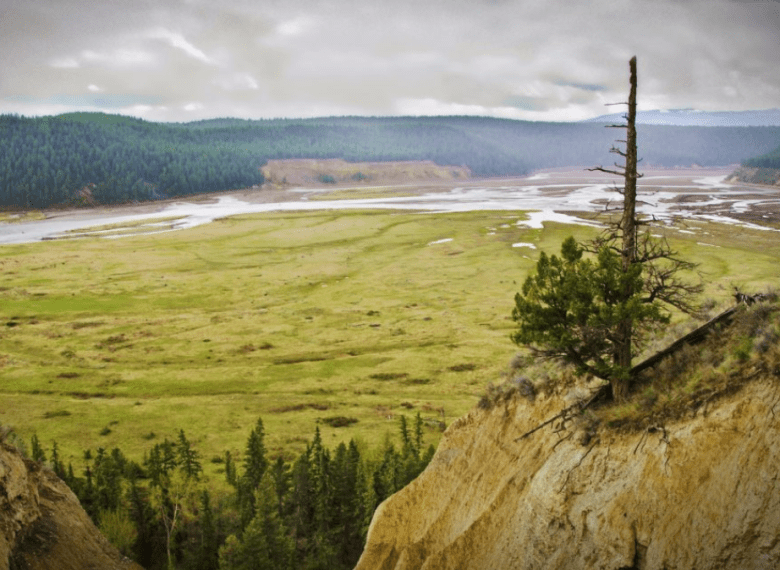
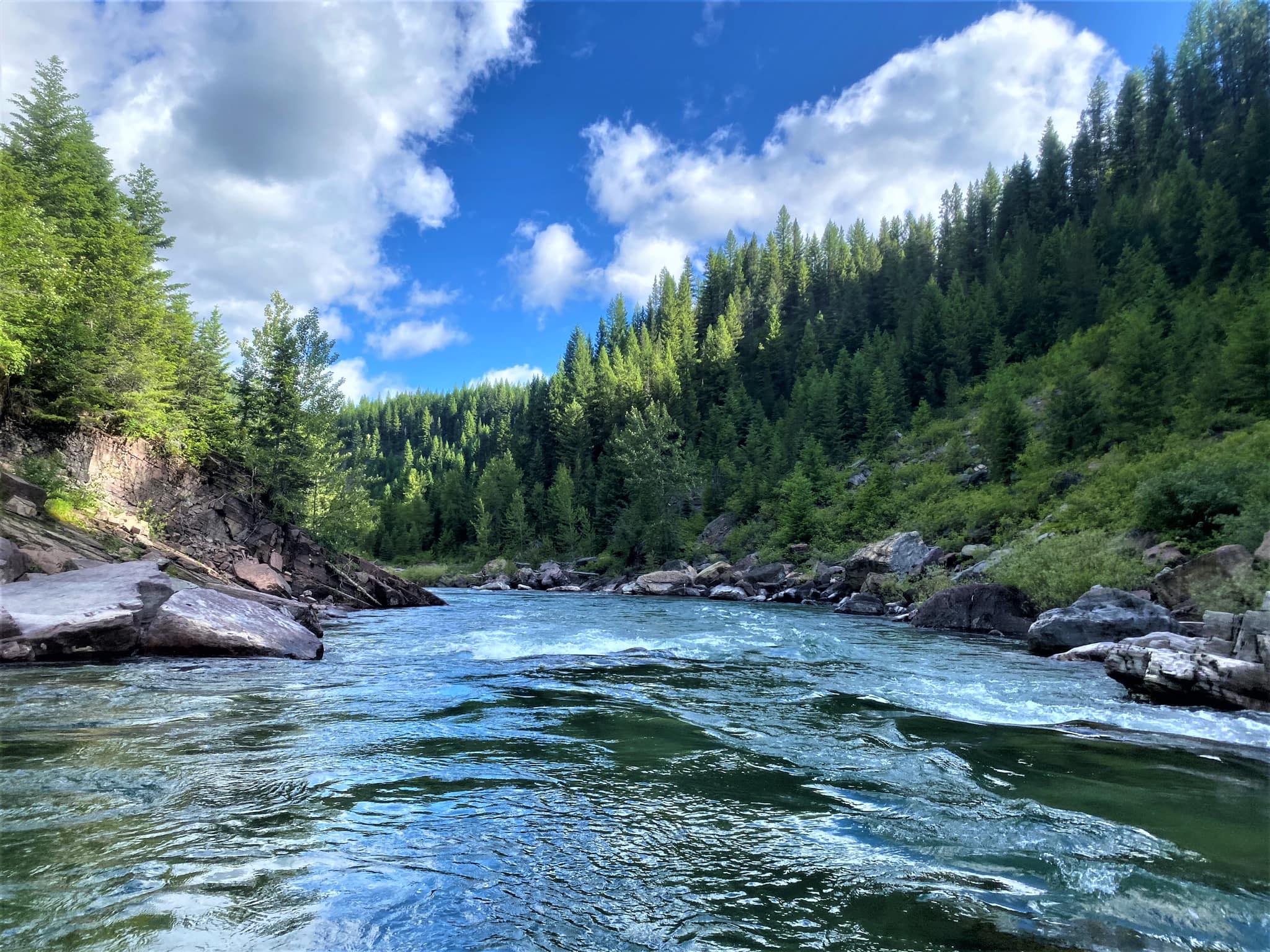
Elk River Valley near Fernie, British Columbia, as it flows into Lake Koocanusa – Terry Lawson, via Flickr
Our friends to the west in the Elk-Kootenai watershed just won and important victory . . .
A long-running dispute over a Montana water-quality standard that involves a Canadian coal mine, a border-straddling waterway, and a suite of local, state and federal officials drew to a close this week.
Montana District Court Judge Kathy Seeley ruled on April 8 that the selenium standard the Montana Department of Environmental Quality adopted for Lake Koocanusa in 2020 can stand. The Lake Koocanusa standard, which involved an extensive scientific and rulemaking process, is 0.8 micrograms per liter.
Selenium, a chemical element that’s toxic to fish above certain thresholds, has been accumulating in the Kootenai River watershed for decades as a result of a massive coal-mining operation in British Columbia. Precipitation releases the selenium that naturally occurs in mine waste, and treatment technologies have demonstrated limited success for removing it.
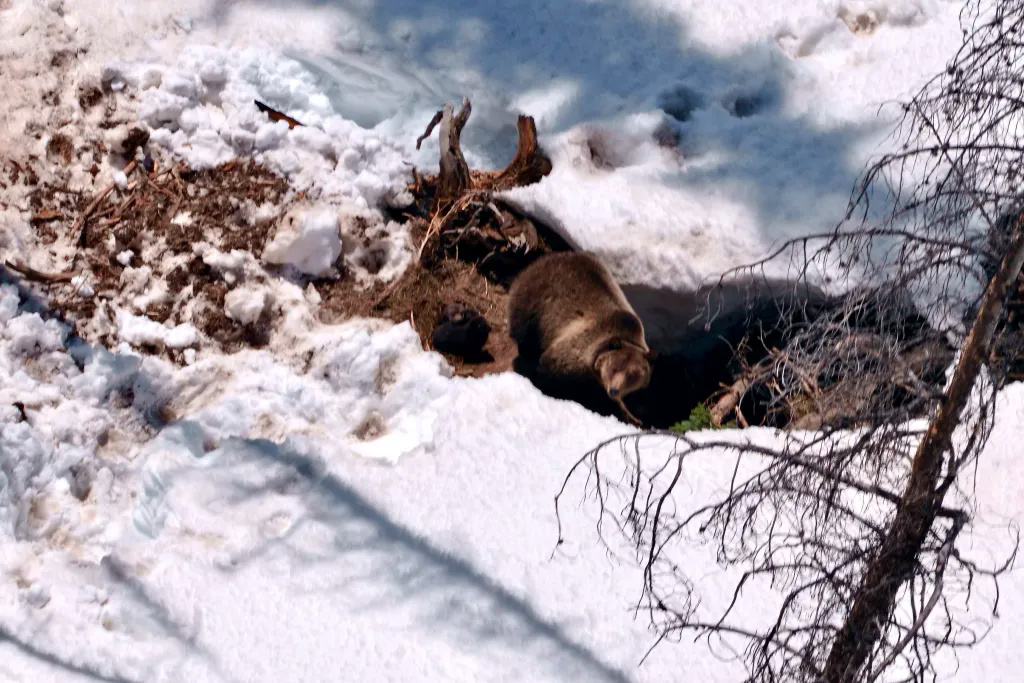
Grizzly sow 1126F appears outside her den on March 27 in the Teton Wilderness with two cubs of the year on the ground to her left – Wyoming Game and Fish
Here’s another great article by Rob Chaney . . .
Greater Yellowstone’s grizzly bear population has grown by at least two this spring.
Federal and state biologists count grizzlies every year, although they don’t usually get this granular. But when a Wyoming Game and Fish wildlife monitoring flight on March 27 brought back the photo of Grizzly 1126F outside her Teton Wilderness hibernation den with two cubs clearly tussling beside her, the discovery checked some special scientific and legal boxes.
“She’s clearly in great shape, for a young mother coming out of the den,” said Quentin Kujala, Montana Fish, Wildlife and Parks Chief of Conservation Policy. “That’s the gold standard to the point of cub production.”
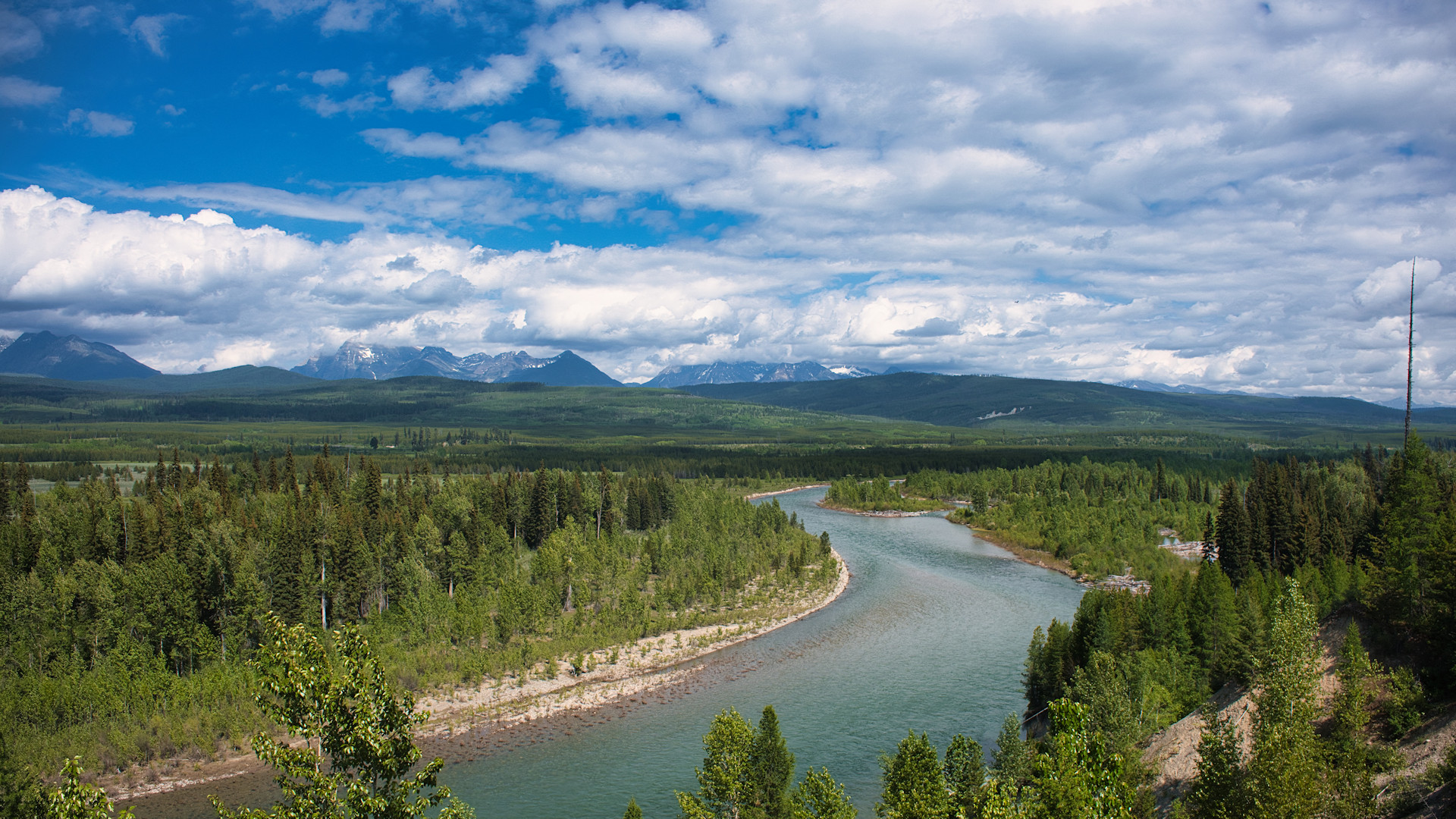
North Fork of the Flathead River, May 28, 2023 – W. K. Walker
After years of efforts and false starts, the Flathead National Forest has released a draft Comprehensive River Management Plan (CRMP). Here are the high points of immediate concern . . .
Two public information sessions will be held at Flathead Valley Community College on February 17 and 18, from 6 to 8pm at the Arts and Technology building, room 139 (AT-139). Both sessions will be open-house format, with information stations staffed by members of the project team.
Kalispell, Mont., February 10, 2026 — The Flathead National Forest has released a draft Comprehensive River Management Plan for the three forks of the Flathead Wild and Scenic River and associated draft environmental assessment of the plan. Both draft documents are available for public review on the project webpage: https://www.fs.usda.gov/r01/flathead/projects/56536
The draft Flathead Comprehensive River Management Plan and associated draft environmental analysis outline the existing condition of the three forks of the Flathead River; identify the outstandingly remarkable values and desired conditions; and identify user capacities and articulate management actions that would be taken to protect these values into the future. The draft also contains a monitoring plan designed to gather real-time data on river use, track long-term trends and assess the effectiveness of management actions.
The draft plan incorporates changes that have occurred since the Wild and Scenic designation, including visitor use patterns, environmental conditions, Endangered Species Act species listing and other laws that affect resources within the Wild and Scenic River corridor.
“We have a high level of river recreation from all over the country and the world. All three forks are highly sought after for recreation opportunities, and this draft plan is an important step towards long-term river management and protection of this world-class resource” said Rob Davies, district ranger for the Hungry Horse and Glacier View Ranger Districts. “The 1980 plan is past due for an update, and the Flathead National Forest has been deeply engaged in this multi-agency project. We’re grateful for the involvement and collaboration from Glacier National Park, U.S. Fish and Wildlife Service, Montana Fish, Wildlife & Parks, community members, nonprofit organizations, and our outfitter and guiding partners who have all contributed to the development of this draft plan.”
“This project has received a high level of public and stakeholder investment from the start, and the demand for protection of the outstandingly remarkable values found on these river segments has driven the development of the draft plan” said Anthony Botello, Flathead National Forest supervisor. “We are all eagerly waiting for this river plan. The passion and support that exists for the three forks of the Flathead and the protection of the Wild and Scenic River is inspiring. We are privileged to steward and protect the three forks of the Flathead.”
Wild and Scenic River management plans protect and enhance the outstandingly remarkable values identified in Wild and Scenic designations. The draft Comprehensive River Management Plan revises the existing 1980 river management plan and brings it into compliance with the statutory requirements of the Wild and Scenic Rivers Act. The final Comprehensive River Management Plan is expected to be released in summer of 2026, accompanied by the final environmental analysis document.
Two opportunities to join us for a project information session:
6 – 8pm on Tuesday Feb. 17
6 – 8pm on Wednesday Feb. 18
Both information sessions will be open-house format at Flathead Valley Community College, Arts and Technology building, room 139 (AT-139), with information stations staffed by members of the project team.
Flathead National Forest and Glacier National Park will provide information on the draft Comprehensive River Management Plan and will be available to answer specific questions. The sessions will start with a brief presentation with an option for virtual attendance. Link to attend virtually will be made available under Project Documents on the project website.
How to submit comments on the project:
This public comment period will be open for 30 days, concluding March 13, 2026. Comments and attachments may be submitted electronically at https://cara.fs2c.usda.gov/Public/CommentInput?project=56536.
Written comments may be mailed, or hand-delivered Monday through Friday, 8 a.m. to 4:30 p.m., excluding holidays, to the Hungry Horse-Glacier View Ranger Station (P.O. Box 190340, 10 Hungry Horse Drive, Hungry Horse, MT, 59919) or to the Forest Supervisors Office, (650 Wolf Pack Way, Kalispell, MT 59901).
Additional information can be found at: https://www.fs.usda.gov/r01/flathead/projects/56536
Changing climate seems to be the biggest factor, along with increased park visitation . . .
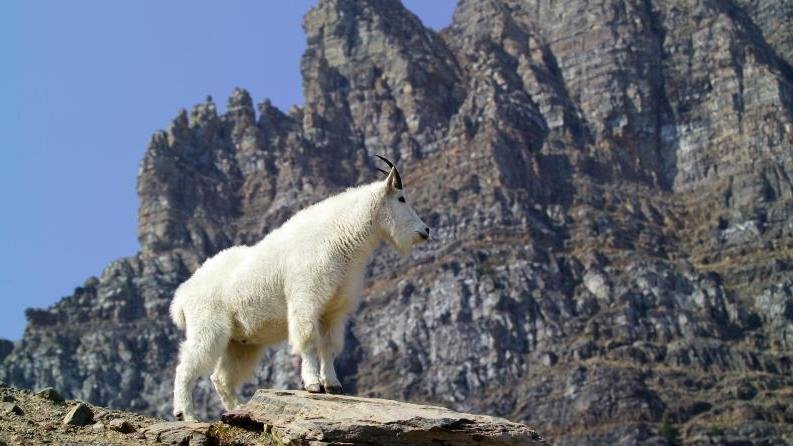
A long-running citizen science program in Glacier National Park has observed a marked decrease in the population of mountain goats since 2008, with scientists concerned that a warming alpine climate could be detrimental to the future of the species.
In a study published in the journal “Ecosphere” in January, researchers with Glacier National Park and the U.S. Geological Survey found from 2008 to 2019 the number of goats observed throughout the park declined by 45%.
“As the largest non-hunted, native population in the contiguous United States, this raises concerns about native mountain goat populations at the southern extent of the range,” according to the study, which states that “climate appears to play a large role” in population shifts.
Public information sessions held at Flathead Valley Community College February 17 and 18
Kalispell, Mont., February 10, 2026 — The Flathead National Forest has released a draft Comprehensive River Management Plan for the three forks of the Flathead Wild and Scenic River and associated draft environmental assessment of the plan. Both draft documents are available for public review on the project webpage: https://www.fs.usda.gov/r01/flathead/projects/56536
The draft Flathead Comprehensive River Management Plan and associated draft environmental analysis outline the existing condition of the three forks of the Flathead River; identify the outstandingly remarkable values and desired conditions; and identify user capacities and articulate management actions that would be taken to protect these values into the future. The draft also contains a monitoring plan designed to gather real-time data on river use, track long-term trends and assess the effectiveness of management actions.
The draft plan incorporates changes that have occurred since the Wild and Scenic designation, including visitor use patterns, environmental conditions, Endangered Species Act species listing and other laws that affect resources within the Wild and Scenic River corridor.
“We have a high level of river recreation from all over the country and the world. All three forks are highly sought after for recreation opportunities, and this draft plan is an important step towards long-term river management and protection of this world-class resource” said Rob Davies, district ranger for the Hungry Horse and Glacier View Ranger Districts. “The 1980 plan is past due for an update, and the Flathead National Forest has been deeply engaged in this multi-agency project. We’re grateful for the involvement and collaboration from Glacier National Park, U.S. Fish and Wildlife Service, Montana Fish, Wildlife & Parks, community members, nonprofit organizations, and our outfitter and guiding partners who have all contributed to the development of this draft plan.”
“This project has received a high level of public and stakeholder investment from the start, and the demand for protection of the outstandingly remarkable values found on these river segments has driven the development of the draft plan” said Anthony Botello, Flathead National Forest supervisor. “We are all eagerly waiting for this river plan. The passion and support that exists for the three forks of the Flathead and the protection of the Wild and Scenic River is inspiring. We are privileged to steward and protect the three forks of the Flathead.”
Wild and Scenic River management plans protect and enhance the outstandingly remarkable values identified in Wild and Scenic designations. The draft Comprehensive River Management Plan revises the existing 1980 river management plan and brings it into compliance with the statutory requirements of the Wild and Scenic Rivers Act. The final Comprehensive River Management Plan is expected to be released in summer of 2026, accompanied by the final environmental analysis document.
Two opportunities to join us for a project information session:
6 – 8pm on Tuesday Feb. 17
6 – 8pm on Wednesday Feb. 18
Both information sessions will be open-house format at Flathead Valley Community College, Arts and Technology building, room 139 (AT-139), with information stations staffed by members of the project team.
Flathead National Forest and Glacier National Park will provide information on the draft Comprehensive River Management Plan and will be available to answer specific questions. The sessions will start with a brief presentation with an option for virtual attendance. Link to attend virtually will be made available under Project Documents on the project website.
How to submit comments on the project:
This public comment period will be open for 30 days, concluding March 13, 2026. Comments and attachments may be submitted electronically at https://cara.fs2c.usda.gov/Public/CommentInput?project=56536.
Written comments may be mailed, or hand-delivered Monday through Friday, 8 a.m. to 4:30 p.m., excluding holidays, to the Hungry Horse-Glacier View Ranger Station (P.O. Box 190340, 10 Hungry Horse Drive, Hungry Horse, MT, 59919) or to the Forest Supervisors Office, (650 Wolf Pack Way, Kalispell, MT 59901).
Additional information can be found at: https://www.fs.usda.gov/r01/flathead/projects/56536.
Short version: Tolerance for wolves on the landscape is increasing. but those with negative views have a significant role in management, despite being a small percentage of the population.
People’s tolerance for wolves goes up when they see one. It also goes up when they don’t.
The study, released Dec. 12, was co-authored by husband-wife duo Alexander and Elizabeth Metcalf of the University of Montana School of Forestry, Justin Gude and Michael Lewis of Montana Fish, Wildlife and Parks, and John Baldridge of UM’s Bureau of Business and Economic Research. It compared a 2023 wolf-tolerance survey to results from the same questions asked in 2012 and 2017, reaching a total of 7,607 Montanans over that decade.
“The Flathead National Forest is adjusting the way planning projects are announced and public comments are solicited.” Short version: There is a separate project announcement email list. (Sign up for the list here: https://www.fs.usda.gov/r01/flathead/projects.) Project comments will need to be sent to the individual project manager. There will be no formal time-frame for comments and feedback.
If this sounds a little vague, that’s because it is, in fact, a little vague.
If the little veins aren’t standing out on your forehead yet, here’s the text of the October 14, 2025, press release. That should do the trick . . .
From: Anthony B. Botello, Forest Supervisor
Dear Interested Stakeholder:
The Flathead National Forest is adjusting the way planning projects are announced and public comments are solicited. You are being contacted because you have expressed interest in Flathead National Forest projects, have previously submitted comments, or have subscribed to project information email bulletins.
On January 20, 2025, President Trump signed the Executive Order, Unleashing American Energy. This E.O. directed the Council of Environmental Quality (CEQ) to provide guidance on implementing NEPA to expedite and simplify the permitting process. CEQ responded to this direction by rescinding its NEPA regulations, creating a path for agencies to reform their own NEPA procedures.
On July 3, 2025, the Department of Agriculture (USDA) removed seven agency-specific regulations implementing the National Environmental Policy Act (NEPA), including those for the U.S. Forest Service, and replaced them with new department-wide NEPA regulations. As a result of these recent changes, the Flathead National Forest is beginning to implement new E.O.s and USDA direction by more efficiently complying with NEPA, especially in regards to projects that address forest health and fuel reduction or other active forest management objectives.
Notices of proposed actions (scoping) will no longer be sent by way of email mailing list. I encourage you to look to our webpage as the primary source of project information and updates at https://www.fs.usda.gov/r01/flathead/projects. You may also sign up for information and be alerted to happenings around the Forest.
Your comments and input remain valuable to our project development and informing decisions. Rather than only engaging public at specific and restricted timeframes, please provide your input on Flathead National Forest projects at any time during project development. To keep informed, please monitor our project webpage, selecting the project that interests you, and contact the individual listed as the project leader.
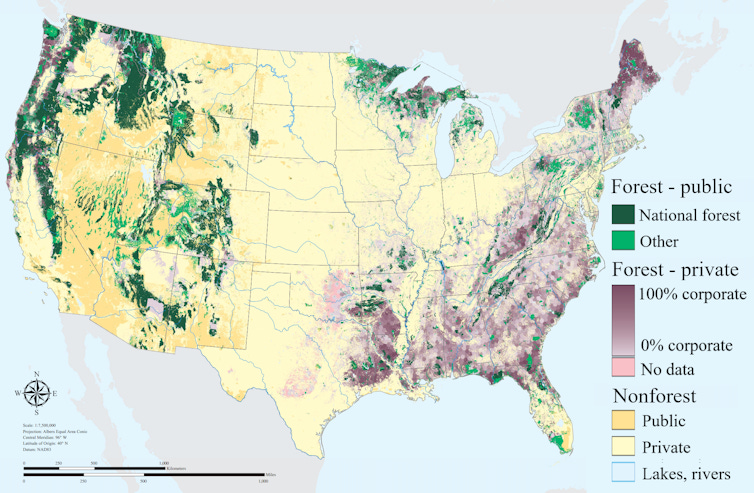
Forest ownership in the United States — Mark D. Nelson, Greg C. Liknes, and Brett J. Butler – U.S. Forest Service
“…there is always a well-known solution to every human problem — neat, plausible, and wrong.” — H. L. Mencken
Here’s a good article, with a minimum of editorializing and including actual numbers and stuff, discussing why increased wildfire danger does not actually justify an increased timber harvest. Better forest management however . . .
As U.S. forests burn, Congress and federal agencies are asking an important question: What role should federal land management play in reducing fire risk?
When created in 2001, The Roadless Rule protected almost 60 million acres of U.S. Forest Service Land by preventing new road construction and development. 37% of these lands are in Montana. At that time 1.6 million communications were submitted during public comment with over 95% in favor of the Rule. The present Department of Agriculture Secretary Rollins is using two of Donald Trump’s executive orders to justify the eliminating Roadless Rule. One demands increased timber harvest and another calls for making wildfire prevention and suppression more effective by easing burdensome rules and regulations. These actions will endanger the ecosystems of the public lands we cherish, diminish wildlife habitat and recreational opportunities, and increased runoff will reduce water quality.
Please help protest the rescinding of the Roadless Rule by participating in the public comment period. NOTE: The public comment period expires on September 19!
Help further by contacting your representatives in Congress and ask them to support the Roadless Area Conservation Act which has been introduced by Senators Maria Cantwell (D-WA) and Ruben Gallego (D-AZ), and Representatives Yassamin Ansari (AZ-03) and Andrea Salinas (OR-06). This legislation has support in both the House and Senate and if passed will codify the 2001 Roadless Rule into law once and for all.
For more background, here are a couple of articles worth reading…