Tag Archives: NCDE

Frank Vitale: Montana Faces New Threat to Its Wildest Lands

Several Types of Public Lands
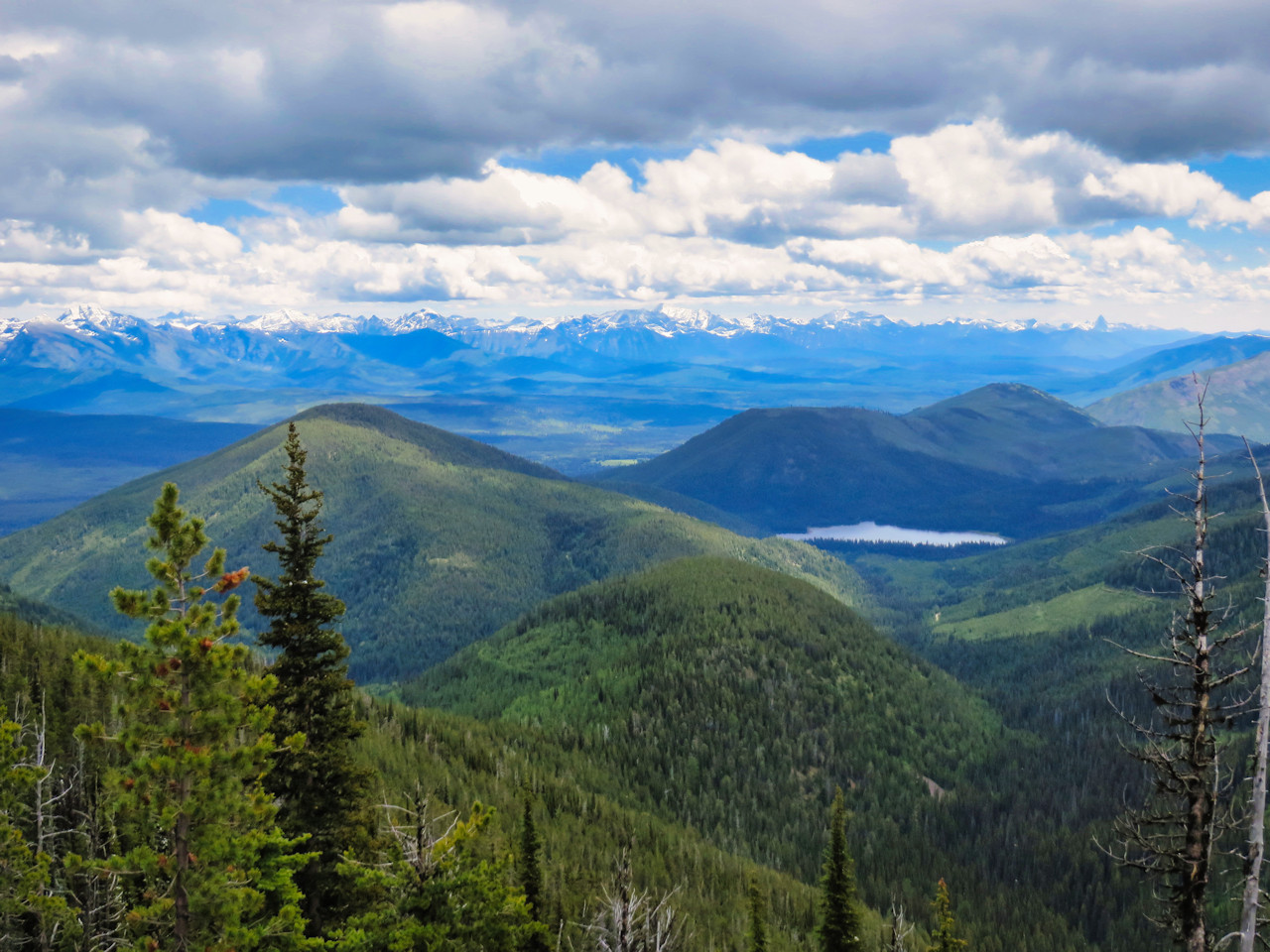
Several types of public lands: Flathead National Forest is in the foreground, left and right; Montana’s Coal Creek State Forest, including Cyclone Lake, is in the middle distance; Glacier National Park stretches across the background.

Founding NFPA member Frank Vitale gets some virtual ink with this well thought out opinion piece appearing in several newspapers, including the Flathead Beacon . . .

It was early summer in 1992, in the northern Whitefish Range. Four riders were moving slowly along the narrow rocky ridge on Trail to where it joined Trail , and eventually up to the top of Tuchuck Mountain. I was told that the name “Tuchuck” in the Kootenai language means “the thumb.”

It was a beautiful sunny day with a light westerly breeze. Wildflowers were in full view everywhere. Some of the open subalpine slopes looked as if they were rototilled with clumps of dirt overturned and rocks strewn everywhere. Obviously, grizzly bears were working over the slopes and digging up the succulent roots of glacier lilies, biscuitroot, sweet vetch and other favorite plants in these subalpine meadows.

I was one of those four riders, trailing one of my young mules. I’d ridden and hiked this trail many times before, and in some hunting seasons, packed out elk. I know this country well. Although it’s been a number of years since I led a packstring up into the northern Whitefish Range, I remember the view from our vantage point on that day. Looking east, from north to south, one could view the start of the Canadian Rockies clear over to the high peaks in southern Alberta, and the whole western expanse of Glacier National Park clear down to the Great Bear Wilderness and the Middle Fork of the Flathead River.

Looking northwest, one could see clear into the rugged peaks of southeastern British Columbia, and south all the way down to the Cabinet Mountain Wilderness and beyond.

I reflect back on my many years and many miles in the saddle leading a packstring of mules across some of the wildest country left in the Northern Rockies. This includes the Bob Marshall Wilderness, Badger-Two Medicine, Rocky Mountain Front, Scapegoat, Great Bear, wild Swan, and the Whitefish Range. This country has been the center of my universe for nearly 50 years.

Fast forward to September 2012. A diverse group of folks from different backgrounds, viewpoints and interests were invited to sit down and form a citizen’s advisory to help the Flathead National Forest update and revise a portion of their new management plan for the Whitefish Mountain Range on the Glacier View Ranger District. That group, in which I was asked to participate, was officially named the Whitefish Range Partnership Agreement. A total of 30 people made up this collaborative. They represented motorized recreation, mountain biking, hiking, landowners, business owners, Confederated Salish and Kootenai Tribes, Montana Logging Association, Stoltz Lumber, wildlife organizations, Backcountry Horsemen, hunting and fishing groups and wilderness organizations.

The Forest Service provided the framework in which we could work, and they gave us the support, expertise, and encouragement to see this collaborative succeed. This dedicated bunch of people stayed together until the collaborative reached consensus in 2018. Remarkably, the Forest Service adopted nearly 95 percent of what the group recommended to incorporate into the new Forest Plan Revision.

The partnership had its ups and downs and disagreements, but in the end, everyone walked away feeling good about what could be accomplished when people sit down, roll up their sleeves, and have meaningful conversations on what’s important.

For me, it was folks who ordinarily would have never supported wilderness in the North Fork, but in the end came together to support protection in some of the last unroaded wildlands left in the Whitefish Range.

So fast forward to 2026. Recently, the Senate Energy Natural Resource Committee (SENRC) voted on S140 – the Wildfire Protection Act of 2025. Attached to this bill is a provision to repeal the Roadless Rule, the very rule that protected the North Fork proposed wilderness that the Whitefish Range Partnership worked so hard and for so long to reach a consensus.

Do you remember a senator from Utah by name of Mike Lee? He chairs the SENRC, and just last year he introduced a bill to sell off large swaths of our public lands. Another name to remember is Steve Daines, one of Montana’s senators who has been trying for years to undo protections for some of our wildest landscapes in Montana. Every Republican on the SENRC voted to repeal a landmark decision created back in 2001, that had remarkable bipartisan support with the vast majority of Americans supporting it.

When the Roadless Rule was first developed, it was the most extensive public engagement process in the history on management of public lands in the United States. When talk of a possible recission of the Roadless Rule was being announced by the Trump Administration, nearly 99 percent of the comments were in favor of keeping the Roadless Rule intact.

Steve Daines and Mike Lee are clearly out of step on this issue. Some of our best unprotected wild country could very well be on the chopping block. This includes places like the North Fork Wildlands, Badger-Two Medicine, wild Swan Range, and the Rocky Mountain Front.

These wildlands are the source of our clean water, clean air, abundant fish and wildlife. They’re a place where we can experience wild nature and they make us better people.

For me, the seeds of conservation and the love of wild nature were sown as a young boy with pant legs rolled up, with fishing pole in hand, wading clear mountain streams catching wild brookies.

I’d like to end with a quote from Aldo Leopold’s memoir, A Sand County Almanac:

“To those devoid of imagination, a blank place on the map is a useless waste; to others, the most valuable part.”
 

Holland Lake expansion proposal puts spotlight on lodging in grizzly habitat

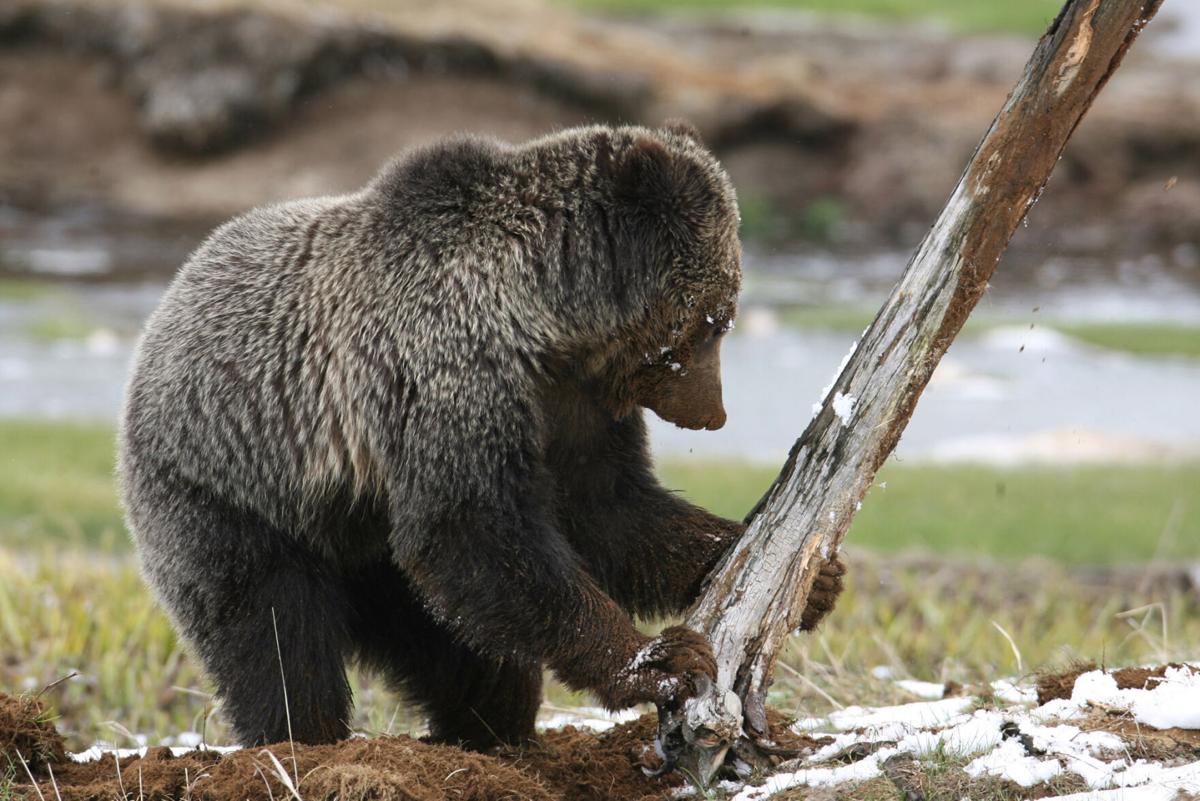
A grizzly bear tips a dead tree near Obsidian Creek in Yellowstone NP - Jim Peaco, NPS
A grizzly bear tips a dead tree near Obsidian Creek in Yellowstone NP – Jim Peaco, NPS

Here’s a very interesting report from the recent winter Interagency Grizzly Bear Committee NCDE subcommittee meeting regarding a debate, triggered by the recent application by POWDR to expand lodging at Holland Lake, over how to handle such issues when they affect core grizzly habitat. Even better, the meeting was chaired by Flathead Forest Supervisor Kurt Steele, who is currently juggling the Holland Lake hot potato.

…The disagreement over land management, specifically development of more overnight lodging, was laid bare in Missoula Friday morning at the winter meeting of the NCDE Subcommittee. That’s part of the national Interagency Grizzly Bear Committee, which coordinates the species’ recovery across six ecosystems in the West.

Tensions were high because of a recent proposal from Utah-based ski corporation POWDR to significantly expand Holland Lake Lodge in the Swan Valley, within the NCDE. The Flathead National Forest recently rejected the proposal. POWDR stated it plans to submit a new, similar proposal of the same size…

Continue reading . . .

Private campgrounds complicating bear conflict management

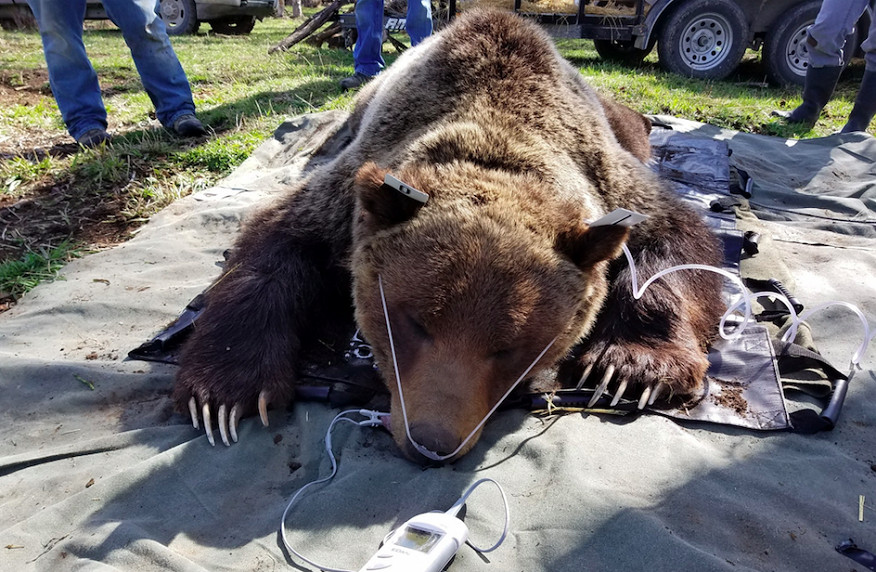
Female grizzly relocated to North Fork from lower Depuyer Creek area in May 2019 following livestock depredation

Timely article concerning Flathead area bear conflict management problems . . .

Privately-run campgrounds are adding another complication for wildlife managers trying to reduce human conflicts with grizzly bears, experts said this week.

On Thursday, the Northern Continental Divide Ecosystem subcommittee met in Kalispell to review last year’s management of NCDE grizzly bears and discuss future challenges as more people with little wildlife awareness move to western Montana. Another 50 members of the committee and the public joined the meeting online.

Montana Fish, Wildlife & Parks grizzly research biologist Cecily Costello summarized the 2021 data that showed the NCDE population is stable based upon the 2017 Conservation Strategy criteria. However, 44 bears, including 11 cubs, died within the primary conservation area and the surrounding Zone 1 buffer area – stretching from Eureka south to the Ninemile Valley, east over Rogers Pass and north through the Blackfeet Reservation.

Continue reading . . .

Grizzly bear conflicts an increasing concern

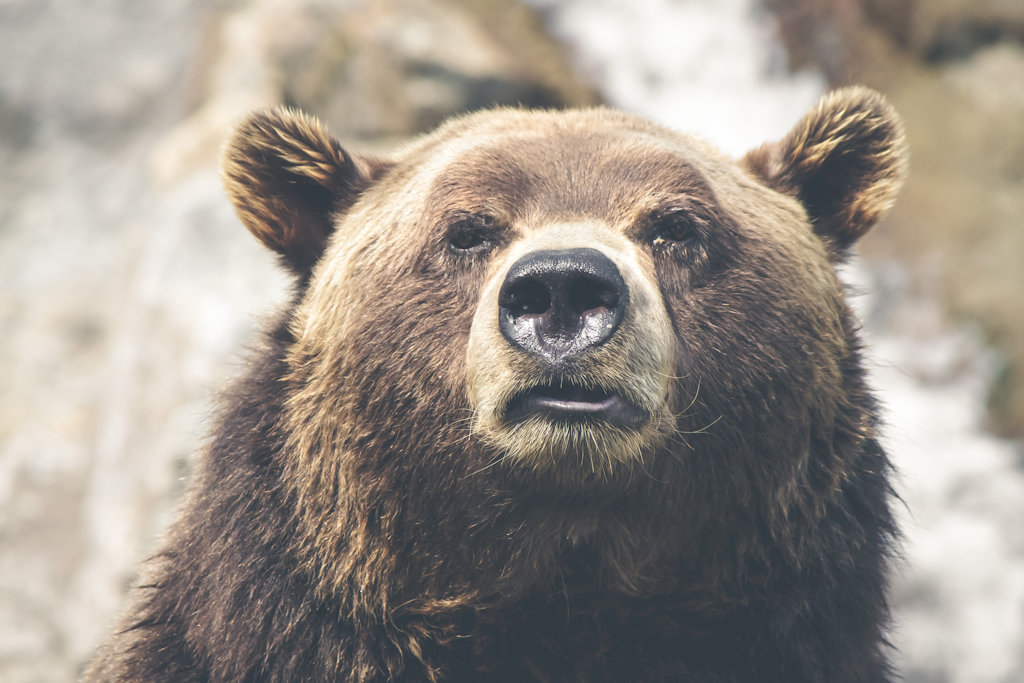
Grizzly Bear - Thomas Lefebvre, via Unsplash
Grizzly Bear – Thomas Lefebvre, via Unsplash

A major subject at last week’s NCDE meeting was the increased conflicts between humans and grizzlies as the bears continue to spread out into their original range . . .

Once teetering on the brink of extirpation, there are now more than 1,000 grizzly bears roaming more than 8 million acres of land known as the Northern Continental Divide Ecosystem (NCDE), which stretches from the top of Glacier National Park to Missoula.

But the booming bear population also comes with a new challenge: what to do when those grizzlies stray beyond the core of the NCDE, an area that includes Glacier National Park, parts of the Flathead and Blackfeet Indian reservations, five national forests and large swaths of state and private land. That challenge was the main focus for wildlife and land managers gathered in Missoula for the bi-annual NCDE meeting on Nov. 20.

During the daylong meeting, state and federal wildlife managers updated attendees on the regional grizzly bear population. This year, there have been 50 confirmed grizzly bear deaths or removals from the NCDE. Three of those mortalities (a term used by wildlife biologists whenever a bear is removed from the NCDE population, even if it’s going to a zoo) occurred recently in the Flathead Valley. On Nov. 8, a young male grizzly bear was struck and killed by a train near Columbia Falls. And in the last month, two adult females died near the Hungry Horse Reservoir. Both of those bears died of natural causes.

Read more . . .

Northwest Montana grizzlies will stay on endangered list a while longer

Grizzly bear sow with three cubs - NPS photo
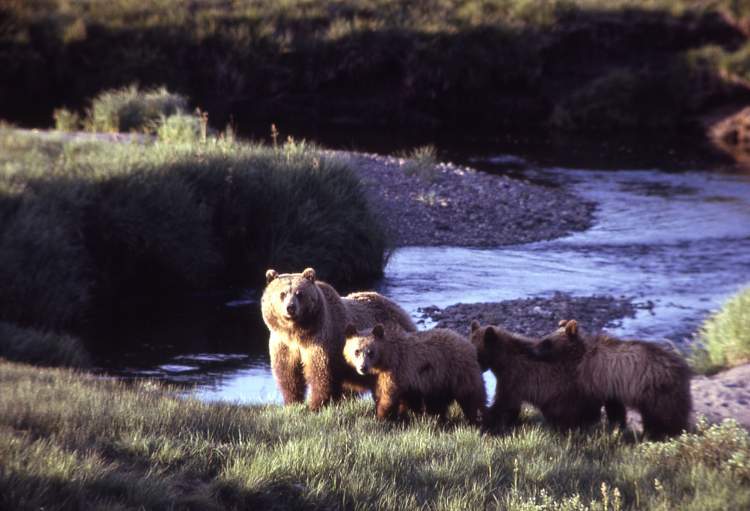
Grizzly bear sow with three cubs – NPS photo

Grizzly bears in this corner of Montana will stay on the Endangered Species List a bit longer while federal officials evaluate the impact of an adverse judicial opinion on delisting the Yellowstone grizzly population . . .

The U.S. Fish and Wildlife Service said Tuesday it no longer plans to propose removing the population of grizzly bears in and around Glacier National Park from the endangered species list this year.

“We were on track to try and have a proposal, or at least have an evaluation of recovery and a potential proposal, out by the end of the calendar year,” says Hilary Cooley, the grizzly bear recovery coordinator for the Fish and Wildlife Service, at an annual meeting Tuesday on grizzlies in what’s known as the Northern Continental Divide Ecosystem, or NCDE.

She says a federal judge’s September opinion on last year’s delisting of a different population of bears in and around Yellowstone put a wrench in those plans.

Read more . . .