All posts by nfpa

Spring rains helped crops, but not wildfire danger

Fire season is a big concern this year . . .

Montana weather experts say a wet spell this spring helped mitigate what could have been a destructive summer for crops, but it hasn’t eased the high threat of wildfire.

A state drought committee concluded Thursday that snowpack melted a month ahead of schedule and exacerbated the slight drought conditions persisting in western Montana.

Montana’s situation pales in comparison to the crippling drought in California, where mandatory water cutbacks have expanded from residential neighborhoods to rural irrigation districts. But with thousands of forest acres increasingly considered vulnerable to fire this summer, Montana is distressed enough to have been included in a June 12 drought conversation between President Barack Obama and the governors of six western states.

Read more . . .

Grizzly bears active in Beartooths

Grizzlies continue to extend their range . . .

Red Lodge resident and hiker Grant Barnard is not worried that there have been more grizzly bear sightings southeast of town this spring than in decades. That’s because he used to live next door to Glacier National Park where he was “constantly surrounded” by the big bruins.

“I’m glad they’re coming back,” he said. “When we first moved here 20 years ago, I was told there were no grizzly bears. The only one I heard about was shot by a rancher.”

This year along the eastern face of the Beartooth Mountains there may be close to about 24 individual bears, most of them southeast of Red Lodge, said Shawn Stewart, a wildlife biologist with Fish, Wildlife and Parks in Red Lodge. “We have so much activity going on southeast of town that we almost add a new dot to the map every day,” he said.

Read more . . .

Judge demands explanation for energy lease delays

There’s no court decision yet on the Solonex energy leases in the Badger-Two Medicine region, but the judge is annoyed at the feds . . .

A federal judge is pressing U.S. officials to explain why it’s taken three decades to decide on a proposal to drill for natural gas just outside Glacier National Park in an area considered sacred by some Indian tribes in Montana and Canada.

A frustrated U.S. District Judge Richard Leon called the delay “troubling” and a “nightmare” during a recent court hearing. He ordered the Interior and Agriculture departments to report back to him with any other example of where they have “dragged their feet” for so long.

Read more . . .

40 years with grizzlies

Well, here’s the end of an era. Rick Mace is retiring . . .

In 1976, University of Montana student Rick Mace walked into his adviser’s office to inquire about classes he needed for his bachelor’s degree in wildlife biology.

He left the office with a summer job researching Northwest Montana’s newly protected grizzly bears. That was the beginning of a nearly 40-year career for Mace as one of the region’s top grizzly experts.

Now, with the Crown of the Continent area home to a robust, growing grizzly population and removal of the bears’ Endangered Species Act listing in sight, the Montana Fish, Wildlife and Parks wildlife biologist is bidding adieu to a lifetime spent working to understand the great bear.

Montana transitioning from wolf monitoring to management

Kent Laudon, a Montana FWP wolf expert, retires as the state shifts from wolf recovery to management . . .

With gray wolves recovered in Northwest Montana, the state wildlife agency’s role has been moving from species monitoring to management, including hunting.

One of the biggest elements of that change is the departure of Kent Laudon, the region’s top wolf expert who retired Friday after a decade spent trapping, tracking and monitoring wolves in the Northwest Recovery Zone, which roughly spans the top half of Montana’s Rocky Mountains.

He started working for Montana Fish, Wildlife and Parks as the regional wolf management specialist in 2004, tasked with determining how many packs are in the area each year and how many wolves are in each pack.

Montanans for Healthy Rivers announces Community River Forum series

[Reminder: The local Community River Forum presentation is next Tuesday, June 16. See below for details.]

Montanans for Healthy Rivers is sponsoring a Community River Forum series to discuss watershed protection throughout the state. The closest is in Kalispell at The Museum at Central School, June 16, 7-8pm. (Note that you need to tell them you’re coming.)

Here’s the announcement they’re sending around . . .

In a nation often divided by partisan politics, river conservation is a subject that unites Montanans. In a state sculpted by mountains, valleys and prairie, rivers define our identity. They are a part of our lifeblood. Clean, free-flowing rivers support our agriculture, tourist economy, fisheries, wildlife, and way of life.

From the Stillwater Valley to Big Sky, Rock Creek to Kalispell, many Montana communities are intimately connected to healthy rivers. For ranchers, anglers, paddlers, hunters, outfitter guides, watershed groups, small business owners and larger Montana-based enterprises, this is hardly breaking news.

So it is ironic that nearly all of our iconic rivers and creeks across the state are unprotected from the impacts of future industrial development.

Montanans for Healthy Rivers is proud to present a solution to protect our remarkable river heritage. Please join us at an upcoming Community River Forum to learn more about our draft citizen’s proposal for new Wild and Scenic River designations.

Seeley Lake (Seeley Lake Community Hall) – June 2nd 7-8 pm
Missoula (Holiday Inn Downtown) – June 3rd 7-8 pm
Kalispell (The Museum at Central School) – June 16th 7-8 pm
Bozeman (Bozeman Public Library) – June 23rd 7-8 pm
Billings (Billings Public Library) – June 25th 7-8 pm

Court hearing today on drilling in Badger-Two Medicine

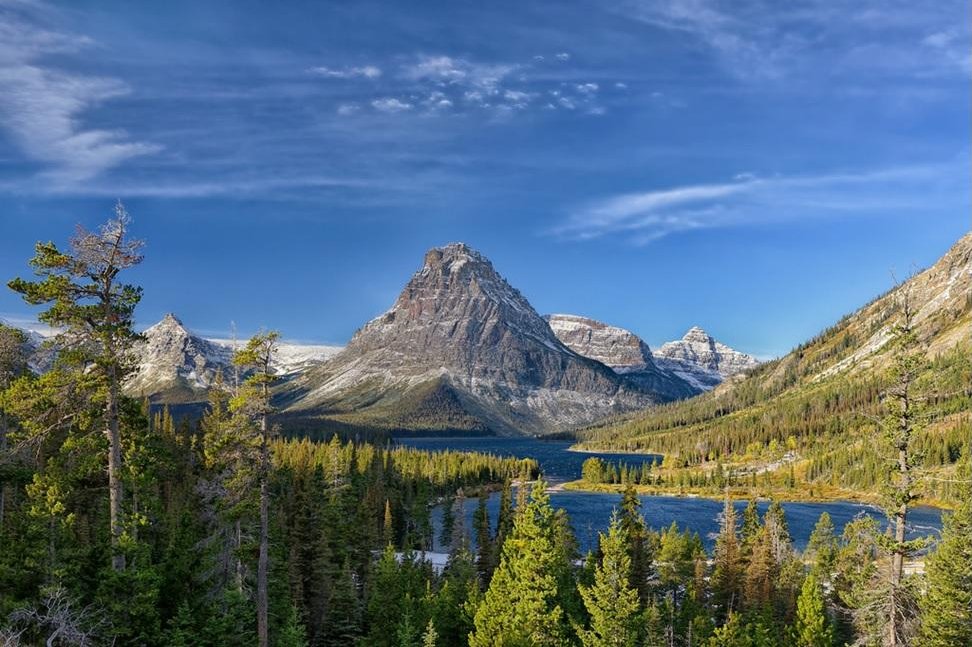
Two Medicine Lake
Two Medicine Lake – Flikr User Phil’s Pixels

As expected, Solonex is in court playing hardball over their old oil and gas leases in the Badger-Two Medicine region . . .

A federal judge is scheduled to hear arguments Wednesday over whether a Louisiana company should be allowed to drill for natural gas on a longstanding lease near Glacier National Park that’s on land considered sacred to the Blackfeet Indians.

The 6,200-acre lease was suspended by federal officials in the 1990s along with dozens of others in the Badger-Two Medicine area south of Glacier.

Owner Solenex LLC of Baton Rouge, Louisiana, filed a 2013 lawsuit to lift the suspension on the lease issued in 1982. The company wants U.S. District Judge Richard Leon in Washington, D.C., to decide the case so it can drill this summer.

Read more . . .

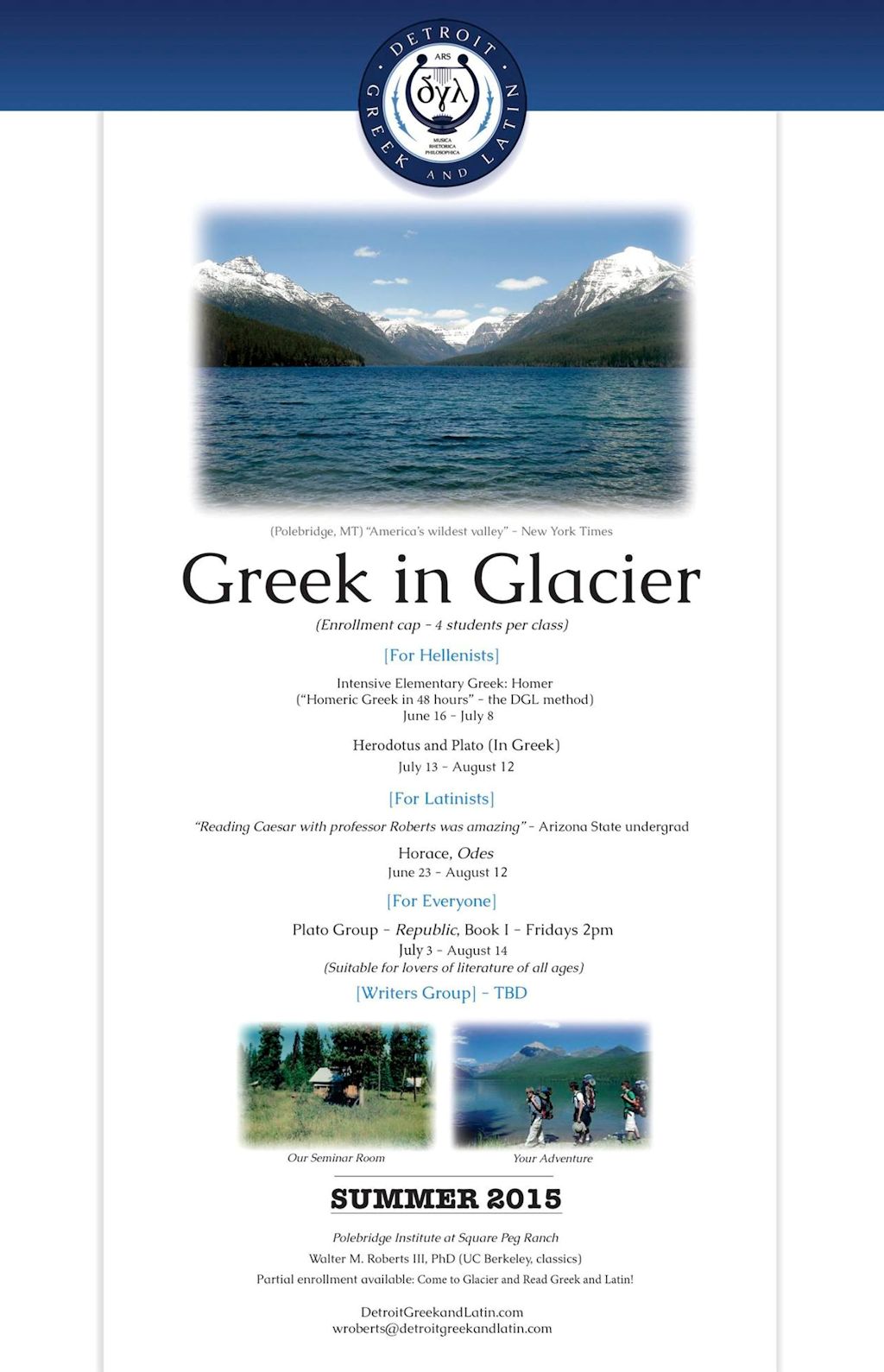
‘Greek in Glacier’ announced!

What would a North Fork summer be without Plato? Dr. Walter M. Roberts III returns to the North Fork later this month. Amidst all the bicycle riding and community participation he will, as usual, be presenting a series of seminars, including his ever-popular Plato course. See the poster below for details.

Greek in Glacier 2015 Poster

A note from Walter regarding the Plato seminar: “To folks who will be wanting to participate in Detroit Greek and Latin’s Plato Seminar in Glacier National Park, this is the text of Plato’s Republic that I would like everyone to have: Plato, Republic — edited by Robin Waterfield (World Classics: Oxford University Press.) We will muster in the Gazebo on Square Peg Ranch on the Friday before the Fourth of July at 2pm for our first meeting. As usual, the seminar will be followed by pizza at the Northern Lights Saloon & Cafe. Who’s treating the instructor?”

Hybrid species evolving before our eyes

Coywolf
Coywolf photo by http://www.ForestWander.com

Here’s a very interesting survey article from the Ensia site on the issue of species hybridization . . .

Native wolves had been eradicated and the forests of the eastern United States long cut down when residents of western New York first began to notice the arrival of coyotes in the 1940s.

The coyotes of the Rocky Mountains and Great Plains were lithe and quick, usually weighing less than 30 pounds. The newcomers were different…

Indeed, scientists have since discovered these super-sized coyotes are only about two-thirds coyote. About 10 percent of their genes belong to domestic dogs and a quarter comes from wolves, with which they hybridized as they moved east north of the Great Lakes . . .

Read more . . .