All posts by nfpa

Lawsuit opposes national park helitours

Groups in Hawaii have sued the FAA regarding helicopter tours over several national parks, including Glacier Park . . .

Hawaii residents and an organization representing federal workers have sued the Federal Aviation Administration to force it to do something about tour helicopters buzzing their communities and national parks around the U.S., including Montana’s Glacier National Park.

The lawsuit filed Wednesday by Public Employees for Environmental Responsibility and Hawaii Island Coalition Malama Pono asks the court to order the FAA to draft either air tour plans or voluntary agreements governing air tours for seven parks within two years.

Bob Ernst lives along the flight path of helicopters taking tourists to see lava inside Hawaii Volcanoes National Park. The rancher and farmer said the helicopter noise starts before he eats breakfasts and lasts all day.

Read more . . .

Feds remove protections from 10M acres of sage grouse habitat

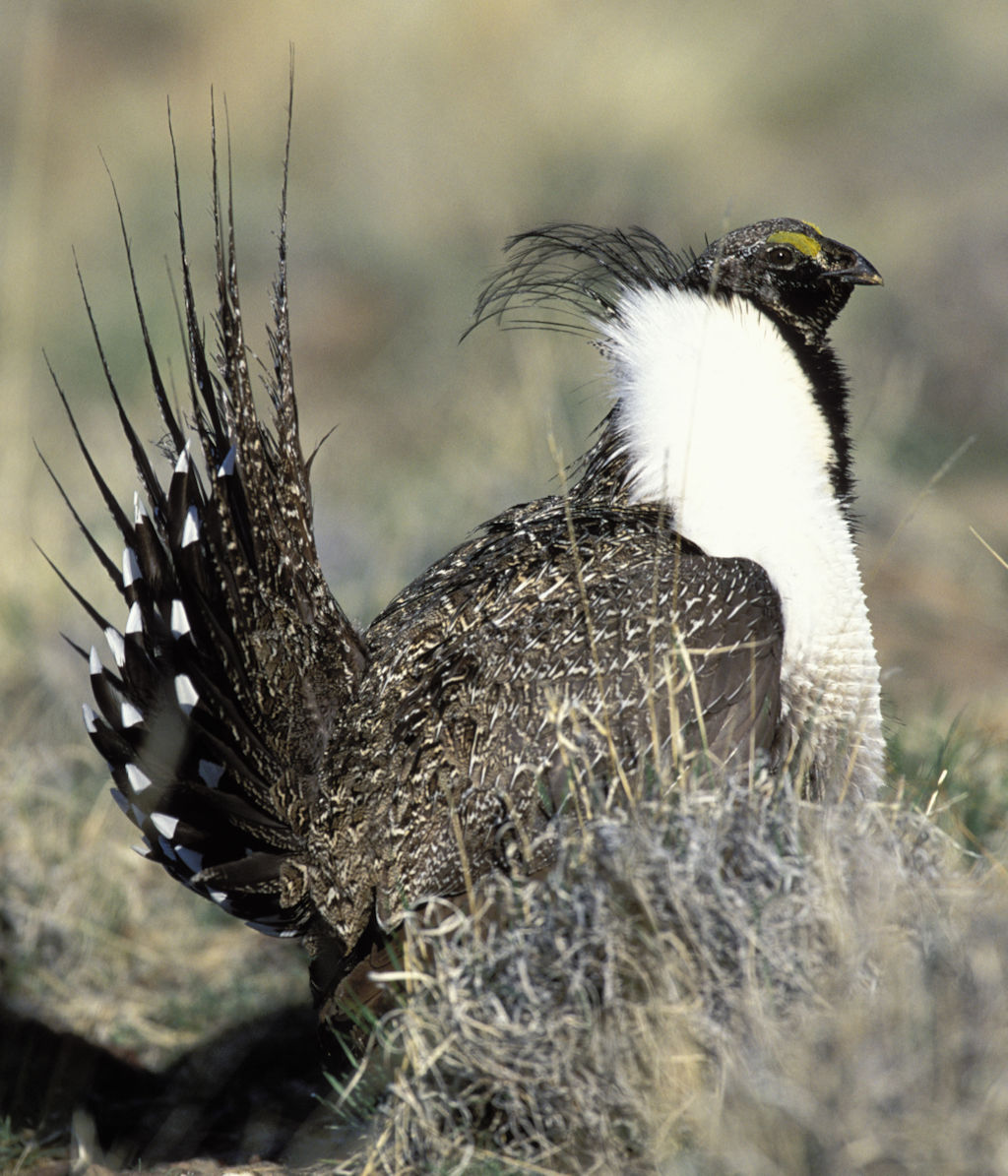
Sage Grouse - USFWS image
Sage Grouse – USFWS image

The Interior Department wants to make a little “adjustment” to sage grouse protection acreage . . .

The Interior Department said Thursday it is withdrawing protections for 10 million acres of federal lands used by the threatened sage grouse to open it up for energy development.

The plan would allow mining and other development in areas where it now is prohibited in six Western states: Idaho, Montana, Nevada, Oregon, Utah and Wyoming…

The proposal would affect less than one-tenth of 1 percent of sage grouse-occupied range across 11 states from California to the Dakotas, officials said.

Read more . . .

Flathead Basin Commission’s future in limbo

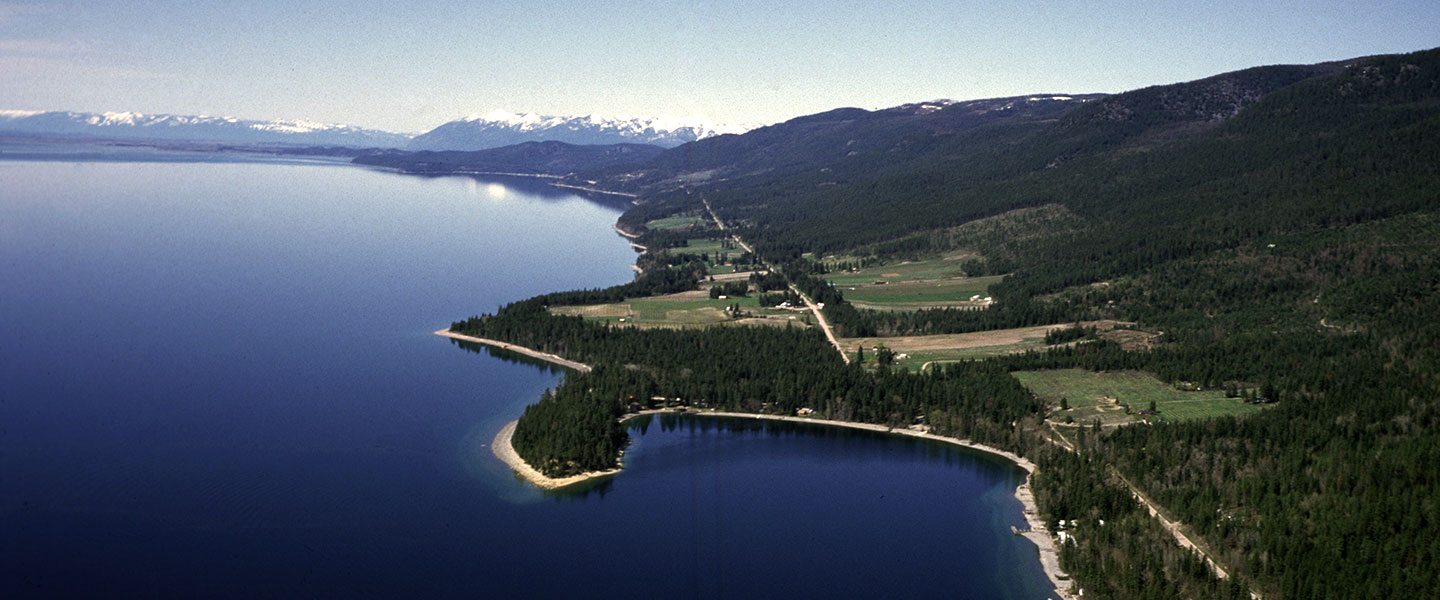
Flathead Lake Bio Station

Here’s a long but important article on the past, present and future of the Flathead Basin Commission . . .

Long before Montana’s state government created the Flathead Basin Commission to safeguard its waters, sprawling coal deposits lay hidden in the wilds of British Columbia, untapped and untouched. They ran in seams beneath a skinny track of wilderness just north of Glacier National Park, at a site overlooking the Canadian Flathead River, which spills south, crosses the international boundary and becomes the North Fork Flathead River.

Against all odds, that coal remains hidden today — still entombed in the strata, thanks in large part to the region’s foremost water-quality watchdog group. But even as the transboundary Flathead enjoys permanent protections from future mining or drilling, the fate of the legislatively established Flathead Basin Commission hangs in limbo due to looming budget cuts that threaten to render the group inoperable.

On the heels of slumping state revenue and skyrocketing firefighting costs, Gov. Steve Bullock is directing most state agency directors to trim 10 percent from their budgets. To achieve that goal, Department of Natural Resources and Conservation Director John Tubbs has recommended cutting the Flathead Basin Commission’s entire budget for fiscal year 2018, which totaled $148,932, as well as its budget for fiscal year 2019.

Read more . . .

US considers ending protections for Northwest Montana grizzlies

Grizzly Sow with Two Cubs - Wikipedia en:User Traveler100
Grizzly Sow with Two Cubs – – Wikipedia en:User Traveler100

Not really news to anyone who has been following the issue, but the feds intend to move forward next year on plans to delist grizzly bears in the Northern Continental Divide Ecosystem . . .

A federal wildlife official says the government will consider lifting threatened species protections for an estimated 1,000 grizzly bears in northwestern Montana.

U.S. Fish and Wildlife grizzly recovery coordinator Hilary Cooley told Montana lawmakers Thursday that a proposal to lift protections could come next year.

The bears in the Northern Continental Divide area that includes Glacier National Park make up the largest population of grizzlies in the Lower 48.

Read more . . .

Trail Creek Road reopens

Trail Creek/Graves Creek Road (#114) is open again, but the trail closures in the upper Trail Creek and Whale Creek drainages are still in place.

Canyon Creek Road (#316) has also been reopened.

Here’s the full official press release . . .

Forest System Road #114 Trail Creek /Graves Creek is now open. It was closed for public safety due to fire activity from the Gibraltar Ridge and Weasel Fires. The road closure began at Tuchuck Campground and extended through the Kootenai National Forest to Graves Creek (Milepost 8.8 – 14.8). The area closures in upper Trail Creek (including Tuchuck Mountain), and Upper Whale Creek will remain in place until further assessments can be made. The Area Closure remains in place due to active fire still present in these areas and fire directly impacting system trails.

Use caution when driving through open roads in the area; crews and equipment may be working, you may encounter activity on the road system.

Additionally, permanent repairs have been accomplished on Canyon Creek Road #316, located approximately 5 miles north of Columbia Falls on the Glacier View Ranger District. Effective immediately, the road is now open from the intersection of Road #316 and 316D (9 mile); west 7 miles to the intersection with Forest Road #316C (South Fork of Canyon Creek). The Kimmerly Road (FS Rd 316B) remains closed to motorized use from its junction of the 316 Road and beyond, due ongoing repair work. The Kimmerly Road is expected to be open for snowmobiles and grooming operations this coming winter.

While recreating on the Flathead National Forest, users are advised to use caution when traveling on Forest roads; encountering heavy truck or other vehicle traffic is common. Please do not to block gates on Forest roads, and report any road damage, or road issues of concern to your local forest service office.

For updated information on temporary road restrictions, campgrounds, and access on the Flathead National Forest, please contact the respective ranger district in your area:

Hungry Horse/Glacier View at (406) 387-3800, Tally Lake at (406) 758-5204, Swan Lake at (406) 837-7500, or Spotted Bear at (406) 758-5376 or (406) 387-3800.

Stop the blame game

NFPA President Debo Powers had this op-ed published in the Hungry Horse News recently…

I was too busy working as a volunteer fire lookout this summer to immediately respond to the outrageous and opportunistic comments made by Senator Daines, Congressman Gianforte, Secretary Zinke, and Secretary Perdue at the Lolo Fire. To use a time when many Montanans were evacuating their homes, firefighters were risking their lives, and all of us were tired of breathing smoke to start a “blame game” and push a political agenda was insensitive and unethical.

This has been one of the hottest, driest summers we’ve ever had and everything wanted to burn … whether it was grassland or former timber plots or old growth forest … everything wanted to burn. And given a spark, it did just that.

Land managers have been working diligently for a decade on thinning and fire mitigation projects on public lands that are adjacent to private land. These projects have been very helpful, but in a drought like this one, nothing will stop wildfire. Our leaders need to, not only be supportive of land management projects, but also be looking for solutions to the bigger, more complex, problem.

The fact is that our fire seasons are longer, drier, and hotter than ever before. Ninety-seven percent of our scientists say that this is the result of our over-consumption of fossil fuels which produce more greenhouse gases than the natural world can handle. The planet is getting hotter at a faster rate than can be explained by natural cycles. We are now seeing the results in horrific fire seasons. Rather than playing the unproductive “blame game,” real leaders should be working together, pushing for real solutions to address this complicated problem, like renewable energy and decreasing the use of fossil fuels.

Debo Powers

How Doug Chadwick’s Willful Optimism Just Might Save A Species

Book cover - Tracking Gobi Grizzlies by Douglas Chadwick
Book cover – Tracking Gobi Grizzlies by Douglas Chadwick

Montana Public Radio did a nice segment on North Forker Doug Chadwick and his new book Tracking Gobi Grizzlies: Surviving Beyond the Back of Beyond. Thanks to Patti Craig-Hart for spotting this one . . .

‘I mean I don’t know where all this is going, but I can’t believe we’re letting the fabric of the natural world unravel without more of a hullabaloo about it because it’s essentially our greater selves.’ — Doug Chadwick

Sarah Aronson: What do you call it, you say every naturalist is . . .

Doug Chadwick: A stunted 11 year-old. They’re an 11 year-old who saw a rock and just has to go turn it over and go “Ooooo wow. What’s that?!” And they don’t change.

There’s a lot of wonder in that.

Well look, the earth offers an infinite supply of it [wonder] and I’ve never figured out how anybody can be bored. And people say, “Well, but I’m not into that nature stuff,” and that confuses me too because, look, there are 10 trillion cells in our body—human cells. There are more microbial cells than that in our body and they consist of thousands of species of yeast and bacteria and archaea, another microbe group, and there’s more microbial DNA is us than there is human DNA, so whenever someone says, “Well you know I’m just not into that nature stuff,” I go, “But nature’s totally into you!”

Read more/listen to the full interview . . .

Leaked memo: national monument status suggested for Badger-Two Medicine

Badger-Two Medicine Region

Well now, this is interesting. Secretary of the Interior Ryan Zinke reportedly suggested the Badger-Two Medicine area be given national monument status . . .

Back in March, nine days into his new post as Interior Department secretary, Ryan Zinke accepted a blessing ceremony from Blackfeet tribal leaders, and heard their request to protect the Badger-Two Medicine area next to their reservation by Glacier National Park.

On Sunday, a leaked draft of Zinke’s report to President Donald Trump on revisions to national monument indicates he proposes to grant that wish.

On the next-to-last page of a 19-page memo advising Trump to amend the boundaries and management plans of 10 national monuments, Zinke suggested the creation of three new monuments:

  • the Union Army Camp Nelson training center for African-American soldiers in the Civil War in Kentucky,

  • the home of assassinated civil rights leader Medgar Evers in Jackson, Mississippi.

  • And No. 3? The Badger-Two Medicine area.

Read more . . .

Leaked memo: Zinke to recommend reductions in four national monuments

Bears Ears National Monument - Bob Wick, BLM-Flickr
Bears Ears National Monument – At 1.35 million acres, it is among the largest national monuments in the country – Bob Wick, BLM-Flickr

Looks like at least four national monuments will be targeted for reductions . . .

Interior Secretary Ryan Zinke’s recommendation to shrink four sprawling national monuments in the U.S. West jeopardizes protections for ancient cliff dwellings, scenic canyons and habitat for endangered fish and threatened Mojave desert tortoises.

The recommendations, revealed in a leaked memo submitted to the White House, would scale back two huge Utah monuments – Bears Ears and Grand Staircase-Escalante – along with Nevada’s Gold Butte and Oregon’s Cascade-Siskiyou.

The monuments encompass an area larger than Connecticut and were created by Democratic presidents under a century-old law. Three were created or expanded in President Barack Obama’s final weeks in office.

Read more . . .

Wildness at stake

Debo Powers spotted this long, but interesting, article on the dangers of unconstrained growth in the Gallatin Valley. Many of the concerns,  lessons and hard choices are applicable to our region as well . . .

In the stillness of a summer morning, haze from wildfire smoke thickening the air, Randy Carpenter arrives for a hike up Sypes Canyon in the pastoral northern outskirts of Bozeman, Montana. Ascending into the Bridger Mountain foothills, we talk about how “crazy” it feels these days “in town”, how quickly new subdivisions are springing up in fields that a year ago were covered with wheat.

And then Carpenter starts in, reciting some jaw-dropping statistics that seem abstract until we reach an overlook and gaze clear-eyed into an uncertain future.

Before us, and stretching for nearly 40 miles to the next muted horizon is the Gallatin Valley, one of the fastest-growing semi-rural settings in America. Carpenter, known for his work as a career land use planner, says it won’t be long, given current trend-lines, before the vast chasm of space fills in with exurban development.

Read more . . .