All posts by nfpa

House vote poses threat to public lands

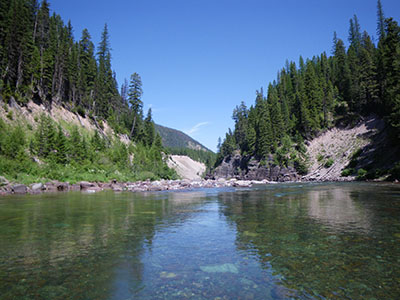
Three Types of Public Lands
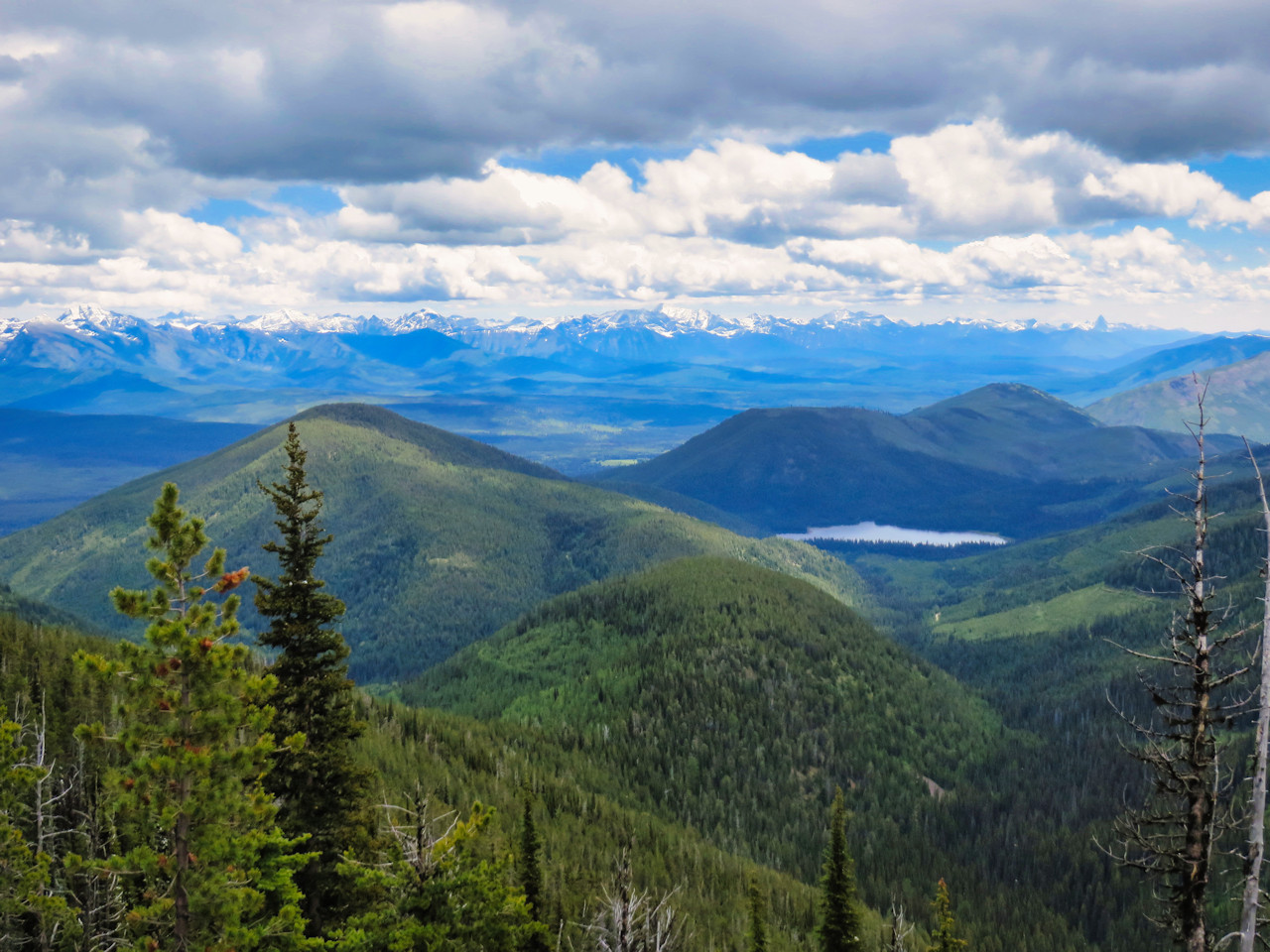
Three types of public lands: Flathead National Forest is in the foreground, left and right; Montana’s Coal Creek State Forest, including Cyclone Lake, is in the middle distance; Glacier National Park stretches across the background.

Here’s a pointed discussion of Rep. Zinke’s vote in favor of a House rules change that would ease the transfer of public lands out of federal control . . .

Keeping federal public lands public is a big issue in Montana and the West. It’s an issue that Rep. Ryan Zinke campaigned on in his successful bid for re-election. In his first term, Zinke frequently described himself as a Teddy Roosevelt Republican, strongly committed to protecting and preserving public lands owned by the people of the United States.

He stated unequivocally that he is against the transfer of federal public lands to states. States such as Montana are rich in public land but lack the staff to manage our priceless American heritage. One concern about the land transfer movement is that cash-strapped states would turn around and sell the land.

So after Rep. Rob Bishop, R-Utah, tucked a provision in the House Rules bill that could make land transfer legislation easier to pass, we expected that Zinke would have something to say about it. The House approved the rules package 233-190 with the Bishop provision that exempts any future land transfers from the budget scrutiny that otherwise must be given to bills that would reduce U.S. revenue or increase U.S. spending. Zinke was among the GOP majority voting for the rules package on Tuesday, the first Congressional work day of 2017.

Read more . . .

US cancels last two oil and gas leases in Badger-Two Medicine area

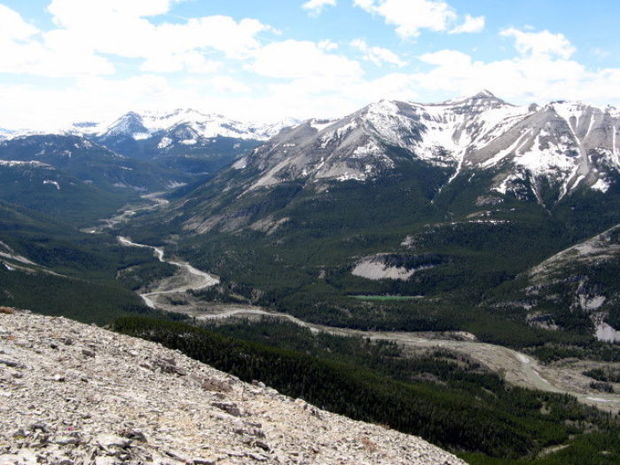
Badger-Two Medicine Region

With 12 days left in the Obama administration, the Interior Department cancelled the remaining two oil and gas leases in the Badger-Two Medicine region . . .

The U.S. Department of the Interior announced the Bureau of Land Management has canceled the final two oil and gas leases in the Badger-Two Medicine area within the Lewis and Clark National Forest in Northwest Montana.

The two lease cancellations address outstanding concerns about the potential for oil and gas development in this culturally and ecologically important area. The cancellations come on the heels of U.S. officials cancelling another 15 oil and gas leases in the area.

“We are proud to have worked alongside the Blackfeet Nation and the U.S. Forest Service throughout this process to roll back decades-old leases and reinforce the importance of developing resources in the right way and the right places.” said Secretary Sally Jewell. “The cancellation of the final two leases in the rich cultural and natural Badger-Two Medicine Area will ensure it is protected for future generations.”

Read more . . .

Invasive mussels pose big threat to Montana’s waters

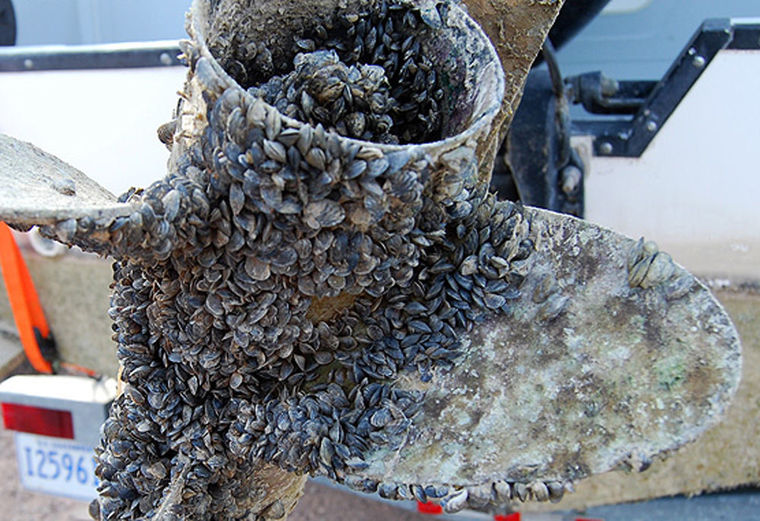
Mussel-fouled Propeller - NPS photo
Mussel-fouled Propeller – NPS photo

Late last Fall, waters in the Tiber and Canyon Ferry reservoirs tested positive for invasive mussel larvae. Montana officials reacted quickly, closing boating access at both locations and initiating the removal of underwater structures for inspection. Later, the Milk River near Malta and the Missouri River near York’s Islands Fishing Access Site south of Townsend also showed evidence of possible infestation by zebra and quagga mussels, triggering further responses to the threat.

Glacier National Park immediately closed all its waters to boating,. A close reading of their press release indicates public boating access may well be restricted throughout the 2017 season.

Leaders of the Confederated Salish and Kootenai tribes declared an emergency and called for the formation of an incident management team to deal with the issue as it applies to Flathead Lake.

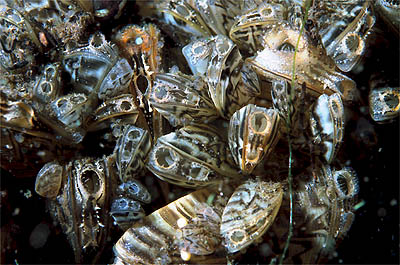
Zebra mussels
Zebra mussels – via Wikipedia

The Flathead Basin Commission, the River to Lake Initiative, U.S. Fish and Wildlife and a number of other other organizations and federal agencies have all expressed alarm and called for further action.

Why all the uproar? Because invasive mussels cause huge damage to waterways, equipment  and fish populations. Once established, they are impossible to remove completely. Mussels are filter feeders, gobbling up the plankton that form the base of the food chain for native fish. Mussels have been known to reduce available plankton by 70 to 80 percent in some waters.

First detected in the Great Lakes less than 30 years ago, mussels now have a foothold in 29 states. In most cases, they were spread by hitching rides on poorly cleaned private watercraft. So, any positive detection anywhere in the state is a big deal.

Further reading: The Flathead Beacon has an excellent article on invasive mussels (kudos to Dillon Tabish for putting it together). The distribution map at the bottom is pretty scary, by the way.

Rally for Public Lands, Jan 30 in Helena

Hiker viewing mountain valley

We received the following announcement a couple of days ago from the Montana Wilderness Association about a public lands rally in Helena at noon on January 30. By all accounts, last year’s rally was a big success. This one may very well be even bigger . . .

Our public lands are under attack. 

On Tuesday, the House of Representatives passed a rule change that would make it easier for Congress to not just sell off our public lands, but to give them away. Montana Congressman Ryan Zinke, our likely next secretary of Interior, voted for the measure.

This comes a few days after Montana state Senator Jennifer Fielder submitted two joint resolution drafts in the legislature, one calling for a study of transferring national public lands to the state and the other calling for outright transfer – the first step in selling off our public lands.

With the changes brought on by the 2016 election, the threat of losing our public lands and our outdoor way of life is perhaps now greater than it’s ever been.

We need to fight back. 

That’s why we’re holding a Rally for Public Lands on Monday, January 30 at noon under the State Capitol Rotunda in Helena. 

This is your chance to let our elected officials know that our outdoor way of life defines who we are as Montanans, and we will always fight back against any attempts to seize the public lands that enable us to lead that life.

Join us in sending the message to our state and federal elected officials: public lands belong in public hands.

Speakers at the rally will include Governor Steve Bullock, mountaineering legend Conrad Anker, fly fishing guide and TV host Hilary Hutcheson, and K.C. Walsh, CEO of Simms fishing company.

See you at the rally on January 30!

Polebridge Field Course gathering and lecture January 16

Graetz Presentation at Sondreson Hall - Jan 18, 2016
Graetz Presentation at Sondreson Hall – Jan 18, 2016

For the past ten years, Rick and Suzie Graetz of the University of Montana have brought a group of geography students to the Polebridge area for their Field Course.

While they are here, they dedicate one evening to giving a public lecture at Sondreson Hall. If for no other reason, it is worth attending just for the photos of spectacular landscapes, often from far-flung regions of the globe.

This year’s presentation will be at Sondreson Hall on January 16 at 6:30pm.

Here’s the text of Suzie’s announcement . . .

Happy New Year to all of our friends in the North Fork!

There is something about the holidays that makes me sit back and count my blessings.

Yesterday, while I was putting away the trappings of Christmas at the same time I was hauling out and checking off the gear we need to pack for our Polebridge Field Course, it dawned on me that this will be our 10th year of bringing students for a week to the amazing landscape you all are lucky to call home.

The course of study is wide-ranging and a great amount of information is crammed into our short stay… we expose the students to twice daily lectures by experts on fire, wildlife, national and state land management, geography, history, and geology (to name a few subjects), they have pre-trip reading assignments, research projects to complete, lecture notes to turn in, daily snowshoe treks into the landscape they are studying, and as always a final test. But, I feel it is meeting you, the members of this valley that has made the biggest impression on them.

Continue reading Polebridge Field Course gathering and lecture January 16

Greg Zimmerman: Extreme views don’t represent most Montanans on public lands

Three Types of Public Lands
Three types of public lands: Flathead National Forest is in the foreground, left and right; Montana’s Coal Creek State Forest, including Cyclone Lake, is in the middle distance; Glacier National Park stretches across the background.

This well-written op-ed concerning public lands transfer was posted in today’s Flathead Beacon. It is written by Greg Zimmerman, deputy director at the Center for Western Priorities. Interestingly, he quotes incoming President Trump as also opposing the transfer of federal lands to the states . . .

In her recent op-ed, Montana state Sen. Jennifer Fielder continued to perpetuate phony myths about American public lands in an attempt to prop up her naive attempts to dispose of them.

According to Sen. Fielder, Montana’s public lands are a trash dump, filled with pests and fenced off to the public. In her telling, the only thing that can save our public lands is for them to be given to the state.

Don’t tell that to the hundreds of thousands of Montanans streaming across the state’s public lands to hunt and fish, who certainly aren’t buying Sen. Fielder’s premise. On the contrary, public opinion research shows unequivocally that Montana voters value national public lands. And poll after poll shows that Montanans – like voters across the West – have little appetite for her misguided plans to “transfer” American lands to state or private interests.

This month’s election result further validates what the polls have been telling us for years.

Read more . . .

Possible invasive mussel detection in Missouri River

Zebra mussels
Zebra mussels – via Wikipedia

Uh, oh. More evidence of invasive mussel species in Montana’s waters . . .

Preliminary test results have indicated another possible detection of mussel larvae south of Canyon Ferry Reservoir in the Missouri River, although additional lab work is needed to confirm the detection.

Montana Fish, Wildlife and Parks spokesman Greg Lemon said Monday evening that a water sample taken from the York Islands fishing access south of Townshend was found to be “suspect” during initial testing by state scientists. He said additional testing is needed to confirm whether the sample contained larvae from zebra or quagga mussels, two species of invasive mussel known to multiply aggressively and generate costly damage to aquatic ecosystems and infrastructure.

The finding comes about two weeks after mussel larvae, known as “veligers,” were confirmed for the first time in Montana waters at Tiber Reservoir. Another sample taken from upstream in Canyon Ferry was inconclusive, but a visual microscopy test indicated the veligers were present in that water body as well.

Read more . . .

Official Montana FWP press release: Samples from Missouri River, south of Townsend, suspect for mussel larva

For additional background: Montana on High Alert After Mussel Discovery (Flathead Beacon)

Feds move to block new mining claims near Yellowstone

The U.S. Department of the Interior responded to community objections over gold mining activity in the Yellowstone area . . .

The seats were full, and there wasn’t much room to stand. About 100 people — locals, environmental groups, political staffers and government officials — stuffed a conference room at Chico Hot Springs here on Monday to hear what they all considered good news.

U.S. Secretary of the Interior Sally Jewell was here to announce that the Obama administration would temporarily block new mining claims on about 30,000 acres of U.S. Forest Service land north of Yellowstone National Park, near where two mining companies have asked the state for permission to look for gold on private land.

“We’ve all heard what you’ve told us, which is Yellowstone is more valuable than gold,” Jewell said as the room burst into applause.

Read more . . .

See also: U.S. Moves to Block Mining Near Yellowstone (Flathead Beacon)

Flathead Basin Commission wants more boating closures due to invasive mussel threat

Mussel-fouled Propeller - NPS photo
Mussel-fouled Propeller – NPS photo

Regional officials are not happy about the recent detection of invasive mussels in Montana’s Tiber and Canyon Ferry reservoirs . . .

A group tasked with protecting the aquatic resources of the Flathead River drainage is urging state officials to close the Canyon Ferry and Tiber reservoirs to all boats as evidence mounts that both of the Central Montana water bodies now harbor invasive mussels.

The Flathead Basin Commission is including the closure recommendations in a letter to Gov. Steve Bullock, drafted last week at the University of Montana’s Flathead Lake Biological Station. It was the commission’s first meeting after the Department of Fish, Wildlife and Parks’ Nov. 9 announcement that the long-feared presence of invasive mussels had been confirmed in Tiber Reservoir — the first such detection in the state.

Glacier National Park and the Blackfeet Nation both closed all their waters to boating within days of the state’s announcement and the U.S. Fish and Wildlife Service followed suit by closing a popular recreation pond that supplies water to its hatchery in Creston.

Read more . . .

Also read:
Consequences of invasive mussels could prove costly (Daily Inter Lake)
Invasive Mussel Larvae Found for First Time in U.S. Northwest (Flathead Beacon)

Officials move a step closer to delisting Yellowstone grizzlies

Grizzly bear sow with three cubs - NPS photo
Grizzly bear sow with three cubs – NPS photo

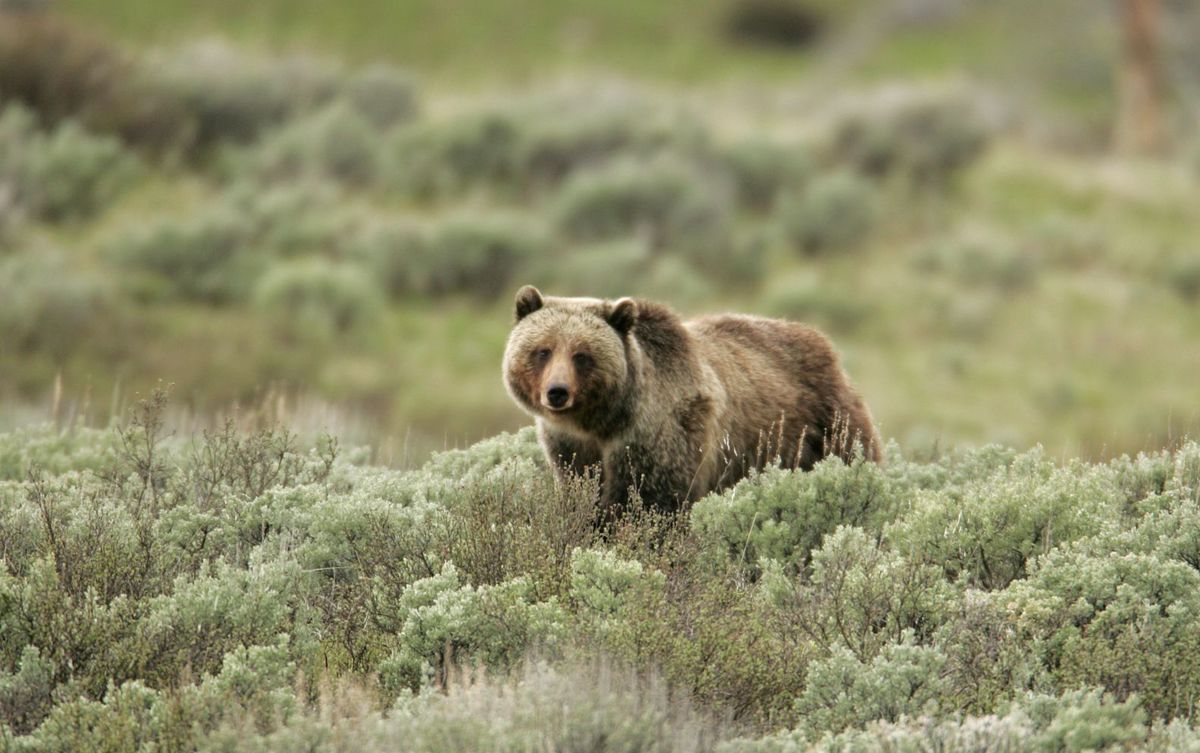
Members of the Yellowstone Ecosystem Subcommittee of the Interagency Grizzly Bear Committee voted to approve a conservation strategy allowing for delisting of the grizzly bear in the region including Yellowstone Park. The vote was not quite unanimous, with the superintendent of Yellowstone Park voting against it and Leander Watson of the Shoshone-Bannock Tribe abstaining . . .

Wildlife officials have moved one step closer to removing the Yellowstone grizzly population from the Endangered Species Act by approving a future conservation strategy.

The Yellowstone Ecosystem Subcommittee of the Interagency Grizzly Bear Committee voted to approve the conservation strategy, sending it to the U.S. Fish and Wildlife Service as part of what has been a months-long process to potentially remove the Yellowstone grizzly from federal protection.

The U.S. Fish and Wildlife Service proposed lifting the federal protections for the Yellowstone bears in March. Grizzly bears were first listed as threatened in 1975 when the Yellowstone population was estimated to have as few as 136 bears. Recent estimates say the population is now above 700.

Read more . . .