All posts by Bill Walker

Flathead Forest finally releases draft Comprehensive River Management Plan; public meetings Feb 17 & 18

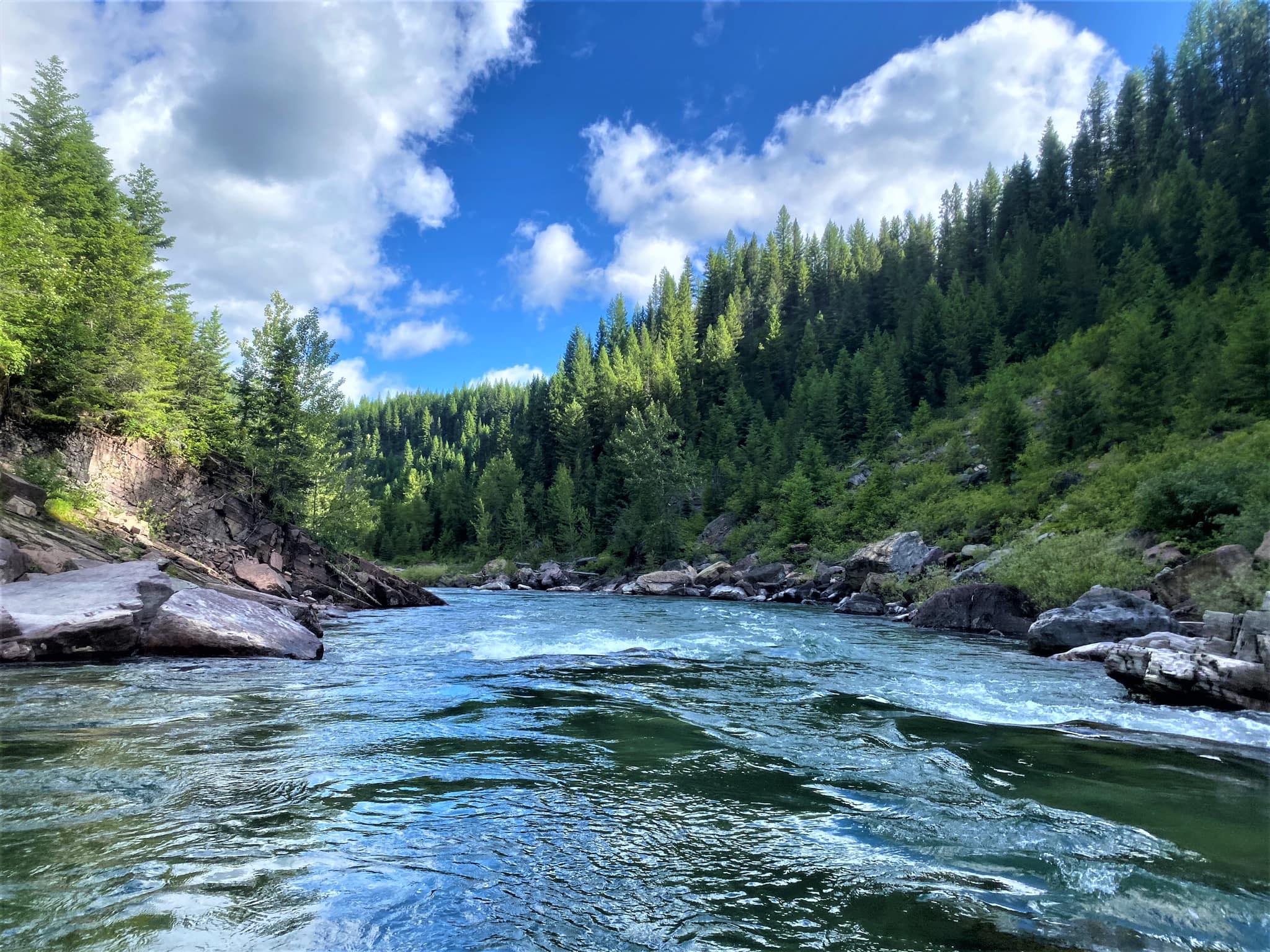
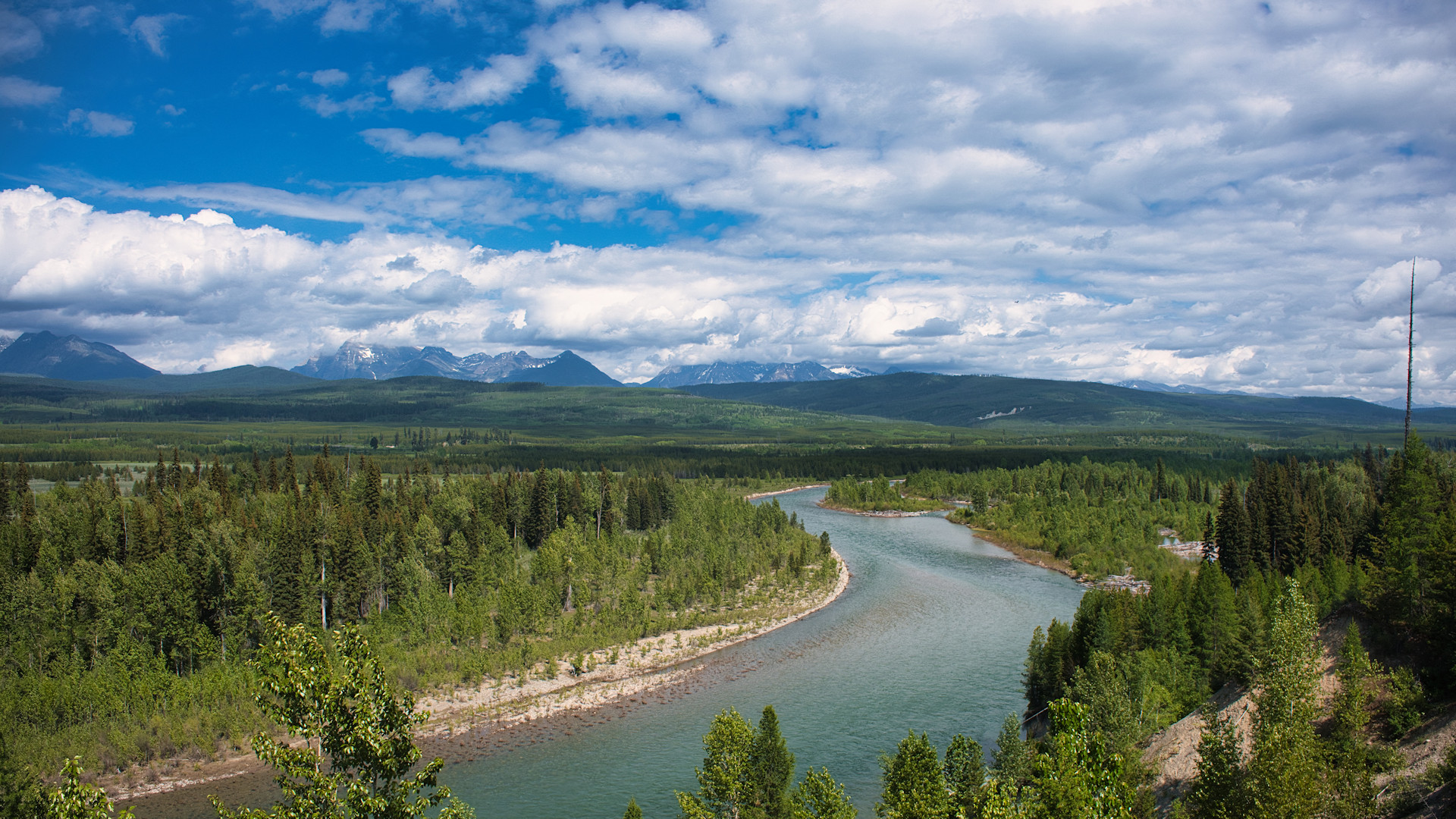
North Fork of the Flathead River, May 28, 2023 – W. K. Walker

After years of efforts and false starts, the Flathead National Forest has released a draft Comprehensive River Management Plan (CRMP). Here are the high points of immediate concern . . .

Two public information sessions will be held at Flathead Valley Community College on February 17 and 18, from 6 to 8pm at the Arts and Technology building, room 139 (AT-139). Both  sessions will be open-house format, with information stations staffed by members of the project team.

The public comment period will be open for 30 days, concluding March 13, 2026. Comments and attachments may be submitted electronically at https://cara.fs2c.usda.gov/Public/CommentInput?project=56536.

For more information, here is the meat of the official press release . . .

Kalispell, Mont., February 10, 2026 — The Flathead National Forest has released a draft Comprehensive River Management Plan for the three forks of the Flathead Wild and Scenic River and associated draft environmental assessment of the plan. Both draft documents are available for public review on the project webpage: https://www.fs.usda.gov/r01/flathead/projects/56536

The draft Flathead Comprehensive River Management Plan and associated draft environmental analysis outline the existing condition of the three forks of the Flathead River; identify the outstandingly remarkable values and desired conditions; and identify user capacities and articulate management actions that would be taken to protect these values into the future. The draft also contains a monitoring plan designed to gather real-time data on river use, track long-term trends and assess the effectiveness of management actions.

The draft plan incorporates changes that have occurred since the Wild and Scenic designation, including visitor use patterns, environmental conditions, Endangered Species Act species listing and other laws that affect resources within the Wild and Scenic River corridor.

“We have a high level of river recreation from all over the country and the world. All three forks are highly sought after for recreation opportunities, and this draft plan is an important step towards long-term river management and protection of this world-class resource” said Rob Davies, district ranger for the Hungry Horse and Glacier View Ranger Districts. “The 1980 plan is past due for an update, and the Flathead National Forest has been deeply engaged in this multi-agency project. We’re grateful for the involvement and collaboration from Glacier National Park, U.S. Fish and Wildlife Service, Montana Fish, Wildlife & Parks, community members, nonprofit organizations, and our outfitter and guiding partners who have all contributed to the development of this draft plan.”

“This project has received a high level of public and stakeholder investment from the start, and the demand for protection of the outstandingly remarkable values found on these river segments has driven the development of the draft plan” said Anthony Botello, Flathead National Forest supervisor. “We are all eagerly waiting for this river plan. The passion and support that exists for the three forks of the Flathead and the protection of the Wild and Scenic River is inspiring. We are privileged to steward and protect the three forks of the Flathead.”

Wild and Scenic River management plans protect and enhance the outstandingly remarkable values identified in Wild and Scenic designations. The draft Comprehensive River Management Plan revises the existing 1980 river management plan and brings it into compliance with the statutory requirements of the Wild and Scenic Rivers Act. The final Comprehensive River Management Plan is expected to be released in summer of 2026, accompanied by the final environmental analysis document.

Two opportunities to join us for a project information session:
6 – 8pm on Tuesday Feb. 17
6 – 8pm on Wednesday Feb. 18
Both information sessions will be open-house format at Flathead Valley Community College, Arts and Technology building, room 139 (AT-139), with information stations staffed by members of the project team.

Flathead National Forest and Glacier National Park will provide information on the draft Comprehensive River Management Plan and will be available to answer specific questions. The sessions will start with a brief presentation with an option for virtual attendance. Link to attend virtually will be made available under Project Documents on the project website.

How to submit comments on the project:
This public comment period will be open for 30 days, concluding March 13, 2026. Comments and attachments may be submitted electronically at https://cara.fs2c.usda.gov/Public/CommentInput?project=56536.

Written comments may be mailed, or hand-delivered Monday through Friday, 8 a.m. to 4:30 p.m., excluding holidays, to the Hungry Horse-Glacier View Ranger Station (P.O. Box 190340, 10 Hungry Horse Drive, Hungry Horse, MT, 59919) or to the Forest Supervisors Office, (650 Wolf Pack Way, Kalispell, MT 59901).
Additional information can be found at: https://www.fs.usda.gov/r01/flathead/projects/56536
Flathead National Forest project notifications require new sign-up & feedback procedures

Flathead National Forest

“The Flathead National Forest is adjusting the way planning projects are announced and public comments are solicited.” Short version: There is a separate project announcement email list. (Sign up for the list here: https://www.fs.usda.gov/r01/flathead/projects.) Project comments will need to be sent to the individual project manager. There will be no formal time-frame for comments and feedback.

If this sounds a little vague, that’s because it is, in fact, a little vague.

If the little veins aren’t standing out on your forehead yet, here’s the text of the October 14, 2025, press release. That should do the trick . . .

From: Anthony B. Botello, Forest Supervisor

Dear Interested Stakeholder:

The Flathead National Forest is adjusting the way planning projects are announced and public comments are solicited. You are being contacted because you have expressed interest in Flathead National Forest projects, have previously submitted comments, or have subscribed to project information email bulletins.

On January 20, 2025, President Trump signed the Executive Order, Unleashing American Energy. This E.O. directed the Council of Environmental Quality (CEQ) to provide guidance on implementing NEPA to expedite and simplify the permitting process. CEQ responded to this direction by rescinding its NEPA regulations, creating a path for agencies to reform their own NEPA procedures.

On July 3, 2025, the Department of Agriculture (USDA) removed seven agency-specific regulations implementing the National Environmental Policy Act (NEPA), including those for the U.S. Forest Service, and replaced them with new department-wide NEPA regulations. As a result of these recent changes, the Flathead National Forest is beginning to implement new E.O.s and USDA direction by more efficiently complying with NEPA, especially in regards to projects that address forest health and fuel reduction or other active forest management objectives.

Notices of proposed actions (scoping) will no longer be sent by way of email mailing list. I encourage you to look to our webpage as the primary source of project information and updates at https://www.fs.usda.gov/r01/flathead/projects. You may also sign up for information and be alerted to happenings around the Forest.

Your comments and input remain valuable to our project development and informing decisions. Rather than only engaging public at specific and restricted timeframes, please provide your input on Flathead National Forest projects at any time during project development. To keep informed, please monitor our project webpage, selecting the project that interests you, and contact the individual listed as the project leader.

Montana jacks up wolf hunting limits in most regions

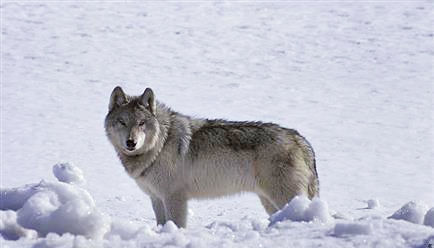
Gray Wolf - Adam Messer-Montana FWP
Gray Wolf – Adam Messer-Montana FWP

Here’s and excellent article by Tristan Scott of the Flathead Beacon concerning last Thursday’s Fish and Wildlife Commission decision to further raise wolf hunting quotas throughout most of Montana . . .

The Montana Fish and Wildlife Commission on Thursday raised the state’s wolf hunting quota by about 37%, approving new regulations that cap the number of wolves that hunters and trappers can kill annually at 452 while stopping just shy of adopting a statewide quota.

The seven-member commission formalized the new rules after a full afternoon of debate and discussion, including hours of testimony from members of the public who were mostly set against a state management regime aimed at reducing the statewide wolf population, per a state legislative mandate.

To achieve this reduction, Montana Fish, Wildlife and Parks (FWP) last month proposed a plan that blends the 2021 directive from Montana’s Republican-controlled legislature with its own recommendations, which are based on population estimates and projections that meet the minimum recovery criteria determined by the U.S. Fish and Wildlife Service.

Continue reading . . .

More reading: The official press release . . .

Feds to drop roadless restrictions on NW Montana forestland

Flathead National Forest

We knew this was coming . . .

The federal government pledged to peel back protections on more than 1.1 million acres of forestland in Northwest Montana, opening vast swaths of the region to potential logging projects.

Secretary of Agriculture Brooke Rollins vowed on June 23 to rescind longstanding federal restrictions on road construction and timber harvesting for 58.8 million acres of U.S. Forest Service land. The proclamation specifically targeted “Inventoried Roadless Areas,” including 478,000 acres in Flathead National Forest and 639,000 acres in Kootenai National Forest.

Continue reading . . .

Wide variety of old-growth ecosystems across the US makes their conservation a complex challenge

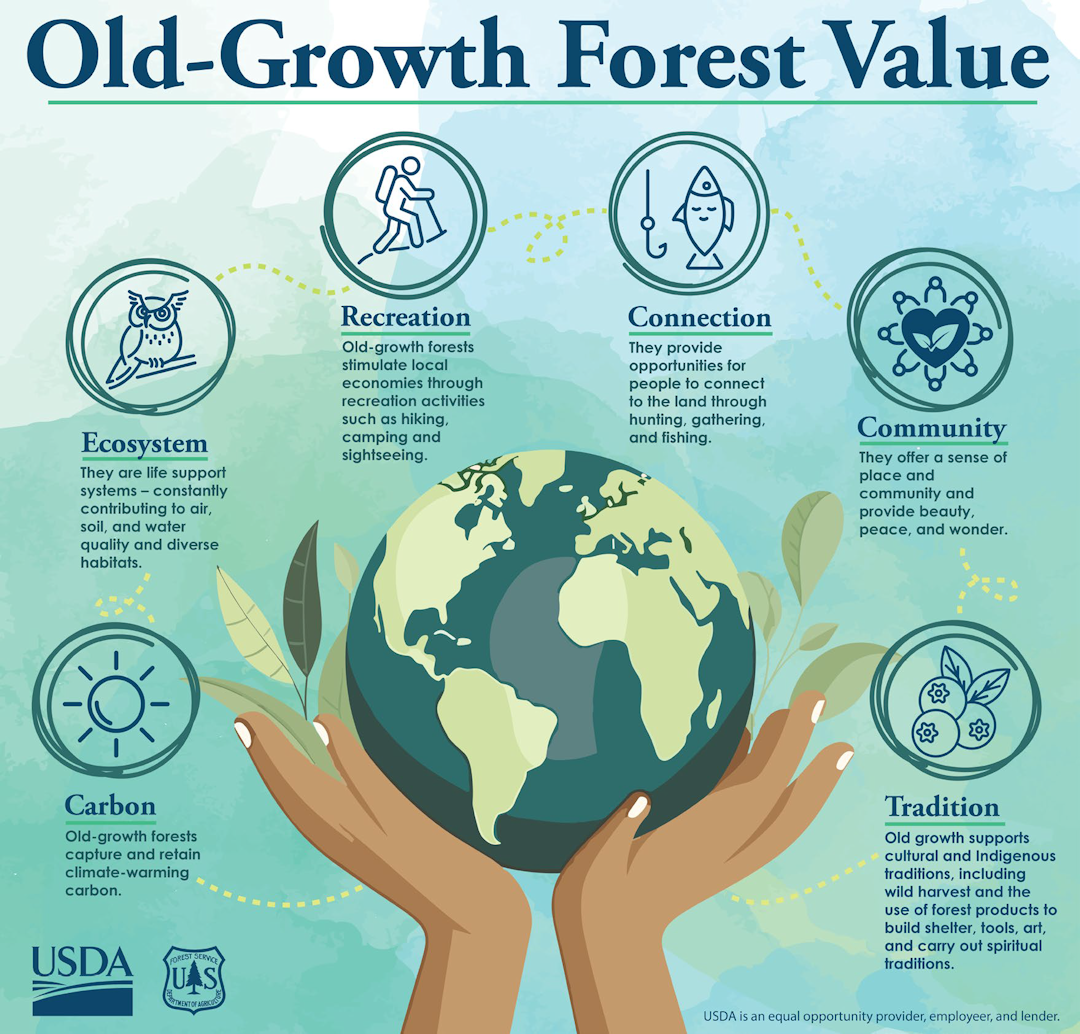
Old-Growth Forest Value graphicWhat exactly is “old growth? This article adds some context to the discussion . . .

In an old-growth longleaf pine savanna, the absurdly long pine needles sing in the wind. Once considered forests, these landscapes in the southeastern U.S. coastal plain are open-canopied and sunny, more grassland than forest, with underbrush kept clear by frequent fires.

Longleaf pines – their needles can be up to 18 inches long – are among the longest-lived trees in eastern North America, surpassing 500 years if they are lucky enough to escape lightning strikes from the region’s frequent thunderstorms. Almost more fascinating is the ground cover, with up to 50 species per square meter, including some plants that are thousands of years old, with the vast majority of their biomass below ground. Picture an underground forest.

In the American West, there are other types of old-growth forest. Dry ponderosa pine woodlands are similarly open in structure and contain trees up to nearly 1,000 years old. But perhaps the most familiar old-growth forests are the complex, wet old-growth forests of the Pacific Northwest, which stretch from northwestern California to southeastern Alaska.

Continue reading . . .


House preliminarily approves ‘River census’ study bill

Flathead River in Flathead National Forest

This sounds like a really good idea. Note that the proposed study includes the three forks of the Flathead River, as well as the main stem as far as Flathead Lake . . .

Rep. David Bedey was born and raised in Hamilton, and he used to fish the Bitterroot River, but it’s so busy he doesn’t anymore.

“Now I go to the Clark Fork or somewhere else where I don’t have to play bumper cars with folks,” said Bedey, a Hamilton Republican.

Bedey made the comments Wednesday in the House Appropriations Committee in support of river use data that would be collected through House Bill 762, sponsored by Rep. Joshua Seckinger, D-Bozeman.

The “river census” bill, which preliminarily passed 67-32 in the House one day earlier, would require Montana Fish, Wildlife and Parks to produce a report of all watercraft on 16 river stretches in the summer totaling 966 miles in the state.

Continue reading . . .

B.C. Rockies conservation talks stumble as trust breaks down

Flathead River in Flathead National Forest

Think conservation threats to the trans-boundary Flathead drainage have settled down? Maybe not…

The leader of one of four Ktunaxa First Nations in B.C. says she’s lost confidence in ongoing discussions between the nations and the federal and provincial governments over land management and potential conservation measures in the Elk and Flathead valleys.

“It boils down to trust,” Yaq̓it ʔa·knuqⱡi’it First Nation Nasuʔkin (Chief) Heidi Gravelle said in an interview. “We definitely do not have that sense of trust right now with how this process has broken down.”

Recent discussions have centred on two parcels of land known as the Dominion coal blocks, which together cover 200 square kilometres in the Elk and Flathead valleys in Ktunaxa Nation territory in southeast B.C. The Flathead Valley, in particular, is an area where Gravelle wants to see Indigenous-led conservation.

Continue reading . . .

Howl – The dark side of wolf reintroduction

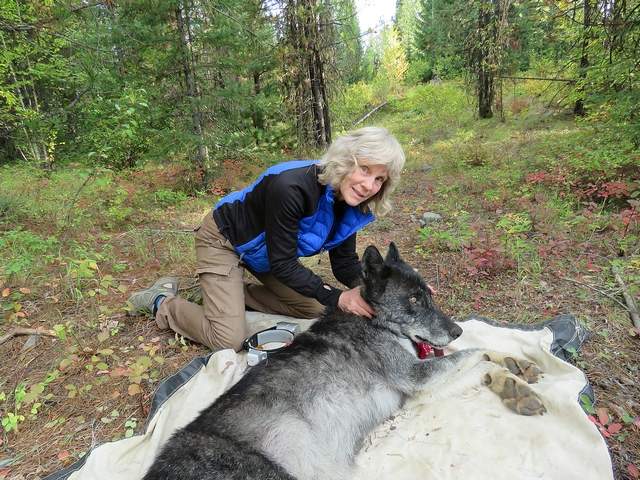
Biologist Diane Boyd with a tranquilized wolf in the field

Our own Diane Boyd got some more ink, this time in a long-form article with lots of photos published in ‘Nautilus’…

Diane Boyd walked along the North Fork of the Flathead River. It was a clear blue summer day, and the wolf biologist relished being in this Rocky Mountain valley in northwestern Montana. She set foot here 45 years ago to track the first known gray wolf to wander into the western continental United States from Canada in decades. Humans had exterminated the last of them in the 1930s.

The river wove through pine, aspen, and willow trees that rose along the edge of a sprawling grass meadow. The mountain peaks in the distance were topped with snow. Boyd grew up in suburban Minnesota, where she was the neighborhood kid who could be found at the wild edges of the subdivision putting caterpillars in jars.

“I always wanted to go more and more wild in my life—wildlife, wild places—and it doesn’t get a lot wilder than here,” Boyd said to me last summer, as we walked through the quiet meadow.

At age 69, dressed in jeans, running shoes, and a T-shirt picturing a dog lazing on a lake pier, Boyd seemed very much the innately independent biologist who settled here at age 24. She spoke with a directness that had little room for sentimentality. The meadow area is called Moose City and was originally a 1910s homesteader ranch with six log cabins. Boyd lived alone in one of the tiny cabins without electricity or running water for 12 years.

Continue reading . . .