Category Archives: Commentary

Gov. Steve Bullock statement on the Upper Missouri River Breaks National Monument

Upper Missouri River Breaks National Monument in Montana - Bob Wicks/BLM
Upper Missouri River Breaks National Monument in Montana – Bob Wicks/BLM

This is a direct, to-the-point statement just released by Montana Gov. Steve Bullock concerning efforts to “review” the Upper Missouri River Breaks National Monument . . .

Today, I sent a letter to Secretary of the Interior Ryan Zinke urging that no changes be made to the designation of the Upper Missouri River Breaks National Monument.

In May, Secretary Zinke began a review of over 20 National Monuments from around the country pursuant to an Executive Order issued by President Donald Trump. The Missouri River Breaks was one of the monuments designated for review. As part of this process, Secretary Zinke reached out to me for my comments and recommendations regarding the Missouri Breaks National Monument.

The Missouri River Breaks offers world-class, once-in-a-lifetime public lands hunting opportunities for trophy mule-deer, elk, and bighorn sheep. Opportunities like these attract over 130,000 visitors to the area every year and provide an annual influx of $10 million to the local economy. The local economy has come to depend on this. In addition to attracting more visitors, the region has sustained growth in many measures of local economic health and prosperity—including a 23 percent increase in real capita income.

Finally, the Missouri Breaks has remained largely unchanged for over 200 years. The monument designation helps keep it that way for our children and grandchildren to share. For these reasons, I strongly recommended that no changes in the size or to the designation of the Monument should be made.

Places like the Missouri River Breaks are important to Montanans and play a significant role in our way of life. These public lands are our heritage and support an unmatched quality of life. I will continue to fight to preserve public access to our lands, rivers, and streams and I oppose any effort that jeopardizes or calls into question the future of the Missouri River Breaks or any other part of our public lands heritage.

As Secretary Zinke continues his review of the Missouri River Breaks National Monument designation, I urge you to reach out to him HERE to share your own comments and experiences within the area.

Sincerely,

STEVE BULLOCK
Governor
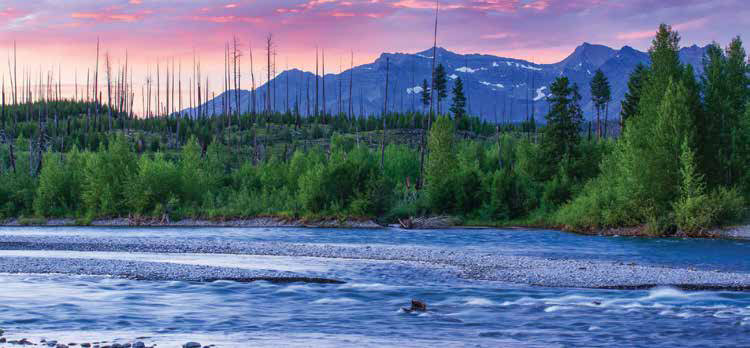
Glacier’s headwaters: Water tower to our continent

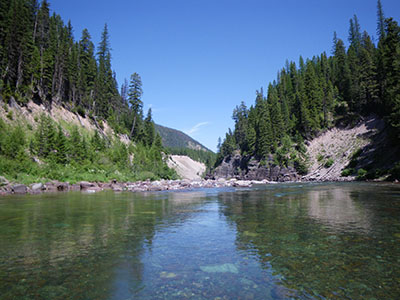
North Fork of the Flathead River - ©Mark LaRowe
North Fork of the Flathead River – ©Mark LaRowe

A few days ago, the National Parks Conservation Association released their Summer 2017 Field Report for the Northern Rockies. In it was an article by Michael Jamison, Crown of the Continent Program Manager, that is highly relevant to the North Fork, as well as any other region downstream of the Canadian Rockies. By permission of the author, it is reprinted here in its entirety . . .

People tend to think Glacier National Park is all about mountains.

And people are wrong.

Glacier is also about water: icy cold water rushing clean and clear across gravel and stone; whitewater plunging over cliff-band falls; sky-blue water eddying into lakes set like sapphires into the deep green of wilderness.

From the summit of the park’s Triple Divide Peak, meltwater flows west to the Pacific, east to the Atlantic, north to the Arctic by way of Hudson Bay. Glacier is water tower to a continent, spiked by peaks sharpened on a grindstone of Pleistocene ice.

I recently flew north out of Glacier, over a long slice of Alaska—another place branded by its mountains. Chugach. Wrangell-St. Elias. The Aleutians and Brooks and Chilkats.

But Alaska, like Glacier, is not really about mountains.

What I saw unfolding below was, again, a wild country defined by water: an endless winding coastline; miles of muskeg pooling like quicksilver; rivers washing the feet of mountains, slicing tundra and stone, spilling sediment braids into an ocean the color of steel.

Montana and Alaska are alike in this way. They also share a common headwater: British Columbia.

Continue reading Glacier’s headwaters: Water tower to our continent

George Wuerthner: Wildlands are of global significance

Here’s an excellent guest column in the Flathead Beacon by George Wuerthner discussing the importance of reserving wilderness areas and listing several in this corner of Montana still in need of protection . . .

The announcement by Montana Sen. Jon Tester that he would be introducing legislation to protect approximately 80,000 acres in the Blackfoot Clearwater area adjacent to the Bob Marshall Wilderness is to be commended. I have personally hiked all the areas included in this legislation and can attest to its important to the ecological integrity of the larger Bob Marshall Wilderness Complex.

The Monture drainage with its wonderful larch forests that glow golden in the autumn, and the North Fork of the Blackfoot with its deep emerald pools holding exceptional bull trout and cutthroat trout populations are both critical gateways to the larger Bob Marshall complex.

The Grizzly Basin portion of the Swan is the critical scenic backdrop to the Seeley-Swan highway and the West Fork of the Clearwater segment is a needed wildlands connection corridor between the Mission Mountains and Swan Range.

What Tester, and those supporting the legislation, recognize is that Montana’s wildlands are of global significance. These patches of self-willed landscapes are critical to ensuring the continued survival of many wildlife species, carbon storage, watershed protection, and the source for inspiration.

Read more . . .

Rob Breeding: Americans like their public lands public

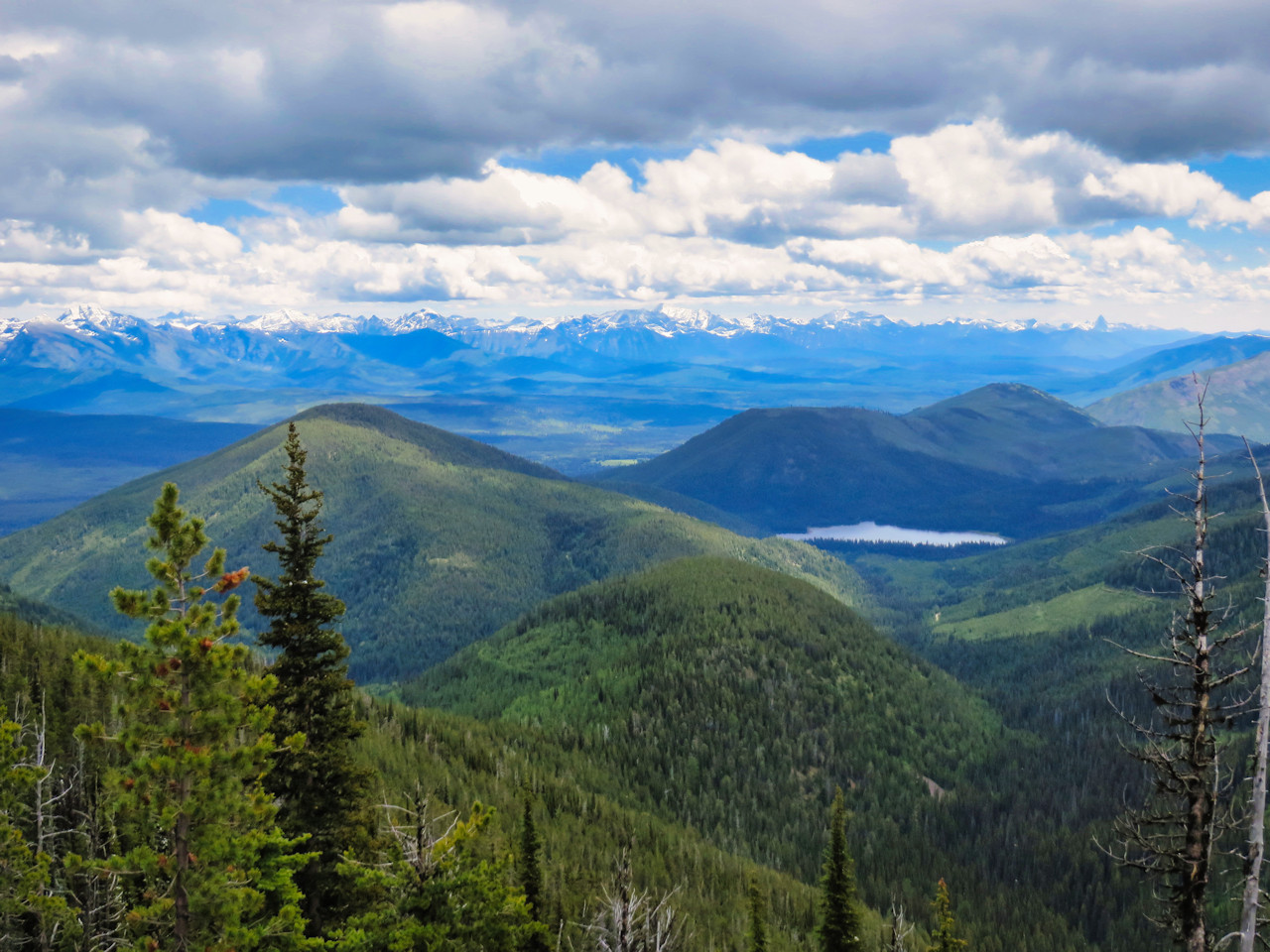
Lake in Flathead National Forest

The Flathead Beacon has a persuasive op-ed by Rob Breeding concerning the public lands transfer movement . . .

So far 2017 hasn’t been a great year for those who want to transfer federal public lands to the states, beginning an inevitable process of turning these public lands over to private hands.

That may seem counter intuitive as the anti-public lands crowd is on the ascendancy politically. Sometimes in politics, however, it’s better to have an issue you can use to rally supporters and fuel fundraising campaigns, rather than be in a position to enact policy to change the situation you’ve been railing against.

So it goes for the opponents of public lands. After the 2016 election they seemed closer than ever to their goal. What these politicians don’t seem to get is the people they represent do not share their anti-public land zealotry.

There may be a bit of political buyers’ remorse here.

Continue reading Rob Breeding: Americans like their public lands public

NYT: Public Lands in Private Hands?

Three Types of Public Lands
Three types of public lands: Flathead National Forest is in the foreground, left and right; Montana’s Coal Creek State Forest, including Cyclone Lake, is in the middle distance; Glacier National Park stretches across the background.

Jimmy Tobias, currently an environmental reporter and, for three summers, a trail crew worker in this corner of the country, has a strongly worded op-ed in the New York Times regarding public lands transfer . . .

The Senate’s confirmation this week of the former Montana congressman Ryan Zinke as secretary of the interior has revived concerns about the future of public lands in the Trump administration. While Mr. Zinke has branded himself as a Teddy Roosevelt-style conservationist — and resigned as a delegate to the Republican National Convention last year to protest the party’s support for transferring federal lands to states or private groups — his record is spotty…

My generation and those that follow have much at stake in this battle. We stand to lose our ability to hike and camp, to bike and boat, to hunt and fish and explore freely in these superlative places. We also stand to lose the opportunities for meaningful work, civic engagement and spiritual fulfillment that our public lands provide…

Read more . . .

Can you be friends with a bear?

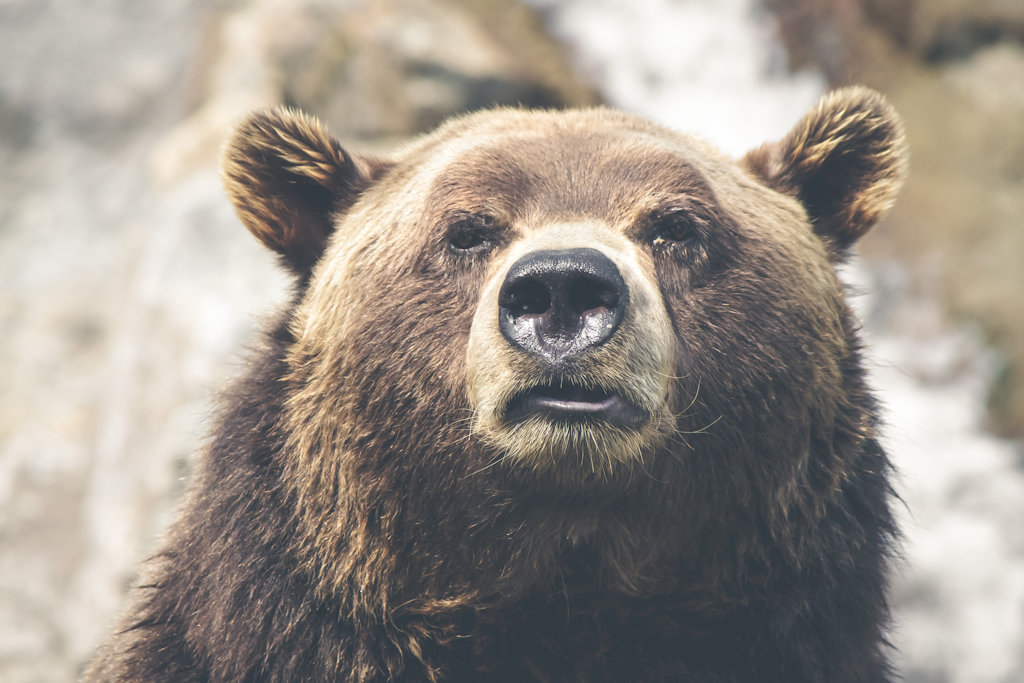
Grizzly Bear - Thomas Lefebvre, via Unsplash
Grizzly Bear – Thomas Lefebvre, via Unsplash

Can you be friends with a bear? This brings to mind a famous line from the original “Indiana Jones” movie: “You go first.”

Still, someone asked the geeks at Gizmodo (of all places!) this question. They, in turn, asked a number of experts for comments and put together a surprisingly interesting article.

Mild spoiler: Shannon Donahue, Executive Director of the Great Bear Foundation, wrote the best, most elegant answer . . .

Late last year, a photo of a bear officiating a wedding in Russia went viral. The picture turned out to be fake, but its popularity says something significant about our conception of the species: Despite thousands of years of contrary evidence, and at least one harrowing documentary, human beings still on some level want to view bears as big, cuddly, forest-dwelling dogs.

Are we wrong to feel this way? Can a human and a wild bear have anything approaching a pet-like, or at least, non-lethal relationship? The example of Grizzly Man’s Timothy Treadwell, of course, haunts this line of questioning. But the experts we spoke with—people who have studied bears, lived among them, and worked to conserve their natural habitats—would reject the idea that any kind of bear-human bond will inevitably end in bloodshed. More or less all agree that every bear is a wild bear—that even if it playfully nuzzles you, or spends twenty years riding a tiny bicycle in your traveling circus, the odds of it suddenly mauling and/or eating you alive remain high. But opinions differ on just how close our two species can get, and what “closeness” can really mean, when you’re dealing with a thousand-plus-pound forest creature.

Read more . . .

House vote poses threat to public lands

Three Types of Public Lands
Three types of public lands: Flathead National Forest is in the foreground, left and right; Montana’s Coal Creek State Forest, including Cyclone Lake, is in the middle distance; Glacier National Park stretches across the background.

Here’s a pointed discussion of Rep. Zinke’s vote in favor of a House rules change that would ease the transfer of public lands out of federal control . . .

Keeping federal public lands public is a big issue in Montana and the West. It’s an issue that Rep. Ryan Zinke campaigned on in his successful bid for re-election. In his first term, Zinke frequently described himself as a Teddy Roosevelt Republican, strongly committed to protecting and preserving public lands owned by the people of the United States.

He stated unequivocally that he is against the transfer of federal public lands to states. States such as Montana are rich in public land but lack the staff to manage our priceless American heritage. One concern about the land transfer movement is that cash-strapped states would turn around and sell the land.

So after Rep. Rob Bishop, R-Utah, tucked a provision in the House Rules bill that could make land transfer legislation easier to pass, we expected that Zinke would have something to say about it. The House approved the rules package 233-190 with the Bishop provision that exempts any future land transfers from the budget scrutiny that otherwise must be given to bills that would reduce U.S. revenue or increase U.S. spending. Zinke was among the GOP majority voting for the rules package on Tuesday, the first Congressional work day of 2017.

Read more . . .

Greg Zimmerman: Extreme views don’t represent most Montanans on public lands

Three Types of Public Lands
Three types of public lands: Flathead National Forest is in the foreground, left and right; Montana’s Coal Creek State Forest, including Cyclone Lake, is in the middle distance; Glacier National Park stretches across the background.

This well-written op-ed concerning public lands transfer was posted in today’s Flathead Beacon. It is written by Greg Zimmerman, deputy director at the Center for Western Priorities. Interestingly, he quotes incoming President Trump as also opposing the transfer of federal lands to the states . . .

In her recent op-ed, Montana state Sen. Jennifer Fielder continued to perpetuate phony myths about American public lands in an attempt to prop up her naive attempts to dispose of them.

According to Sen. Fielder, Montana’s public lands are a trash dump, filled with pests and fenced off to the public. In her telling, the only thing that can save our public lands is for them to be given to the state.

Don’t tell that to the hundreds of thousands of Montanans streaming across the state’s public lands to hunt and fish, who certainly aren’t buying Sen. Fielder’s premise. On the contrary, public opinion research shows unequivocally that Montana voters value national public lands. And poll after poll shows that Montanans – like voters across the West – have little appetite for her misguided plans to “transfer” American lands to state or private interests.

This month’s election result further validates what the polls have been telling us for years.

Read more . . .

Remembering the Craigheads, pioneers of wildlife biology

The New Yorker has a first-rate retrospective on the Craigheads. Thanks to Monica Graff and Patti Craig-Hart for passing this along . . .

At dawn on Sunday, September 18th, a blanket of clouds hung over the tawny grass mountainsides around Missoula, Montana. The cottonwoods had begun to turn yellow. On the south edge of town, in the home that the retired wildlife biologist John Craighead had occupied with his wife, Margaret, for six decades, the couple’s daughter, Karen, had been sleeping only intermittently. For years, she had shared the care of her aged parents with her younger brother, Johnny, a commitment that carried the two of them and their elder brother, Derek, well into their own senior years. During the previous night, Karen had risen, as she always did, to look in on their parents. She found them both sleeping peacefully. But by morning, when she and Johnny checked again, their father had died. It was a month after his hundredth birthday.

Continue reading . . .

Rebecca Powell: Slow the roll of bikes in the wilderness

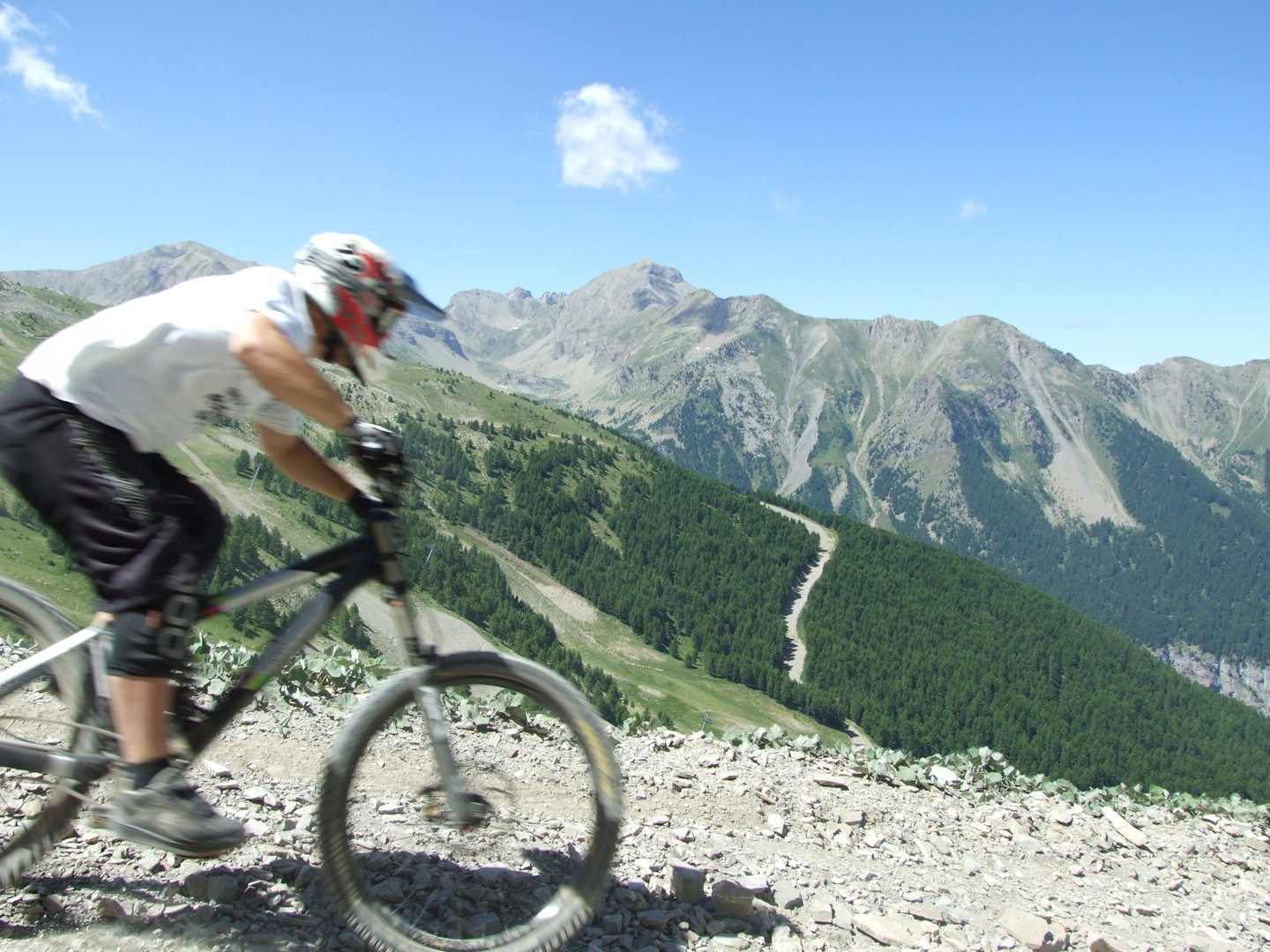
Mountain Biker by Mick Lissone

Rebecca Powell of Columbia Falls has an excellent op-ed making the rounds regarding bicycling in wilderness areas. It has appeared in the Hungry Horse News and in the Flathead Beacon so far . . .

By now you have probably heard from both sides of the debate on allowing mountain bikes into federally designated Wilderness. They are too fast, they will scare my horse, bikers play loud rap music. On the other side, bikers argue that they are low impact, human powered and can bring much needed funding for trail maintenance in these areas. Both arguments have valid points. But let’s just push pause here and think about it.

In the 1800s as the industrial revolution was sweeping the nation it seemed as though no person or no area was safe from impact and modification of man. In seeking to “improve” the standard of living we went from producing things by hand, to everything produced by machine. Fast forward a few decades and enter the conservation movement and forward thinking of people like John Muir, Aldo Leopold and Bob Marshall to name a few. These visionaries could see the benefits of designating large swaths of lands, ecosystems where industry was not dominate and had very little influence. From here came the Wilderness act of 1964 that states, “In order to assure that an increasing population, accompanied by expanding settlement and growing mechanization, does not occupy and modify all areas within the United States and its possessions … it is hereby declared to be the policy of the Congress to secure for the American people of present and future generations the benefits of an enduring resource of wilderness.”

Bikes have been around much longer than the Wilderness Act, but in the 1950s and ‘60s, just as the Wilderness Act was taking hold, bicycles were being modified to operate better off road and on trails. Tires getting bigger, frames lighter and people were able to access areas on bike that were not possible just years before. Visit any bike shop in the world and you will see that bikes are still evolving. Lighter, faster, tougher than ever before. The bike industry does not have nor should they have a pause button on the technology. There is no doubt that bikes are fun. Really fun. It’s a great way to exercise, spend time outdoors and challenge yourself. I love riding my bike on roads and on mountain trails and I am grateful for the advancements that are made each year.

Today in America we have just about 110 million acres of federally designated wilderness. Traveling in these areas is like stepping back in time. Wilderness is a haven from the pressures of our fast-paced technology dependent society. Each year as we evolve, we become more dependent on technology and less connected to wild places. When we are more comfortable connected to urban and technological landscapes, we are less likely to let it go and seek refuge in the wilderness. Just ask a teenager to put down their phone for a few hours and you will see.

Wilderness is a place where the pause button of industry has been pushed and modern conveniences are not allowed. The tools and equipment used to travel and work in the wilderness have not changed in the last 50 years. Trail crews are still using crosscut saws operated by hand instead of the quickness and convenience of chainsaws. Horses and mules are used to transport heavy loads and posting an update to your Instagram, Twitter, etc. is nearly impossible. Let’s keep some areas in this world free of the burdens of technological evolution. Let’s protect the place where you can engulf all of your senses in in the natural world just as it was 100 years, 10 years even two years ago and will remain 100 years from now. Mountain bikes have their place on trails, but let’s keep them out of these special places. Please keep mechanised transportation out of your wilderness areas.