Category Archives: Commentary

Edward Monnig: Wilderness and Collaboration

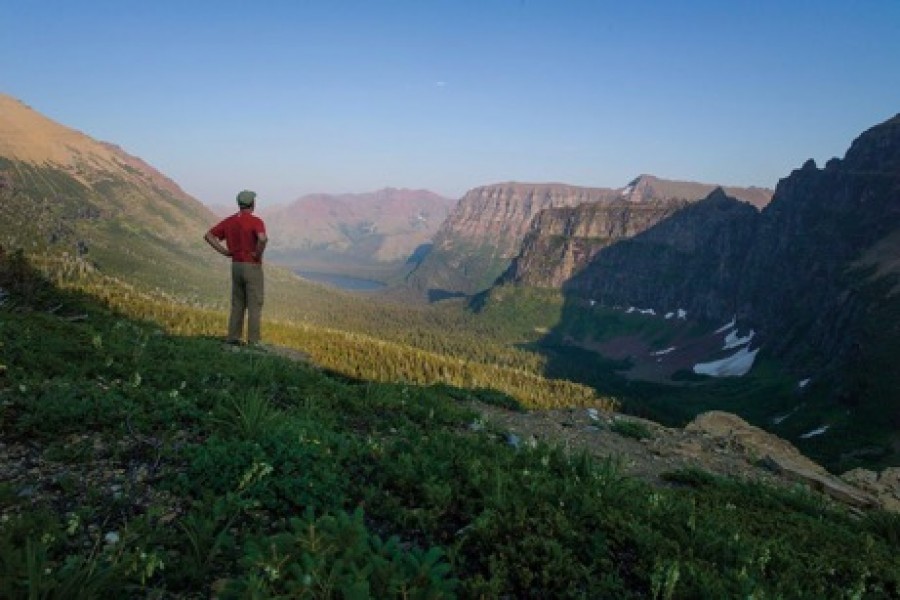
Hiking in GNP

Here’s an outstanding op-ed posted yesterday to the Flathead Beacon web site. Recommended reading . . .

In preface to commenting on Stewart Brandborg’s opinion piece on wilderness issues (Dec. 16 Beacon: “Today’s Wilderness Challenge”), I would like to acknowledge with gratitude the service that he and others like Howard Zahniser, Mardy and Olaus Murie, and Aldo Leopold rendered in establishing the framework of our National Wilderness Preservation System. These men and women fought for decades to establish a legacy that benefits all Americans from active users to passive appreciators. Nonetheless, I must offer an alternative perspective to Stewart’s injunction to “resist the fuzzy, fuzzy Neverland of collaboration” when addressing critical wilderness issues.

The Wilderness Preservation System certainly made my career with the U.S. Forest Service immeasurably more rewarding. In my final career assignment, I was supervisor of the Humboldt-Toiyabe National Forest, a forest of 6.3 million acres, including 1.2 million acres of congressionally-designated wilderness. In addition, the H-T has about 3 million acres of roadless areas, de-facto wilderness as it were, that was the subject of intense battles to determine what part should be formally included by Congress in the Wilderness Preservation System.

Managing wilderness is also challenging and much more than a passive exercise in “let it be.” Stewardship of designated wilderness areas is bound by the mandates of the 1964 Wilderness Act. And therein lie many of our management challenges. The introductory section of the 1964 Wilderness Act is inspiring and oft-quoted: “an enduring resource of wilderness…where earth and its community of life are untrammeled by man…” But as a counterpoint to these two paragraphs of poetic vision the Wilderness Act concludes with two pages of exceptions allowing various non-wilderness practices to continue. A cynic might say “Yeah right, untrammeled by man except for multiple airstrips, irrigation reservoirs and ditches, livestock grazing, mineral exploration and mining” – all allowed under the 1964 Act.

Continue reading Edward Monnig: Wilderness and Collaboration

Brian Peck: The ‘grizzly killing fields’: An irresponsible idea

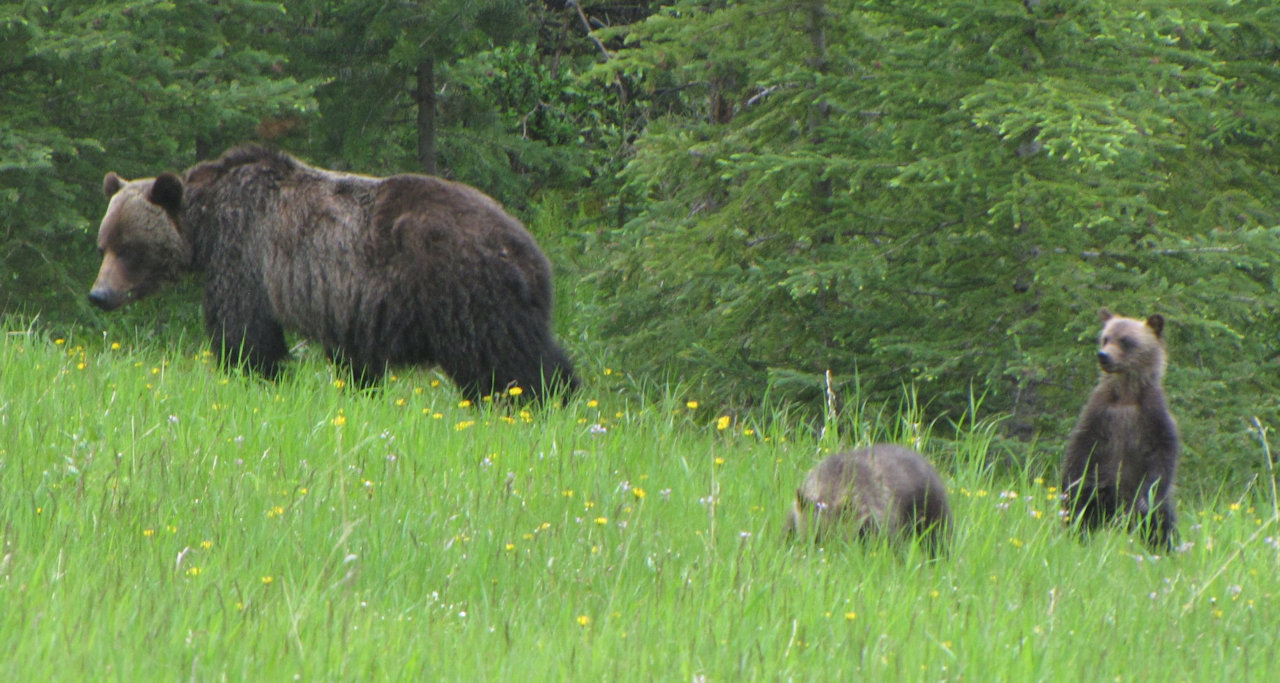
Grizzly Sow with Two Cubs - - Wikipedia en:User Traveler100

As mentioned here three weeks ago, the affected states are already divvying up hunting quotas in anticipation of grizzly bear delisting in the  Yellowstone region.

Brian Peck thinks this is a bad idea, stating his case in a sensible, non-confrontational op-ed in yesterday’s Daily Inter Lake.

Left unaddressed is the topic of trophy hunting, a hot button issue for conservationists and many tribes . . .

In recent weeks, area papers have run the article “States divvy up Yellowstone-area grizzly hunt,” noting that Wyoming will get 58 percent of the body count, Montana 34 percent, and Idaho 8 percent. With grizzlies still listed as “threatened,” and likely to remain so for years to come despite efforts by the U.S. Fish and Wildlife Service to prematurely delist them, it’s unseemly, irresponsible, and unnecessary for state wildlife agencies to begin dividing up the “killing fields” for this iconic species.

It’s important to remember that grizzlies are the slowest reproducing mammal in North America. As such, there is no biological “need” to ever hunt grizzlies for population control. In Yellowstone, it’s taken over 40 years for the population to increase from around 300 to last year’s estimate of 717. Not exactly a bear behind every tree.

OK, but how are we going to deal with “problem bears?” First, it’s important to realize that virtually all “problem bears” are caused by “problem people” and their bad behavior — for example, leaving bird feeders out from April to October and baiting bears to their deaths. Or leaving pet food on the deck, leftover burgers on the barbecue, unsecured horse feed, or tasty chickens in flimsy enclosures. Clean up our behavior and clean up the problem.

Second, a grizzly hunt is unlikely to target problem bears in people’s back yards or subdivisions because it’s too dangerous. And Fish, Wildlife and Parks can’t lead hunters to collared problem bears because it’s unethical and unsportsmanlike.

Finally, we already have the solution in the state’s Bear Conflict Resolution Specialists, who do a fabulous job through homeowner education, aversive conditioning of food-conditioned bears, and removing those whose bad habitats can’t be broken. However, we need to adequately fund and staff this vital program.

But don’t we need to hunt grizzlies to make them fear humans and avoid us? Nonsense. There’s no credible research to back up this claim. Properly conducted, ethical hunting of grizzlies doesn’t teach them to fear humans — it teaches them to be dead. And a dead bear tells no tales to his/her fellow grizzlies. It’s far more likely that grizzlies learn to fear/avoid humans by observing the thousands of big game hunters in the woods each fall.

So, if grizzlies don’t “need” to be hunted, there’s already a solution to problem bears; and if hunting grizzlies doesn’t instill fear in them, why are the states so adamant about divvying up the killing fields and starting a hunt in Greater Yellowstone?

State wildlife agencies get nearly all of their revenue from the sale of hunting, fishing, and trapping licenses and were set up to manage wildlife populations through regulated “harvest” (killing). It’s part of their cultural history and ingrained in their management DNA.

Yet with grizzlies, and particularly the Greater Yellowstone bears, state wildlife agencies need to understand they’re playing in a whole new game where the old historic ways of doing business do not apply. States that insist on killing these iconic bears that millions of Americans associate with Yellowstone National Park itself, will quickly find themselves in a firestorm of public disapproval that will not only target them, but hunting itself. Time to think outside the box.

Brian Peck, of Columbia Falls, is an independent wildlife consultant.
Please help protect North Fork wildlife!

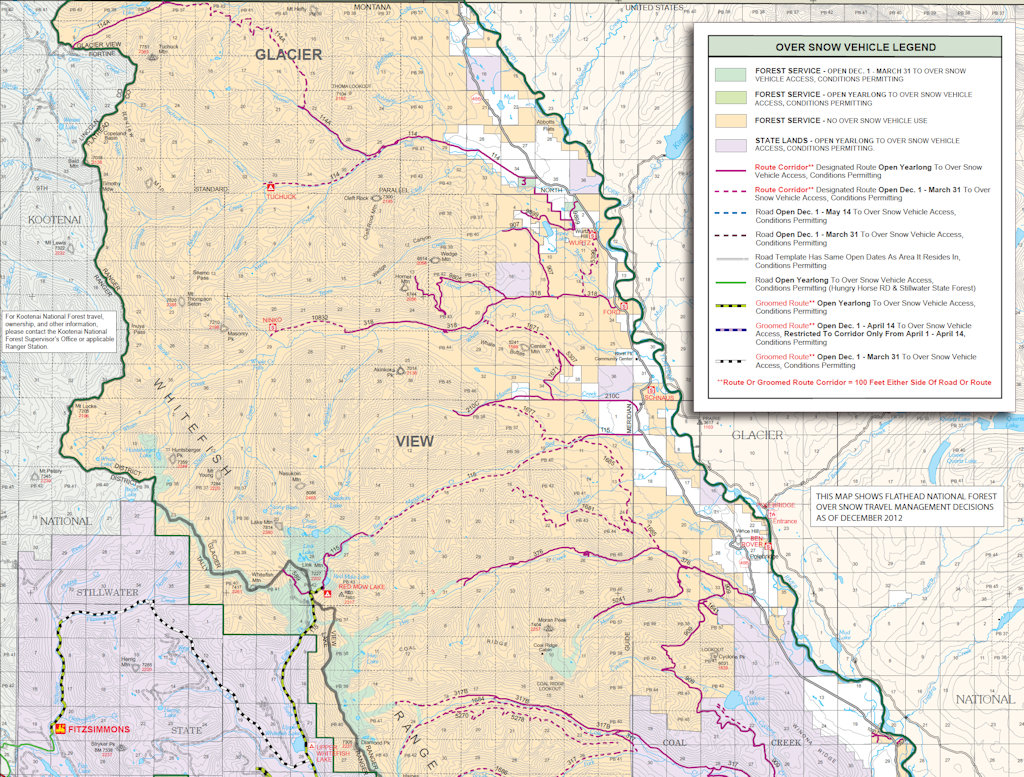
Over Snow Vehicle Use Map, 2013 - Glacier View Ranger District-North Half

Illegal snowmobile use disturbs wildlife, including lynx and wolverine. Grizzly bear tracks are seen year-round up the North Fork, but they regularly come out of their dens in April, long before the snow melts.

Please take some time to familiarize yourself with the USFS map for over snow use (http://www.fs.usda.gov/Internet/FSE_DOCUMENTS/stelprdb5410980.pdf)
and then educate your neighbors and friends. This map is free at USFS offices.

If you observe illegal use, send the Flathead Forest law enforcement agent, Brad Treat, a note at btreat@fs.fed.

Gloria Flora: Why I resigned over a public land dispute

An excellent, well-researched op-ed on the current public lands debate . . .

Once again, a provocative armed display of dissatisfaction with a federal land management agency is unfolding—this time, at a remote wildlife refuge in southern Oregon. It’s been happening since 1848, when Mexico ceded the southwest quadrant of the United States after losing the Mexican-American War. Early settlers were primarily Mormons and Confederate Civil War refugees, both fiercely anti-federal government. Those attitudes haven’t changed much.

In the late 1990’s, when I served as Forest Supervisor of the Humboldt-Toiyabe National Forest in Nevada and eastern California, the simmering anti-federal government animosities boiled over dangerously multiple times but failed to garner much notice. Now, we’re seeing a similar boil-over in Oregon. The Nevada-based protesters, despite confusion over history and the exact purpose of their one-sided stand-off, are demanding privatization, to give the land back to “the people.” It sounds compelling, but it’s invented history.

The federal government created the Malheur National Wildlife Refuge, the focus of this standoff, by usurping the Native American Pauite Nation’s homeland, then, years later, aggregating their abandoned reservation and a used-up cattle ranch bought at a premium during the Depression. The Malheur occupation today sounds a battle-cry of frustration from unwanted proxies who believe they speak for the people of Harney County. Clearly, the interlopers have their facts wrong. But their hair-trigger reaction to a situation reminiscent of their grievances deserves a closer look.

The heart of the matter is that the human dimensions of managing public lands are just as important as the physical and biological dimensions. We Americans love our landscapes. Those who spend a lifetime on the land, like ranchers, connect with it even more deeply…

Read more . . .

Frank Vitale: Badger-Two Medicine is no place to drill

Frank Vitale says his piece
Frank Vitale

NFPA member Frank Vitale has a nice op-ed in today’s Daily Inter Lake concerning drilling in the Badger-Two Medicine region . . .

The Blackfeet call it “Mistakis,” the Backbone of the World. The Continental Divide snakes its way through this land also known as the Badger-Two Medicine. It is the cornerstone of the Blackfeet creation story.

I have ridden, hiked and hunted through this area and know it well. It is some of the wildest country in the Northern Rockies. It lies between Glacier National Park, the Bob Marshall Wilderness and the Great Bear Wilderness. It is one of the largest unprotected roadless areas in the state at 165,588 acres.

The Badger-Two Medicine is a rugged, remote, pristine ecosystem that’s home to grizzlies and black bears, wolves, mountain lions, wolverines and lynx. Moose, bighorn sheep, mountain goats, mule deer and whitetail deer and one of the largest herds of elk on the northern Rocky Mountain Front (numbering around 800 head) also live here. Its cold rivers and streams support some of the last pure populations of westslope cutthroat trout east of the Continental Divide.

The Badger and Two Medicine rivers spill out on the high prairies. Life zones range from the alpine and montane forests to short-grass prairies where grizzlies and antelope intermix.

This is not a place to drill for oil or gas. No mitigation can avoid the negative impacts of oil and gas exploration in this sacred and wild land.

Time is running out to submit comments on the Forest Plan!

A very timely reminder from Debo Powers, NFPA Vice-President . . .

Dear Friends of NFPA!

Many of you know that the comment period for the Flathead Forest Plan is fast approaching! May 15 is the deadline. Letters from people who love the North Fork would be very helpful. Please take the time to write your comments today and send them to flatheadplanrevision@fs.fed.us or snail mail your comments to:

Flathead National Forest Supervisor’s Office
Attention: Forest Plan Revision
650 Wolfpack Way
Kalispell, MT 59901

In your comments, please be sure to mention that Nasukoin Mountain should be included in the proposed wilderness for the northern Whitefish Range.

The Forest Plan should be praised for accepting the recommendations from the Whitefish Range Partnership (that several of us from NFPA served on) concerning recommended wilderness for 80,000 acres in the northern Whitefish Range including Tuchuck, Hefty, Thoma, and Thompson-Seton. However, when the lines were drawn, Nasukoin was not included. Hopefully, this was just a mistake which will be corrected, but it is important that they hear from us about the importance of this peak which is the highest in the Whitefish Range and definitely has wilderness characteristics.

In addition, let us join our voices with members of the Montana Wilderness Association and Headwaters Montana in calling for protection of the wild country in the Swan and Mission Mountains in the Flathead Forest Plan:

  • Extend the Bob Marshall Wilderness north to include Bunker and Sullivan Creek – critical areas for grizzlies, elk, mountain goats and other species.
  • Expand the Jewel Basin and protect the wild Swan Front. Bring the boundary down to the valley floor.
  • Widen the Mission Mountains Wilderness! Protect the wildlife corridor of Sunset Ridge, the critical bull trout spawning beds of Elk and Hemlock creeks, and the rugged species-rich lower slopes.

Another issue to consider commenting on is to ask that “non-conforming uses” (like snowmobiling and mountain biking) not be allowed in recommended wilderness. When these activities become established in proposed wilderness, it is often difficult to exclude them later.

Please send your comments today!

Thanks,

Debo Powers,
NFPA Vice President

Carol Edwards: A personal letter to Flathead planners

A very timely missive from Carol “Kelly” Edwards, a longtime NFPA member . . .

To the Flathead Forest and Watershed Planners,

My plea, as a local resident and land owner in the Flathead watershed area is that you protect, increase, and  safeguard wilderness within your management area.  By wilderness, I mean strongly regulated, pristine wilderness. Walk in only. At your own risk. No motors. No machines. No logging. No mining. No drilling.  Just the creatures that live there naturally, in the forests that grow there, with water sources running free and clean, accessible only to those who are willing to enter those places on those terms.

Over the last 200+ years on this continent we have taken everything we could get from the natural world in trade for economic growth.  Well, as the song goes… “…This is the end, my friend.”  At this point it is either work to save the little bit of it that remains, or just dig it up, chop it down, pollute the rest of it.

Somewhere along the way we have to open our eyes, look around and realize that we’re in trouble if we continue the way we’ve done before. Sustainable is not just a nonsense word that radicals throw around.  It means something that can be continued……like life on earth, for example.

I think we’d all like that, and it’s time that people in your position, with your responsibility to the environment, helped us out in that direction.

Sincerely,
Carol Edwards
10641 North Fork Rd.
Polebridge, MT 59928

Deb Mucklow talks about overseeing the Bob

Sounds like Deb Mucklow, the Spotted bear District Ranger, gave an interesting presentation about managing the Bob Marshall Wilderness . . .

From the remote Spotted Bear Ranger Station, District Ranger Deb Mucklow spends each summer overseeing more than one million acres within the Bob Marshall Wilderness Complex.

The Lower 48’s third-largest wilderness complex has become a star attraction for Northwest Montana.

But as the Spotted Bear District ranger, Mucklow emphasized the difficulty in balancing human activities with the integrity of the primeval area during a recent presentation hosted by the Bob Marshall Wilderness Foundation.

‘The Rachel Carson of the Rockies’

Arlene Montgomery of Friends of the Wild Swan gets a very nice write-up in CounterPunch this week. Her accomplishments are quite impressive . . .

If you wanted to locate the frontlines for the battle to protect the future of wild nature in the lower-48 states, you could do worse than tuning your Google map to the Swan Range in northwestern Montana. This rugged and remote swath of the Northern Rockies rambles from the border of Glacier National Park southward for nearly 100 miles. Bounded on the west by the Mission Mountains and Flathead Lake and the vast Bob Marshall Wilderness to the west, the valleys, alpine slopes and forests of the Swan Range retain much of the natural character of the Rockies at the time when Lewis and Clark first encountered the Salish people in 1805.

The landscape looks roughly—very roughly, from some vantages—the same. And most of the wildlife the Corps of Discovery saw, described and often shot as they crossed the Continental Divide, is still present, though in greatly reduced numbers. The Swans still harbor populations of wolves, lynx, mountain goats, wolverines, bobcats, moose, elk and grizzlies. In short, the Swan Range is one of the last redoubts of wild America, one of those rare places that still has most, if not all, of its key ecological parts, from the top of the food chain on down to newts and salamanders, forest lichens and glacial wildflowers.

But it is also hotly contested terrain…


Read more . . .

Frank Vitale: Keep federal lands in public hands

Long-time NFPA member Frank Vitale wrote a pointed op-ed addressing the idea of transferring federal lands to state ownership and control. It appeared today on the Flathead Beacon’s website . . .

On Feb. 16 my wife and I attended the Public Lands Rally in Helena in the state capitol rotunda. The rally began at high noon, but people started filtering through the doors well before that. Many sported posters and banners in support of keeping our federal lands in public hands. As the rally began people continued filing into the room standing shoulder to shoulder. All the hallways, balconies and staircase were packed full.

A few people who supported transferring our federal lands to state ownership infiltrated our rally, but they were drowned out. Folks from all around the state made the trip to Helena and stood in solidarity against the lunatic idea of land transfer. Gov. Steve Bullock along with several guest speakers including Mary Sexton, former head of State Lands and Teton County commissioner, and David Allen, president of the Rocky Mountain Elk Foundation, gave fiery speeches against transfer of federal lands to the state. The crowds responded with thundering applause and cheers. Hopefully the state legislators took heed as the State Capitol rocked and rolled.

The land transfer concept is not new. It goes as far back as territorial days and the copper kings. In more recent history, I remember the days of James Watt and the Sagebrush Rebellion of the 1970s and early ’80s. Today it resurfaces with the Koch brothers, American Legislative Exchange Council (ALEC), and Americans for Prosperity to name a few. They work their dark money in local elections across the country. Their call for local control rings hollow because their agenda is exploitation of the resources on our public lands.

Our public lands belong to all Americans. They’re not for sale to the very wealthy to make huge profits and lock us out. My suggestion to those who support land transfer: pack your bags and move to a place where there are no public lands and access is limited to only those who can afford pay.

Our public lands are a national treasure, a gift to all of us, and the envy of the world.

Frank Vitale
Columbia Falls