Debo Powers spotted this long, but interesting, article on the dangers of unconstrained growth in the Gallatin Valley. Many of the concerns, lessons and hard choices are applicable to our region as well . . .
In the stillness of a summer morning, haze from wildfire smoke thickening the air, Randy Carpenter arrives for a hike up Sypes Canyon in the pastoral northern outskirts of Bozeman, Montana. Ascending into the Bridger Mountain foothills, we talk about how “crazy” it feels these days “in town”, how quickly new subdivisions are springing up in fields that a year ago were covered with wheat.
And then Carpenter starts in, reciting some jaw-dropping statistics that seem abstract until we reach an overlook and gaze clear-eyed into an uncertain future.
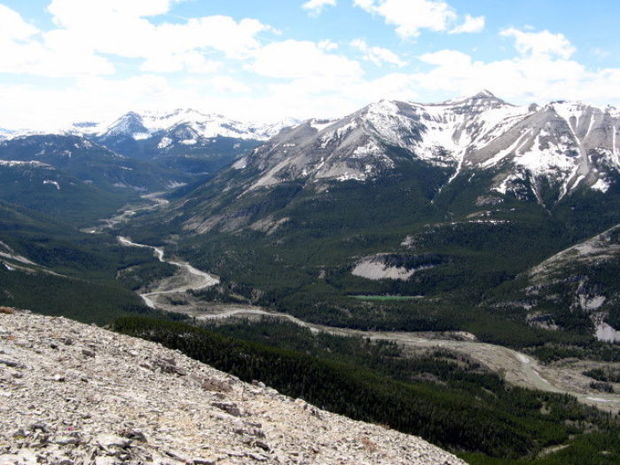
Before us, and stretching for nearly 40 miles to the next muted horizon is the Gallatin Valley, one of the fastest-growing semi-rural settings in America. Carpenter, known for his work as a career land use planner, says it won’t be long, given current trend-lines, before the vast chasm of space fills in with exurban development.
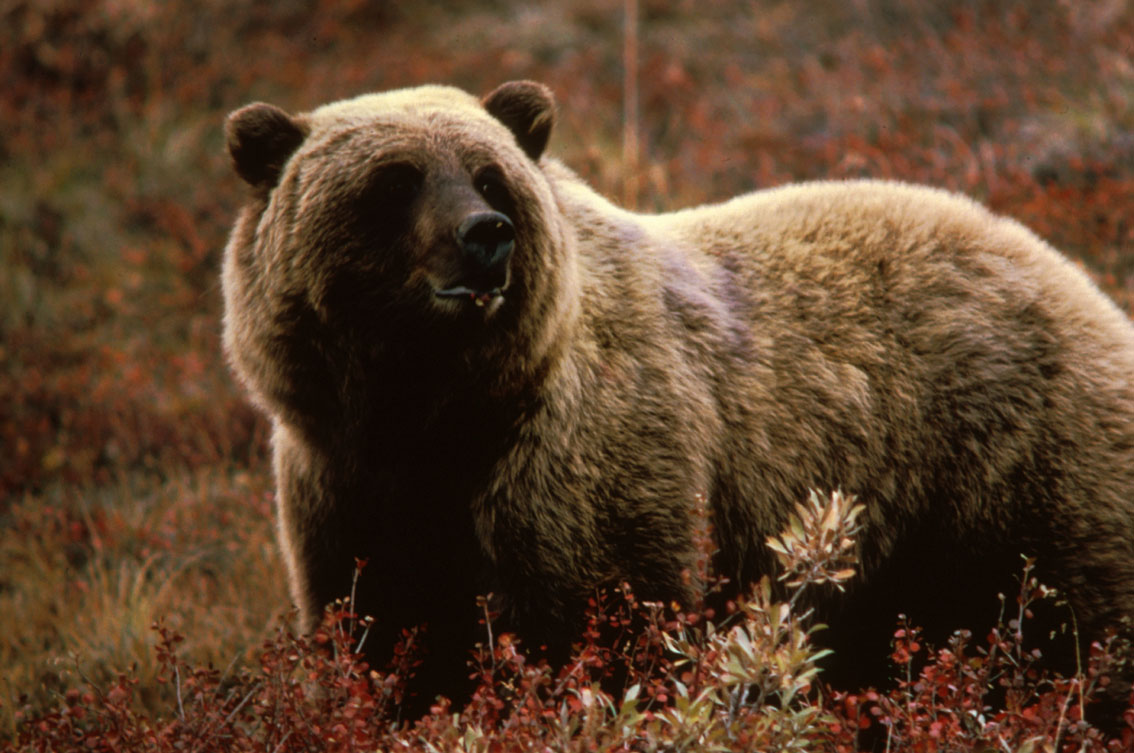
The Missoulian has an interesting story about how a farmer in the Mission Valley is dealing with bear conflicts . . .
Standing in a hollowed-out section in the middle of his 80-acre cornfield, Greg Schock bends over and picks up one of dozens of corn cobs scattered about. It’s been picked clean of every kernel.
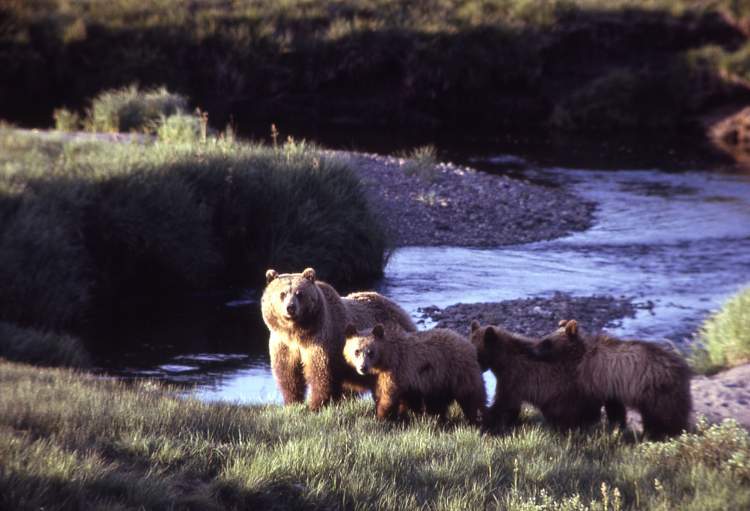
On the dark black ground just barely moistened by Thursday night’s welcome rain, there are grizzly bear tracks and fresh scat dotted with kernels of corn.
From where he’s standing, the longtime Mission Valley dairyman’s view past the edge of the clearing is obscured by the thick rows of corn that will sometime soon become the silage that his cows will depend on to eat through the winter months.
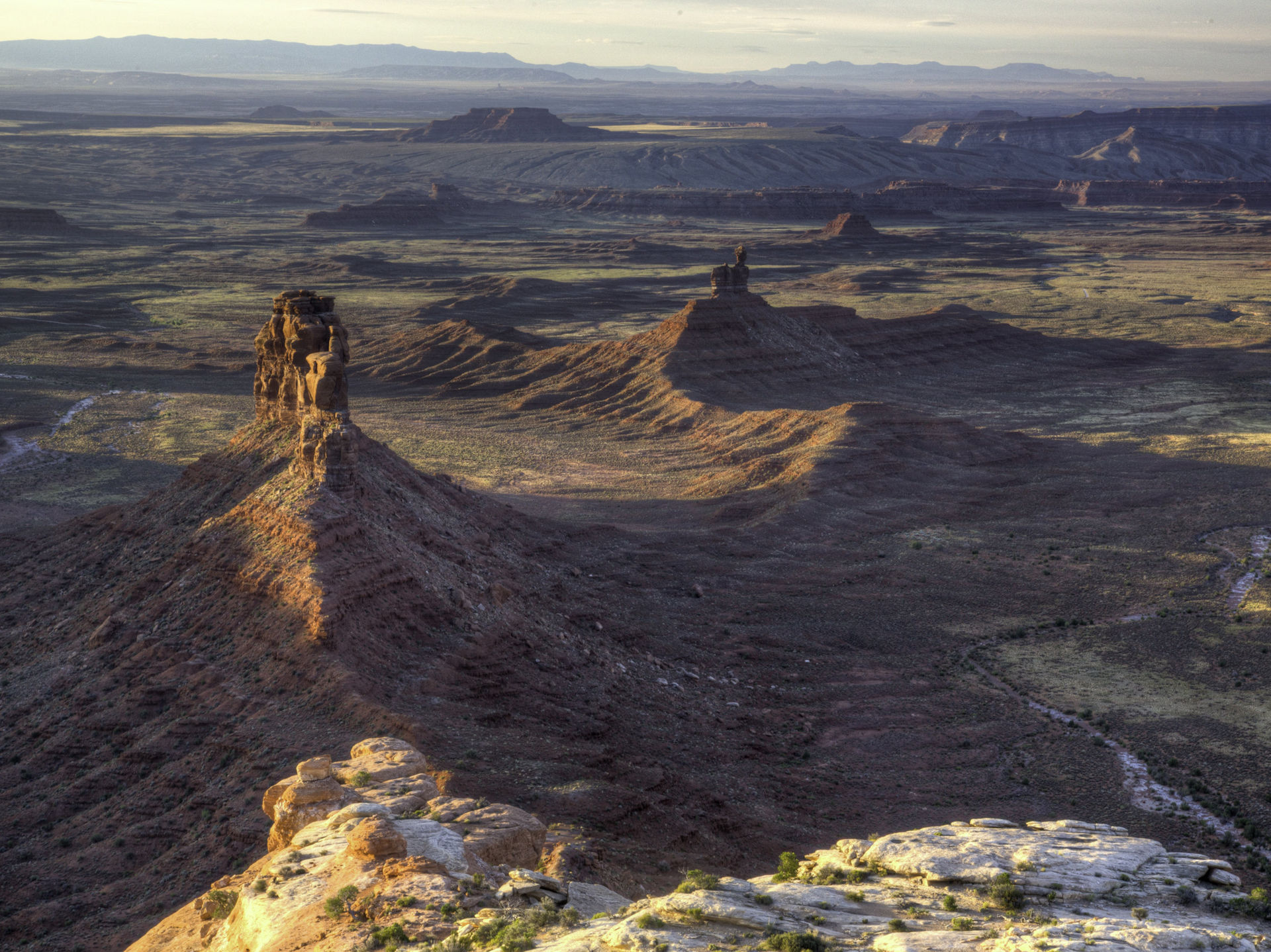
Bears Ears National Monument – At 1.35 million acres, it is among the largest national monuments in the country – Bob Wick, BLM-Flickr
There may be a few (cough) adjustments, though . . .
Interior Secretary Ryan Zinke announced Thursday he won’t seek to rescind any national monuments carved from the wilderness and oceans by past presidents. But he said he will press for some boundary changes and left open the possibility of allowing drilling, mining or other industries on the sites.
Twenty-seven monuments were put under review in April by President Donald Trump, who has charged that the millions of acres designated for protection by President Barack Obama were part of a “massive federal land grab.”
If Trump adopts Zinke’s recommendations, it could ease some of the worst fears of his opponents, who warn that vast public lands and marine areas could be stripped of federal protection.
Columbia Falls had quite an event last Tuesday in support of public lands and the part they play in the economy . . .
Montana’s public lands and outdoor recreation provide 71,000 jobs in the state and $7.1 billion in consumer spending, Montana Sen. Jon Tester told a capacity crowd at the Last Best Outdoor Fest Tuesday night in Columbia Falls.
The fest celebrated Montana’s abundance of public lands and was also a political rally to oppose any measures to sell them off.
With a host of public lands at its doorstep and a river running through it, Columbia Falls is becoming the place to live for those who love the great outdoors.
A judge has ruled that the isolated grizzly bear population in the Cabinet-Yaak area can be treated as endangered . . .
Animals and plants can be considered endangered even if they are not on the brink of extinction, a judge ruled in overturning the U.S. government’s re-classification of a small population of grizzly bears living in the forests of Montana and Idaho near the Canada border.
Tuesday’s ruling by U.S. District Judge Dana Christensen said that the U.S. Fish and Wildlife Service is prohibited from narrowing the definition an endangered species in its future decisions without explaining why it wants to make the policy change.
The federal Endangered Species Act defines an endangered species as one that is “in danger of extinction throughout all or a significant portion of its range.”
NPR’s “All Things Considered” did a segment on efforts by wildland firefighters to prevent their operations from spreading invasive species . . .
Wildland firefighters in the West are using precious time to clean equipment in order to avoid bringing invasive species into sensitive areas. It’s an attempt to avoid billions of dollars in damage.
This is encouraging news. A search at one of the first places in Montana to test positive for invasive mussels last year turned up no evidence of adult mussels last week.
Divers searched for adult aquatic invasive mussels at Tiber Reservoir last week, but found none.
The five divers involved in the effort were from the U.S. Fish and Wildlife Service and coordinated by Montana Fish, Wildlife and Parks. The primary search area was Tiber Dam up to a depth of about 35 feet.
With its rock structure, the dam is good habitat for the invasive mussels, which prefer solid substances, like rocks, to attach to. However, deeper than 35 feet, silt reduced the habitat significantly.
The divers are part of FWP’s monitoring plan for Tiber Reservoir after water samples last year came back positive for aquatic invasive mussel larvae. The monitoring plan also includes an increased frequency of water sampling at the reservoir.
The divers also searched rock outcroppings around Turner Point at Tiber Reservoir. No adult invasive mussels were discovered.
BC is banning trophy hunting of grizzlies. Interestingly, it’s not that too many bears are being killed, but because societal norms no longer favor this type of activity . . .
In a win for conservationists and environmental groups, British Columbia says it will no longer allow the trophy hunting of grizzly bears in the Canadian province starting on Nov. 30.
The new policy blocks all hunting of grizzlies in the Great Bear Rainforest but still allows people to hunt them for food elsewhere in British Columbia.
Of the approximately 15,000 grizzlies in British Columbia, about 250 are killed by hunters annually, according to government figures.
Fireweed below Nasukoin Lake, Aug 12, 2017 – W. K. Walker
We’re getting there, with a near-final version of the Flathead National Forest’s revised forest plan due out in October. Barring any significant further delays, the final version of the whole package should be released around March 2018.
The Flathead National Forest release of the final environmental impact statement and draft records of decision for the revised forest plan and forest plan amendments is now slated for October due to the need to coordinate schedules with the Washington, D.C., headquarters of the U.S. Forest Service.
In addition to addressing the effects of the Flathead National Forest revised forest plan, the final environmental impact statement includes discussion of the environmental consequences of the forest plan amendments to incorporate habitat-related management direction for the Northern Continental Divide Ecosystem grizzly bear population on the Helena-Lewis and Clark, Kootenai, and Lolo National Forests.
The final environmental impact statement and draft records of decision will be subject to a pre-decisional administrative review process, commonly referred to as the objection process. The Forest Service’s objection process provides an opportunity to have any unresolved concerns reviewed by the Forest Service prior to a final decision by the responsible official. Objections will be accepted only from those who have previously submitted substantive formal comments during an opportunity for public participation provided during the planning process and attributed to the individual or entity providing them.
For more information, please call Joe Krueger, plan revision team leader, at 406-758-5243 or visit www.fs.usda.gov/goto/flathead/fpr.
Also, here is a related letter from Chip Weber, Flathead National Forest Supervisor, explaining the reasons behind the delay in this stage of the forest plan revision . . .
Hello,
I would like to update you on the status of the final environmental impact statement for the revised forest plan and the draft records of decision. In addition to addressing the effects of the Flathead National Forest revised forest plan, the final environmental impact statement includes discussion of the environmental consequences of the forest plan amendments to incorporate habitat-related management direction for the Northern Continental Divide Ecosystem grizzly bear population on the Helena-Lewis and Clark, Kootenai, and Lolo National Forests.
We had planned to have the documents out for the pre-decisional administrative review process, commonly referred to as the objection process, in August but because of the need to coordinate schedules with the Washington, D.C., headquarters of the U.S. Forest Service, we now plan to release the documents in October. The schedule on our webpage has been updated to reflect this change.
I appreciate your patience and continued interest in the revised forest plan for the Flathead National Forest as well as the forest plan amendments for the Helena-Lewis and Clark, Kootenai, and Lolo National Forests. I greatly appreciate the commitment of the interested participants who have provided important contributions toward the development of the revised forest plan and amendments.
For further information about the project, contact Joe Krueger, plan revision team leader, at 406-758-5243. Thank you for your continued interest in the management of your public lands.
Whitewater Fire, 2017 – Willamette National Forest
The tone is a little overwrought, but this article has some good points about the risks of large crowds gathering along the solar eclipse path during peak wildfire season . . .
At the peak of wildfire season, all it takes is one errant spark to start a blaze, potentially leading to wildfires engulfing thousands of acres. It isn’t just the fire itself that’s dangerous, but also the smoke, the degraded air quality, and the potential closures of roads. In Oregon, in particular, over a million people are expected to travel to the seventy-mile-wide path of totality, in the heart of the hottest, driest part of the year. The entire pacific northwest, including parts of Oregon, Idaho, and Wyoming, has active wildfires going right now, threatening the air, roads, and general safety of residents and tourists alike…