A recent article in the New Yorker about the Craighead brothers triggered a note from Ray Hart concerning North Forker Bob Funk, who was well acquainted with the Craigheads and a major player in getting wild and scenic river status for the North Fork.
Category Archives: Environmental Issues
Lynx rule becomes law, but will it stand?
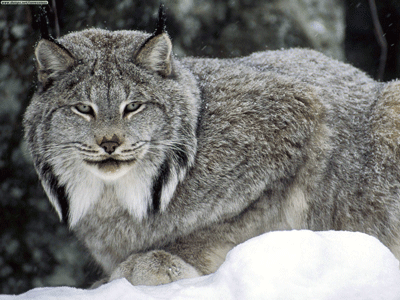
Here’s a well-researched piece by Rob Chaney of the Missoulian. It discusses the status of the ‘lynx rule,’ which recently survived a whole series of judicial appeals . . .
A court order to do more work on protecting Canadian lynx in Rocky Mountain forests could become a late-season battleground for congressional action this winter.
Last week, the Supreme Court let stand a U.S. 9th Circuit Court of Appeals ruling that the U.S. Forest Service has to take a big-picture look at how it protects critical lynx habitat across 12 million acres touching 11 national forests. While wildlife advocates claimed a major win for the Endangered Species Act, timber industry supporters vowed to rewrite laws to speed up logging projects.
“It’s now known as the Cottonwood decision, and it affects pretty much the whole Nort
hwest,” said Julia Altemus of the Montana Wood Products Association. “I’m hoping we can find a path forward, either legally or by a congressional path.”
Remembering the Craigheads, pioneers of wildlife biology
The New Yorker has a first-rate retrospective on the Craigheads. Thanks to Monica Graff and Patti Craig-Hart for passing this along . . .
At dawn on Sunday, September 18th, a blanket of clouds hung over the tawny grass mountainsides around Missoula, Montana. The cottonwoods had begun to turn yellow. On the south edge of town, in the home that the retired wildlife biologist John Craighead had occupied with his wife, Margaret, for six decades, the couple’s daughter, Karen, had been sleeping only intermittently. For years, she had shared the care of her aged parents with her younger brother, Johnny, a commitment that carried the two of them and their elder brother, Derek, well into their own senior years. During the previous night, Karen had risen, as she always did, to look in on their parents. She found them both sleeping peacefully. But by morning, when she and Johnny checked again, their father had died. It was a month after his hundredth birthday.
First look at grizzly bear ‘family tree’ study
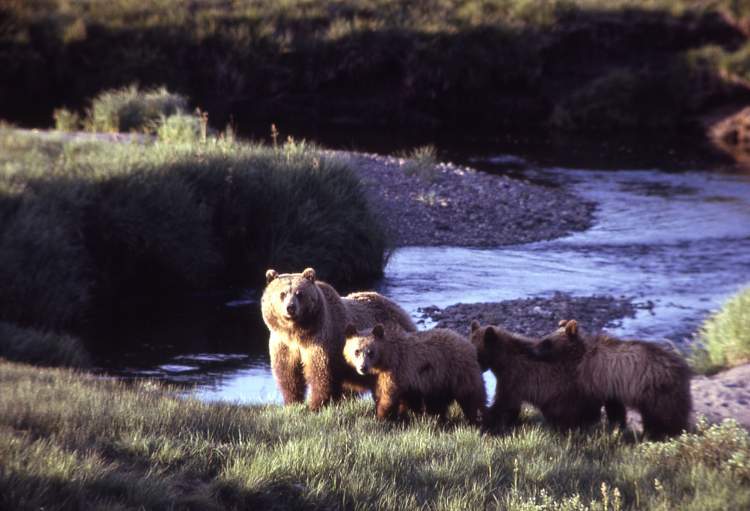
The first results from a Northern Continental Divide Ecosystem grizzly bear “family tree” study are encouraging . . .
Using genetic analysis U.S. Geological Survey Scientist Tabitha Graves and Nate Mikle recently completed a first look at the “family tree” of grizzly bears in the Northern Continental Divide Ecosystem.
The 8-million plus acre area stretches from Glacier National Park south to Ovando. The pair looked at genetic data gathered from 1,115 bears in a 2004 study done by researcher Kate Kendall and again in 2009-2012 through hair follicle samples of bears.
The family tree, printed out on one sheet of paper, stretches 20 feet, Graves noted in an interview last week. The thrust of this initial study was to determine the genetic diversity of bears on the fringes of the ecosystem, namely in the southeast and southwest corners.
Get your Forest Plan comments in now! Deadline is Oct 3!
Dear North Fork Preservation Association Member,
With all of the wild public lands in the North Fork, there is not one acre of designated Wilderness….yet. This needs to change and YOU can play a significant role in this by writing a comment on the Flathead Forest Plan TODAY!
The Flathead National Forest is in the midst of its forest planning process. Several years ago, members of NFPA participated in the Whitefish Range Partnership (WRP), a local citizen collaborative, in anticipation of the forest planning process. The WRP represented various interests (loggers, snowmobilers, mountain bikers, backcountry horsemen, and wilderness advocates) and consensus was reached on 83,000 acres of proposed wilderness in the northern Whitefish Range. This area includes the most spectacular peaks in the Whitefish Range: Nasukoin, Tuchuck, Hefty, Thompson-Seton, and Review. We are hoping that the Flathead National Forest will include the northern Whitefish Range as Recommended Wilderness in their final Forest Plan and not allow any non-conforming uses in recommended wilderness. (Recommended Wilderness is the first step in getting this area designated as Wilderness by Congress.)
A personal letter from you makes the biggest impact. If you have hiked any of these peaks, please mention this in your letter. If you don’t have time to write a personal letter and want the easy way, just go to www.wildmontana.org/flathead and add your name and contact information to the letter that was written by the Montana Wilderness Association.
If you write your own personalized letter, send it to:
Chip Weber
Forest Supervisor
Flathead National Forest
650 Wolfpack Way
Kalispell, MT 59901
Please include support for the following things:
For the North Fork—
- Recommended Wilderness in the northern Whitefish Range following the map submitted by the Whitefish Range Partnership.
- Manage recommended Wilderness just like designated Wilderness, prohibiting motorized use and mountain biking.
For other areas in the Flathead National Forest–
- Expansion of the Bob Marshall Wilderness northward in the Swan Range to protect the Bunker and upper Sullivan Creek area
- Protect the Greater Jewel Basin, especially the western slope of the Swan Range, in recommended Wilderness.
- Expansion of the Mission Mountains Wilderness to include the lower-elevations, species rich-lands adjacent to it.
- Manage recommended Wilderness just like designated Wilderness, prohibiting motorized use and mountain biking.
Also, please support Alternative 3 in the Environmental Impact Statement to keep core grizzly bear habitat managed at the level that it has been in the past…… whether or not the grizzly is delisted.
We have a receptive Forest administration and a good chance of getting recommended wilderness additions if there are lots of comments from citizens. Your comment is very important! You can make a real difference! Thanks for taking the time to do this! The deadline is October 3, so please submit your comments today!!
Warm Regards,
Debo Powers, NFPA President
NFPApresident@gravel.org
Legendary conservationist John Craighead dead at 100
First Chuck Jonkel, now John Craighead . . .
John Craighead liked to quote fellow legendary conservationist Aldo Leopold, who once said “we should think like a mountain.”
The philosophy of following nature’s cues and looking “at the fundamentals of things” guided Craighead’s pioneering work in American conservation, its wild rivers and seminal studies of grizzly bears.
“I have listened to the voice of the mountain for most of my life,” said Craighead upon receiving The Wildlife Society’s Aldo Leopold Memorial Award in 1998.
The mountains still talk, but they lost one of their most avid listeners Sunday morning when John Craighead died in his sleep at his home of more than 60 years in southwest Missoula.
Conservationists from around the globe gather in Glacier Park
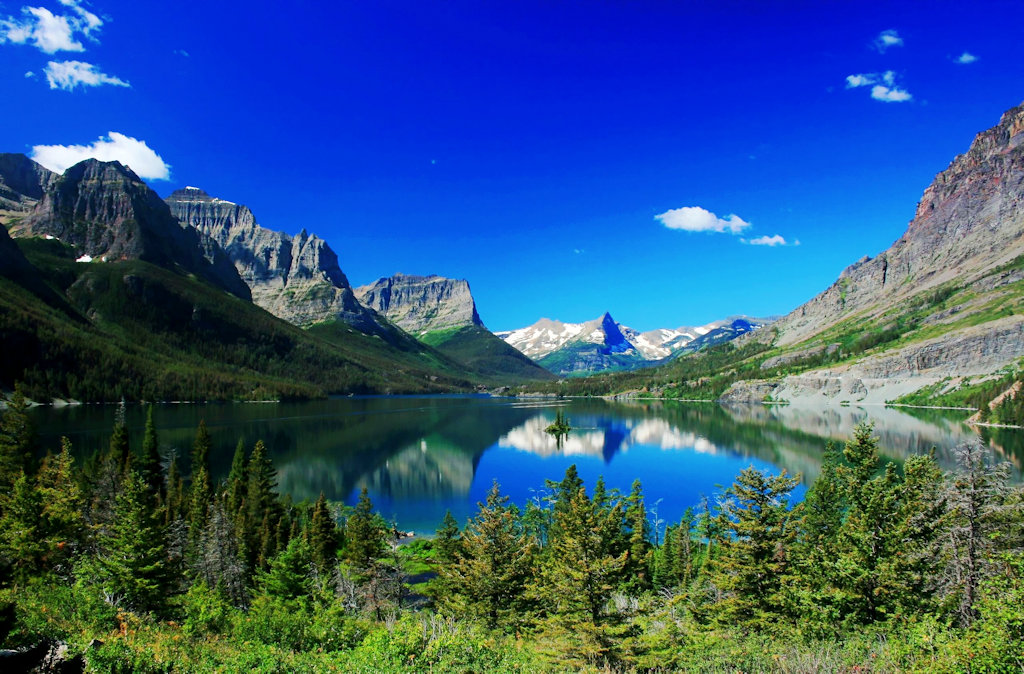
A world-wide assortment of conservationists met in Glacier Park . . .
What many European visitors to the United States encounter on their first trip to America, the woman from Croatia noted, is New York City.
One of the first things Maja Vasilijevic saw on her first trip to the U.S. was a little different than the bright lights and teeming crowds of Times Square. No, one of Vasilijevic’s first encounters with America included a large herd of bison thundering across a lonely stretch of U.S. Highway 2 on the Blackfeet Indian Reservation.
“It’s unique,” said Vasilijevic, who had never in her life seen one of the animals in person. “Not only the bison – the whole landscape.”
Grizzly bear DNA database grows by the day
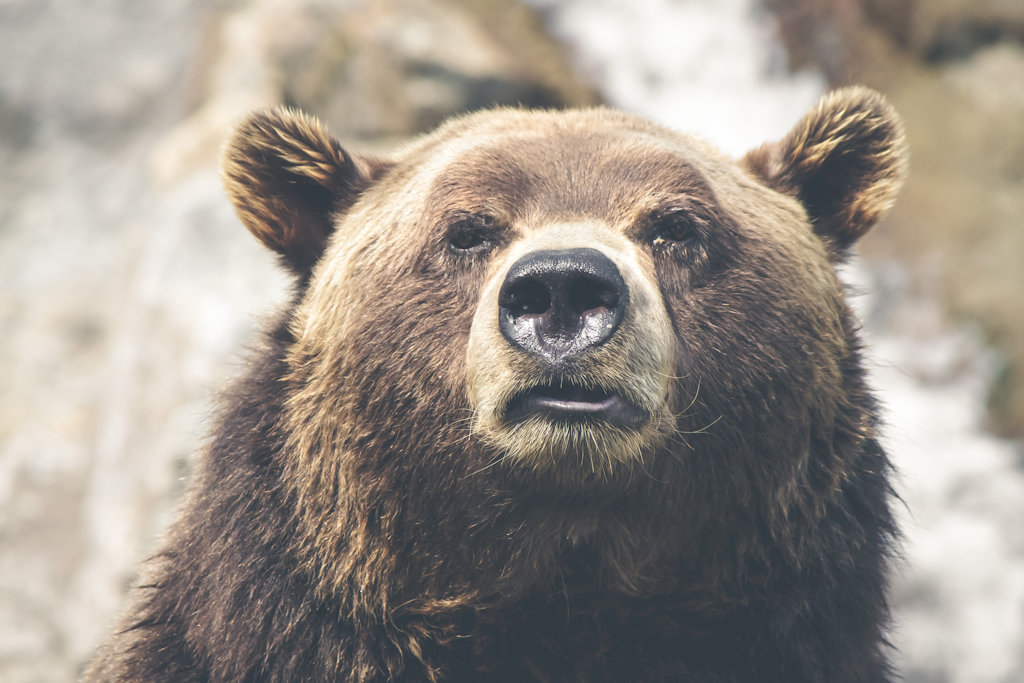
Here’s a good article by Chris Peterson in the Hungry Horse News discussing how the use of DNA analysis in grizzly bear research is really hitting its stride . . .
This summer, grizzly bears have been confirmed in the Big Hole River Valley of Montana for the first time in the last 100 years.
Montana Fish, Wildlife and Parks bear manager Kevin Frey said they do have hair samples from at least one grizzly from earlier this summer in the Big Hole and the state plans on having the samples analyzed to find out if biologists can track the origins of the bear.
The case is just another illustration of how far DNA analysis of bears has come in the past 25 years.
Judge asked to restore cancelled energy lease in Badger-Two Medicine
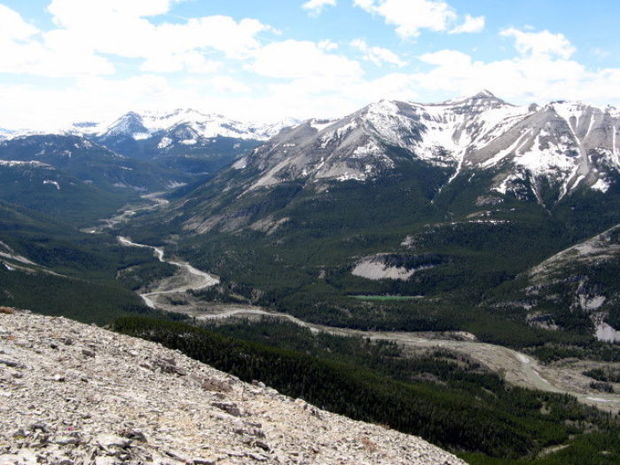
Solonex makes the next move in its court fight over cancelled oil and gas leases in the Badger-Two Medicine region . . .
A Louisiana energy company is asking a federal judge to reverse the cancellation of a 33-year-old oil and gas lease on land considered sacred to the Blackfoot tribes of the U.S. and Canada.
Solenex LLC of Baton Rouge filed court papers Monday seeking a judgment in the case that’s before U.S. District Judge Richard Leon in Washington, D.C.
The 6,200-acre lease is in the Badger-Two Medicine area of the Lewis and Clark National Forest. It’s just outside Glacier National Park and the Blackfeet Indian Reservation.
Coalition challenges Rock Creek Mine water permit
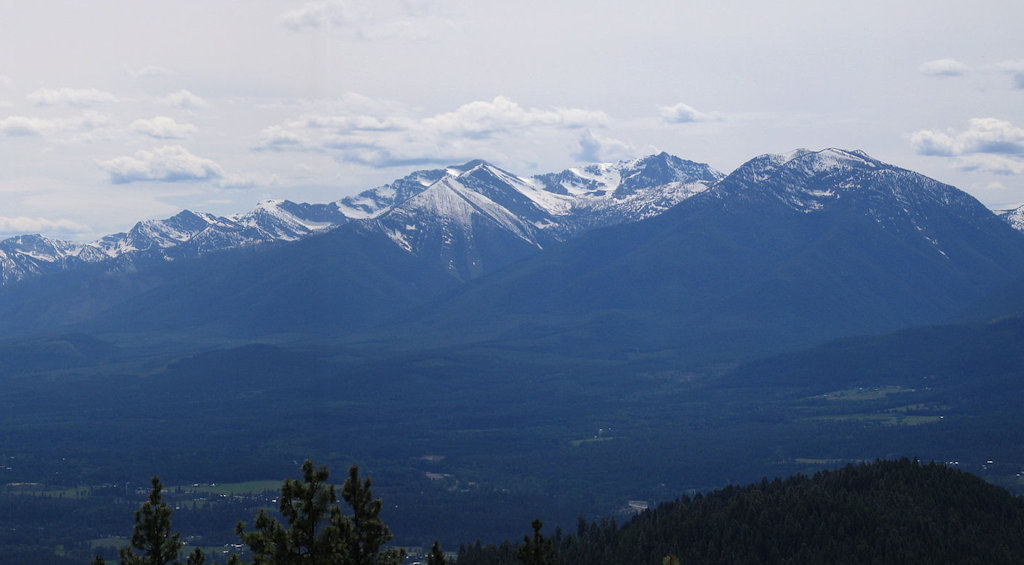
An environmental coalition is challenging the DNRC water permit for the Rock Creek Mine, one of two proposed mines near the Cabinet Mountains Wilderness . . .
A coalition of environmental groups is challenging the Montana Department of Natural Resources and Conservation’s proposed decision to issue a water permit to the company hoping to build a massive copper and silver mine near Noxon.
The coalition, including the Clark Fork Coalition, Rock Creek Alliance, Earthworks and the Montana Environmental Information Center, has alleged that the Hecla Mining Company’s Rock Creek Mine would dewater streams within the Cabinet Mountains Wilderness. The nonprofit environmental law firm Earthjustice represents the groups.
The formal objection was filed with the DNRC on Sept. 6.