National Geographic is running their annual photography contest. I cannot post samples here but, trust me, you really want to go check them out. There are some truly spectacular photos among the submissions so far and the contest still has several weeks to run.
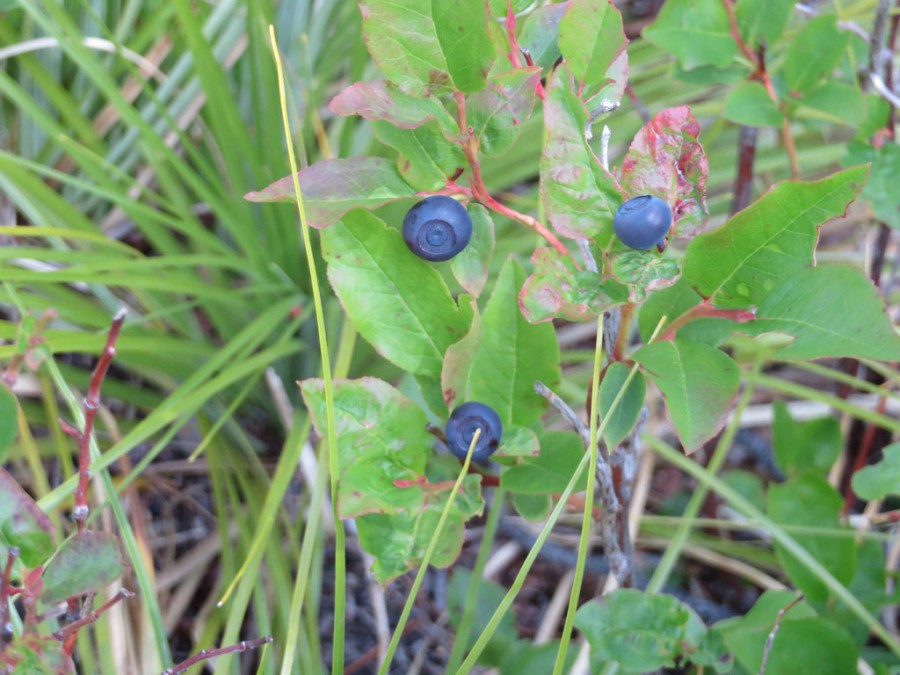
Huckleberries on Moran Creek Trail (T2) in Flathead NF – W. K. Walker
Researchers have launched a serious effort to learn more about huckleberries.
The North Fork Preservation Association is supporting this investigation. The NFPA has a huckleberry team of seven people, led by Suzanne Danielle, who checked two sites in the North Fork every week throughout the season . . .
We know the least about the plant we love the most in the mountains.
When Tabitha Graves took up carnivore research for the U.S. Geological Survey base at Glacier National Park, one of the biggest puzzles needing attention was the role huckleberries play in the food chain. Although creatures from grasshoppers to grizzlies like the purple fruit, we know little about what the berries themselves like.
“The more I’ve gotten into this, the more I’ve realized how important they are,” Graves said. “All kinds of birds eat them, as do small mammals. We’ve found coyote scats with berries in them. We’ve seen wasps eating them. And of course, humans eat a lot of them.”
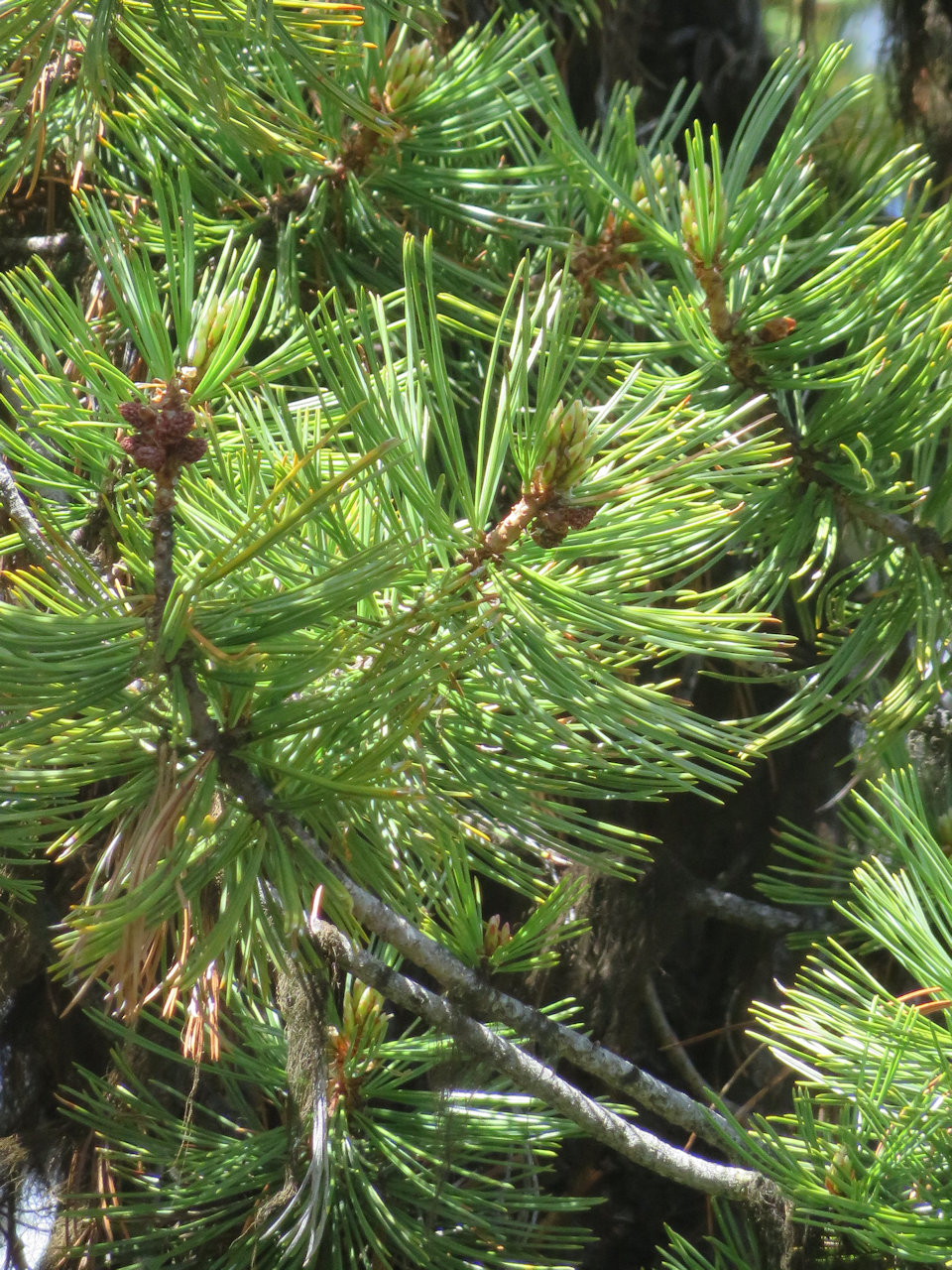
The Whitebark Pine Ecosystem Foundation (WPEF) is partnering with the Flathead National Forest and Glacier National Park to hold the Foundation’s 2016 science meeting in Whitefish on September 16th. The event is being held at the O’Shaughnessy Center, 1 Central Avenue, and includes both a full day of science presentations and an evening program for the public. There will also be an event on Saturday recognizing Whitefish Mountain Resort as the first certified “Whitebark Pine Friendly Ski Area”. The formal presentation ceremony recognizing the ski area’s efforts to protect and restore whitebark pine will occur at the resort’s Base Lodge at 10:30 a.m.
Whitebark pine is a keystone species, whose large seeds provide a critical food source for over 110 species of birds and animals at high elevations. Its presence allows other tree species to establish under the harsh conditions near the tree line, and helps retain snowpack and regulate runoff. Outdoor enthusiasts know whitebark pine as a familiar companion that enriches their high mountain experiences.
Whitebark faces several threats, primarily human caused, that have decreased the number of whitebark pine in Northwest Montana by over 90 percent. The science program being held on Friday, the 16th from 8:00 a.m. – 5:00 p.m. will feature presentations by many of the premier experts in whitebark pine research, policy and restoration efforts. The public is welcome to attend; go to http://whitebarkfound.org/ for more information.
An evening program for the public, covering whitebark pine ecology, threats and local restoration efforts, will be held after the science meeting from 6:30 – 7:30 p.m. The evening program will feature presentations by whitebark pine and Clark’s nutcracker researcher, Dr. Diana Tomback, and Flathead National Forest reforestation specialist, Karl Anderson. Evening events will also include a no-host bar and silent auction. The public is encouraged to attend and learn more about whitebark pine and why it is such an important species to the people living in northwest Montana.
For more information on any of the events, please contact Melissa Jenkins, WPEF Secretary, at (406) 260-6500.
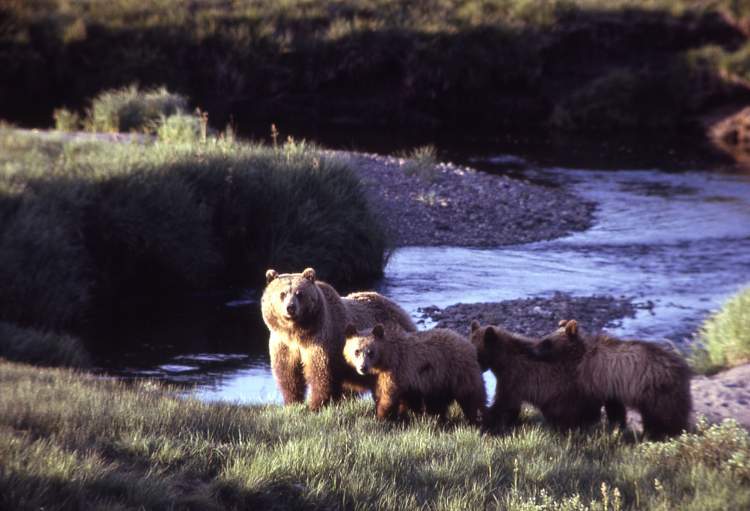
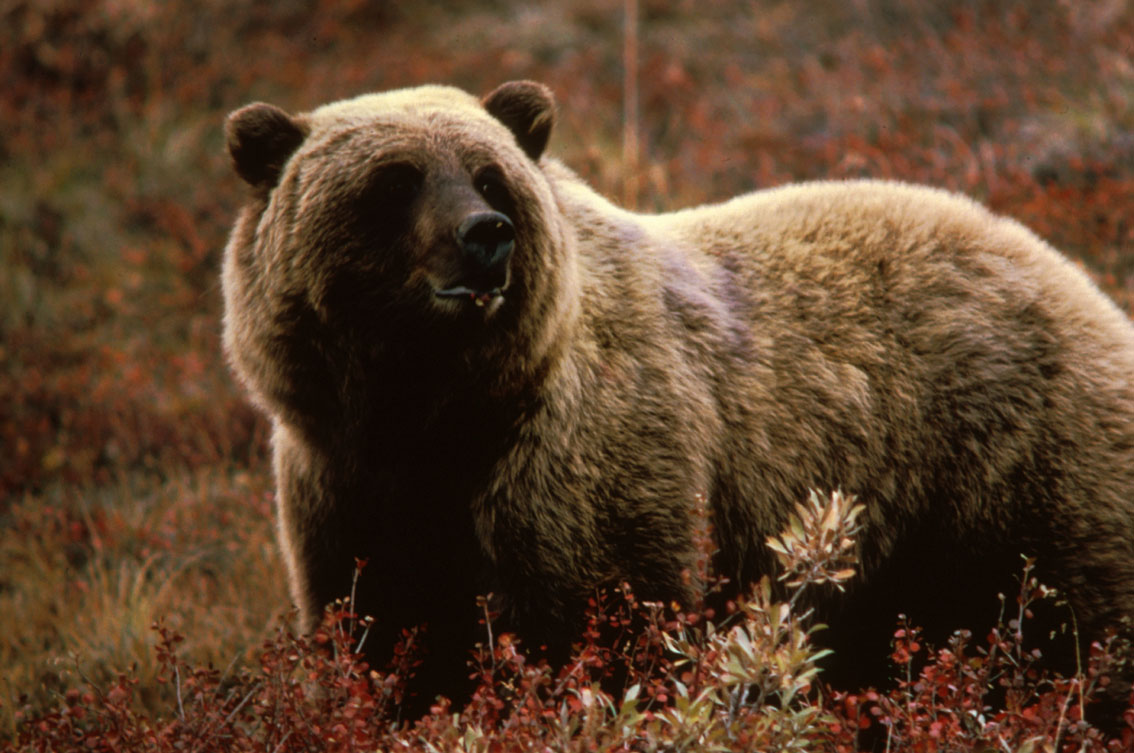
Wildlife managers continue to work on a plan to remove grizzly bears from the Endangered Species List. Meanwhile, there’s evidence of contact between the two main grizzly population centers . . .
Federal plans to delist the grizzly bear from Endangered Species Act protection will get a second round of public comment.
The U.S. Fish and Wildlife Service’s Tuesday announcement follows its release of a peer-review report generally approving its management plan for allowing state management of grizzlies in the Greater Yellowstone Ecosystem. Coincidentally, it also arrives on the heels of reports that Yellowstone grizzlies may be making contact with their fellows in the Northern Continental Divide Ecosystem north of Missoula.
Montana, Idaho and Wyoming state wildlife managers have all proposed plans for both protecting and hunting Yellowstone grizzly bear populations, assuming they leave federal management. Northern grizzlies are considered a separate population, although they are undergoing a similar delisting process that isn’t as far along as the Yellowstone one.
Rebecca Powell of Columbia Falls has an excellent op-ed making the rounds regarding bicycling in wilderness areas. It has appeared in the Hungry Horse News and in the Flathead Beacon so far . . .
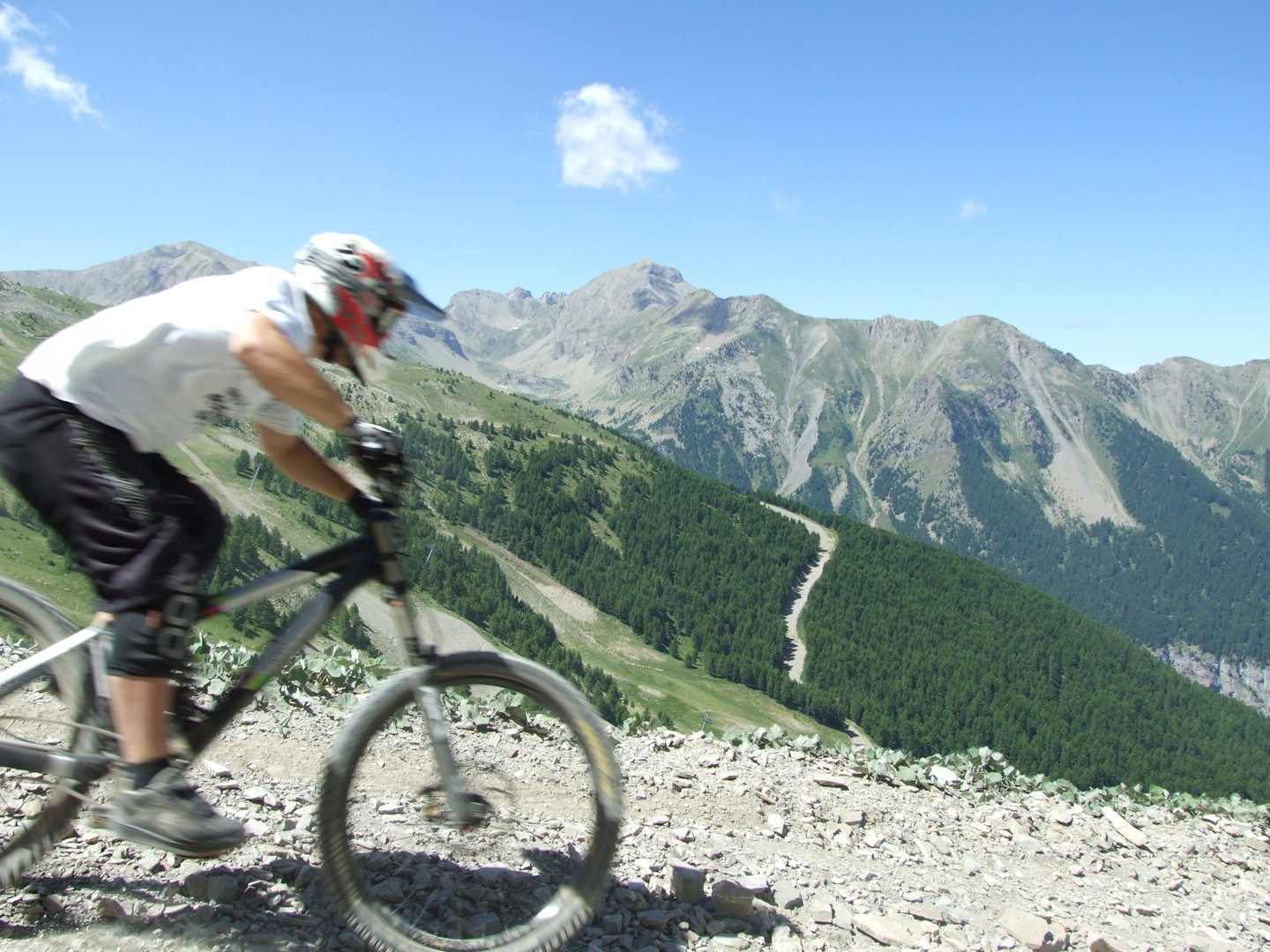
By now you have probably heard from both sides of the debate on allowing mountain bikes into federally designated Wilderness. They are too fast, they will scare my horse, bikers play loud rap music. On the other side, bikers argue that they are low impact, human powered and can bring much needed funding for trail maintenance in these areas. Both arguments have valid points. But let’s just push pause here and think about it.
In the 1800s as the industrial revolution was sweeping the nation it seemed as though no person or no area was safe from impact and modification of man. In seeking to “improve” the standard of living we went from producing things by hand, to everything produced by machine. Fast forward a few decades and enter the conservation movement and forward thinking of people like John Muir, Aldo Leopold and Bob Marshall to name a few. These visionaries could see the benefits of designating large swaths of lands, ecosystems where industry was not dominate and had very little influence. From here came the Wilderness act of 1964 that states, “In order to assure that an increasing population, accompanied by expanding settlement and growing mechanization, does not occupy and modify all areas within the United States and its possessions … it is hereby declared to be the policy of the Congress to secure for the American people of present and future generations the benefits of an enduring resource of wilderness.”
Bikes have been around much longer than the Wilderness Act, but in the 1950s and ‘60s, just as the Wilderness Act was taking hold, bicycles were being modified to operate better off road and on trails. Tires getting bigger, frames lighter and people were able to access areas on bike that were not possible just years before. Visit any bike shop in the world and you will see that bikes are still evolving. Lighter, faster, tougher than ever before. The bike industry does not have nor should they have a pause button on the technology. There is no doubt that bikes are fun. Really fun. It’s a great way to exercise, spend time outdoors and challenge yourself. I love riding my bike on roads and on mountain trails and I am grateful for the advancements that are made each year.
Today in America we have just about 110 million acres of federally designated wilderness. Traveling in these areas is like stepping back in time. Wilderness is a haven from the pressures of our fast-paced technology dependent society. Each year as we evolve, we become more dependent on technology and less connected to wild places. When we are more comfortable connected to urban and technological landscapes, we are less likely to let it go and seek refuge in the wilderness. Just ask a teenager to put down their phone for a few hours and you will see.
Wilderness is a place where the pause button of industry has been pushed and modern conveniences are not allowed. The tools and equipment used to travel and work in the wilderness have not changed in the last 50 years. Trail crews are still using crosscut saws operated by hand instead of the quickness and convenience of chainsaws. Horses and mules are used to transport heavy loads and posting an update to your Instagram, Twitter, etc. is nearly impossible. Let’s keep some areas in this world free of the burdens of technological evolution. Let’s protect the place where you can engulf all of your senses in in the natural world just as it was 100 years, 10 years even two years ago and will remain 100 years from now. Mountain bikes have their place on trails, but let’s keep them out of these special places. Please keep mechanised transportation out of your wilderness areas.
The Flathead National Forest is having another in a series of open houses on September 8 regarding their “forest plan, plan amendments and draft environmental impact statement.”
This is a fairly big deal. They’re deciding how to manage the forest for the next 20 years or so, including such things as timber management, wilderness, recreation, travel and, in conjunction with surrounding forests, items like how to handle grizzly bear de-listing.
Here’s the announcement . . .
Open House Notice
Flathead National Forest Plan Revision, Plan Amendments, and Draft Environmental Impact Statement
You are invited to attend an open house on the Flathead National Forest draft forest plan, plan amendments, and draft environmental impact statement.
The purpose of the draft forest plan is to provide for long-term sustainability of ecosystems and desired ecosystem services. The draft forest plan describes the Forest’s distinctive roles and contributions within the broader landscape and details forest-wide, management area, and geographic area desired conditions, objectives, standards, and guidelines. The revised forest plan identifies suitable uses of National Forest System lands and estimates of the planned timber sale quantity for the Forest. The draft revised plan identifies priority watersheds for restoration, and includes the evaluation of recommended wilderness areas and eligible wild and scenic rivers. The purpose and need for the four forest amendments for the Helena, Lewis and Clark, Kootenai, and Lolo National Forests, along with the revised forest plan for the Flathead National Forest, is to ensure the adequacy of regulatory mechanisms regarding habitat protection across the national forests in the Northern Continental Divide Ecosystem in support of the de-listing of the grizzly bear.
During the open house the planning team will be available to answer any questions you may have. There will not be a formal presentation. You can plan to stop in at any time during the open house.
Thursday, September 8, 2016, 4:30-7:00 p.m., Flathead National Forest Supervisors Office, 650 Wolfpack Way, Kalispell MT 59901
Documents and maps are available on-line, as well as information about how to comment, at www.fs.usda.gov/goto/flathead/fpr. The comment period ends on October 3, 2016.
State wildlife biologists aren’t ready to say whether the grizzly bear or bears spotted this year in the Upper Big Hole area originated in the Yellowstone ecosystem or traveled from northern Montana.
“We can’t honestly say yet, north or south,” said Fish, Wildlife and Parks biologist Kevin Frey on Monday. “The Big Hole is kind of the gray zone between the two ecosystems.”
The two confirmed grizzly sightings this year are the first in the area in nearly a century. Biologists aren’t certain whether the two sightings, roughly 40 miles apart, were of the same bear. Even though the range makes it entirely possible, Frey has his doubts.
This is a response to the Mountain-Bicycles-in-Wilderness effort. First, a bit about me – I have four bikes; a Specialized Allez road bike, an old Specialized Stump Jumper mountain bike, a Surly Pugsley fat tire bike, and a Surly Long Haul Trucker touring bike. I ride them all at various times. I live 30-plus miles from the nearest telephone pole. North of Polebridge, there is no electric grid. Part of each year, I spend several months living on top of a mountain as a forest fire lookout looking for fire. I write all of this to define what forms my thoughts.
I love to ride my fat tire bike back in the woods/mountains where I’m allowed, and where I’m not allowed – I respect the rules of Wilderness. I love knowing Wilderness is there and is a constant sanctuary left the way it was and I hope that it always stays as it is. The attitude of the Sustainable Trails Organization http://www.sustainabletrailscoalition.org and The International Mountain Bicycling Association https://www.imba.com/ remind me of a petulant child – one who is sitting in a supermarket cart full of nutritious food, who leans towards the candy display and screams “I want that.” A temper tantrum focusing not on what they have, only what they don’t have.
I say no bikes in existing Wilderness. There are so many more acres to ride bikes than designated wilderness – BLM Lands, national forest lands and state lands. Where I live, there is a coalition of folks who gathered together to find common ground on national forest land use. They are called the Whitefish Range Partnership and this partnership consists of a diverse group of snowmobilers, loggers, mountain bikers, wilderness advocates, backcountry horsemen, private landowners and other special interest groups. They have collaborated to come to a mutual multi-use land plan for the Whitefish Range that satisfies each of the groups. This agreement was reached by consensus … unanimous agreement. Then, it was submitted as a proposal to the Flathead National Forest in its planning process. No one got exactly what they wanted, but they came to an agreement that they could all live with and enjoy. I feel that future Wilderness designations will come about as a result of collaborative efforts and contain compromises to satisfy the various land use interests.
I’m hoping that the various mountain bike groups here in Montana realize what a precious place our Wilderness Areas are and that they work to lead the way for other mountain bicycle groups to leave them alone. And, that they also lead the way to create new trails through collaboration with other groups. But I don’t want existing wilderness rules to change.
Bull trout recovery is still a difficult problem . . .
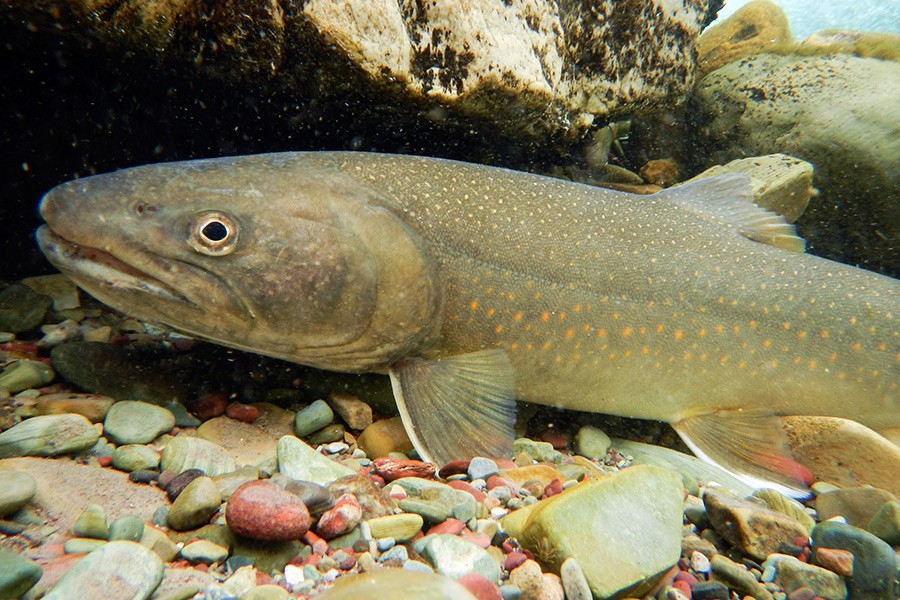
Bull trout numbers in the Flathead River drainage crashed so fast in the 1990s, they wound up on the Endangered Species list.
Their populations haven’t recovered, but the amount we know about a fish considered the “grizzly bear of the freshwater world” has zoomed upward even faster. That’s good news for the consortium of communities charged with keeping bull trout around.
The Northwest Power and Conservation Council’s meeting in Missoula last week got an update on the range of efforts to protect bull trout, from commercial netting of its chief rival in Flathead Lake to tinkering with the water temperature coming out of Hungry Horse Dam.
Representatives of several tribes held a gathering in Glacier Park to speak out in favor of retaining grizzly bear protections . . .
As federal wildlife managers prepare to move grizzly bears off the Endangered Species List in the Greater Yellowstone Ecosystem, opposition to delisting the iconic — and to many, sacred — animal has continued.
Led by several tribal nations, a crowd of roughly 100 people met at the eastern gateway of Glacier National Park on Friday for a “Prayer for the Great Bear” ceremony.
David Bearshield of the Cheyenne Nation sang a prayer in his native language with the shore of St. Mary’s Lake as the backdrop.