Category Archives: News

‘Greek in Glacier’ announced!

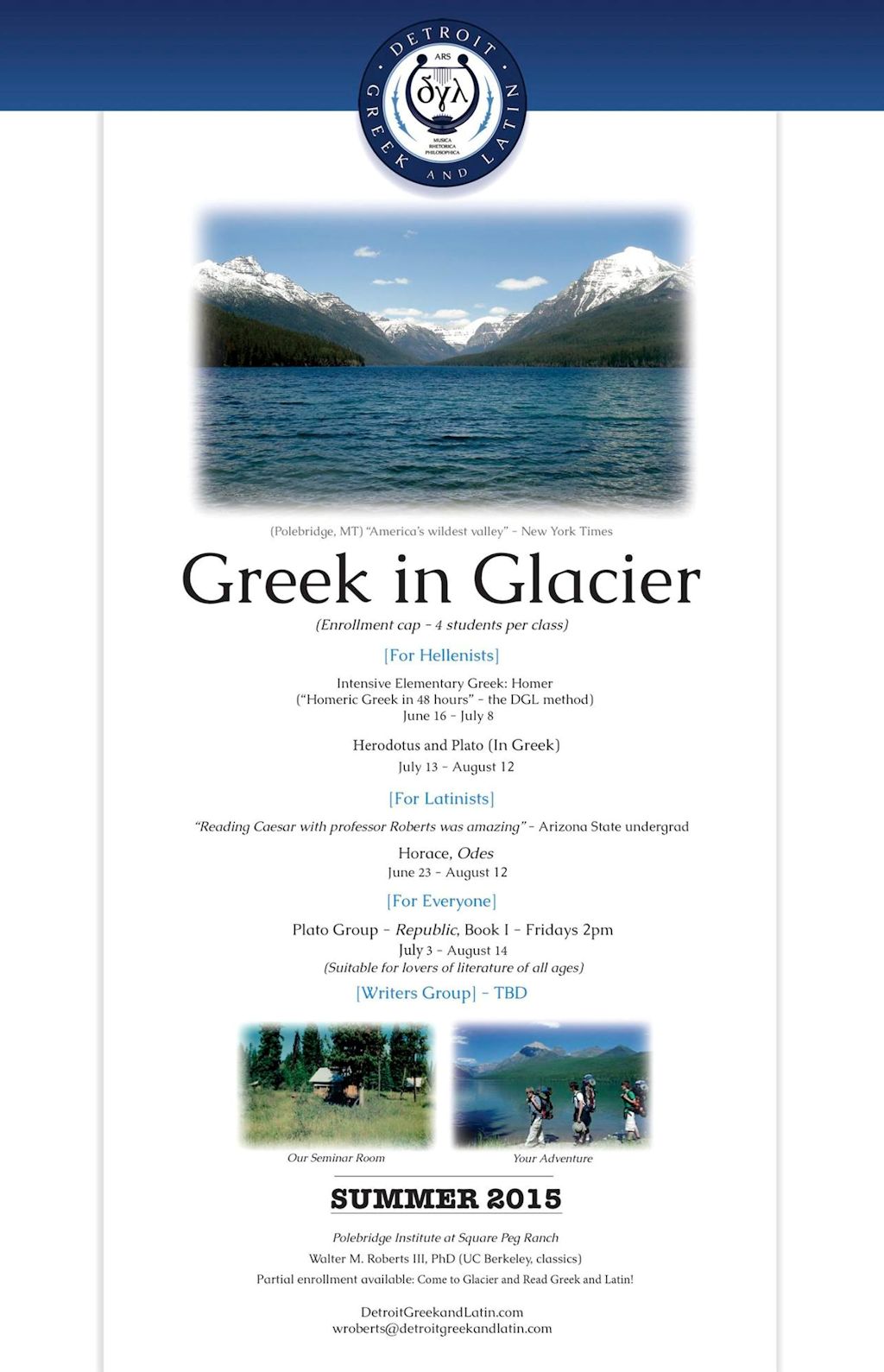
What would a North Fork summer be without Plato? Dr. Walter M. Roberts III returns to the North Fork later this month. Amidst all the bicycle riding and community participation he will, as usual, be presenting a series of seminars, including his ever-popular Plato course. See the poster below for details.

Greek in Glacier 2015 Poster

A note from Walter regarding the Plato seminar: “To folks who will be wanting to participate in Detroit Greek and Latin’s Plato Seminar in Glacier National Park, this is the text of Plato’s Republic that I would like everyone to have: Plato, Republic — edited by Robin Waterfield (World Classics: Oxford University Press.) We will muster in the Gazebo on Square Peg Ranch on the Friday before the Fourth of July at 2pm for our first meeting. As usual, the seminar will be followed by pizza at the Northern Lights Saloon & Cafe. Who’s treating the instructor?”

Federal bull trout recovery plan released for public comment

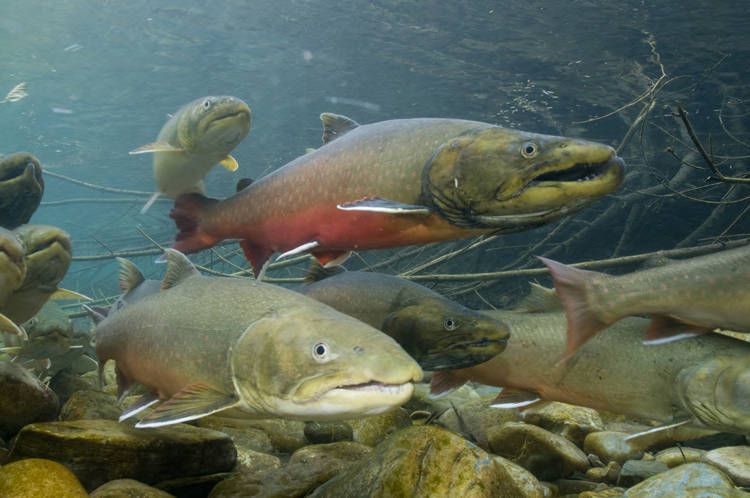
Bull Trout
Bull Trout

The feds released a draft version of their plan for bull trout recovery yesterday, starting the clock on a 45-day recovery period . . .

The draft master plan for removing bull trout from Endangered Species Act protection was released at 12:01 a.m. Tuesday, after 16 years of work and protracted legal battles.

“What we’ve tried to do with this approach over previous approaches is focus on what we believe are the highest priority conservation actions that need to occur,” said U.S. Fish and Wildlife Service bull trout recovery planning coordinator Steve Duke. “It won’t make the best life possible for bull trout, but where we know something will have an impact, we’ll react to that.”

The FWS plan is out for 45 days of public comment. It must meet a court-ordered settlement deadline for acceptance by Sept. 30. Two previous plans developed in 2002 and 2004 were deemed inadequate.

Read more . . .

Additional reading: Draft Bull Trout Recovery Planning Documents

Flathead Forest to hold river recreation open house

From the press release . . .

River recreationists are invited to an open house to learn more about the 3 Forks of the Flathead River, which include the North Fork, Middle Fork, and South Forks. The open house is schedule June 8th from 5:30 to 7:00 p.m. on June 8th, 2015 at the Flathead National Forest Supervisor’s Office at 650 Wolfpack Way in Kalispell, Montana.

During the open house, river managers will be available to visit and answer questions about river recreation activities, river use and management, and rules and regulations.

For additional information about this open house, contact the Hungry Horse-Glacier View Ranger District in Hungry Horse at 406-387-3800 and the Spotted Bear Ranger District at Spotted Bear at 406-758-5376.

Researchers start their Spring round of grizzly bear trapping

Personnel from Montana Fish, Wildlife and Parks will be live-trapping and collaring a couple of grizzly bears in the North Fork area over the next few days. So, if you see the warning signs, stay clear of the sites. . .

Here’s what Rick Mace had to say . . .

The grizzly bear population monitoring team would like to capture and radio collar a couple grizzly bears in the NF Flathead River starting in the next few days. We would be working both on Forest Service and private lands.  All of the Forest Service sites would be off of the existing open road system as we have done in the past. All sites will have approved signs and we will obviously avoid any active timber sales and trail heads.  Most of our sites have been used now for many years without incident.  We anticipate capture sites in Trail, Red Meadow,  and Moose Creeks. Also we may work off the main North Fork Road near Mud (Garnet) Lake going towards the border.  We would like to run the capture program for a maximum of about 10 days depending on success, starting later this week.

Feds unveil 10-state sage grouse conservation plan

The federal government rolled out their sage grouse conservation plan to considerable debate . . .

Interior Secretary Sally Jewell revealed plans Thursday to preserve habitat in 10 Western states for an imperiled ground-dwelling bird, the federal government’s biggest land-planning effort to date for conservation of a single species.

The proposal would affect energy development. The regulations would require oil and gas wells to be clustered in groups of a half-dozen or more to avoid scattering them across habitat of the greater sage grouse. Drilling near breeding areas would be prohibited during mating season, and power lines would be moved away from prime habitat to avoid serving as perches for raptors that eat sage grouse.

Some will say the plans don’t go far enough to protect the bird, Jewell said. “But I would say these plans are grounded in sound science — the best available science,” she said at a news conference on a ranch near Cheyenne.

Read more . . .

Cabinet-Yaak grizzly numbers small, but rising

Scientists continue to struggle to establish a good population of grizzly bears in the Cabinet-Yaak Ecosystem . . .

Spring has brought bears back into action, and it’s also energized biologists overseeing the remote population of grizzlies in the Cabinet-Yaak mountains of northwest Montana.

“We were in negative territory, but as of this year, after several years of low mortality we’re seeing some improvement,” said Wayne Kasworm, the U.S. Fish and Wildlife Service recovery coordinator in Libby. “Now we have a projected growth rate of 1.4 percent. That’s compared to the Northern Continental Divide Ecosystem and Greater Yellowstone Ecosystem, where it’s roughly 3 percent.”

While those two huge areas each have close to 1,000 grizzlies, the Cabinet-Yaak Ecosystem struggles to stay around 50. It does so with about a quarter of the NCDE’s territory, which stretches from the southern tip of the Rattlesnake Wilderness north of Missoula up to Glacier National Park.

Read more . . .

Celebrating the Rocky Mountain Front Heritage Act

Debo Powers has a nice post up at the NF News site regarding a recent celebration near Choteau of the Rocky Mountain Front Heritage Act . . .

On Saturday, May 23, there was a celebration near Choteau for Congressional passage of the Rocky Mountain Front Heritage Act.

In the afternoon, about 50 people gathered at the trailhead for Headquarters Pass into the Bob Marshall Wilderness to place a new sign designating the new boundary. Among other things, the Heritage Act created new wilderness areas that have been added to the Bob Marshall Wilderness complex. This is a significant achievement since it is the first addition to Montana wilderness in 31 years. After the sign was raised, Gloria Flora, former Forest Supervisor on the Lewis and Clark Forest, spoke about the importance of protecting wilderness for future generations. Her profound words moved the crowd with her assertion that “the Forest Service stands for the unborn……..of every species.”

Read more at NF News . . .

Community meetings scheduled to share info about Glacier Park

Glacier Park has two community meetings scheduled to share information and gain community feedback. The closer of the two is Wednesday, June 3, 5:30-7 p.m. at the Teakettle Community Hall in Columbia Falls.

Here’s the press release . . .

Glacier National Park is hosting two community meetings to share information about park activities and provide an opportunity for personal dialogue between park leadership and local community members and neighbors. The first meeting will take place Tuesday, June 2 at 4-5:30 p.m. at the St. Mary Visitor Center Auditorium in St. Mary, and a second meeting will be Wednesday, June 3, 5:30-7 p.m. at the Teakettle Community Hall in Columbia Falls.

The format of the meetings will include presentations by Glacier National Park Superintendent Jeff Mow and other members of the park leadership team. Following the presentations, there will be a question and answer period and opportunity for informal conversations.

Topics of presentation and discussion will include rehabilitation of the Going-to-the-Sun Road and related activities, spring plowing and snow removal operations, entrance fee increases, Going-to-the-Sun Road Corridor Management Plan, Many Glacier Hotel 100th Anniversary and projected work activities at the hotel, and National Park Service Centennial.

Community members are encouraged to attend and learn more about what’s happening at the park.

Black bear genetic study expanded to all of North America

It’s not always about grizzlies. Sometimes, our much larger population of black bears gets some attention . . .

Last year, researchers examined the genetic diversity of American black bears in Missouri, Arkansas and Oklahoma. Now, scientists have expanded the study to include black bears throughout North America and have found a bit more about the genetics of these bears.

“This is the first genomics study of black bears across their range,” said Emily Puckett, one of the researchers, in a news release. “Using advanced nuclear genomics, the team delineated three geographic lineages of bears in the western and eastern regions of North America and in Alaska. After identifying the three lineages, the team delineated them into nine geographically relevant regional clusters to better understand the relationships of populations within each cluster.”

Read more . . .

2015 Citizen Science opportunities at Glacier Park

From the official press release . . .

The Crown of the Continent Research Learning Center at Glacier National Park will continue its Citizen Science Program this summer, offering free research and learning opportunities for the public.

The program trains individuals to identify, observe, and record information on mountain goats, bighorn sheep, pikas, aquatic insects, loons, and invasive plants in Glacier National Park. These species have been targeted because of their sensitivity to changes in habitat, human disturbances and, in the case of invasive plants, their threat to native biodiversity. Participants are asked to attend a one-day training session before collecting data for a project.

High Country Citizen Science
Observe mountain goats, bighorn sheep, pikas, and aquatic insects at selected sites to assist with population and distribution estimates. These species are habitat and temperature sensitive and may be affected by climate change. Monitoring takes place June through October. Training Dates: June 12, June 19, or July 2

Common Loon Citizen Science
Gather information on the distribution and reproduction of common loons to understand more about population trends and nesting success. Glacier National Park is home to about 20% of Montana’s breeding Common Loons. Monitoring takes place May through September.
Training Date: May 22, June 18, June 26, or July 9

Invasive Plant Citizen Science
Learn to identify five targeted invasive plants and use GPS units to map their locations while hiking along trails in Glacier National Park. Monitoring takes place June through September. Interested invasive plant citizen science participants can be trained in one of two ways:
1. Complete online training session at http://www.crownscience.org/getinvolved/citizen-science/noxious-weeds.
2. Attend annual weed blitz on Tuesday, July 21. Participants will assist Glacier National Park by pulling targeted weeds.

Additional training sessions for any of the programs may be scheduled based on interest.


Since 2005, the Glacier National Park Citizen Science Program has utilized trained citizen scientists to collect baseline population data on species of interest within the park. Training is provided to participants to inform them of threats to native plants and wildlife that may result from human disturbance, climate change, and invasive species. Perhaps most importantly, the Citizen Science Program helps create an informed group of visitors involved in active stewardship of Glacier National Park.

Please contact the Crown of the Continent Research Learning Center at 406-888-7986 to register for training or for more information, or visit http://www.crownscience.org/getinvolved/citizen-science.

Funding and support for the Crown of the Continent Research Learning Center’s Citizen Science Program is provided by the Glacier National Park Conservancy. The Glacier National Park Conservancy, a private non-profit 501(c)(3) organization, is the official non-profit fundraising partner of Glacier National Park by providing support for preservation, education, and research through philanthropy and outreach. Visit http://glacierconservancy.org/ for more information about the Conservancy.