Annual Bob Marshall Wilderness Complex public meeting, April 11

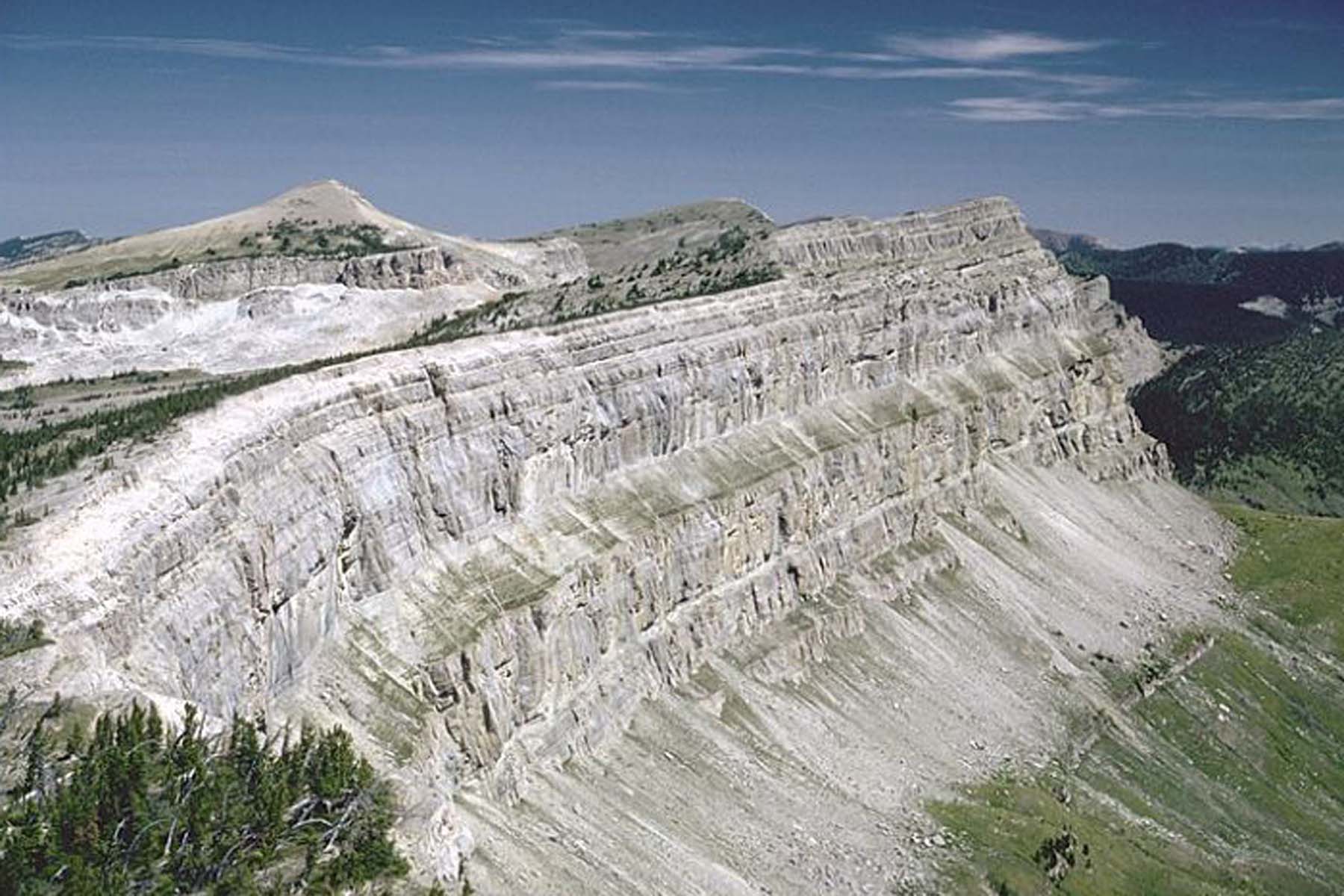
Chinese Wall - Bob Marshall Wilderness
Chinese Wall – Bob Marshall Wilderness

It’s that time again. The annual Bob Marshall Wilderness Complex public meeting is coming up on Saturday, April 11, at the Choteau Library in Choteau, Montana. It starts at 10:00 a.m.

Here’s the official Forest Service press release . . .

The public is invited to the annual Bob Marshall Wilderness Complex (BMWC) Public Meeting on Saturday, April 11 starting at 10 AM at the Choteau Library in Choteau, Montana.

“This is a great annual opportunity to meet with the National Forest Wilderness Managers and Montana Fish and Wildlife staff”, says Deb Mucklow, Spotted Bear District Ranger. “The challenges of managing wilderness are often not understood. Historically the participants at this annual meeting have helped with solutions or ideas that we as managers may be able to incorporate.” All of the participants will be asked to share how they contribute to the wilderness and sustaining the character of the Bob Marshall Wilderness Complex. In addition, updates will be provided on specific activities and projects, and ongoing monitoring across the Bob Marshall Wilderness Complex. The monitoring and actions are a piece of the Limits of Acceptable change for the Bob Marshall Wilderness Complex (BMWC).”

The BMWC plan was developed by interested individuals, partners and agency representatives. The Bob Marshall Wilderness Complex is comprised of the Bob Marshall Wilderness, Great Bear Wilderness, and Scapegoat Wilderness and jointly they are an area of more than 1.5 million acres. This is the third largest wilderness complex in the lower 48 states. The complex is managed by four national forests (Flathead, Lolo, Helena, and Lewis & Clark) and five ranger districts (Spotted Bear, Hungry Horse, Seeley Lake, Lincoln, and Rocky Mountain).

Recently the Forest managers and Fish and Wildlife staff prepared the annual BMWC newsletter which is available on the Flathead National Forest Web page under Special Places (http://www.fs.usda.gov/attmain/flathead/specialplaces). This newsletter gives background and highlights of information that may be shared at the public meeting.

For additional information, please contact the Spotted Bear Ranger District at (406) 387-3800.

Bird flu kills captive falcon in Columbia Falls

The death from bird flu of a captive gyrfalcon in Columbia Falls created a stir last week. The gyrfalcon probably caught it from a wild duck, but there is concern about any possible spread to domestic poultry . . .

The death of a captive gyrfalcon here was caused by highly pathogenic avian influenza, the Montana Department of Livestock confirmed Tuesday.

It’s the first case, outside of hunter-harvested wildlife, reported in Montana in years.

Read more . . .

More information:

From Montana FWP: Avian Influenza Reported in a Captive Gyrfalcon from Columbia Falls

From Science World: Highly Pathogenic Bird Flu is Circulating in North America and May Impact Wild Birds

Tester urges feds to cancel oil & gas leases in Badger-Two Medicine

Sen. Jon Tester is joining the chorus asking for cancellation of oil and gas leases in the Badger-Two Medicine area . . .

U.S. Sen. Jon Tester has joined Blackfeet tribal leaders in their efforts to have all federal oil and gas exploration leases in the Badger-Two Medicine area next to their reservation canceled.

In a letter Friday to Interior Secretary Sally Jewell and Agriculture Secretary Tom Vilsack, the Montana Democrat said he agreed with the Blackfeet Tribe that Jewell and Vilsack’s departments “clearly have not just the moral obligation but also the legal authority to cancel all existing leases in the Badger-Two Medicine area.”

Tester visited the Blackfeet Reservation earlier this month and discussed the issue with tribal leaders. They maintain that 47 leases in the 165,000-acre area were illegally granted by the Bureau of Land Management and the U.S. Forest Service in 1982.

Read more . . .

Collaborative sage grouse protection deal signed in Nevada

Seems this public-private collaboration idea is spreading . . .

An unprecedented attempt to protect sage grouse habitat across parts of more than 900 square miles of privately owned land in Nevada will begin under a deal Thursday involving the federal government, an environmental group and the world’s largest gold mining company.

The agreement comes as the U.S. Fish and Wildlife Service approaches a fall deadline for a decision on whether to protect the greater sage grouse, a bird roughly the size of a chicken that ranges across the West, under the Endangered Species Act.

Commercial operations, including mining companies and oil and gas producers, are entering into such deals in an effort to keep the bird off the threatened or endangered list because the classification would place new restrictions on their work.

Read more . . .

Montana starts handing out farm bill money to national forests

The State of Montana is beginning to disburse grant money for national forest projects, including the Flathead and Kootenai forests . . .

About $1 million in state grants will be distributed to 13 national forest projects across Montana over the next few months as Montana’s first installment of funding authorized in the 2014 federal farm bill.

Four projects in the Flathead and Kootenai national forests will receive a total of $260,000.

The bill created the authority for state governors to nominate up to 5 million acres of “Priority Landscape Areas” in national forests within their states, focused on identifying tracts of land at the highest risk for disease, insect infestation and wildfires.

Read more . . .

Study: Beetle infested forests no more likely to burn than healthy ones

This one is a little tricky. A study was just released saying that forests with lots of beetle killed trees are no more likely to burn than other western forests. What it does not address is fire behavior, once started, in beetle-killed stands . . .

Mountain pine beetles have left vast tracts of dead, dry trees in the West, raising fears that they’re more vulnerable to wildfire outbreaks, but a new study found no evidence that bug-infested forests are more likely to burn than healthy ones.

In a paper released Monday, University of Colorado researchers said weather and terrain are bigger factors in determining whether a forest will burn than beetle invasions.

The findings could provide some comfort to people who live near beetle-infested forests, if those trees are statistically no more likely to burn than healthy forests.

Read more . . .

Legal battles put some Wyoming wolf research on-hold

Lawsuits over wolf management in Wyoming are hampering some research efforts . . .

Fur piled in a mess under a fallen tree. A jawbone lay nearby. The spine was farther down the hill by some ribs. Part of a shoulder was 50 yards in another direction. They were the first signs of a female moose killed months before by a pack of wolves. Little remained of her body. But her bones told a story…

She was sick, and that may have lowered her defenses, which is what matters to wolves, said Ken Mills, wolf biologist for the Wyoming Game and Fish Department…

Mills, 35, was gathering information in late July on how many moose, deer and elk wolves have killed in the Gros Ventre Range in northwestern Wyoming.

Read more . . .

Montana FWP finds fewer mountain goats in Bitterroot

Montana FWP found fewer mountain goats in the Bitterrroots this winter than in previous surveys . . .

A couple of times in February and once in March, Rebecca Mowry had a chance to see the Bitterroot Mountains in a way only a handful before her have ever experienced.

From the inside of a helicopter, the Montana Fish, Wildlife and Parks biologist explored 22 canyons from Trapper Peak to Carlton Ridge while searching for signs of mountain goats.

“It’s a fun survey to do,” Mowry said. “You get to see a lot of beautiful country, but it’s treacherous too. You’re right next to the cliffs, with no good places to land if something goes wrong.”

Read more . . .

Forest Service biologist presents wolverine findings

Here’s a pretty good article on Rick Yates’ wolverine study in Glacier Park . . .

The devil bear. The little wolf. The skunk bear.

Despite being a member of the weasel family topping out at about 40 pounds, the wolverine’s abundance of nicknames reflects its larger-than-life personality. Perhaps most telling, its scientific name, Gulo gulo, is Latin for “glutton.”

Rick Yates, a U.S. Forest Service wildlife biologist, spent from 2002 to 2007 studying the elusive carnivore’s behavior, trapping and tracking wolverines over hundreds of square miles in Glacier National Park…