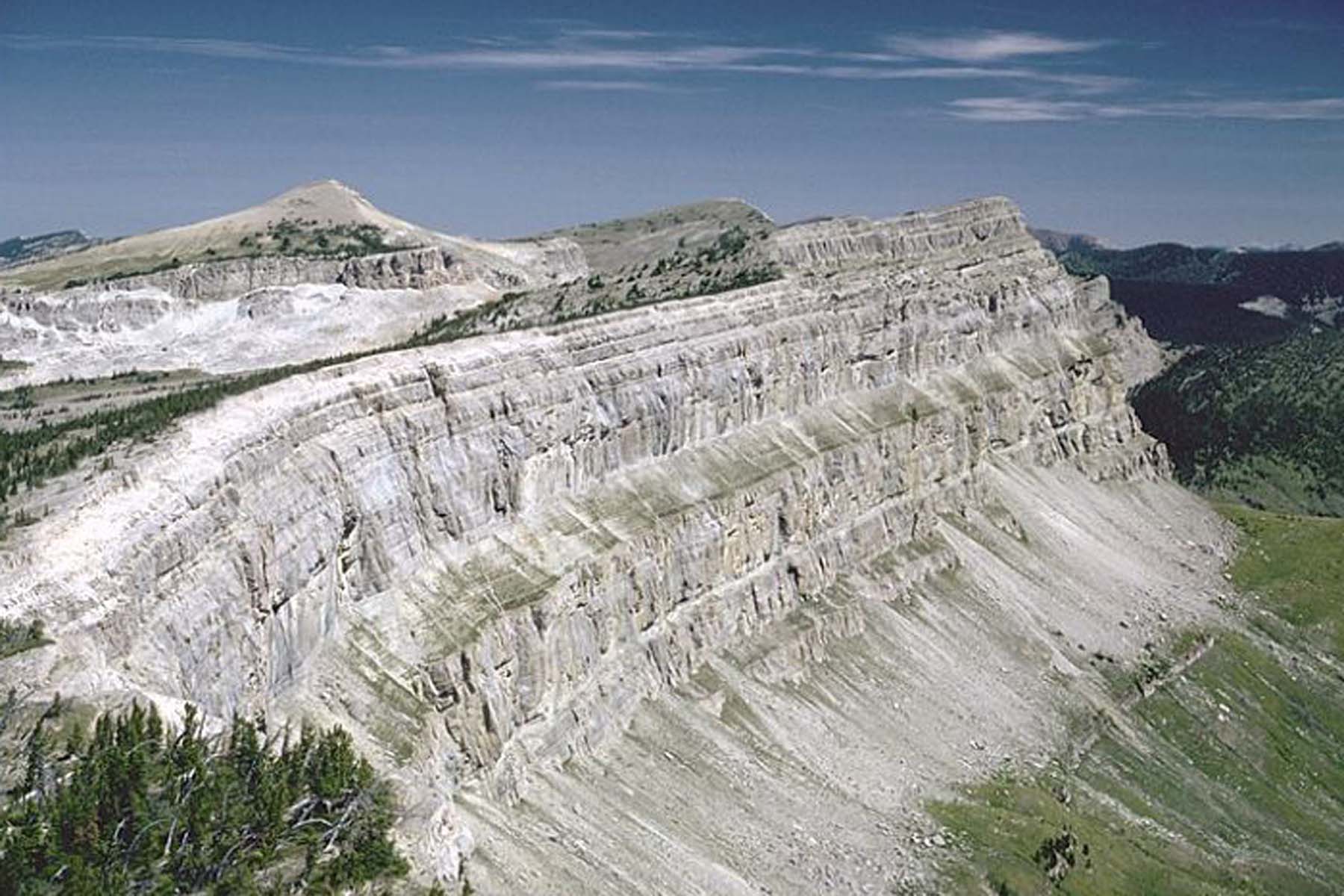
More tribal pressure to terminate oil leases in the Badger-Two Medicine region. . .
The chief of the Blackfeet Nation has asked President Barack Obama to cancel oil leases in the culturally and environmentally significant Badger-Two Medicine area east of the divide.
Chief Earl Old Person, a member of the Blackfeet Tribal Business Council since 1954, sent a letter to Obama last month asking him to help protect the mountainous area between the Blackfeet Reservation, Glacier National Park and the Bob Marshall Wilderness. He also invited the president to Blackfeet Country to see the area for himself.
The Badger-Two Medicine is an important area in the Blackfeet creation story and is known as the “Backbone of the World.” In 1982, the U.S. government leased land within the Badger-Two Medicine to oil companies and of the 47 land leases originally issued, 18 remain. For years, tribal officials have tried to terminate the leases but in 2013 the final leaseholder, Sidney Longwell of Solenext, LLC, filed a lawsuit so it could begin drilling for oil. No ruling has been made in the case.
The bears are definitely on the move. We spotted a black bear right on the south edge of Coram yesterday, quite close to a number of buildings . . .
With the arrival of spring, bears are emerging from their mountain dens and descending into the lower valleys in search of food.
Earlier this week, tribal biologists located a radio-collared female grizzly bear at the base of the Mission Mountains on the Flathead Reservation.
Stacy Courville, wildlife program bear biologist with the Confederated Salish and Kootenai Tribes, reminds the public that springtime is accompanied by an increase in bear activity. After stirring awake, bears begin seeking food sources, and they are often drawn to items such as garbage, pet food, bird feeders and chicken coops. Food-depleted bears can react aggressively if they’re surprised while feeding.
Hunting pressure decreased the number of wolves in Montana . . .
The number of gray wolves in Montana continues to decline under the state’s management efforts but remains above federal recovery goals, according to the Fish, Wildlife and Parks department.
State officials released an annual report detailing the status of the controversial animal, which remains the subject of scrutiny and debate throughout the West.
Jeff Mow, Superintendent of Glacier National Park, reiterated the park’s opposition to North Fork Road paving and expressed a lot of concern over the safety of oil shipments along the park’s boundary . . .
Glacier National Park superintendent Jeff Mow said last week he is not in favor of paving the North Fork Road to the Camas Road, a project strongly supported by Columbia Falls city officials.
The goal of paving the North Fork Road has been debated for years, but now Columbia Falls business and civic leaders are pitching the idea not only to boost tourist traffic through town but as an emergency route for West Glacier in case of a rail disaster.
City leaders told Sen. Jon Tester on March 20 that the Park supports paving the North Fork Road, but Mow disagreed.
The western U.S. states really do not want a federally managed sage grouse conservation effort . . .
A group of Western-state governors has released a report on voluntary efforts in 11 states to conserve the habitat of sage grouse as part of an effort to avoid a federal listing of the bird under the federal Endangered Species Act.
The 32-page “2014 Sage-Grouse Inventory” released Thursday by the Western Governors’ Association identifies conservation work during the year and is accompanied by a 101-page appendix listing efforts since 2011.
It’s that time again. The annual Bob Marshall Wilderness Complex public meeting is coming up on Saturday, April 11, at the Choteau Library in Choteau, Montana. It starts at 10:00 a.m.
The public is invited to the annual Bob Marshall Wilderness Complex (BMWC) Public Meeting on Saturday, April 11 starting at 10 AM at the Choteau Library in Choteau, Montana.
“This is a great annual opportunity to meet with the National Forest Wilderness Managers and Montana Fish and Wildlife staff”, says Deb Mucklow, Spotted Bear District Ranger. “The challenges of managing wilderness are often not understood. Historically the participants at this annual meeting have helped with solutions or ideas that we as managers may be able to incorporate.” All of the participants will be asked to share how they contribute to the wilderness and sustaining the character of the Bob Marshall Wilderness Complex. In addition, updates will be provided on specific activities and projects, and ongoing monitoring across the Bob Marshall Wilderness Complex. The monitoring and actions are a piece of the Limits of Acceptable change for the Bob Marshall Wilderness Complex (BMWC).”
The BMWC plan was developed by interested individuals, partners and agency representatives. The Bob Marshall Wilderness Complex is comprised of the Bob Marshall Wilderness, Great Bear Wilderness, and Scapegoat Wilderness and jointly they are an area of more than 1.5 million acres. This is the third largest wilderness complex in the lower 48 states. The complex is managed by four national forests (Flathead, Lolo, Helena, and Lewis & Clark) and five ranger districts (Spotted Bear, Hungry Horse, Seeley Lake, Lincoln, and Rocky Mountain).
Recently the Forest managers and Fish and Wildlife staff prepared the annual BMWC newsletter which is available on the Flathead National Forest Web page under Special Places (http://www.fs.usda.gov/attmain/flathead/specialplaces). This newsletter gives background and highlights of information that may be shared at the public meeting.
For additional information, please contact the Spotted Bear Ranger District at (406) 387-3800.
The death from bird flu of a captive gyrfalcon in Columbia Falls created a stir last week. The gyrfalcon probably caught it from a wild duck, but there is concern about any possible spread to domestic poultry . . .
The death of a captive gyrfalcon here was caused by highly pathogenic avian influenza, the Montana Department of Livestock confirmed Tuesday.
It’s the first case, outside of hunter-harvested wildlife, reported in Montana in years.
Just thought you’d like to know that Camas Road is officially open. They probably didn’t even have to plow it this year — just sent someone down to open the gate.
Sen. Jon Tester is joining the chorus asking for cancellation of oil and gas leases in the Badger-Two Medicine area . . .
U.S. Sen. Jon Tester has joined Blackfeet tribal leaders in their efforts to have all federal oil and gas exploration leases in the Badger-Two Medicine area next to their reservation canceled.
In a letter Friday to Interior Secretary Sally Jewell and Agriculture Secretary Tom Vilsack, the Montana Democrat said he agreed with the Blackfeet Tribe that Jewell and Vilsack’s departments “clearly have not just the moral obligation but also the legal authority to cancel all existing leases in the Badger-Two Medicine area.”
Tester visited the Blackfeet Reservation earlier this month and discussed the issue with tribal leaders. They maintain that 47 leases in the 165,000-acre area were illegally granted by the Bureau of Land Management and the U.S. Forest Service in 1982.
Seems this public-private collaboration idea is spreading . . .
An unprecedented attempt to protect sage grouse habitat across parts of more than 900 square miles of privately owned land in Nevada will begin under a deal Thursday involving the federal government, an environmental group and the world’s largest gold mining company.
The agreement comes as the U.S. Fish and Wildlife Service approaches a fall deadline for a decision on whether to protect the greater sage grouse, a bird roughly the size of a chicken that ranges across the West, under the Endangered Species Act.
Commercial operations, including mining companies and oil and gas producers, are entering into such deals in an effort to keep the bird off the threatened or endangered list because the classification would place new restrictions on their work.