All posts by nfpa

Grizzlies were raiding Montana farms. Then came some formidable dogs.

Grizzly bears, gaping mawsA very interesting article from the New York Times discussing how folks on the east side of Montana’s Continental Divide are learning to deal with grizzlies as they return to their historic range . . .

The grizzly bears feasted on piles of spilled wheat and barley. They broke into grain bins. They helped themselves to apples from family orchards. Sometimes they massacred chickens or picked off calves.

Once nearly eradicated from the lower 48 United States, grizzlies are growing in population and spreading onto Montana’s plains, where they had not roamed in perhaps a century.

In their travels, they’ve acquired a fondness for the good eating to be found in farmyards.

Continue reading . . .

Montana passes landmark wildlife crossing legislation

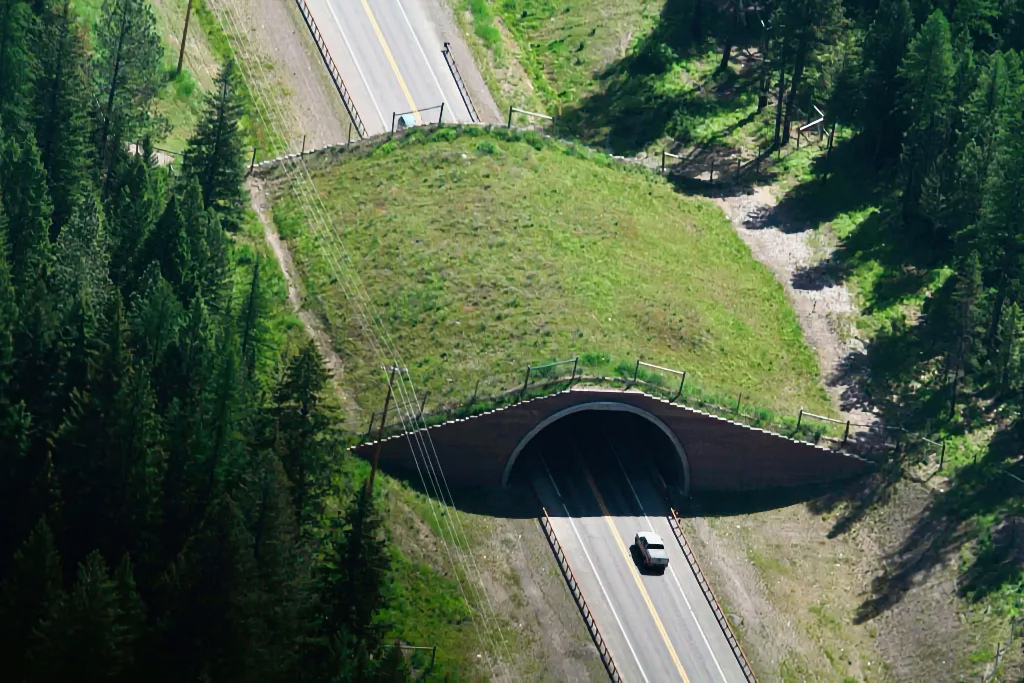
A wildlife overpass along U.S. Highway 93 in Montana - Kylie Paul, Center for Large Landscape Conservation
A wildlife overpass along U.S. Highway 93 in Montana – Kylie Paul, Center for Large Landscape Conservation

Montana now has some dedicated funding to support wildlife crossing efforts . . .

Montana has taken a major step toward protecting both wildlife and drivers with the passage of two groundbreaking pieces of legislation this spring: House Bill 855 and House Bill 932. Together, the bills establish the state’s first dedicated funding streams for wildlife crossings, structures proven to reduce collisions and improve landscape connectivity.

Montana currently has the second-highest per capita rate of wildlife-vehicle collisions in the United States. The average driver faces a 1 in 53 chance of hitting an animal each year and 13 percent of total reported collisions in the state related to wildlife, according to the Montana Department of Transportation. These crashes pose serious risks to people and animals alike, and cost Montanans tens of millions of dollars annually.

Kylie Paul, road ecologist at the Center for Large Landscape Conservation, a nonprofit creating strategies to solve large-scale challenges like climate change and habitat fragmentation, told Mountain Journal the nonprofit supported the legislation.

“In Montana, we have  a lot of roads cutting through intact wildlife habitats and migration routes,” Paul said. “Many are high-speed, low-light and, to some level, still low-traffic highways which help animals still feel safe to move across them.”

Read more . . .

What could the end of the Roadless Rule mean for Montana’s national forests?

Flathead National Forest

Here’s an excellent, objective and informative long-form article on the Roadless Rule written by Tristan Scott of the Flathead Beacon. Highly recommended . . .

When U.S. Department of Agriculture Secretary Brooke Rollins announced last month that the administration was taking steps to rescind a decades-old policy to restrict road building and timber harvests on 58.5 million acres of national forest lands, she justified it as another step by the Trump administration to remove “absurd obstacles” that have stymied forest management and intensified the threat of wildfire.

Continue reading at the Flathead Beacon . . .

NFPA announces 2025 Kreck/Fields Scholarship recipients

The North Fork Preservation Association (NFPA) is pleased to announce the 2025 recipients of the Kreck/Fields Scholarship. The scholarship honors Dr. Loren Kreck and Edwin Fields and is given annually by NFPA. Dr. Kreck, DDS, dedicated much of his life to wilderness and natural resource conservation on the Flathead National Forest and was a key activist in the designation of the Great Bear Wilderness and the protection of the North Fork of the Flathead River Valley. Edwin Fields, a well respected builder in the Flathead Valley, spent decades as an activist for protecting Montana’s remaining wilderness and wild places, including founding and serving as the president of Headwaters Montana. After their respective passings, both the Kreck and Field families bequeathed funds to Headwaters. Ultimately, the Headwaters board voted to sunset the organization, and as a result, transferred these funds to the NFPA for the management and administration of the Loren Kreck/Edwin Fields Wilderness Scholarship.

This year, NFPA was able to fund three $2000 scholarships. The pool of applicants was quite competitive. The recipients are Elizabeth Tobey, law student at Alexander Blewett III School of Law, University of Montana; Davis Paul, also a law student in Missoula and Abigail Fuseler, PhD Candidate In Forest and Conservation Sciences at the University of Montana. CONGRATULATIONS TO ALL THREE RECIPIENTS.

FWP releases grizzly bear conflict dashboard

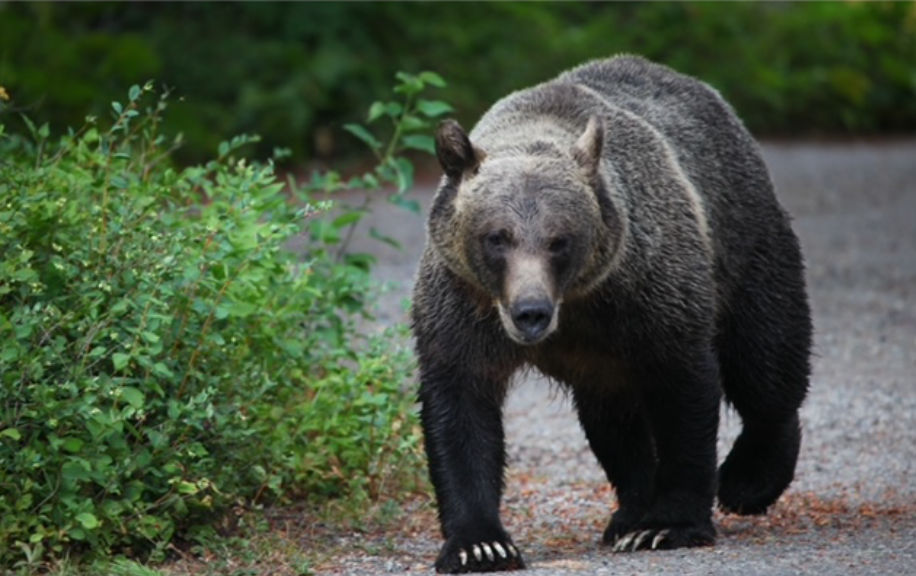
Grizzly bear strolling along a roadFrom the FWP press release . . .

HELENA – In Montana, grizzly bear populations have expanded in both number and in distribution along both sides of the Continental Divide and in the Greater Yellowstone area. In many instances, grizzly bears are expanding into areas they haven’t been in more than a century.

With this expansion comes an increased focus by Montana Fish, Wildlife & Parks to help people and communities stay safe and avoid conflicts. Across Montana’s bear country, FWP staff are working hard to respond to conflicts, provide tools to landowners and communities to prevent conflicts, and to educate people on how to stay safe.

As part of that effort, FWP unveiled a new Grizzly Bear Conflict Dashboard as a resource for information on where FWP staff are helping landowners and communities with conflicts and the types of conflicts people are experiencing.

Read full press release . . .

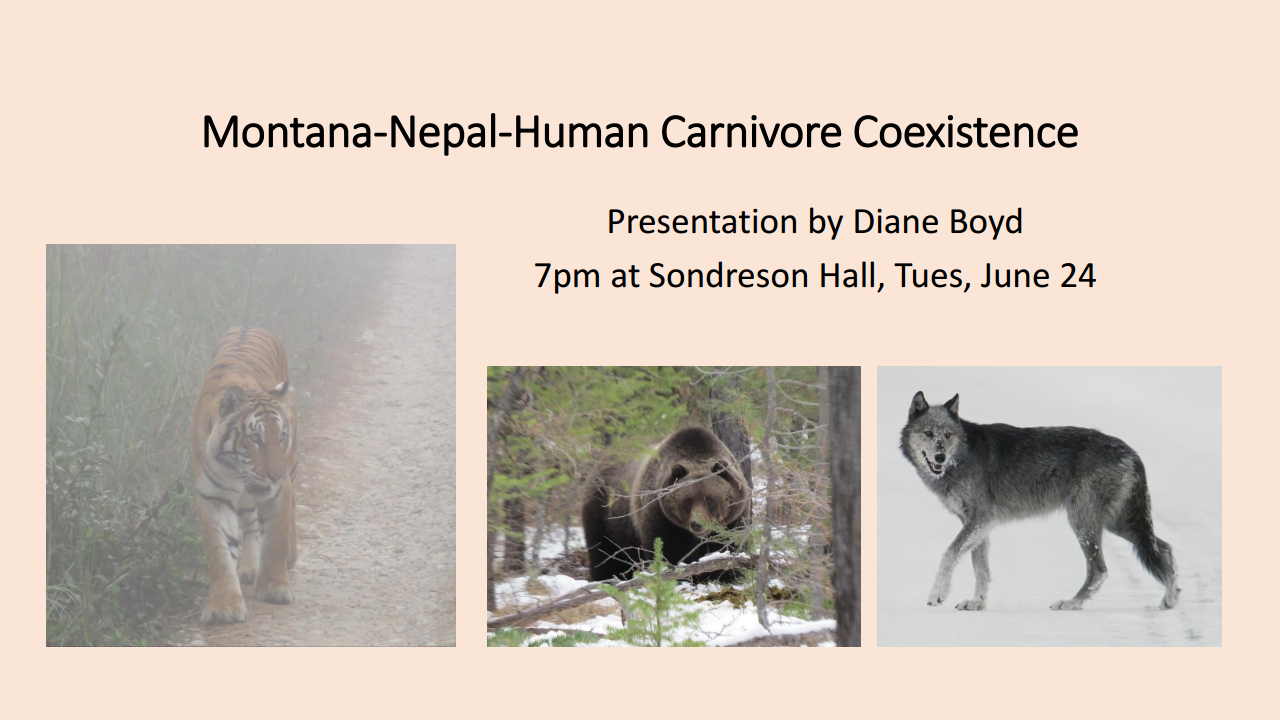
‘Montana-Nepal-Human Carnivore Coexistence’ presentation at Sondreson Hall, 7pm, June 24

On Tuesday, June 24th, 7:00pm at Sondreson Hall we welcome back North Fork neighbor, author, and world-renowned wildlife biologist, Diane Boyd. She will discuss wildlife-human challenges through the parallel lenses of Montana-Nepal-Human carnivore coexistence. A presentation of photos and videos will complement the conversation.

A short reading from A Woman Among Wolves and book signing will follow.

Snacks will be provided at both presentations and Q&As will follow!

The Phantom of the Rockies

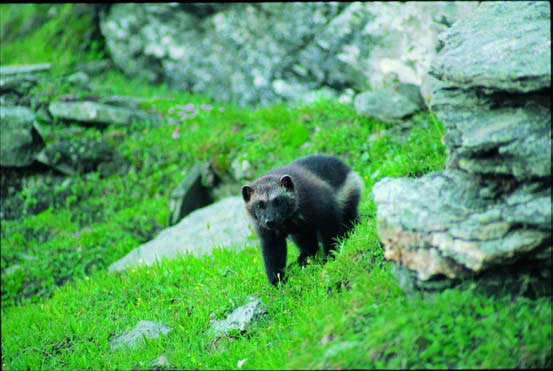
Roaming wolverine - USFWS
Roaming wolverine – USFWS

Great article about wolverines from the Mountain Journal . . .

Mist rises off the river, wetting our faces as we ford with chunks of slush bouncing off our waders. Stabbing the riverbed with ski poles, Mike Schadell and I struggle through the swift current, trying to find purchase on slimy river cobblestones. Our packs are weighed down by skis, dangling boots, three days of gear and a deer’s hindquarter.

We’re in Glacier National Park for an ongoing, multiyear, parkwide, noninvasive citizen science wolverine study in January 2010. Biologists had gathered data to estimate how many wolverines reside within the protected area’s boundaries. We each carry deer hindquarters to lure the largest mustelids to a post where steel wool brushes snag the animal’s hair, which we will gather and use to collect DNA.

Once across the river, we ski the undulating terrain through a mosaic forest of burnt black lodgepole pine, Douglas-fir and still-living, needleless larch trees. A fire raged through here years ago charring most of the woods. Deer, moose and wolf tracks punctuate the snow. A pine marten, a smaller member of the mustelid family, scampers from behind a tree. Its curiosity outweighs its elusive nature for a moment before it darts back into a dark hole at the base of an upturned root wad.

Continue reading . . .

Trump administration cuts back forest protections to increase logging

Flathead National Forest

No big surprise. Whether it will actually lead to more timber production is an open question . . .

[Click here for map of areas under consideration for increased logging. (PDF, 19.7MB)]

President Donald Trump’s administration acted to roll back environmental safeguards around future logging projects on more than half of U.S. national forests under an emergency designation announced Friday that cites dangers from wildfires.

Whether the move will boost lumber supplies as Trump envisioned in an executive order last month remains to be seen. Former President Joe Biden’s administration also sought more logging in public forests to combat fires, which are worsening as the world gets hotter, yet U.S. Forest Service timber sales stayed relatively flat under his tenure.

Agriculture Secretary Brooke Rollins did not mention climate change in Friday’s directive, which called on her staff to speed up environmental reviews.

Continue reading . . .

FWP releases final Montana Wolf Management Plan

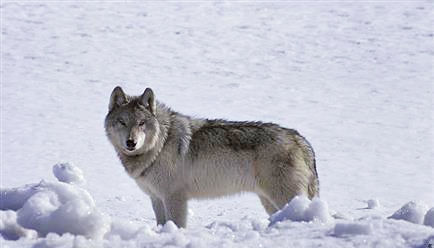
Gray Wolf - Adam Messer-Montana FWP
Gray Wolf – Adam Messer-Montana FWP

The press release is quoted in full here. There’s a link to the final plan at the end.

Mar 26, 2025 2:07 PM
HELENA – Montana Fish, Wildlife & Parks released the 2025 Montana Gray Wolf Conservation and Management Plan today, wrapping up an extensive public process to capture updates to wolf management strategies and research into a new plan.

The final 2025 Montana Gray Wolf Conservation and Management Plan (2025 Wolf Plan) incorporates updates in wolf-related research, more than 20 years of management experience, evolution in conflict management, new laws, social perspectives, and public input.

“The former wolf plan served us well, but it was time to make sure our management plan contained the evolutions we’ve made in wolf research, monitoring, conflict management, and the changes to the legal framework we operate under today,” said FWP Director Christy Clark.

The 2025 Wolf Plan builds on a foundation of FWP wolf management: monitoring populations, tracking harvest, effective conflict management, and flexibility to integrate evolutions in science.

The 2025 Wolf Plan shifts a key counting metric from the number of breeding pairs to the number of wolves representing at least 15 breeding pairs. The final plan establishes that 450 wolves would ensure 15 breeding pairs. Population estimates will continue to be determined by the peer-reviewed Integrated Patch Occupancy Modeling method, or iPOM. The final plan also reflects the current depredation prevention and response program.

“Wolf management discussions continue to draw a lot of attention from people in Montana and around the world,” Clark said. “The 2025 Wolf Plan will ensure those conversations can be grounded in current science and the research FWP is doing every day.”

To see the final plan, click here.