For those of you who can’t wait on the mail, the North Fork Preservation Association Summer 2018 Newsletter is now available online in the “Newsletters” section of the website. Enjoy!
Here’s a partial table of contents:
Announcement of NFPA Annual Meeting, July 28
New T-shirts on sale at Annual Meeting!
Victories While Under Threat (President’s letter)
Montana’s Wilderness Areas Are Under Attack
Working Group Reports:
– Watershed Currents
– Wonderful Wildlife
– Wilderness Matters
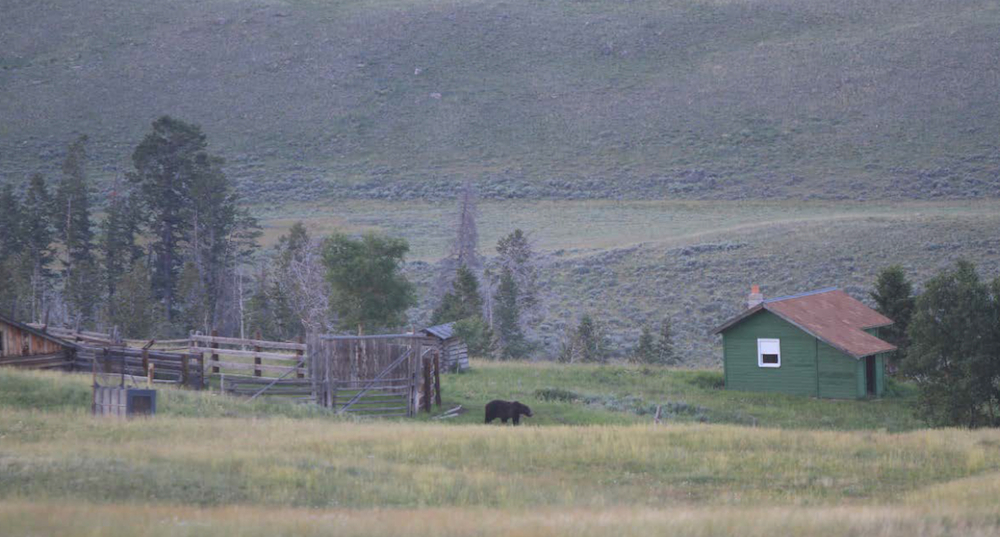
Grizzly on ranch east of Yellowstone – Wyoming Game and Fish Department
Now, here’s an interesting approach to combating Wyoming’s grizzly bear hunt. Talk about putting your money where your mouth is . . .
Jane Goodall is a global icon, perhaps the most admired living environmentalist and legendary for her research with chimpanzees. Cynthia Moss is famous for her conservation work in eastern Africa battling elephant poachers and speaking out against trophy hunting.
Within the last few days, Goodall, 84, and Moss, 78, entered a lottery hoping to win a coveted hunting license in Wyoming allowing them to sport shoot a grizzly bear in the Yellowstone region. They have no aspirations to actually kill a bruin. Their maneuver is part of a mass act of civil disobedience to protest Wyoming’s controversial hunt of up to 22 grizzlies—the first in 44 years—slated to commence only weeks from now.
Called “Shoot ‘em With A Camera, Not A Gun,” the impromptu campaign, spearheaded mainly by women, has caught hunting officials in Wyoming off guard. It has also created a groundswell among those who condemn the state’s recommencement of a trophy season on grizzlies just a year after they were removed from federal protection. In May, Wyoming’s wildlife commission approved the hunt unanimously 7-0.
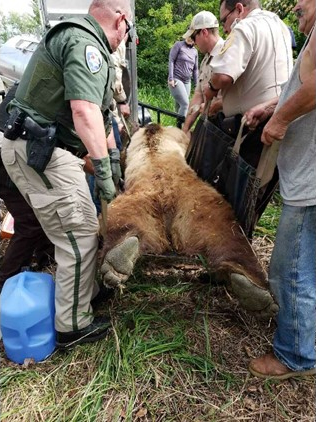
Personnel load up a grizzly bear that was darted in Conrad, MT on June 4, 2018. – photo by Donna Hepp
Tim Manley posted the following note to Facebook yesterday letting us know that Montana Fish, Wildlife and Parks had “translocated” a couple of grizzlies to the North Fork:
“Hi, I wanted to let you know that two sub-adult grizzly bears were translocated to the NFK drainage on June 5th. A 3 year old male captured in Conrad was released on the Coal Cr State Forest in Coal Cr. The second bear is a 2 year old male captured just NW of Columbia Falls. He was released on the Canadian border at Moose City. He has moved north into B.C. I will give an update at Sonderson Hall Sunday evening.”
What he didn’t mention is that the grizzly released in the Coal Creek drainage got the heave ho because he was interfering with everyone’s golf game at the Pondera Golf Course in Conrad. See “Montana golfer demands refund due to course hazard: Grizzly bear” for details.
Here’s a good article in the Hungry Horse News on the federal habitat plan intended to provide protection for grizzly bears in this corner of the country even after they are removed from the Endangered Species List . . .
The U.S. Fish and Wildlife Service signed off on plan May 16 that looks to maintain grizzly bear habitat and recovery along the Continental Divide even after the bear is removed from the Endangered Species List.
The Habitat Recovery Criteria for the Northern Continental Divide Ecosystem, which includes about 8 million acres of land along the Divide from Glacier National Park south to Ovando, looks to maintain road density and other standards on federal lands, though it does include some wiggle room.
Roads and bears over the years have been a controversial subject, as federal land agencies — most notably the Forest Service, have either closed or completely torn out hundreds of miles of dirt roads that once criss-crossed the Forest. Studies have found that roads and grizzlies don’t mix — not because grizzlies won’t cross roads — they will — but because open roads often result in poaching or other forms of bear deaths due to interactions with humans.
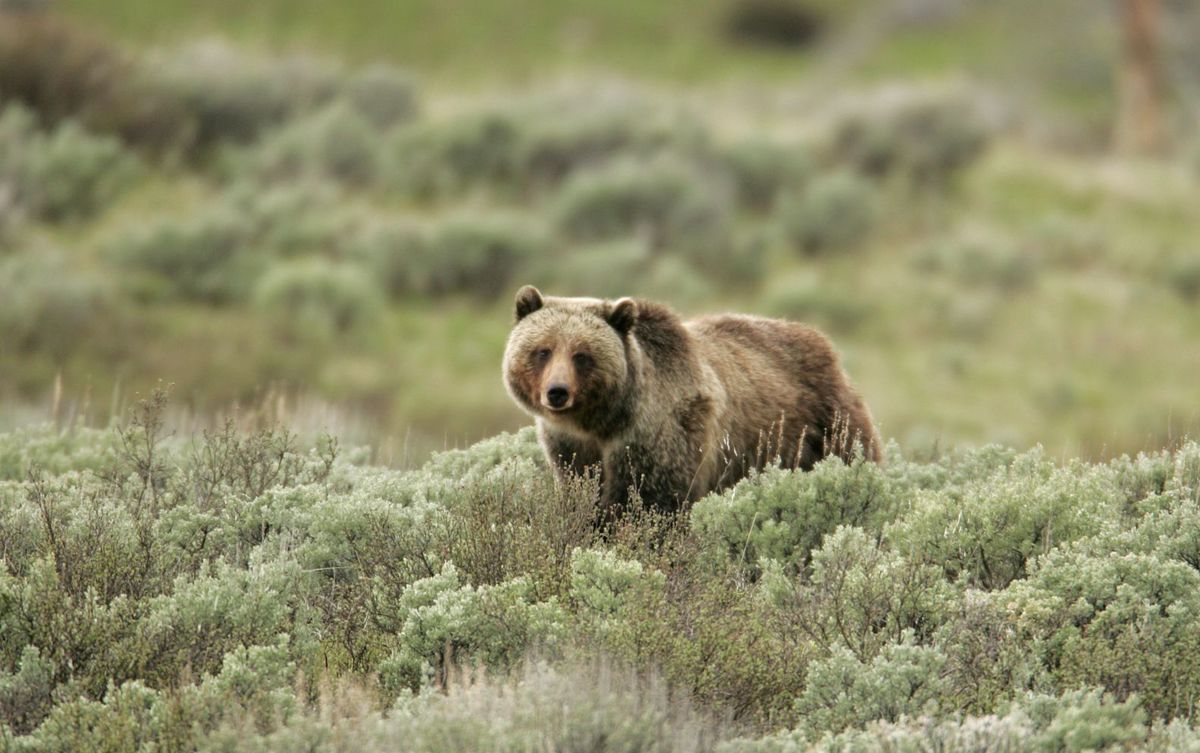
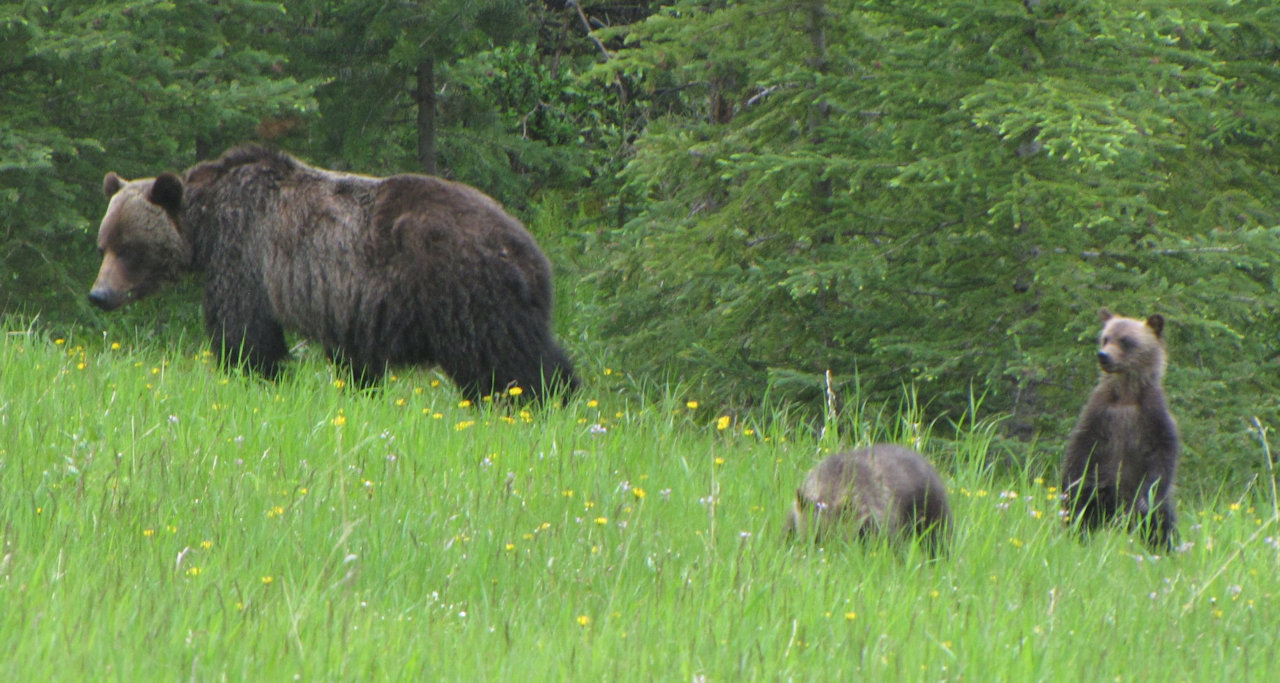
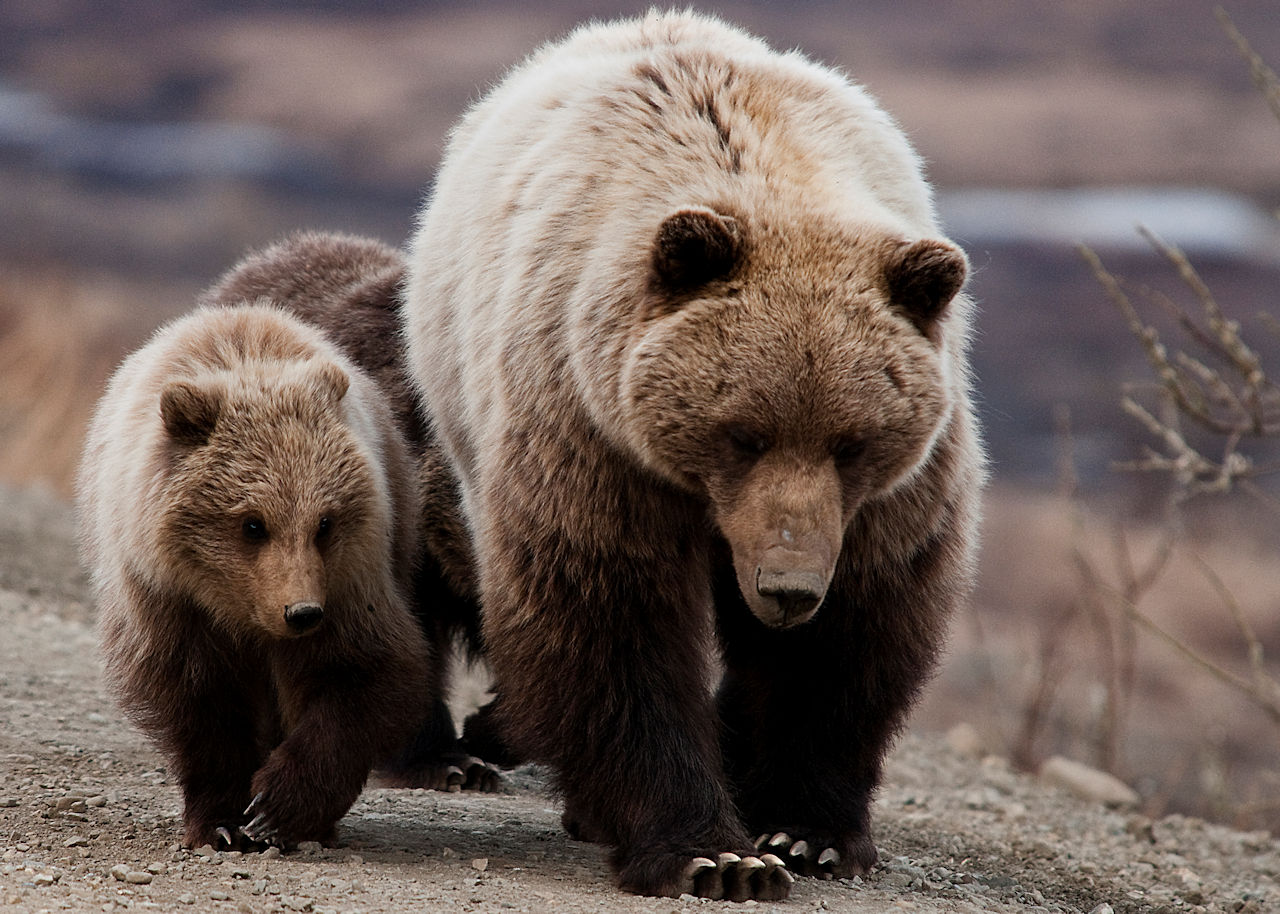
Grizzly Sow with Two Cubs – – Wikipedia en:User Traveler100
Amid substantial debate, plans for removing the grizzly bear from the Endangered Species List proceed apace . . .
A crucial piece of the plan to hand the biggest population of grizzly bears in Montana over to state management was released on Thursday.
The U.S. Fish and Wildlife Service’s Habitat-Based Recovery Criteria for the Northern Continental Divide Ecosystem describes what grizzlies there need to remain off Endangered Species Act protection if the federal government decides to delist them. A full delisting plan for the grizzlies should come up for public review in June.
The Northern Continental Divide Ecosystem (NCDE) stretches from the southern tip of the Bob Marshall Wilderness Complex north to the Canadian border. It includes Glacier National Park, but does not connect to the Greater Yellowstone Ecosystem around Yellowstone National Park. An estimated 1,000 grizzly bears inhabit the NCDE.
Here’s a pretty good overview of Wyoming’s recently approved grizzly bear hunt . . .
A debate over whether the Yellowstone ecosystem’s grizzly bear population can thrive while being hunted will be put to the test this fall after Wyoming officials on Wednesday approved the state’s first grizzly hunt in 44 years.
The hunt, approved 7-0 by the Wyoming Game and Fish Commission, could allow as many as 22 grizzlies to be killed in a wide area east and south of Yellowstone and Grand Teton national parks.
Hunt proponents and opponents made last-minute pleas before the commission, which held several public meetings on the hunt around the state and tweaked the hunt rules in response to some previous comments.
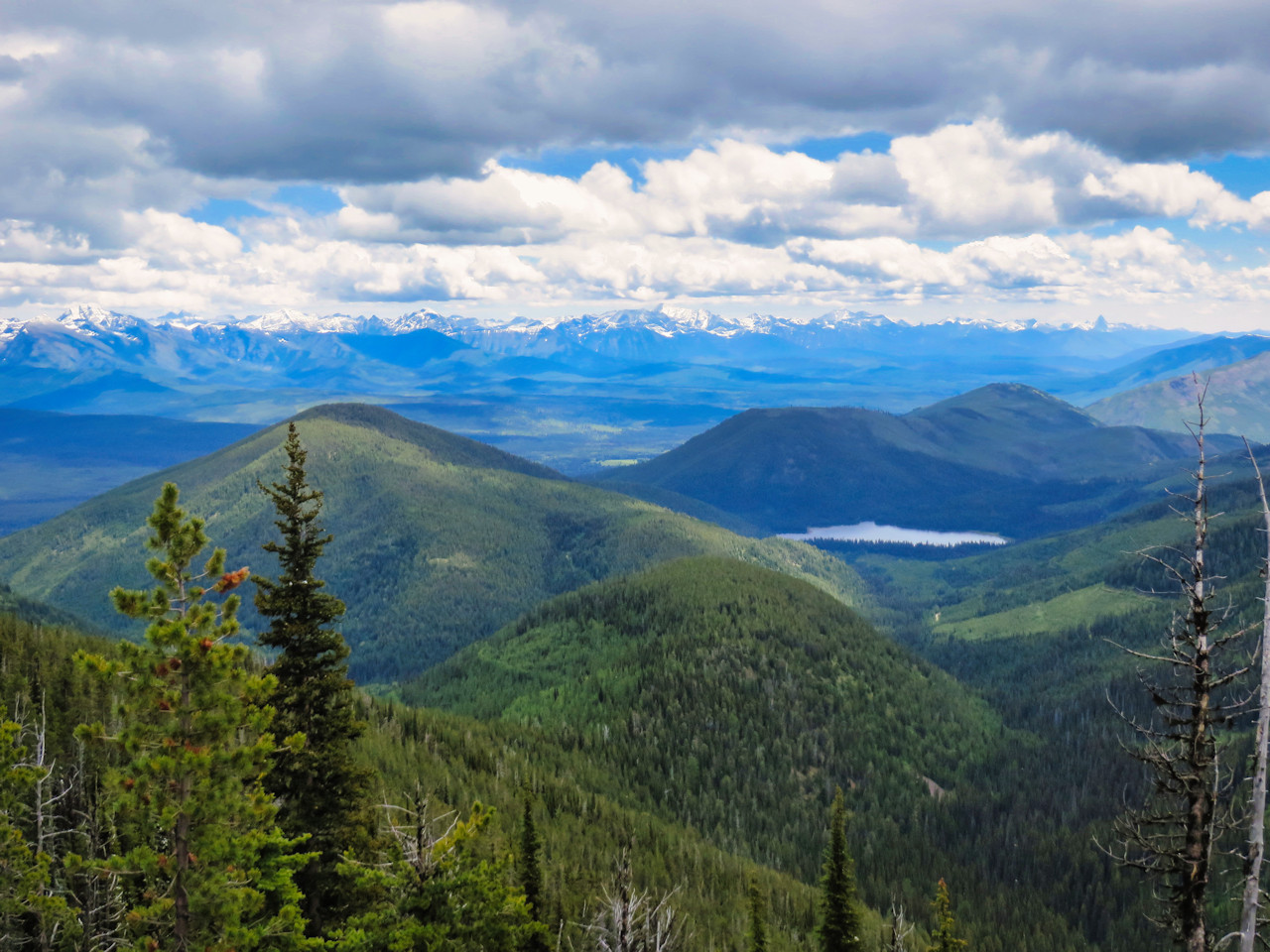
Three types of public lands: Flathead National Forest is in the foreground, left and right; Montana’s Coal Creek State Forest, including Cyclone Lake, is in the middle distance; Glacier National Park stretches across the background.
The Flathead Beacon has posted a couple of excellent, well-reasoned op-eds over the past week.
Montana Fish, Wildlife and Parks released its annual wolf population estimate recently. Short version: They think there are abut 900 wolves in the state now, up from 851 a year earlier . . .
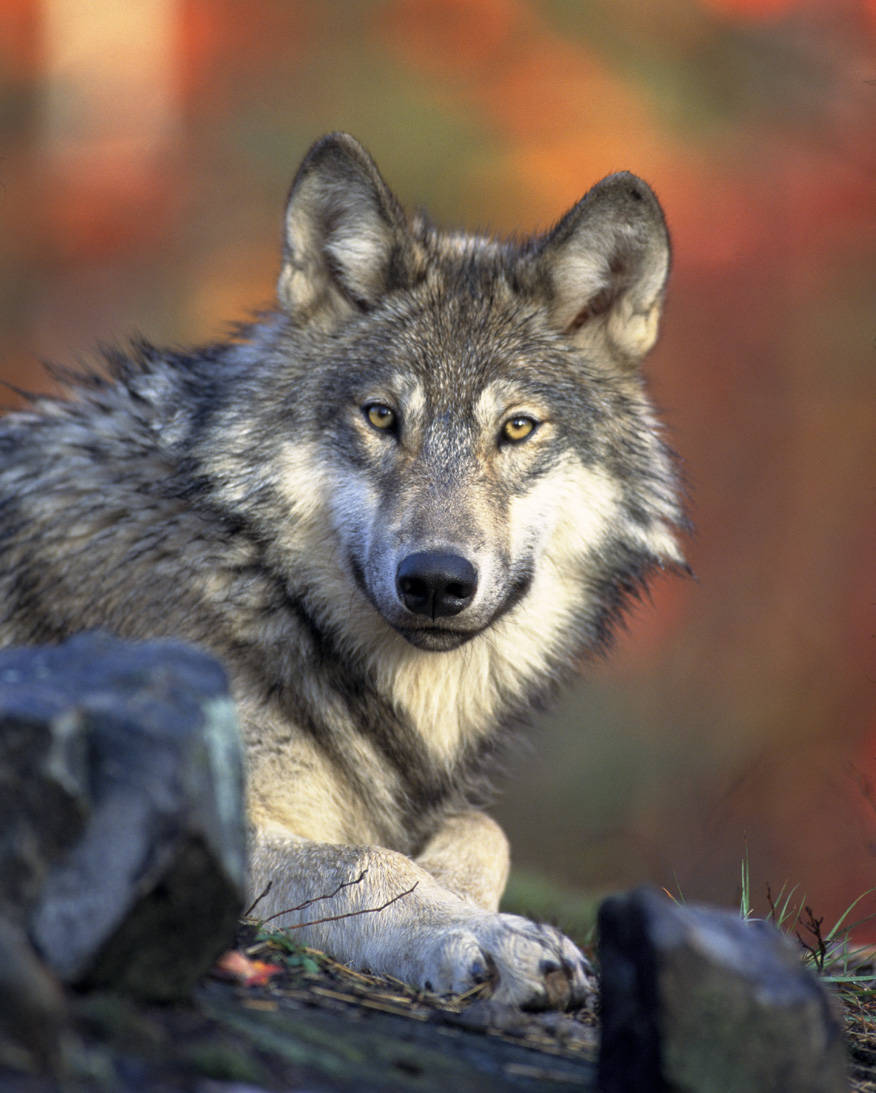
There are roughly 900 wolves in Montana according to the 2017 Montana Gray Wolf Program Annual Report, the 13th consecutive year that Montana has exceeded wolf recovery goals.
FWP now estimates wolf numbers using a method called Patch Occupancy Modeling. The old way of trying to count wolves from an airplane became a less accurate picture of wolf numbers as the wolf population grew beyond the agency’s ability to count them. Additionally, the old method was expensive and took a lot of staff time.
FWP has used POM estimates along with the old minimum counts for several years. POM uses wolf sightings reported to FWP during annual deer hunter surveys, known wolf locations, habitat variables and research-based wolf territory and pack sizes to estimate wolf distribution and population size across the state. The most recent POM estimates were 961 wolves in 2015 and 851 in 2016. Data has been gathered for 2017 estimates and analysis will take place during summer 2018.
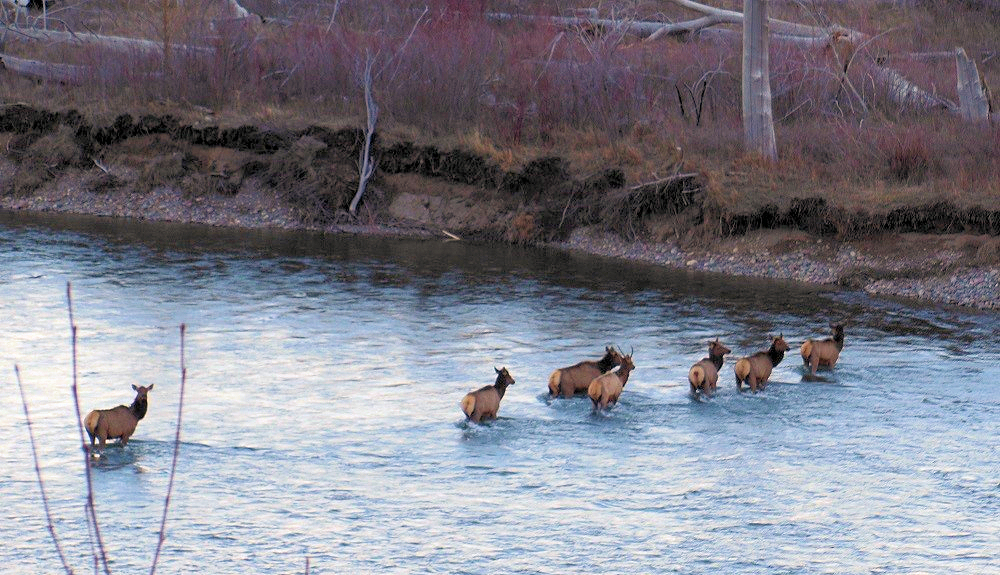
Elk Crossing North Fork of Flathead River, north of Camas Bridge, March 4, 2016 – Greg Evans
The Flathead Beacon has a good article on conservation project funding in the valley . . .
A slate of conservation projects are nearing completion or recently came to fruition in the Flathead Valley, underscoring the importance of private donations and a federal program that funds a suite of conservation projects, including land acquisition and grants to state and local entities for everything from conservation easements to municipal parks.
Recently, the Land and Water Conservation Fund helped complete the next phase of a 13,400-acre conservation easement northwest of Whitefish Lake, providing $2 million for the final piece of the multi-phased Whitefish Lake Watershed Project, which helps protect wildlife, promote timber production, and allow public access for hunting, fishing, hiking, mountain biking, and other outdoor pursuits.
The conservation and recreation community has praised the easement because it protects critical fish and wildlife habitat and provides continued public access for outdoor recreation, while also securing the city of Whitefish’s water supply, 20 percent of which is drawn from Whitefish Lake.