The BBC Planet Earth II team left some remote cameras in the Canadian Rockies hoping to film grizzly bears and got more than they bargained for . . .
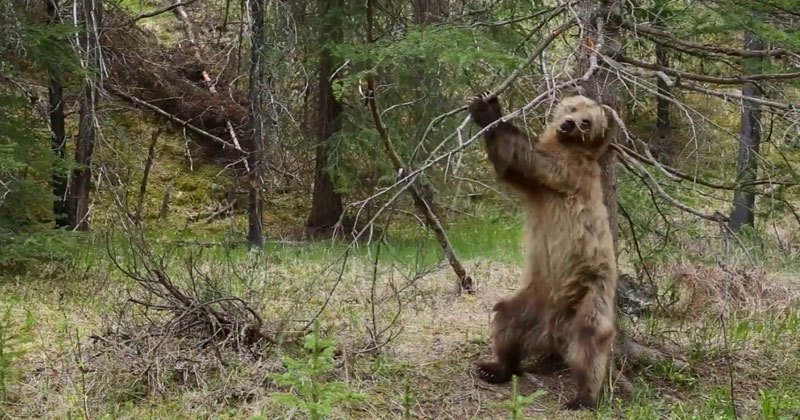
The BBC Planet Earth II team left some remote cameras in the Canadian Rockies hoping to film grizzly bears and got more than they bargained for . . .
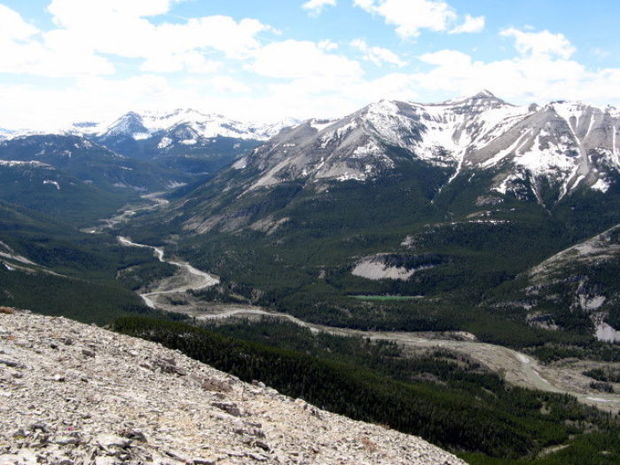
Looks like more lease cancellations in the Badger-two Medicine region are likely . . .
Blackfeet tribal leaders, conservationists and cultural preservationists have made numerous pilgrimages to Washington, D.C. this year in hopes of furnishing permanent protections on the wild and sacred Badger-Two Medicine region, which for more than three decades has been threatened with industrialization.
This week, their efforts are expected to pay off.
Chief Earl Old Person and the Blackfeet Nation’s elected leadership arrived in the capital this week to underscore their long-standing request that federal land managers cancel a suite of remaining undeveloped oil and gas leases on the 130,000-acre Badger-Two Medicine, which lies on the Rocky Mountain Front, bounded on the north by Glacier National Park and the east by the Blackfeet Indian Reservation.
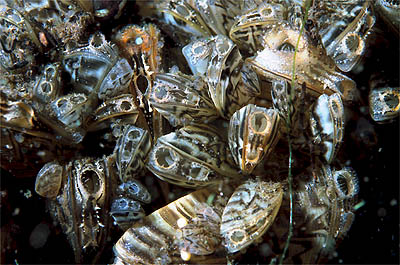
For the first time, invasive mussel larvae have been detected in Montana waters. In response, Glacier Park has immediately shut down boating in the park while they double check everything.
Here’s the meat of the official press release . . .
In response to the recent detection of invasive mussel populations in central Montana, Glacier National Park is issuing an interim boating closure within all park waters, in accordance with the park’s Aquatic Invasive Species (AIS) Action Plan. The closure includes both motorized and hand propelled watercraft.
The 2014 plan calls for this immediate closure when invasive mussels are detected within a waterway in the State of Montana, as was announced on November 9 by Montana Fish Wildlife, and Parks.
The park will begin an assessment period to conduct testing, inspect park boats, and evaluate the risk boats pose to park waters and waters downstream from the unintended introduction of invasive mussels. The assessment will likely include the evaluation of further tests of waters across the State of Montana during the summer of 2017. The closure will remain in place during the assessment period, which will extend until the nature of the threat is better understood.
“Park scientists will work diligently with the State of Montana and other water quality experts to understand the scope of this threat, and identify steps the park will take to further protect our waters in the Crown of the Continent,” said park superintendent Jeff Mow.
Glacier National Park sits at the top of three continental scale watersheds. Water from the park drains into the Columbia, Missouri, and South Saskatchewan Basins. Protecting park waters from an infestation is important not only for the park’s ecosystem, but also to economic and ecological interests downstream.
Beginning in 2011, the park initiated a mandatory boat inspection and launch permit program to reduce the risk of infestation of park waters by invasive mussels. Since that time, approximately 1,000 motorized boat permits were issued annually. The park also required self-inspection and AIS-free certification of non-motorized watercraft. These boats come from many states across the country, including those with established populations of invasive mussels.
In 2016, launch permits were issued to boats registered in 13 mussel positive states following inspection.
See also: Invasive Mussel Larvae Found in Montana Reservoir (Flathead Beacon)
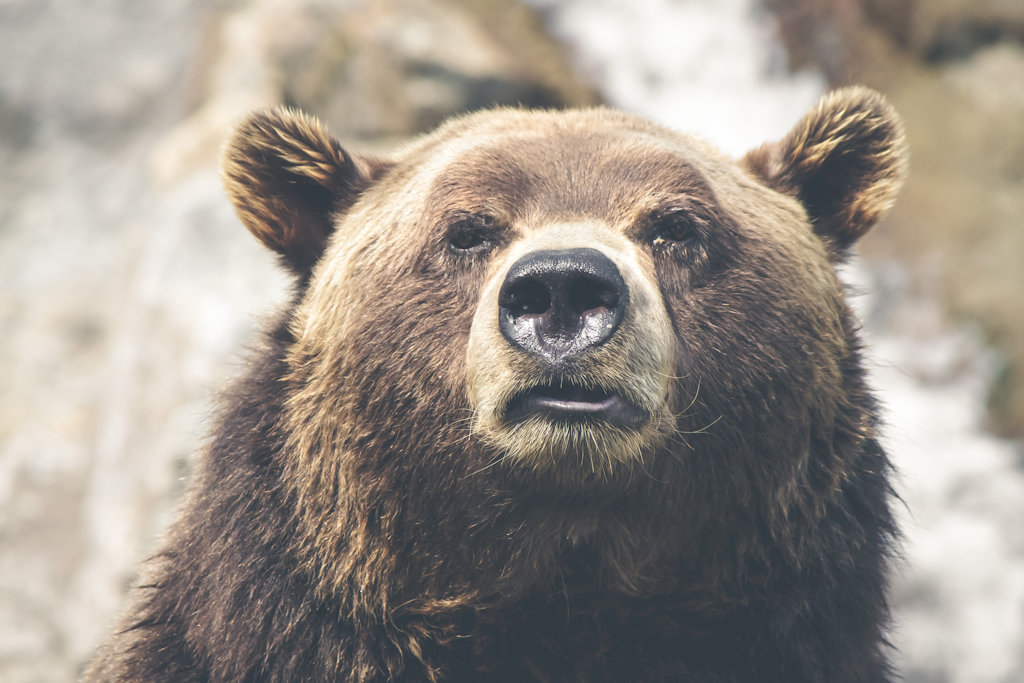
It’s that time of year. Montana Fish, Wildlife and Parks is busy dealing with nuisance grizzlies as they fatten up ahead of winter hibernation. One two-year-old delinquent was captured near the county landfill and turned loose up the North Fork’s Whale Creek drainage . . .
Wildlife managers captured a 5- or 6-year-old, 365-pound, adult male grizzly bear above Lake Blaine on the east side of the Flathead Valley Oct. 19 after the bruin was reported to have been damaging fruit trees in the area.
Officials with Montana Fish, Wildlife and Parks relocated the bear to the east side of Hungry Horse Reservoir. It was fitted with a GPS collar and had not been captured previously
Meanwhile, managers also caught a 2-year-old male grizzly across U.S. Highway 93 from the Flathead County Landfill after the bear was reportedly eating apples at a residence.
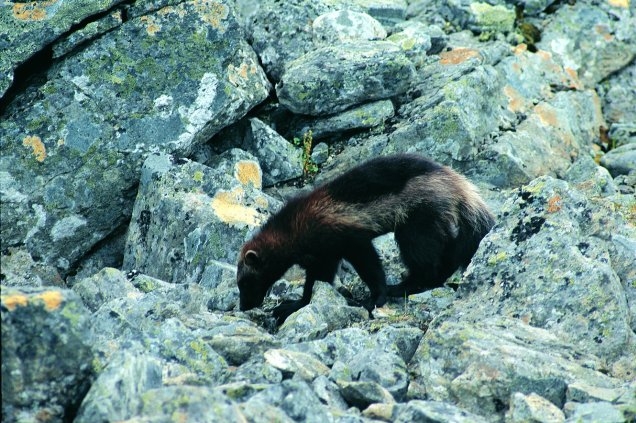
Three years ago, the U.S. Fish and Wildlife Service (USFWS) proposed listing the wolverine as “threatened” under the Endangered Species Act, but later reversed course. They got dragged into court over this action and, last April, a federal judge told them to act as quickly as possible to protect the species.
So… USFWS is now accepting comments on a proposed rule to list the wolverine as threatened. Here’s the meat of the official press release, which includes instructions on how to submit comments regarding the proposal. Note that the deadline is November 17, 2016 . . .
The U.S. Fish and Wildlife Service (Service) is reopening the public comment period on a proposed rule to list the North American wolverine as threatened under the Endangered Species Act (ESA).
The Service had proposed to list the North American wolverine, which is a Distinct Population Segment of wolverines found in the lower 48 states, but withdrew its proposal in 2014 after concluding that the factors affecting it were not as significant as were once thought.
However, the District Court for the District of Montana overturned the Service’s withdrawal, effectively returning the wolverine population to the point at which it was proposed for listing as threatened. A threatened listing would mean this wolverine population is likely to become endangered within the foreseeable future throughout all or a significant portion of its range.
The Service has considered the North American wolverine as proposed for listing since the April court decision. This Federal Register Notice is an administrative step to implement the court ruling.
The Service will be starting a new review on the wolverine population to determine whether it meets the definition of a threatened or endangered species, or if the animal is warranted for listing at all. Any decision on whether to list or not list the wolverine under the ESA will be based on the best scientific and commercial information available. We anticipate new climate change information will assist us in this decision.
The Service is asking for any scientific or commercial information on the North American wolverine population during the 30-day public comment period that closes November 17, 2016.
The proposed 2013 listing rule is available online at https://www.fws.gov/mountain-prairie/es/wolverine.php. To submit comments on https://www.regulations.gov, search for Docket Number FWS–R6–ES–2016–0106, and click on “Comment Now!”
Or, you can mail comments to: Public Comments Processing, Attn: Docket No. FWS–R6–ES–2016–0106, U.S. Fish & Wildlife, MS: BPHC, 5275 Leesburg Pike, Falls Church, VA 22041-3803.
The Service will post all information received on https://www.regulations.gov, including any personal information provided.
Wolverines look like a small bear with a bushy tail, and each of its five toes is armed with curved, semi-retractile claws. In the lower 48 states, they live in the Pacific Northwest and Northern Rocky Mountains, with occasional sightings in Colorado, California, and Nevada. Learn more at https://www.fws.gov/mountain-prairie/species/mammals/wolverine/.
The mission of the U.S. Fish and Wildlife Service is working with others to conserve, protect, and enhance fish, wildlife, plants, and their habitats for the continuing benefit of the American people. We are both a leader and trusted partner in fish and wildlife conservation, known for our scientific excellence, stewardship of lands and natural resources, dedicated professionals, and commitment to public service.
For more information on our work and the people who make it happen, visit http://www.fws.gov/mountain-prairie/. Connect with our Facebook page at http://www.facebook.com/USFWSMountainPrairie, follow our tweets at http://twitter.com/USFWSMtnPrairie, watch our YouTube Channel at http://www.youtube.com/usfws and download photos from our Flickr page at http://www.flickr.com/photos/usfwsmtnprairie/.
From an MWA announcement released this morning . . .

Don’t miss the Kalispell screening of “Our Last Refuge,”a documentary film about the sacred Badger-Two Medicine area and the decades-long struggle to protect it from oil and gas development.
The film features voices from all sides of the struggle — Blackfeet elders, local conservationists, and even the law firm pushing for oil exploration. All together, they chronicle the epic saga of this unique landscape and the current legal challenge over it, the outcome of which could determine the fate of sensitive and sacred lands nationwide.
“Our Last Refuge” is the first in-depth telling of this critical story at a moment in time when the stakes are at their highest.
Thursday, October 20, 6:30 – 8 p.m.
Flathead Valley Community College
Large Community Room, Arts & Technology Building, Room 139
777 Grandview Drive, Kalispell, MT 59901
For more information, contact Casey Perkins, MWA Rocky Mountain Front field director, at (406) 466-2600 or at cperkins@wildmontana.org.
The “Our Last Refuge” trailer can be viewed on Vineo: https://vimeo.com/183899314
Note: There is also a free panel discussion in Missoula on Tuesday, October 18, from 6:30 – 8:30 p.m. featuring Blackfeet Tribal members speaking about the Badger-Two Medicine area of the Rocky Mountain Front and the efforts of the Blackfeet and others to protect this sacred and wild area from oil and gas development.
Hosted by the UM Native American Studies program, the event will feature scenes from the “Our Last Refuge” documentary about the Badger and the fight save it.
The event will be held at
University of Montana – The Payne Family Native American Center – Rm. 105
32 Campus Drive, Missoula, MT 59812
A recent article in the New Yorker about the Craighead brothers triggered a note from Ray Hart concerning North Forker Bob Funk, who was well acquainted with the Craigheads and a major player in getting wild and scenic river status for the North Fork.
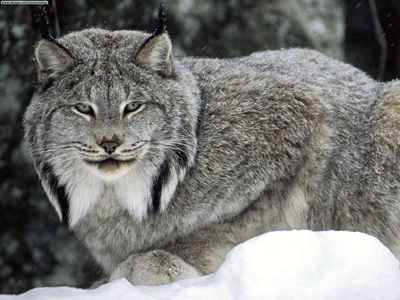
Here’s a well-researched piece by Rob Chaney of the Missoulian. It discusses the status of the ‘lynx rule,’ which recently survived a whole series of judicial appeals . . .
A court order to do more work on protecting Canadian lynx in Rocky Mountain forests could become a late-season battleground for congressional action this winter.
Last week, the Supreme Court let stand a U.S. 9th Circuit Court of Appeals ruling that the U.S. Forest Service has to take a big-picture look at how it protects critical lynx habitat across 12 million acres touching 11 national forests. While wildlife advocates claimed a major win for the Endangered Species Act, timber industry supporters vowed to rewrite laws to speed up logging projects.
“It’s now known as the Cottonwood decision, and it affects pretty much the whole Nort
hwest,” said Julia Altemus of the Montana Wood Products Association. “I’m hoping we can find a path forward, either legally or by a congressional path.”
The New Yorker has a first-rate retrospective on the Craigheads. Thanks to Monica Graff and Patti Craig-Hart for passing this along . . .
At dawn on Sunday, September 18th, a blanket of clouds hung over the tawny grass mountainsides around Missoula, Montana. The cottonwoods had begun to turn yellow. On the south edge of town, in the home that the retired wildlife biologist John Craighead had occupied with his wife, Margaret, for six decades, the couple’s daughter, Karen, had been sleeping only intermittently. For years, she had shared the care of her aged parents with her younger brother, Johnny, a commitment that carried the two of them and their elder brother, Derek, well into their own senior years. During the previous night, Karen had risen, as she always did, to look in on their parents. She found them both sleeping peacefully. But by morning, when she and Johnny checked again, their father had died. It was a month after his hundredth birthday.
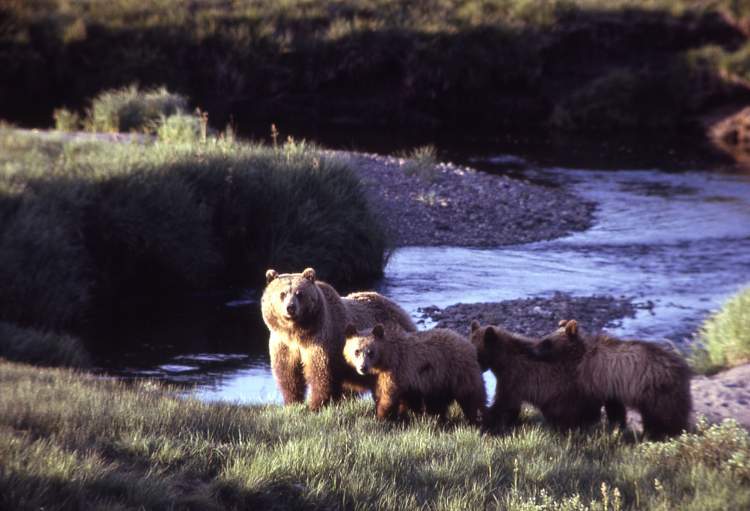
The first results from a Northern Continental Divide Ecosystem grizzly bear “family tree” study are encouraging . . .
Using genetic analysis U.S. Geological Survey Scientist Tabitha Graves and Nate Mikle recently completed a first look at the “family tree” of grizzly bears in the Northern Continental Divide Ecosystem.
The 8-million plus acre area stretches from Glacier National Park south to Ovando. The pair looked at genetic data gathered from 1,115 bears in a 2004 study done by researcher Kate Kendall and again in 2009-2012 through hair follicle samples of bears.
The family tree, printed out on one sheet of paper, stretches 20 feet, Graves noted in an interview last week. The thrust of this initial study was to determine the genetic diversity of bears on the fringes of the ecosystem, namely in the southeast and southwest corners.