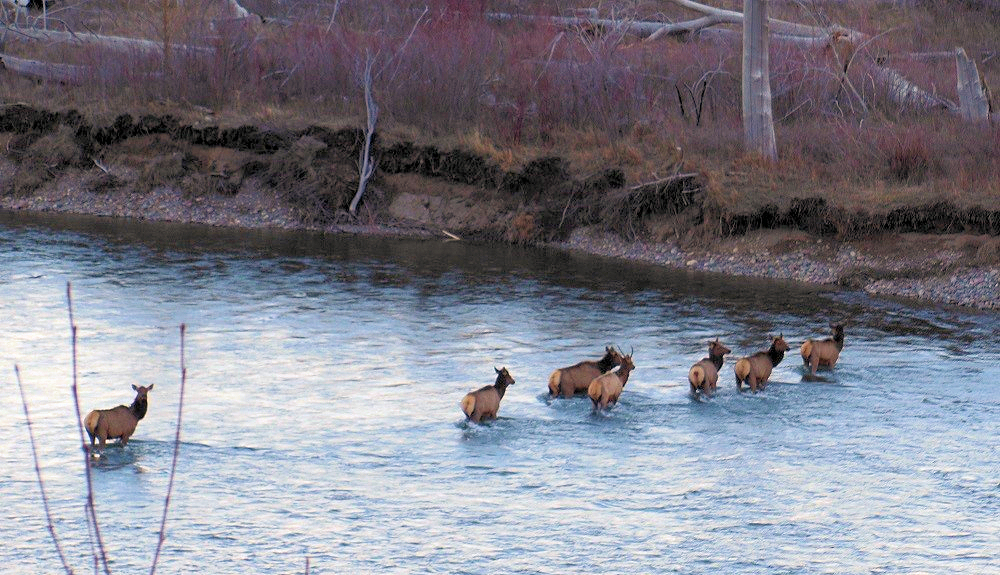
By all reports, the elk are on the move. Greg Evans caught this group fording the North Fork just above the Camas bridge last Friday.
By all reports, the elk are on the move. Greg Evans caught this group fording the North Fork just above the Camas bridge last Friday.
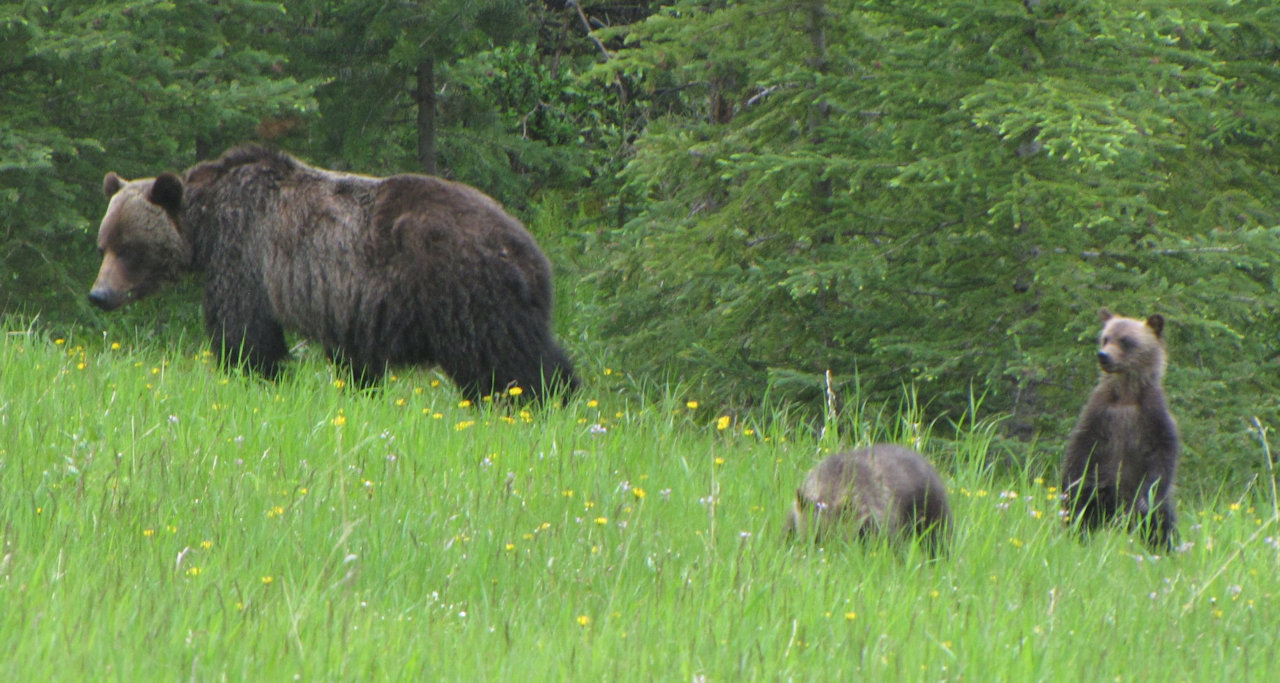
Here’s a lengthy, rational discussion of the concerns many conservationists have about the looming removal of grizzly bears from the Endangered Species List.
Kudos to Bill Fordyce for finding this one . . .
The federal government’s imminent release of plans to let states manage Yellowstone-area grizzly bears — including by hunting — rekindles debate about whether gunning down grizzlies will undo years of conservation work.
Federal officials are on the cusp of releasing and seeking public comment on draft rules and regulations that would remove Endangered Species Act protection from more than 717 Yellowstone–area grizzly bears. As officials propose the dramatic change, conservationists wonder whether hunters’ bullets might upend 40 years of advances.
The Wilderness Speaker Series presents a lecture by Harvey Locke entitled From the Flathead to Yellowstone to the Yukon: Nature Needs Half — a Hopeful Agenda for the Future of Wild Nature and Humanity.
A specialist in transboundary, large-scale habitat conservation, Locke is founder of the Yellowstone to Yukon Conservation Initiative and former vice president of the WILD Foundation. In 1999, Time Magazine Canada named him one of Canada’s “Leaders of the 21st Century.” He was also honored with the Fred M. Packard Award for Outstanding Service to Protected Areas at the World Parks Congress in Sydney, Australia in 2014.
Thursday, March 3
7 p.m.
Flathead Valley Community College
Room 144 A/B, Arts & Technology Building
777 Grandview Dr., Kalispell
Seating will be limited to 80 audience members, so please arrive early.
The Wilderness Speaker Series is a free community lecture series sponsored by the Bob Marshall Wilderness Foundation and Montana Wilderness Association.
For more information, please contact Grete Gansauer at ggansauer@wildmontana.org.
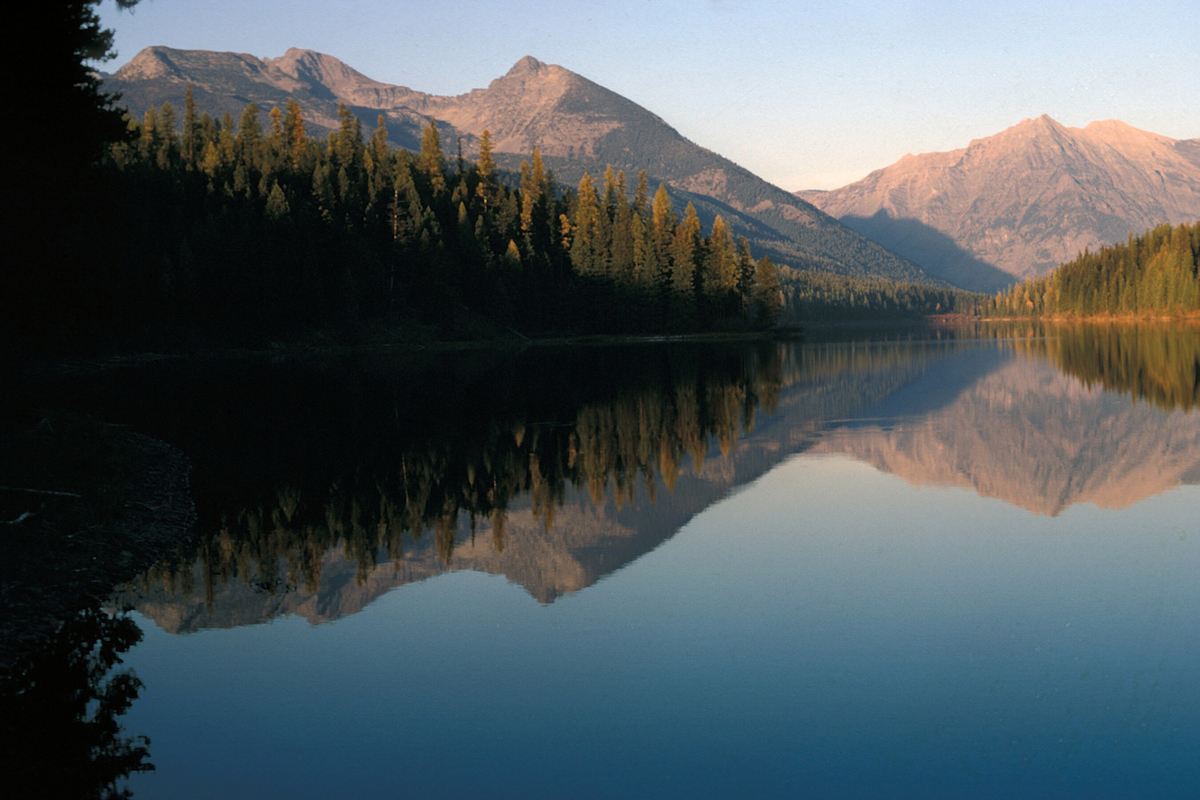
Logging Lake is stuffed with invasive lake trout . . .
Glacier National Park’s Logging Lake is brimming with non-native lake trout, biologists have found. In 2015, biologists from the U.S. Geological survey netted 2,158 lake trout from the remote North Fork water.
“That’s a lot of fish,” Vin D’Angelo, fisheries biologist with the USGS said.
Initial netting last spring brought worries that the entire lake was full of lake trout and little else. They only caught 10 suckers, but hundreds of lake trout. The lake trout are killed and their air bladders are punctured so they sink back to the bottom of the lake, which avoids any conflict with bears and other scavengers.
But fall netting caught 864 suckers, D’Angelo noted. The idea isn’t to catch suckers, which are a bait fish, he noted, but at least biologists know they’re in the lake in healthy numbers. In fact, Logging Lake has turned out to be a fairly diverse body of water compared to other North Fork lakes. In addition to suckers species, it has a healthy population of westslope cutthroat trout, northern pike minnows and mountain whitefish. The lake trout don’t eat many cutts, because lake trout generally live in water that’s 50 to 70 feet deep, while cutts are a surface feeding fish.
Whitefish makes a preliminary move to protect even more of their watershed from development . . .
Even as local leaders and state resource managers celebrated the recent completion of the Haskill Basin conservation easement east of Whitefish Lake, a plan to protect more than 15,000 acres of private land northwest of the lake is already in the works.
Montana Fish, Wildlife and Parks Conservation Manager Alan Wood said the Whitefish Lake Watershed Project, a 15,334-acre easement proposal northwest of the lake, is still in its preliminary stages.
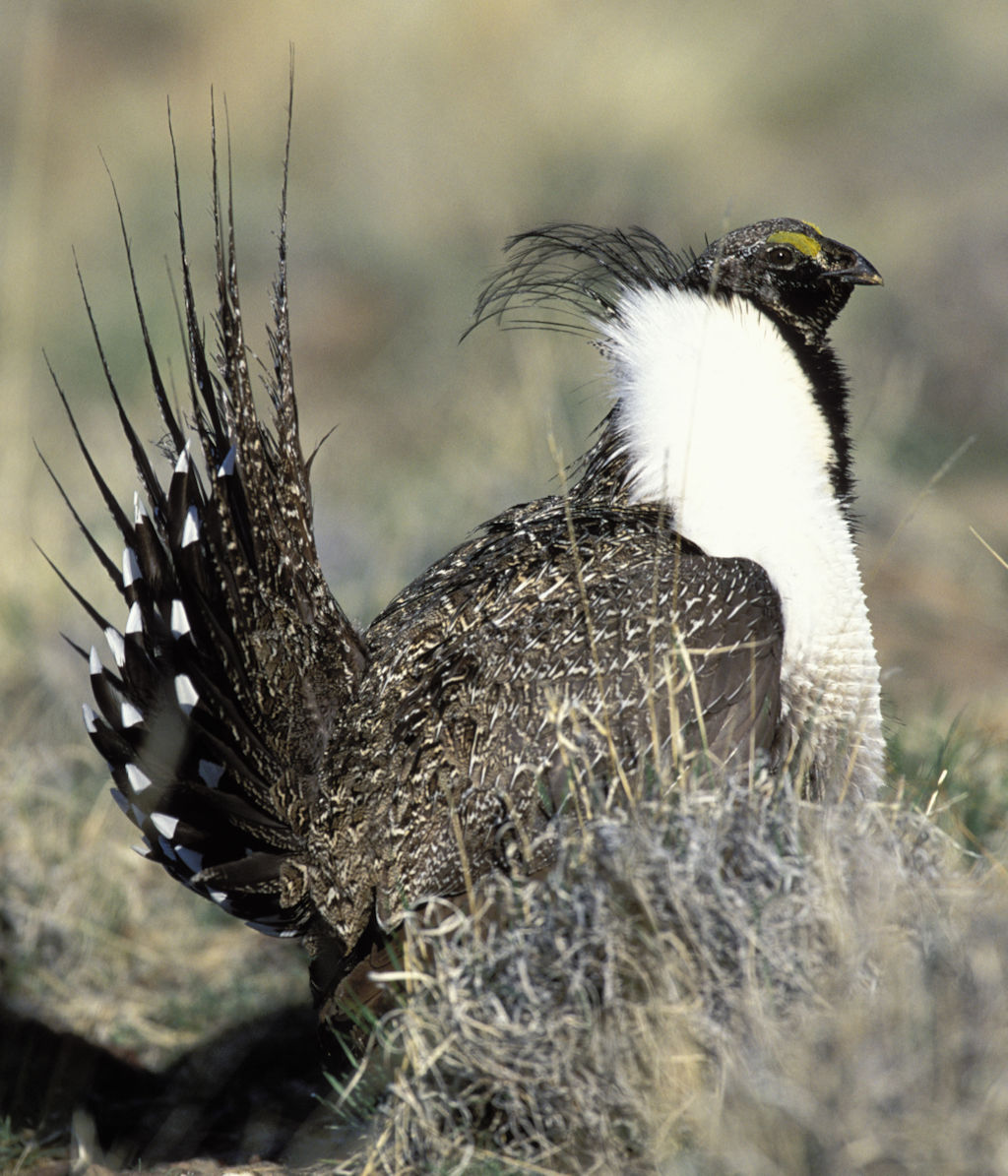
The greater sage grouse conservation plan is drawing fire from both sides . . .
Environmental groups sued Thursday to force the Obama administration to impose more restrictions on oil and gas drilling, grazing and other activities blamed for the decline of greater sage grouse across the American West.
A sweeping sage grouse conservation effort that the government announced last September is riddled with loopholes and will not be enough to protect the bird from extinction, according to the lawsuit filed in U.S. District Court in Idaho.
It follows several legal challenges against the same rules from the opposite end of the political spectrum. Mining companies, ranchers and officials in Utah, Idaho and Nevada argue that the administration’s actions will impede economic development.
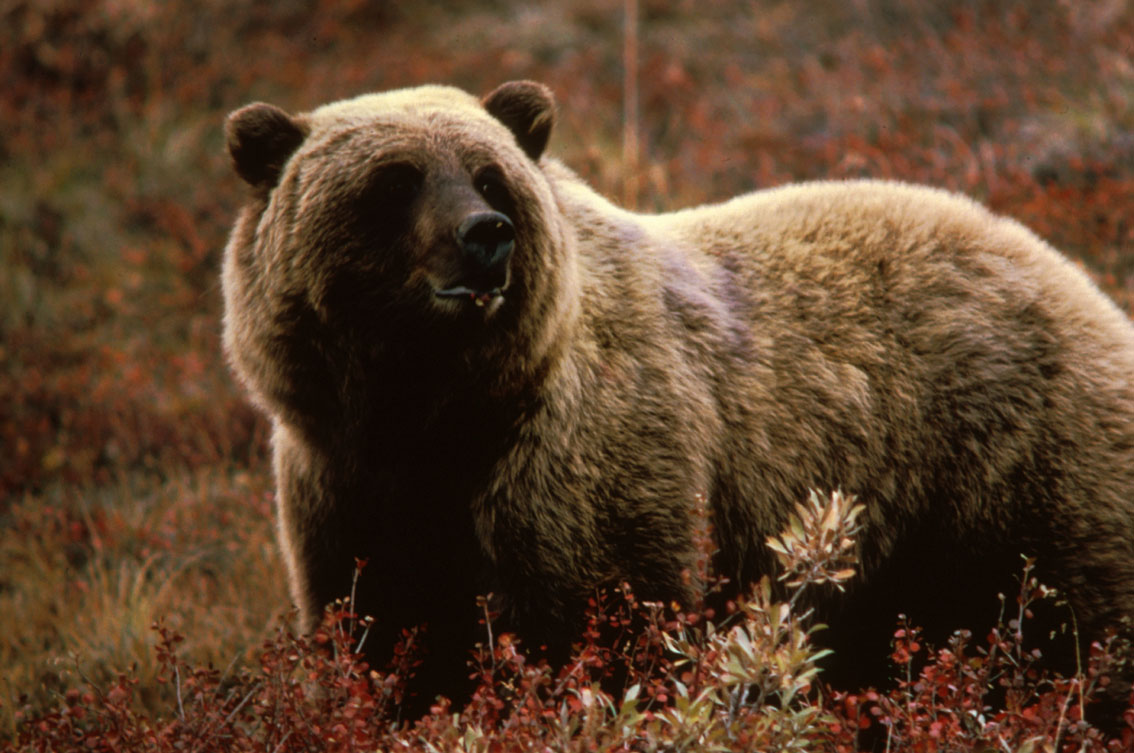
The following op-ed in the New York Times provides broad visibility for grizzly bear conservation issues . . .
In 1805 the explorers Meriwether Lewis and William Clark, making their way across the West, were warned by American Indian tribes of grizzly bears’ awesome strength. At first Lewis scoffed at the tribes’ advice, writing in his journal that “in the hands of skillful riflemen they are by no means as formidable or dangerous as they have been represented.” A few terrifying encounters with the bears, though, changed his mind about that.
A little more than a century later, crowds at Yellowstone National Park would gather in delight to watch the bears dine on food scraps. Signs were marked “Lunch Counter … for Bears Only.” Those days are long gone, but crowds still flock to Yellowstone — nearly four million visitors every year — partly to catch a glimpse of the storied creatures.
I’ve seen a few wild grizzly bears, mostly in Alaska and British Columbia, and always from a distance. But each grizzly I’ve caught sight of was as fearsome and sublime as the last. You never get used to their raw power and massive bodies, or the mysterious intelligence in their dark, close-set eyes.
A heads-up from Debo Powers . . .
Let’s get out our pens and start writing letters to Congressman Zinke to oppose HR3650 and HR2316…….or better still, call his office (406-225-3211).
The U.S. House Natural Resources Committee will hear the new bills on Thursday. HR 3650 would allow any state to claim ownership of up to 2 million acres of national forests, roughly the size of Yellowstone National Park. A second bill, HR 2316, would allow states to seize 4 million acres of national forests for clear-cut logging.
Read the whole story here:
UPDATE: The Montana Wilderness Association has an online form that makes it easy to zip off a message to Rep. Zinke. You can find it here. It’s best to replace the text of the auto-generated email message with your own words, though.
The upcoming meeting between President Obama and Canada’s new Prime Minister, Justin Trudeau, is drawing a lot of attention to transboundary environmental issues . . .
On March 10, President Obama will host a state dinner at the White House for newly elected Canadian Prime Minister Justin Trudeau, the first time such an event has occurred for a Canadian leader in nearly two decades.
The historic gathering between the two liberal leaders could signal a watershed moment for the conservation world, which is on high alert as stakeholders attempt to ensure that a suite of transboundary natural resource measures figure prominently on the menu, including a call by Montana’s largest tribal government to address concerns over mining contaminants in the state’s waterways.
On both sides of the border, the growing wish list of environmental measures is unspooling rapidly.
Montana gets ready to dish out funding for sage grouse habitat improvement . . .
A Montana panel overseeing a sage grouse conservation plan finalized guidelines on Friday for awarding $10 million in grants to help boost habitat for the imperiled bird.
Meanwhile, state officials have completed evaluating the bulk of 112 projects proposed within prime habitat for the sage grouse, as part of the ongoing implementation of an executive order issued by Gov. Steve Bullock in September.
“I am very happy to report that we are under way,” said Carolyn Sime, a resource program manager for the state’s Department of Natural Resources and Conservation.