Category Archives: News

Wildfire science has moved beyond Smokey Bear

Wildfires are handled a lot differently than they were a few decades ago . . .

Smokey Bear taught a simple message: “Only you can prevent forest fires.”

Modern fire science has grown far beyond that slogan, according to Tom Zimmerman, president of the International Association of Wildland Fire. But the public that breathes the smoke and the politicians who control the funding have trouble seeing fire as something other than an unnatural event that needs to be stopped.

“There are a lot of jokes out there about Smoky and drip-torches,” Zimmerman said. “We’re still coming out of that era when all fire was harmful. And there’s no good six-word message to replace it.”

Read more . . .

2013 Jack Potter Award winner announced

Headwaters Montana just announced the winner of the second annual Jack Potter Glacier National Park Stewardship Award. Here’s the announcement . . .

Headwaters Montana is pleased to announce the 2013 recipient of the second award made for the protection of Glacier Park’s natural resources.  The winner, the Glacier National Park Volunteer Associates (GNPVA), is credited with marshaling the volunteer help of hundreds of citizen-volunteers to help with many facets of Glacier Park’s operations and protection of resources.

The park’s Volunteer Associates has functioned for years with the best interests of Glacier at its core mission.  In 2013 alone the Association’s volunteers logged over 6,000 of free public service to Glacier.  We think that commitment and what it represents to Glacier merits recognition and celebration.

The Associates has been an active partner with Glacier National Park for almost 25 years, and continues to increase its commitment to the park each year.

Headwaters Montana received five strong nominations for the award in 2013.  Glacier Park finds itself in the care of many dedicated people who cherish the park for its own sake and who recognize the contribution the park makes to our quality and way of life.

This year’s award citation notes that the Volunteer Associates gathers the collective energy and dedication of many citizens and has provided opportunities for service to the public and the park over decades of time that include but are not limited to backcountry and river patrol, backcountry preservation and internships, operation of the Discovery Cabin learning center, assistance to the Native Plant Greenhouse, Transit Center, and restoration projects like the Mount Brown Lookout and Lower Nyak Cabin.

“This award to the volunteers of the Associates is a real honor.  We are a one hundred percent volunteer organization dedicated to stewardship and conservation of Glacier Park,” said Tom Nelesen, volunteer president of the GNPVA. “To my knowledge we have never been recognized like this over the many years of service to Glacier Park,”

The Jack Potter Glacier National Park Stewardship Award is given to an individual, park service employee, or non-governmental organization who demonstrates courageous or above average commitment to the stewardship and protection of the natural resources of Glacier National Park.

The award was established in 2012 to honor the 40-year service of its name-sake, Jack Potter, who retired from public service in Glacier Park as Chief of Science and Resources.

In a very real sense the Volunteer Associates and its many volunteers deserved this award a long time ago.  We’re very pleased to provide this recognition at this time.

The award consists of $200 and a hand-blown glass sculpture of a water ouzel by Bigfork artist Lee Proctor.  The award presentation will occur at the February board meeting of the Associates.
‘Winter Ecology and Animal Tracking in Glacier National Park’ class offered March 1

Here’s an interesting winter course coming up at Glacier Park the first Saturday in MArch . . .

The Glacier Institute and instructor Beau Servo are offering a course titled, “Winter Ecology and Animal Tracking in Glacier National Park” on Saturday, March 1.

Servo will lead a day of adventure in the snow-covered forest to study ecological concepts from a winter perspective. The day will begin with a short classroom session at the Glacier Park Community Building behind Park Headquarters in West Glacier. Discussion will focus on predator/prey relationships, evergreen plant species and animals’ adaptations to winter.

A field session will follow, concentrating on hunting behaviors, prey escape strategy, specialized adaptations, tracks and trails and wintering birds of prey. The class will travel on snowshoes…

Read more . . .

BNSF gears up to move a million barrels of oil this year

BNSF is getting braced to haul a lot of oil this year . . .

Less than a mile from Glacier National Park Superintendent Jeff Mow’s office is one of America’s fastest growing pipelines for Bakken crude oil: BNSF Railway.

Oil trains have become a common sight in West Glacier and the Flathead Valley, due in large part to the oil boom in North Dakota and Eastern Montana. Recently, BNSF CEO Matt Rose said his 32,000-mile railroad was projected to haul 1 million barrels of oil every day by the end of 2014. According to BNSF, the railroad operates one crude oil train every day through the Flathead Valley to refineries in Washington and Oregon. However, a recent rash of accidents has brought scrutiny to the practice.

Now, the railroad company is preparing a detailed hazardous materials response plan if an oil train were to derail near Glacier National Park. According to spokesperson Matt Jones, the plan will be available to local first responders in the coming weeks.

Read more . . .

Work continues on Flathead National Forest Plan revision

The Missoulian has a brief progress report on the Flathead National Forest Plan revision project . . .

Work on the Flathead National Forest Plan revision gets underway this week with several work-group meetings in Kalispell.

The stakeholder gathering on habitat, vegetation and disturbance takes place Wednesday from 5:30 to 9 p.m. Those interested in recreation, access and wilderness meet Thursday from 5:30 to 9 p.m. Both meetings take place at the Flathead National Forest Supervisor’s office, 650 Wolfpack Way.

Read more . . .

Sign-up begins for dust control program; deadline is Mar. 21

It’s that time of year again. Landowners who wish to sign up for Flathead County’s gravel road dust control cost-share program can do so until March 21 . . .

Flathead County residents who own property along a county-maintained gravel road can participate in a cost-share program to have dust control on roads near their land. Letters have been sent to people who have participated in the program in past years to determine if they again want to participate. Newcomers also may sign up, county Public Works Director Dave Prunty said.

People can download an application form from the county website, http://flathead.mt.gov/roads_bridges, under the “downloads” section, under the “forms” folder.

Call the road department office at 758-5790 or stop by the office at 1249 Willow Glen Drive in Kalispell for more information.

Applications are due at 4 p.m. March 21 in the road department.

Read more . . .

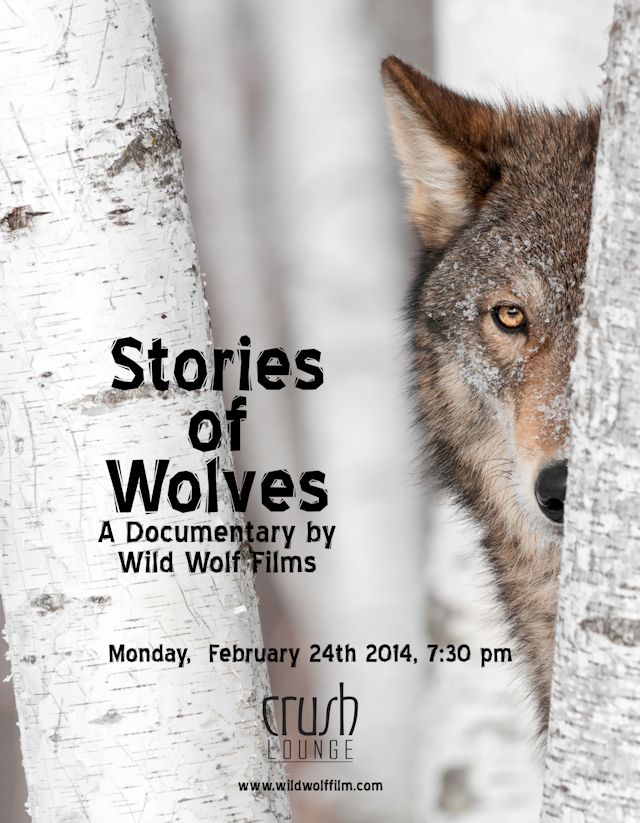
‘Stories of Wolves’ screens Feb. 24

Elke Duerr, who took care of the North Fork Hostel while Oliver was away early this year, is also, among many other things, a filmmaker. Her documentary about the Mexican Gray Wolf, “Stories of Wolves”,  is showing at the Crush Lounge on Monday, February 24, at 7:30 p.m. The Crush Lounge is located at 124 Central Avenue in Whitefish, on the second floor.

For more information see the Wild Wolf Film web site and the site for the Web of Life Foundation (W.O.L.F.).

Stories of Wolves film poster

Grizzly studies may provide help for human obesity

This New York Times article by Kevin Corbet has some fascinating information about grizzly hibernation. It turns out that the physical changes associated with grizzly bear hibernation are extensive and amazing and may provide clues for controlling human obesity . . .

Clinically speaking, about 1.5 billion people worldwide are overweight. According to the World Health Organization, more than 10 percent of the world’s adults are obese, arguably making them the largest patient population in existence. We can debate the causes, but the long-term consequences of obesity — diabetes, heart disease, cancer — place huge burdens on our society. Public health campaigns have made little impression on this spreading medical crisis.

The biotechnology industry, where I work, strives to develop therapies for the greatest unmet medical needs. Can it provide a solution to a problem for which, so far, there have been few clinical responses? Only three drugs are currently approved for long-term treatment of obesity; they promote moderate weight loss and often have significant side effects.

Why don’t we have better options? It’s not as if very smart people with lots of resources aren’t trying.

Read more . . .

Some fear farm bill grant program could harm Montana elk

A vaccine research provision in the recently passed farm bill has some folks worried that it could be used to fund ill-considered disease eradication programs in elk populations . . .

Some wildlife advocates worry a considerably rewritten wildlife disease provision in the final version of the federal farm bill will make it much harder to track livestock agencies’ efforts to control wild elk…

…[A] section called the Competitive, Special and Facilities Research Grant Act included a line calling for vaccine research to control “pests and diseases (especially zoonotic diseases) in wildlife reservoirs presenting a potential concern to public health or domestic livestock and pests and diseases in minor species (including deer, elk and bison).” That goes into a grant program authorized to spend about $3.5 billion over five years.

The problem, according to people like Glenn Hockett of the Gallatin Wildlife Association, is whether some of those grants will go toward the eradication of brucellosis in wildlife. Attempting to do so could devastate Montana’s wild elk herds without much benefit to its cattle industry, he said.

Read more . . .

Idaho trappers catch unexpected lynx; researchers attach tracking collar

The Idaho Department of Fish and Game is finding lynx in unexpected places . . .

State biologists have put a satellite-tracking collar on a female Canada lynx captured alive by two trappers in northern Idaho.

The trappers called the Idaho Department of Fish and Game last week after finding the 17-pound lynx in one of their traps in the West Cabinet Mountains.

The agency is in the middle of a five-year attempt to collect information on 20 little-studied creatures in the Idaho Panhandle and northeastern Washington.

“I was surprised that there were lynx in the West Cabinets,” said Michael Lucid, who’s heading up the Multi-Species Baseline Initiative for Idaho Fish and Game. “It shows us how little we know about the animals that live in our forests.”

Read more . . .