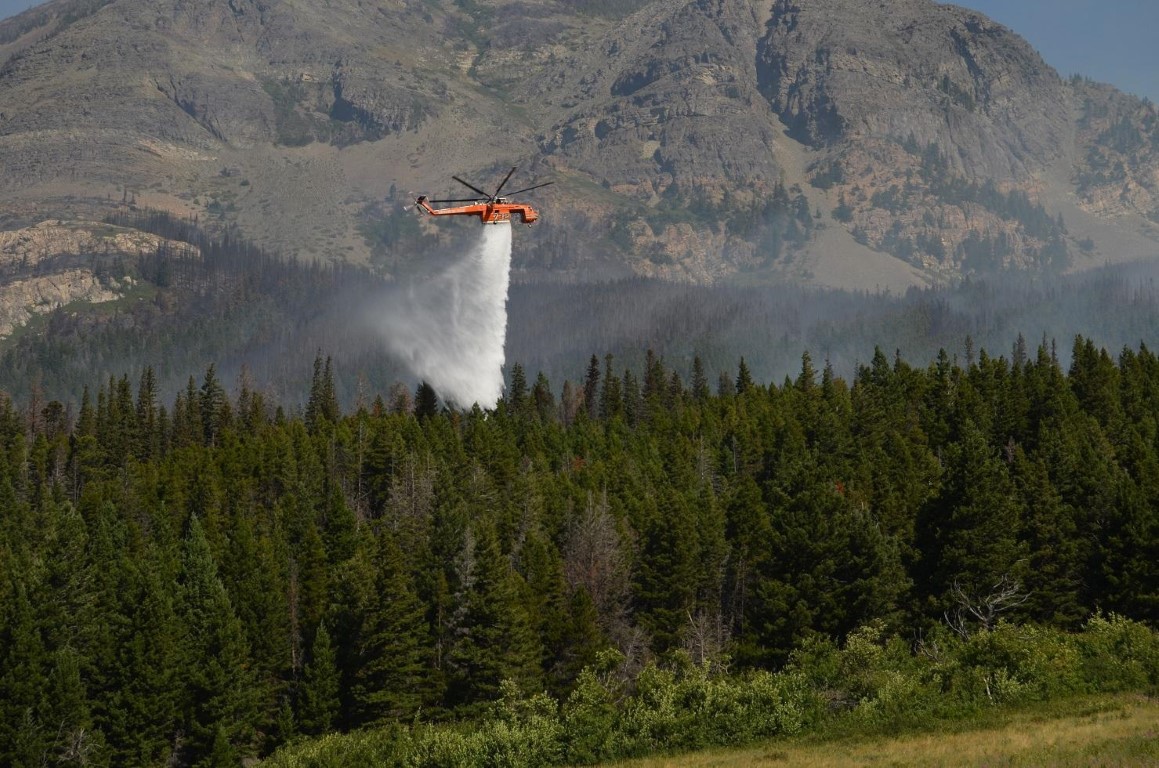
Winds have the Reynolds Creek Fire burning more intensely, but it is still contained . . .
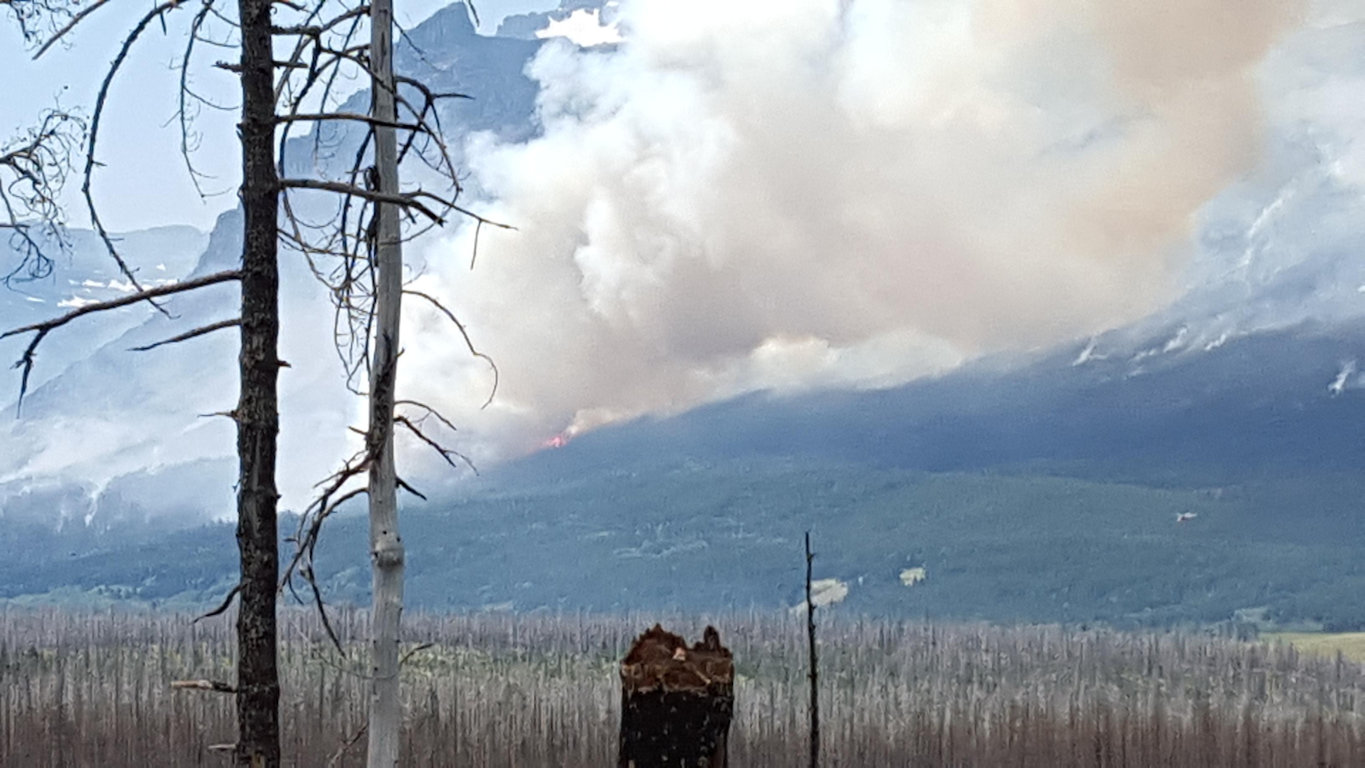
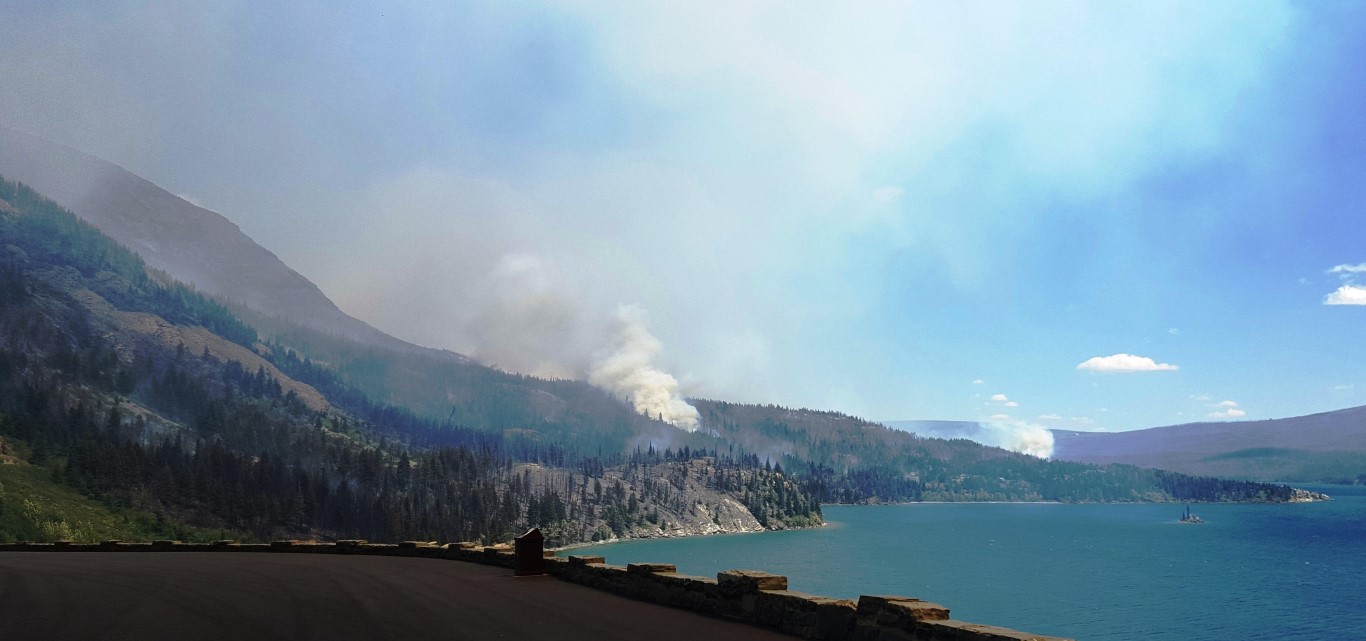
Heavy plumes of smoke towered above the east side of Glacier National Park on Friday afternoon as a patch of fuel burned within the Reynolds Creek Fire.
“It’s mostly burning in the interior, up in the Rose Creek area,” said Nan Stinson, a fire information officer. A spot in the northeastern corner fueled the increased burn. Stinson said that it was a pocket of vegetation up against some rocks.
Smoke rose into the sky and a portion of the plume could be seen from the Flathead Valley.
The National Park Service is seeking information that may assist with an investigation of the Reynolds Creek Fire in Glacier National Park.
Initial evidence suggests that the Reynolds Creek Fire was caused by human actions.
Park visitors that were hiking in the area of Reynolds Creek on the Gunsight Pass Trail or that may have been staying in or hiking through the Reynolds Creek Backcountry Campground, from July 14 to July 21, are encouraged to call 888-653-0009 or email nps_isb@nps.gov.
The fire was first reported at approximately 3:45 p.m. on Tuesday, July 21, approximately six miles east of Logan Pass. To date, it has burned approximately 3,200 acres.
As progress continues against the Reynolds Creek fire, Logan Pass re-opens for access from the west side of the park . . .
Access to Logan Pass is available to Glacier National Park visitors for the first time since the Reynolds Creek Fire sparked July 22, and as fire crews continue to gain ground on the blaze and shore up its northeast edge, officials have listed the fire at 56 percent contained.
The Going-to-the-Sun Road remains closed on the east side from just beyond the St. Mary Campground to Logan Pass, but beginning at 9 a.m. Wednesday visitors could once again travel to the iconic corridor’s high point from the west side.
Visitors should expect delays and congestion along the road.
Forensic hair analysis comes to bear research . . .
U.S. and Canadian researchers have found they can get a good idea of a grizzly bear’s diet over several months by looking at a single hair. The technique, which measures residues of trace metals, can be a major tool in determining if the threatened animals are getting enough of the right foods to eat.
The technique can also help determine how much mercury bears are ingesting. A study published last year by many of the same researchers found that two out of three grizzlies sampled in coastal British Columbia had mercury levels exceeding a neurochemical effect threshold proposed for polar bears.
“You can use the technology for both applications,” said Marie Noël, lead author of both the mercury study and a more recent study, published in Science of the Total Environment, on how the technique works. “You can see how much mercury they’re getting but also estimate how much salmon they’re eating.”
Debo Powers (the new NFPA President, by the way) wrote the following report on last Saturday’s NFPA annual meeting. Interspersed with her article are several pictures of the event submitted by myself and Debo. If you weren’t there …well, you should have been. Everyone had a good time.
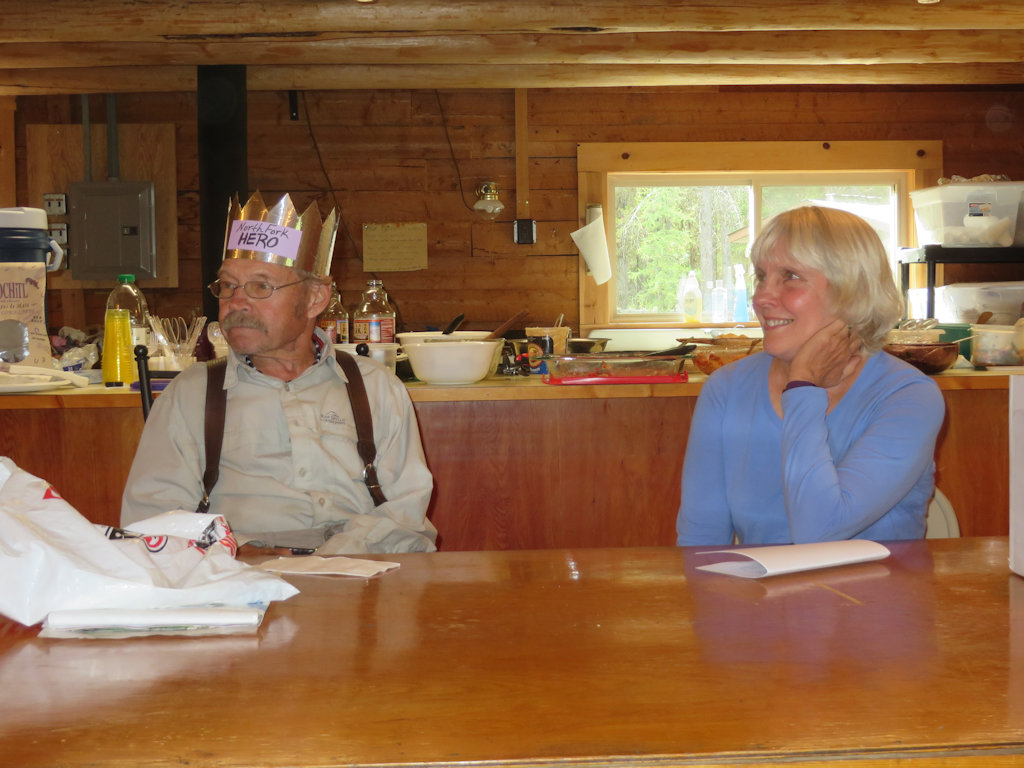
On Saturday night, John Frederick stepped down as President of the North Fork Preservation Association (NFPA) after more than three decades of leadership in this environmental organization which was founded in 1982. Following a potluck supper, a crown which said “North Fork Hero” was placed on John’s head. The crowd of around 50 people listened while various NFPA members spoke about John’s contributions to the North Fork, told stories about John, and read email appreciations from other members who could not attend. John was also given a plaque by the NFPA.
John has been an “environmental warrior” on many issues that have threatened the North Fork in the past three decades. One of his major feats was buying ten shares of Rio Algom (a Canadian mining company) stock and traveling six times to stockholder meetings in Toronto to speak in opposition to the proposal to build a coal mine north of the border that would threaten the water quality of the North Fork of the Flathead River. That coal mine was never built. This was one of the many stories told about John’s activism.
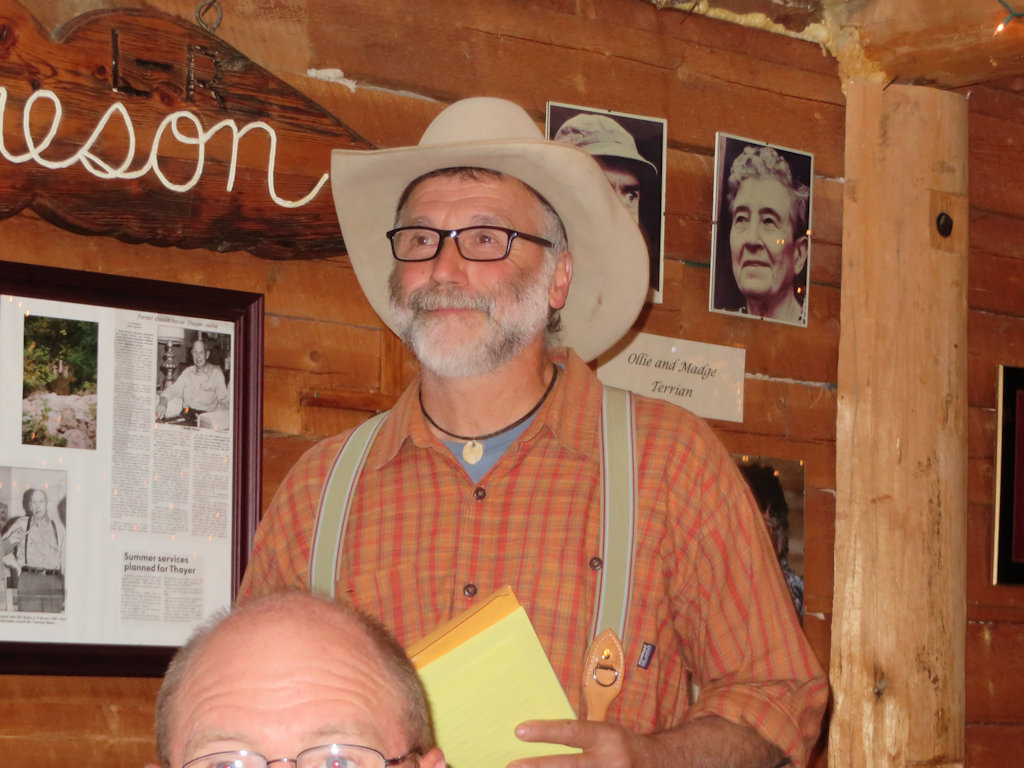
John suffers through lots of people saying nice things about himFrank Vitale says his pieceJohn receives his plaque
After John’s “appreciation fest,” there was a short NFPA meeting in which officers and board members were elected. The new officers are: Debo Powers (President), Randy Kenyon (Vice President), Suzanne Daniell (Secretary), and Kelly Edwards (Treasurer). Annemarie Harrod and Steve Gniadek were re-elected to the board and John Frederick will remain on the board as the Past President. Those who will remain on the board for another year are Frank Vitale, Cameron Naficy, Alan McNeil, and Walter Roberts.
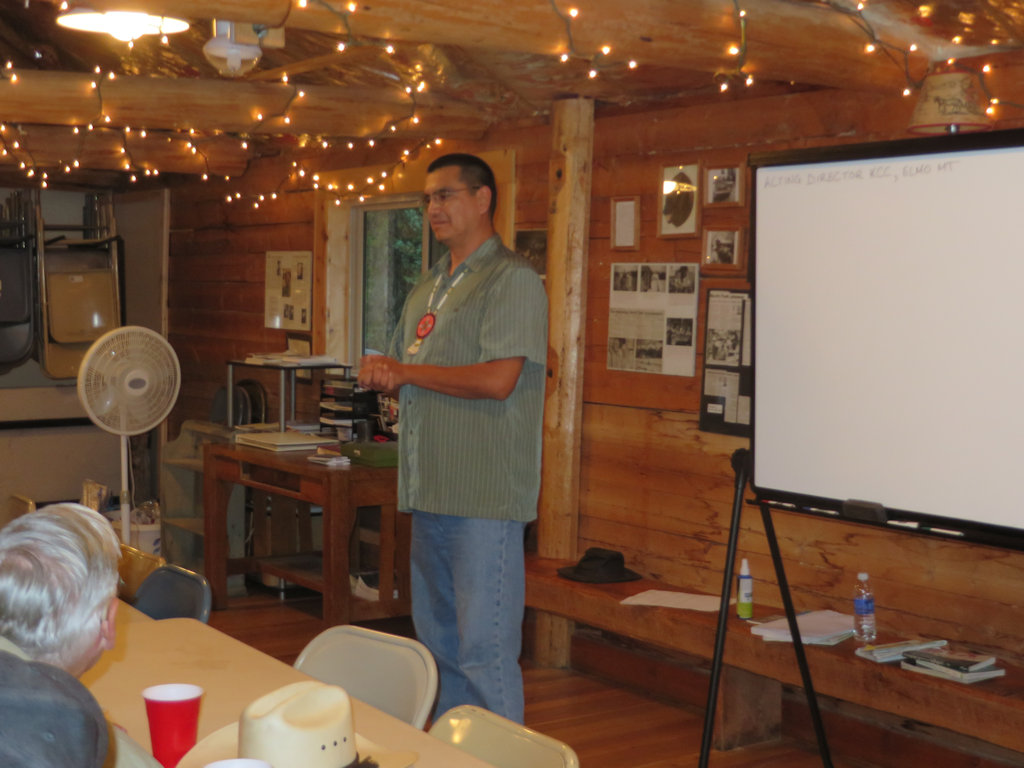
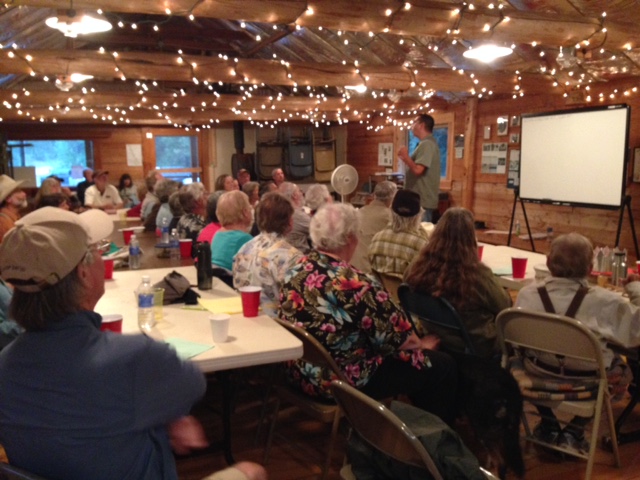
Every year following the annual NFPA meeting, there is an informative speaker who is invited to talk about a topic of local interest. This presentation is open to the entire North Fork community, so others began to arrive after the meeting. The NFPA speaker this year was Daniel Stiffarm, a Kootenai tribal member who is the acting director of the Kootenai Cultural Committee on the Flathead Reservation. He spoke about Kootenai history, culture, and language. Daniel comes regularly to the North Fork which was part of the Kootenai Territory that was used for hunting and vision quests. North Forkers learned much about Kootenai language and traditions including the Kootenai names of many familiar mountains in the North Fork. Daniel was asked many questions which he graciously answered.
Daniel Stiffarm giving his presentationDaniel Stiffarm drew a big crowd
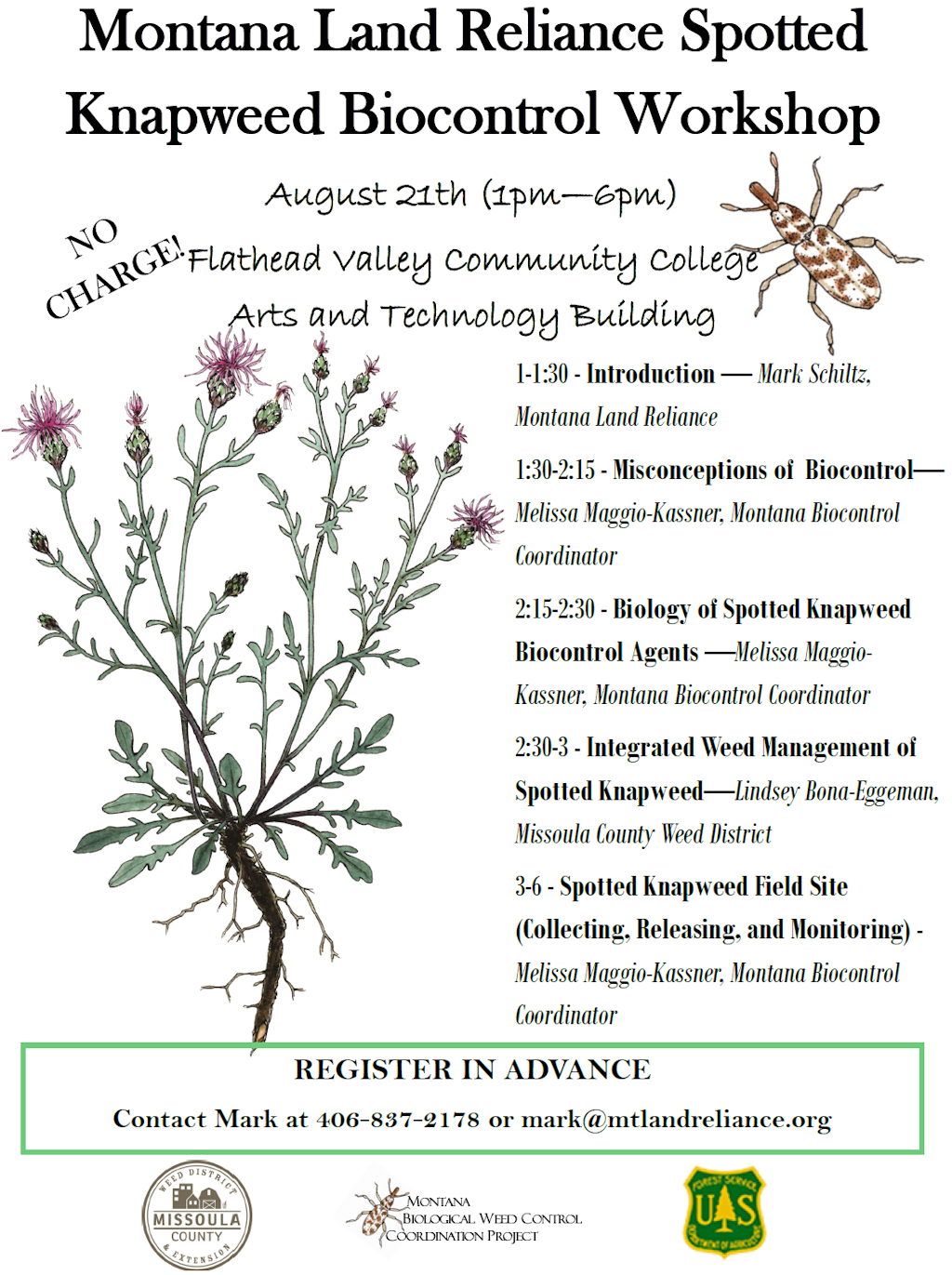
Montana Land Reliance is sponsoring a spotted knapweed biocontrol workshop at the Flathead Valley Community College Arts and Technology Building on August 21 from 1-6 pm. Please register in advance. Contact Mark at 406-837-2178 or mark@mtlandreliance.org.
See the following poster for details . . .
MLR Spotted Knapweed Biocontrol Workshop Aug 21 2015
Glacier National Park News Release July 26, 2015 5:00 p.m.
For immediate release: We apologize for conflicting information earlier today.
Fire officials have assessed current fire behavior and suppression activity in the Reynolds Creek Fire and announced that the St. Mary Visitor Center at the east entrance to Glacier National Park can reopen on Monday July 27. Hours are from 8 am to 6 pm.
The Going-to-the-Sun Road will remain closed from the St. Mary Visitor Center to Big Bend on the west side of the Divide, a distance of 18 miles. The St. Mary Campground, the Rising Sun Motor Inn, the Rising Sun Campground and Logan Pass are not yet open to the public.
Another day of steady progress against the Reynolds Creek Fire in Glacier National Park . . .
Evacuation levels in Glacier National Park are being downgraded as the weather improves and fire crews corral sections of the Reynolds Creek Fire.
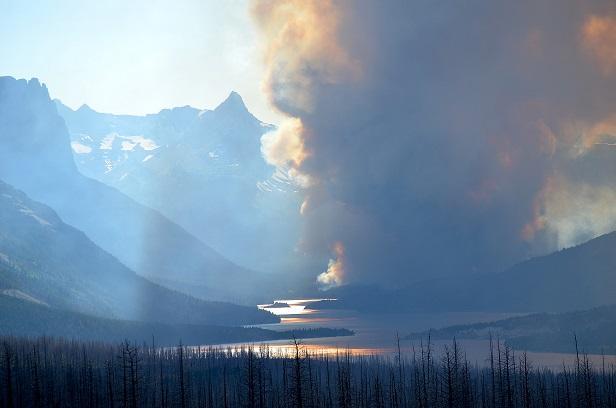
Officials with the incident did not report any new growth of the fire on Sunday morning. The blaze, which is burning along the north shore of St. Mary Lake in rocky, rugged terrain, remains listed at 3,158 acres. It is 20 percent contained.
Recent rains have subdued the fire, but it still possesses potential for activity if drier weather conditions return, according to fire officials. Forecasters have said a cold, wet weather system would hit the region Sunday and Monday with possible snow in the higher elevations of Glacier Park.
Reynolds Creek Fire – Smoke Plume Above St. Mary Lake, July 25, 2015
With more than 450 people battling the blaze, crews continue their steady progress against the Reynolds Creek Fire. The biggest concern is forecast high winds . . .
There was little change overnight in the Reynolds Creek Fire in Glacier Park, as an elite team of firefighters continued to be aided by weather conditions.
The fire, which started on Tuesday, is currently listed as approximately 3,166 acres, according to a press release issued this morning. More than 450 firefighters and support crew members are assigned to the fire, which has been slowed by cool temperatures and rising humidity.
Helicopters were kept engaged throughout the day Friday, assisting crews on the ground by dropping water on the head of the fire at the northeast perimeter.
This evening, July 25, the annual meeting of the North Fork Preservation Association will be held at Sondreson Community Hall on the North Fork Road at Whale Creek.
At 7:30 pm Daniel Stiffarm of the Confederated Salish and Kootenai Tribes, will speak on topics relating to Kootenai history. It should be a very engaging presentation.
The 7:30 pm program is preceded by a potluck dinner starting at 5pm and election of officers at 6:45 pm. Everyone is invited