All posts by nfpa

A Montana perspective on the Milky Way

A very nice essay on “dark skies” posted to the Missoulian via the Billings Gazette . . .

When I stepped out from the canopy of trees along the Appalachian Trail into a meadow, I walked into a sea of lights.

Fireflies danced in the night above the midsummer grass. Their larval offspring — the glow worms — hung from the surrounding trees, and like spectators at a giant amphitheater, they watched their parents dance.

Above, stretched over the length of open field, the Milky Way blazed across the moonless night.

Read more . . .

BNSF gears up to move a million barrels of oil this year

BNSF is getting braced to haul a lot of oil this year . . .

Less than a mile from Glacier National Park Superintendent Jeff Mow’s office is one of America’s fastest growing pipelines for Bakken crude oil: BNSF Railway.

Oil trains have become a common sight in West Glacier and the Flathead Valley, due in large part to the oil boom in North Dakota and Eastern Montana. Recently, BNSF CEO Matt Rose said his 32,000-mile railroad was projected to haul 1 million barrels of oil every day by the end of 2014. According to BNSF, the railroad operates one crude oil train every day through the Flathead Valley to refineries in Washington and Oregon. However, a recent rash of accidents has brought scrutiny to the practice.

Now, the railroad company is preparing a detailed hazardous materials response plan if an oil train were to derail near Glacier National Park. According to spokesperson Matt Jones, the plan will be available to local first responders in the coming weeks.

Read more . . .

Work continues on Flathead National Forest Plan revision

The Missoulian has a brief progress report on the Flathead National Forest Plan revision project . . .

Work on the Flathead National Forest Plan revision gets underway this week with several work-group meetings in Kalispell.

The stakeholder gathering on habitat, vegetation and disturbance takes place Wednesday from 5:30 to 9 p.m. Those interested in recreation, access and wilderness meet Thursday from 5:30 to 9 p.m. Both meetings take place at the Flathead National Forest Supervisor’s office, 650 Wolfpack Way.

Read more . . .

Sign-up begins for dust control program; deadline is Mar. 21

It’s that time of year again. Landowners who wish to sign up for Flathead County’s gravel road dust control cost-share program can do so until March 21 . . .

Flathead County residents who own property along a county-maintained gravel road can participate in a cost-share program to have dust control on roads near their land. Letters have been sent to people who have participated in the program in past years to determine if they again want to participate. Newcomers also may sign up, county Public Works Director Dave Prunty said.

People can download an application form from the county website, http://flathead.mt.gov/roads_bridges, under the “downloads” section, under the “forms” folder.

Call the road department office at 758-5790 or stop by the office at 1249 Willow Glen Drive in Kalispell for more information.

Applications are due at 4 p.m. March 21 in the road department.

Read more . . .

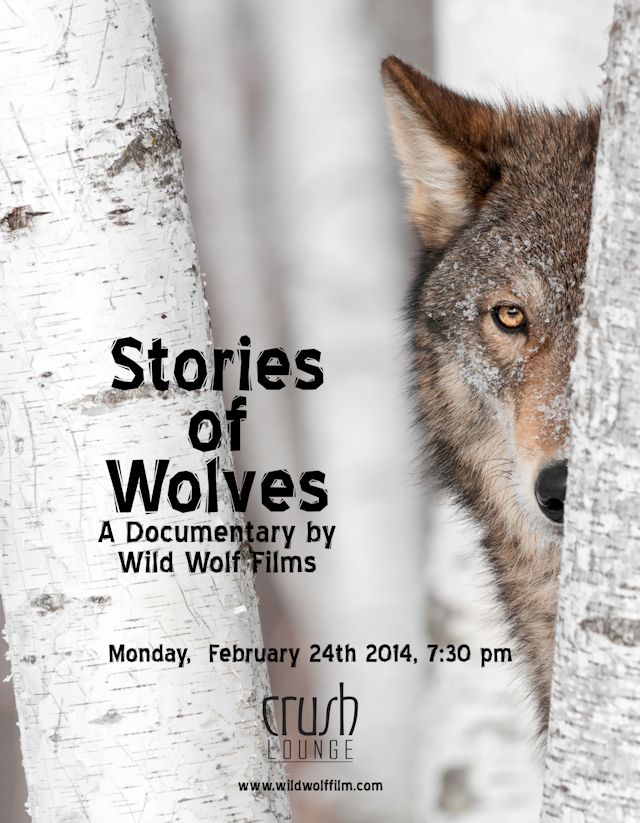
‘Stories of Wolves’ screens Feb. 24

Elke Duerr, who took care of the North Fork Hostel while Oliver was away early this year, is also, among many other things, a filmmaker. Her documentary about the Mexican Gray Wolf, “Stories of Wolves”,  is showing at the Crush Lounge on Monday, February 24, at 7:30 p.m. The Crush Lounge is located at 124 Central Avenue in Whitefish, on the second floor.

For more information see the Wild Wolf Film web site and the site for the Web of Life Foundation (W.O.L.F.).

Stories of Wolves film poster

Grizzly studies may provide help for human obesity

This New York Times article by Kevin Corbet has some fascinating information about grizzly hibernation. It turns out that the physical changes associated with grizzly bear hibernation are extensive and amazing and may provide clues for controlling human obesity . . .

Clinically speaking, about 1.5 billion people worldwide are overweight. According to the World Health Organization, more than 10 percent of the world’s adults are obese, arguably making them the largest patient population in existence. We can debate the causes, but the long-term consequences of obesity — diabetes, heart disease, cancer — place huge burdens on our society. Public health campaigns have made little impression on this spreading medical crisis.

The biotechnology industry, where I work, strives to develop therapies for the greatest unmet medical needs. Can it provide a solution to a problem for which, so far, there have been few clinical responses? Only three drugs are currently approved for long-term treatment of obesity; they promote moderate weight loss and often have significant side effects.

Why don’t we have better options? It’s not as if very smart people with lots of resources aren’t trying.

Read more . . .

Some fear farm bill grant program could harm Montana elk

A vaccine research provision in the recently passed farm bill has some folks worried that it could be used to fund ill-considered disease eradication programs in elk populations . . .

Some wildlife advocates worry a considerably rewritten wildlife disease provision in the final version of the federal farm bill will make it much harder to track livestock agencies’ efforts to control wild elk…

…[A] section called the Competitive, Special and Facilities Research Grant Act included a line calling for vaccine research to control “pests and diseases (especially zoonotic diseases) in wildlife reservoirs presenting a potential concern to public health or domestic livestock and pests and diseases in minor species (including deer, elk and bison).” That goes into a grant program authorized to spend about $3.5 billion over five years.

The problem, according to people like Glenn Hockett of the Gallatin Wildlife Association, is whether some of those grants will go toward the eradication of brucellosis in wildlife. Attempting to do so could devastate Montana’s wild elk herds without much benefit to its cattle industry, he said.

Read more . . .

Idaho trappers catch unexpected lynx; researchers attach tracking collar

The Idaho Department of Fish and Game is finding lynx in unexpected places . . .

State biologists have put a satellite-tracking collar on a female Canada lynx captured alive by two trappers in northern Idaho.

The trappers called the Idaho Department of Fish and Game last week after finding the 17-pound lynx in one of their traps in the West Cabinet Mountains.

The agency is in the middle of a five-year attempt to collect information on 20 little-studied creatures in the Idaho Panhandle and northeastern Washington.

“I was surprised that there were lynx in the West Cabinets,” said Michael Lucid, who’s heading up the Multi-Species Baseline Initiative for Idaho Fish and Game. “It shows us how little we know about the animals that live in our forests.”

Read more . . .

Panel says assumption of ‘eastern wolf’ species not justified

One of the assumptions basic to the federal government’s wolf recovery plan may be in error . . .

A proposal to lift federal protections for gray wolves across most of the U.S. suffered a significant setback Friday as an independent review panel said the government is relying on unsettled science to make its case.

Federal wildlife officials want to remove the animals from the endangered species list across the Lower 48 states, except for a small population in the Southwest.

The five-member U.S. Fish and Wildlife Service peer-review panel was tasked with reviewing the government’s claim that the Northeast and Midwest were home to a separate species, the eastern wolf.

If the government were right, that would make gray wolf recovery unnecessary in those areas.

Read more . . .

10 best Hikes in Glacier National Park at Montana Wild, Feb. 27th

I’m not sure why Montana FWP is sponsoring a presentation on hiking in Glacier National Park, but here’s the press release . . .

Montana Fish, Wildlife & Parks will offer a free one-hour program on the top 10 hikes in Glacier National Park on Feb. 27 at Montana Wild, 2668 Broadwater Ave., next to Spring Meadow Lake State Park off Highway 12 West.

Glacier National Park Interpretive Ranger Lynne Dixon will lead the program. Dixon will discuss the park’s reservation system that helps one guarantee a place in the backcountry and offer detailed descriptions of each hike. Details will be offered on how to best plan for family friendly overnight trips and for week-long strenuous adventures. For more information call 444-9944.