Category Archives: Environmental Issues

Satellites record spread of pine beetle infestation over decades

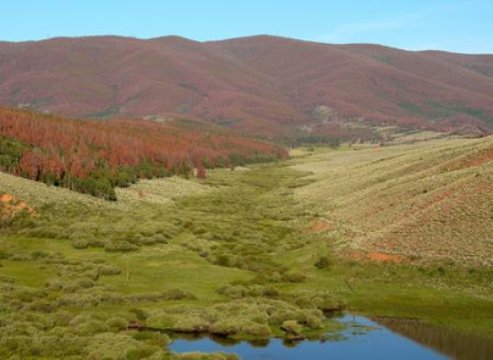
Northern Williams Range, Colorado, where mountain pine beetles have killed more than 80 percent of mature lodgepole pine over many square kilometers - USGS
Northern Williams Range, Colorado, where mountain pine beetles have killed more than 80 percent of mature lodgepole pine over many square kilometers – USGS

Here’s an interesting article about using satellites to monitor and record the spread of pine beetle infestation . . .

In western North America, mountain pine beetles infest and ravage thousands of acres of forest lands. Landsat satellites bear witness to the onslaught in a way that neither humans nor most other satellites can.

Since 1972, the U.S. Geological Survey’s Landsat satellites have been the watchman that never sleeps with spectral bands capturing the subtle turning of green mountainsides into dying forests. From the ground, the extent of forest land damage is simply too large for field observers to quantify. But 438 miles above the Earth, Landsat satellites pass over every forest in the country dozens of times a year — every year — creating a historical archive of clear, composite images that tells the hidden stories of life and death in our nation’s forests.

Such was the vision of Secretary of the Interior Stewart Udall 50 years ago when he boldly called for Earth observations from space. What the U.S. Geological Survey has accumulated now are vast and continuous long-term records from Landsat that have become critical tools for agencies such as the U.S. Forest Service (Forest Service), which reports the status and health of our nation’s forest resources.

Read more . . .

Montana signs forest management deal with feds

Montana and the federal government signed the paperwork to establish a formal federal-state logging and restoration partnership . . .

Montana Gov. Steve Bullock signed an agreement with the U.S. Forest Service on Monday for the state to play a bigger role in forest management on federal lands, which officials say will speed up backlogged logging projects.

Forest management and the declining timber industry have emerged as major issues in this year’s governor’s race, with Weyerhaeuser announcing last month that it would close a Columbia Falls lumber and plywood mill. The closure will put about 100 people out of work in addition to 100 administrative jobs that are being eliminated or moved with Weyerhaeuser’s purchase of Plum Creek Timber.

With the Chessman Reservoir as a backdrop, Bullock, Forest Service Regional Forester Leanne Marten and Montana Department of Natural Resources and Conservation Director John Tubbs signed the Good Neighbor Authority agreement, which was authorized under the 2014 federal Farm Bill.

Read more . . .

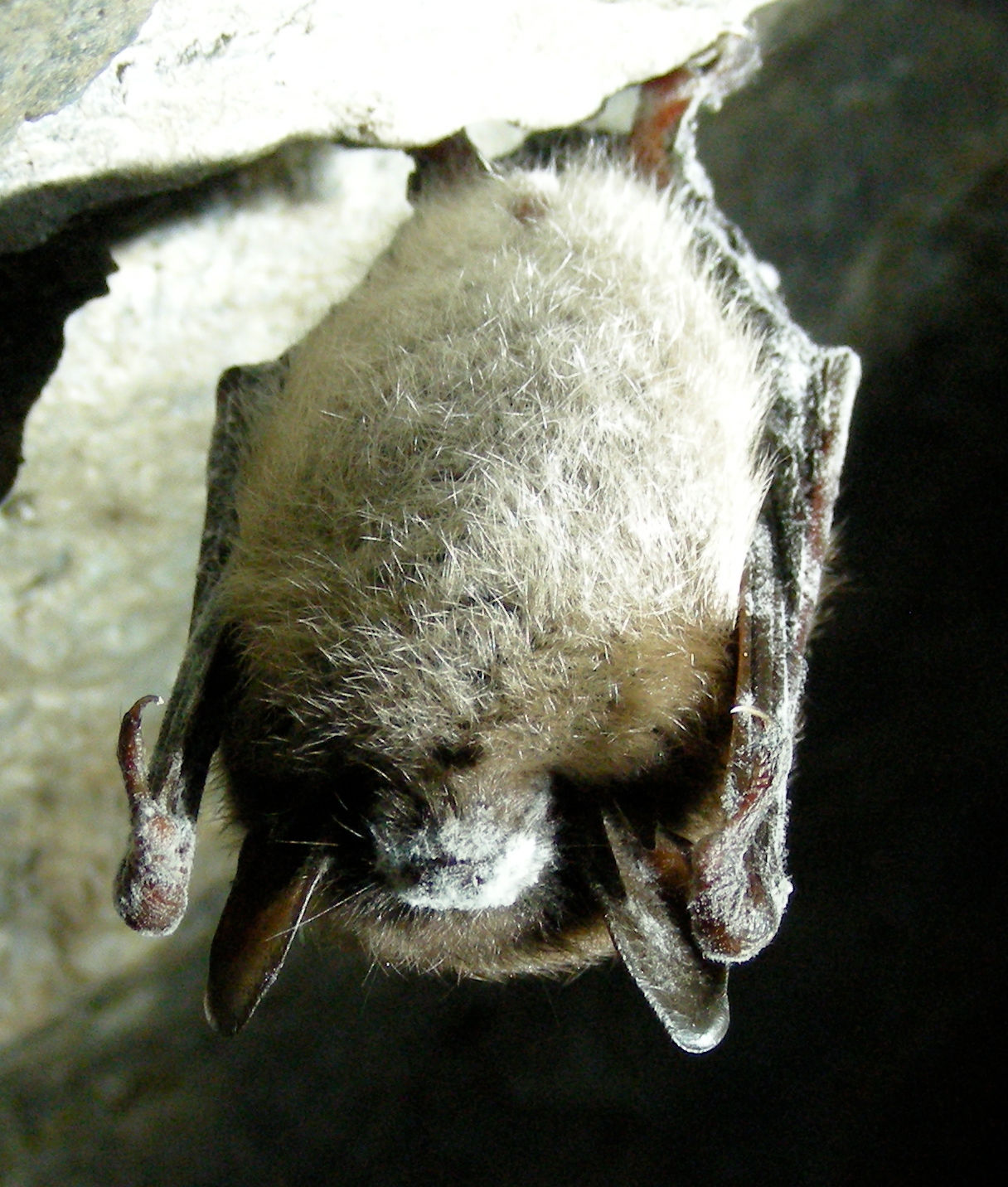
Second bat with white-nose disease found in Washington

Little brown bat affected by White nose syndrome - Marvin Moriarty-USFWS
Little brown bat affected by white nose syndrome – Marvin Moriarty-USFWS

The Flathead Valley along both sides of the border is a significant bat study area, so another report of white-nose syndrome in the Western U.S. is cause for concern . . .

White-nose syndrome fungus has shown up in a second species of bat in Washington, adding to the concern that the problem could be expanding west of the Rocky Mountains.

Washington Department of Fish and Wildlife biologists reported finding a silver-haired bat that tested positive for Pseudogymnoascus destructans – a fungus that has killed millions of bats in 27 states and five Canadian provinces.

While the silver-haired bat was not made ill by the fungus, researchers worry it may be spreading spores to more vulnerable populations.

Read more . . .

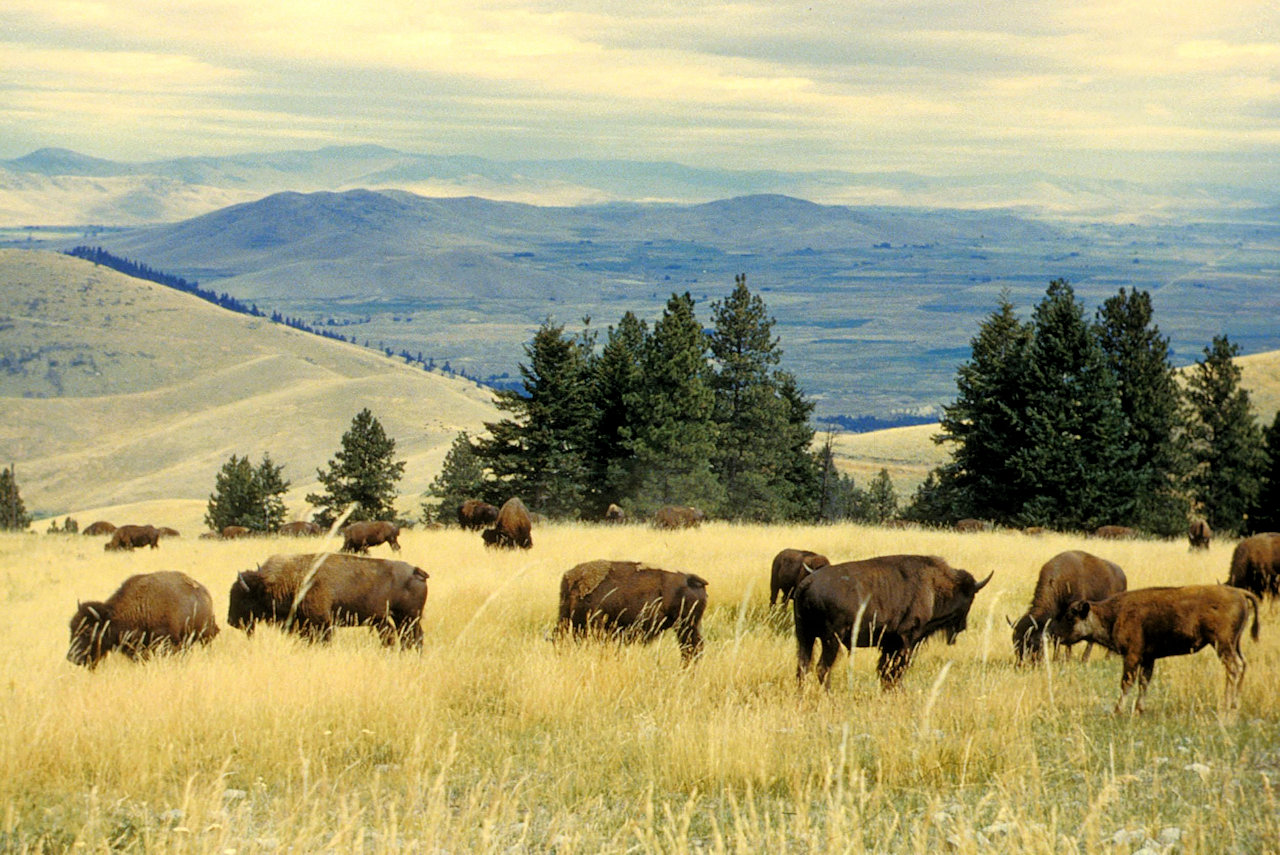
Bison range transfer gets generally positive reviews

Bison herd grazing at the national bison range - U.S. Fish and Wildlife Service
Bison herd grazing at the national bison range – U.S. Fish and Wildlife Service

The idea of transferring the National Bison Range back to tribal control is gaining traction . . .

More than a century after the federal government removed more than 18,000 acres of land on the Flathead Indian Reservation to establish the National Bison Range, the Confederated Salish and Kootenai Tribes are working to return the wildlife refuge to tribal management.

Such an action would require federal action, and last month the tribes released a legislative proposal that would remove the range from the National Wildlife Refuge System and place it back into federal trust ownership for the tribes.

Nearly 150 people attended a Tuesday night meeting at the Salish Kootenai College in Pablo, where representatives from the tribes’ natural resources and legal departments were on hand to discuss the proposal with community members and explain the draft legislation.

Read more . . .

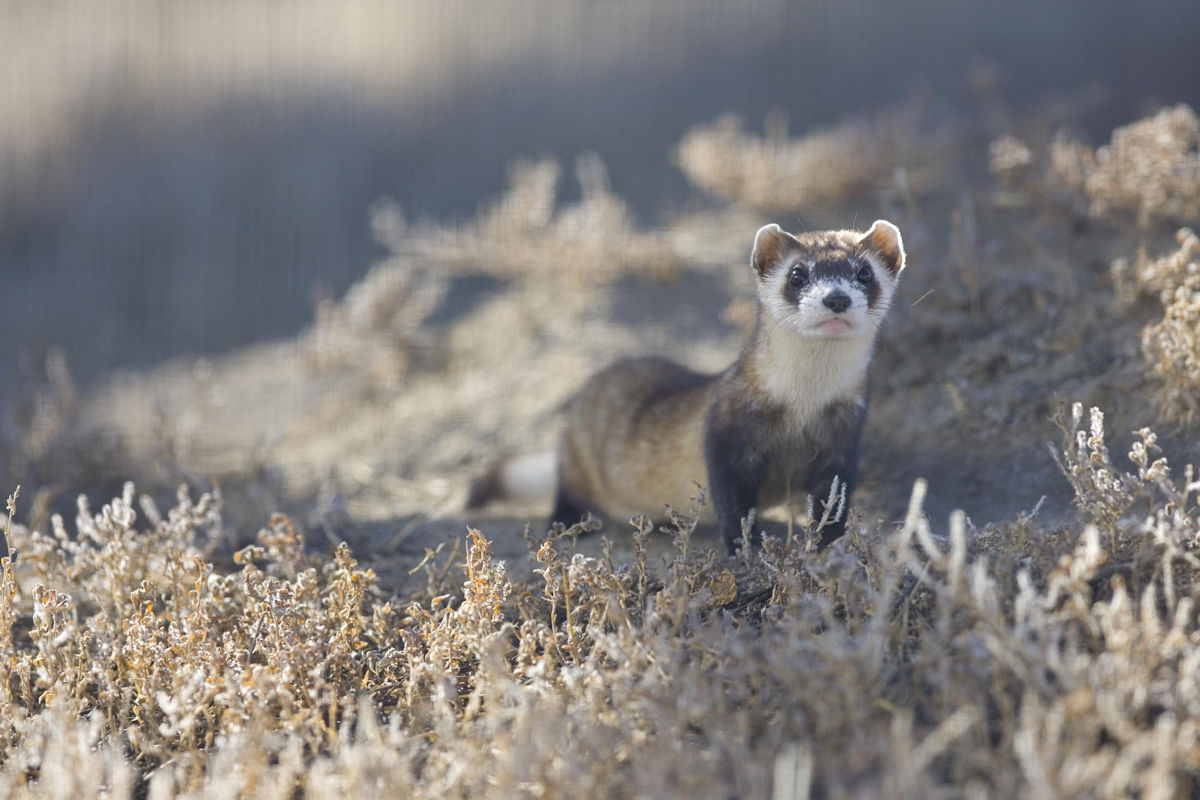
Drones to deliver vaccine-laced pellets in attempt to save endangered ferrets

Black-footed ferret
Black-footed ferret

The US Fish and Wildlife Service hopes to use drones to inoculate black-footed ferrets against sylvatic plague . . .

The US government is set to unleash drones that fire vaccine-laced pellets in a bid to save the endangered black-footed ferret, a species that is facing a plague epidemic across America’s great plains.

The US Fish and Wildlife (FWS) has developed a plan to bombard ferret habitat in Montana with the vaccine, which will be administered via specially designed drones that will be able to shoot pellets in three directions simultaneously.

The vaccines will be targeted at the prairie dog population at the UL Bend National Wildlife Refuge in north-eastern Montana. Black footed ferrets – North America’s only native ferret – are completely dependent upon prairie dogs, which are a type of burrowing rodent, for their food and shelter.

Read more . . .

Bears vs bikes: Who’s at risk?

A biker on Glacier Park's Going-to-the-Sun Road photographs a black bear, May 2016 - Butch Larcombe
A biker on Glacier Park’s Going-to-the-Sun Road photographs a black bear, May 2016 – Butch Larcombe

Here’s a pretty good article by Rob Chaney of the Missoulian on the issue of ‘high speed recreation’ in backcountry areas. Despite the title, it’s not just about mountain bikes . . .

Two weeks before a Kalispell man died in a bicycle collision with a bear near Glacier National Park, an ultra-marathon runner in New Mexico was mauled by a bear she encountered on a New Mexico trail…

On Thursday, an estimated 2,500 people paid their respects to Brad Treat at a memorial service in Kalispell’s Legends Stadium on Thursday. The 38-year-old Forest Service law enforcement officer died on June 29 after colliding with a bear on his bicycle while pedaling on a trail near Halfmoon Lake.

That same Thursday in Missoula, grizzly bear advocates were warning U.S. Fish and Wildlife Service acting Grizzly Bear Recovery Coordinator Wayne Kasworm about the dangers posed by high-speed recreation in bear habitat.

Read more . . .

Road management a hot topic in new forest plan

Gate Across Hay Creek Rd, Flathead NF, April 16, 2016 - W. K. Walker
Gate Across Hay Creek Rd, Flathead NF, April 16, 2016 – W. K. Walker

Even something as commonplace as roads is a hot topic in the new forest plan . . .

The Flathead National Forest will likely change the way it manages its roads when a new Forest Plan is adopted and at least one environmental group isn’t happy with the change.

Three of the four alternatives listed in a recently released draft forest plan will not utilize provisions in Amendment 19, the controversial standard that has resulted in the closure of more than 700 miles of roads across the forest in the past couple of decades.

Under Amendment 19, biologists divided the Forest habitat into grizzly bear subunits and in each subunit, the Forest was to strive for a formula that allowed for 19 percent open roads, 19 percent total roads, and 68 percent core grizzly habitat with no roads.

Read more . . .

Grizzly managers hear some strong feedback on recovery strategy

Grizzly bear sow with three cubs - NPS photo
Grizzly bear sow with three cubs – NPS photo

Grizzly bear recovery is still a contentious issue . . .

A listening session on future grizzly bear management in northwest Montana drew lots of criticism from both bear advocates and livestock proponents.

“While the (U.S. Fish and Wildlife) Service claims it will maintain bear habitat security levels that existed in 2011, it is instead lowering the goal posts on what is considered secure bear habitat,” Keith Hammer of Swan View Coalition said in Missoula at Thursday’s workshop. He accused FWS of “lying” about grizzly population recovery to justify removing the bear from federal Endangered Species Act protection.

From the other direction, Montana Board of Livestock member Nina Baucus said the agency wasn’t doing enough to protect people from a growing population of grizzlies.

Read more . . .

Whitebark pine survival may require modern technology

Whitebark Pine Closeup, 2016 - W. K. Walker
Whitebark Pine Closeup, 2016 – W. K. Walker

Here’s a very interesting article about the diminishing whitebark pine population . . .

Even the living whitebark pine trees look tragic.

Each living tree points gnarled limbs at 10 dead fellows on this mountain pass in the Bob Marshall Wilderness. They bend and twist the way the wind shrieks along the Continental Divide, implying a mix of pain and defiance. They adapted to grow on the most hostile ground in Montana. But they’re failing.

Diana Six calls them “ghost forests.” At the edge of the tree line, beyond where the Ponderosa pine and spruce and alpine fir can survive, the whitebark pine used to rule. The University of Montana forest entomologist seeks them out on the slopes of Ch-paa-qn Mountain west of Missoula, in the Beaverhead Mountains above the Big Hole Valley, and the high ridges of the Bob Marshall. Her search gets harder every year.

Read more . . .