Category Archives: Environmental Issues

Bears vs bikes: Who’s at risk?

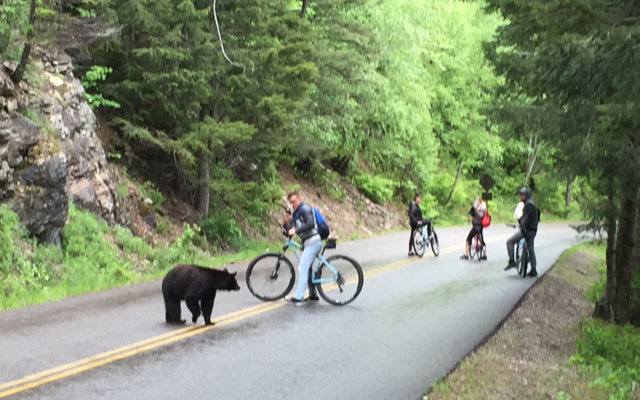
A biker on Glacier Park's Going-to-the-Sun Road photographs a black bear, May 2016 - Butch Larcombe
A biker on Glacier Park’s Going-to-the-Sun Road photographs a black bear, May 2016 – Butch Larcombe

Here’s a pretty good article by Rob Chaney of the Missoulian on the issue of ‘high speed recreation’ in backcountry areas. Despite the title, it’s not just about mountain bikes . . .

Two weeks before a Kalispell man died in a bicycle collision with a bear near Glacier National Park, an ultra-marathon runner in New Mexico was mauled by a bear she encountered on a New Mexico trail…

On Thursday, an estimated 2,500 people paid their respects to Brad Treat at a memorial service in Kalispell’s Legends Stadium on Thursday. The 38-year-old Forest Service law enforcement officer died on June 29 after colliding with a bear on his bicycle while pedaling on a trail near Halfmoon Lake.

That same Thursday in Missoula, grizzly bear advocates were warning U.S. Fish and Wildlife Service acting Grizzly Bear Recovery Coordinator Wayne Kasworm about the dangers posed by high-speed recreation in bear habitat.
Read more . . .

Road management a hot topic in new forest plan

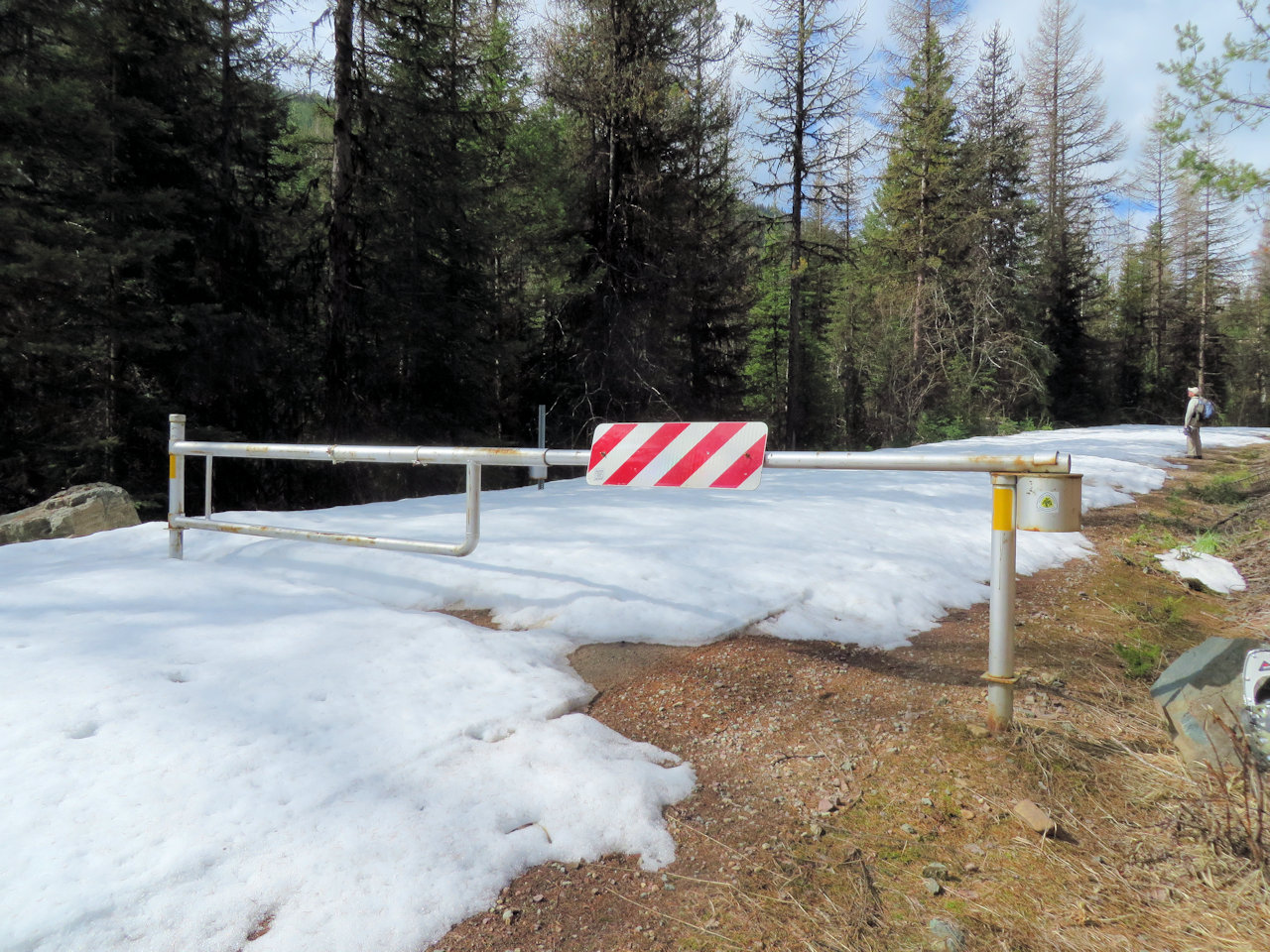
Gate Across Hay Creek Rd, Flathead NF, April 16, 2016 - W. K. Walker
Gate Across Hay Creek Rd, Flathead NF, April 16, 2016 – W. K. Walker

Even something as commonplace as roads is a hot topic in the new forest plan . . .

The Flathead National Forest will likely change the way it manages its roads when a new Forest Plan is adopted and at least one environmental group isn’t happy with the change.

Three of the four alternatives listed in a recently released draft forest plan will not utilize provisions in Amendment 19, the controversial standard that has resulted in the closure of more than 700 miles of roads across the forest in the past couple of decades.

Under Amendment 19, biologists divided the Forest habitat into grizzly bear subunits and in each subunit, the Forest was to strive for a formula that allowed for 19 percent open roads, 19 percent total roads, and 68 percent core grizzly habitat with no roads.

Read more . . .

Grizzly managers hear some strong feedback on recovery strategy

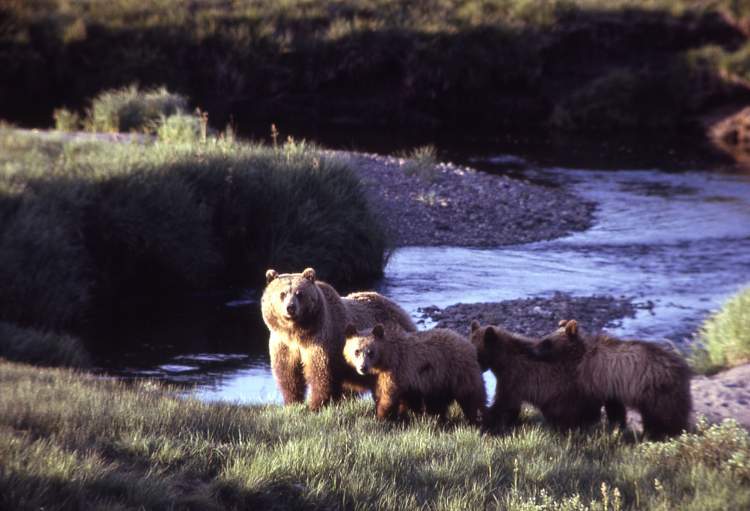
Grizzly bear sow with three cubs - NPS photo
Grizzly bear sow with three cubs – NPS photo

Grizzly bear recovery is still a contentious issue . . .

A listening session on future grizzly bear management in northwest Montana drew lots of criticism from both bear advocates and livestock proponents.

“While the (U.S. Fish and Wildlife) Service claims it will maintain bear habitat security levels that existed in 2011, it is instead lowering the goal posts on what is considered secure bear habitat,” Keith Hammer of Swan View Coalition said in Missoula at Thursday’s workshop. He accused FWS of “lying” about grizzly population recovery to justify removing the bear from federal Endangered Species Act protection.

From the other direction, Montana Board of Livestock member Nina Baucus said the agency wasn’t doing enough to protect people from a growing population of grizzlies.

Read more . . .

Whitebark pine survival may require modern technology

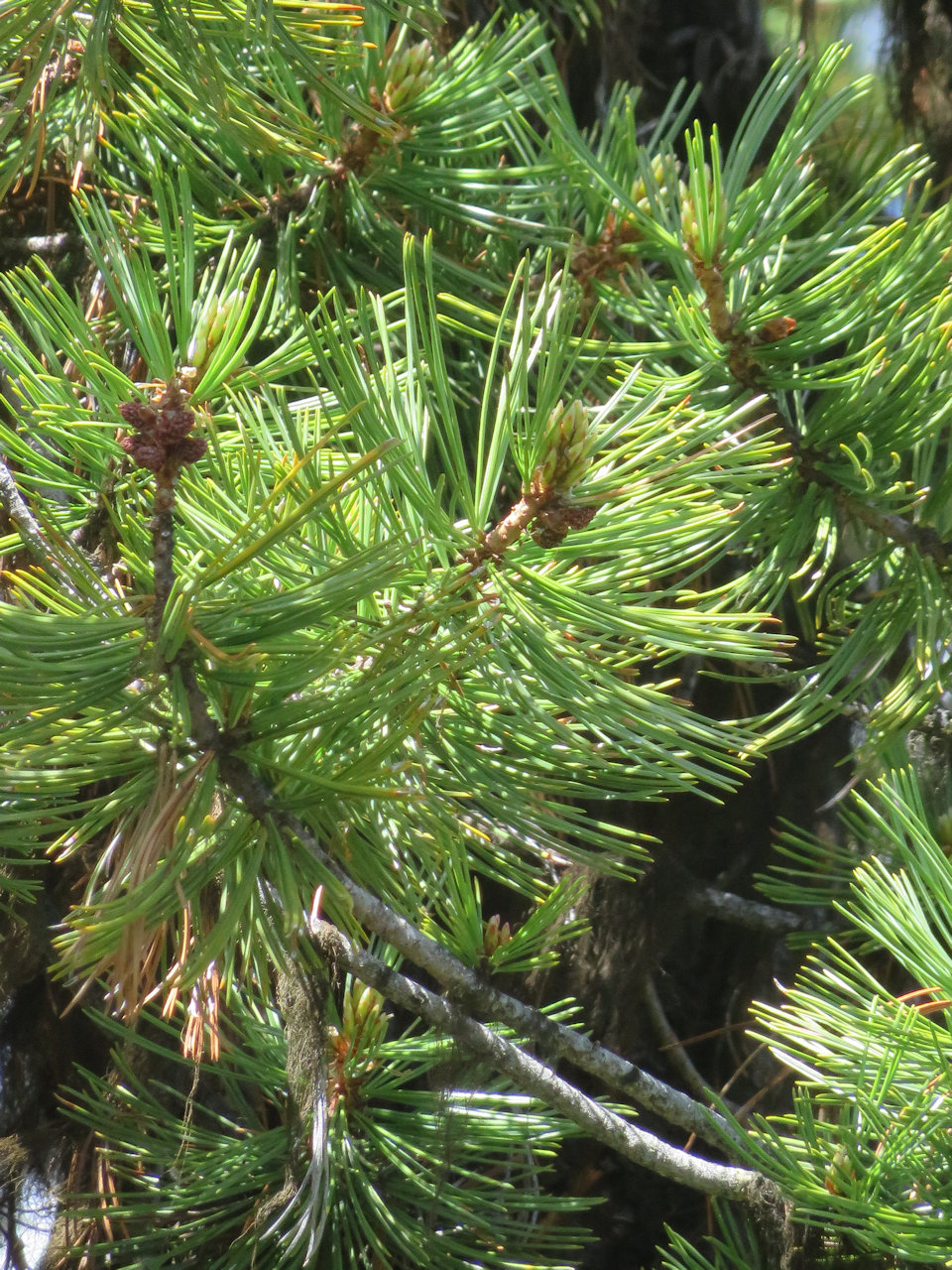
Whitebark Pine Closeup, 2016 - W. K. Walker
Whitebark Pine Closeup, 2016 – W. K. Walker

Here’s a very interesting article about the diminishing whitebark pine population . . .

Even the living whitebark pine trees look tragic.

Each living tree points gnarled limbs at 10 dead fellows on this mountain pass in the Bob Marshall Wilderness. They bend and twist the way the wind shrieks along the Continental Divide, implying a mix of pain and defiance. They adapted to grow on the most hostile ground in Montana. But they’re failing.

Diana Six calls them “ghost forests.” At the edge of the tree line, beyond where the Ponderosa pine and spruce and alpine fir can survive, the whitebark pine used to rule. The University of Montana forest entomologist seeks them out on the slopes of Ch-paa-qn Mountain west of Missoula, in the Beaverhead Mountains above the Big Hole Valley, and the high ridges of the Bob Marshall. Her search gets harder every year.

Read more . . .

Gravel-bed rivers a primary ecological feature in western North American mountains region

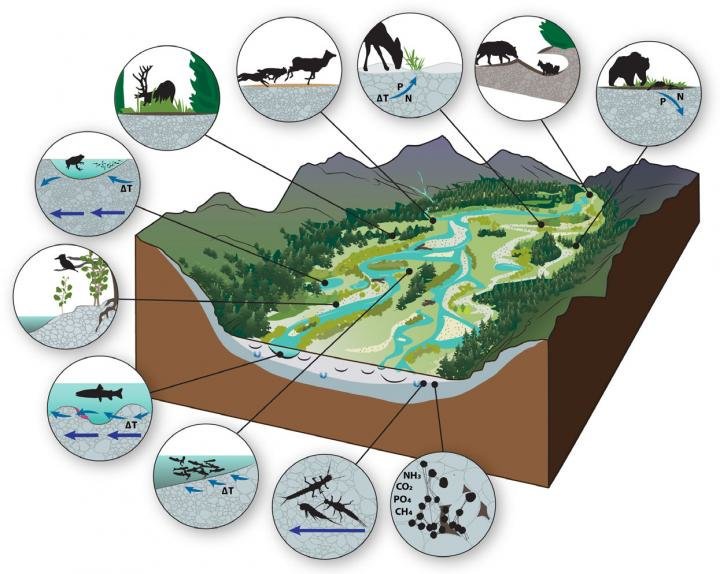
Scientific illustration shows the complexity of organisms that benefit from gravel-bed river floodplain ecosystems - credit: Ric Hauer
Scientific illustration shows the complexity of organisms that benefit from gravel-bed river floodplain ecosystems – credit: Ric Hauer

Here’s a very interesting study led by Ric Hauer of the University of Montana. Recommended reading . . .

Gravel-bed river floodplains are some of the most ecologically important habitats in North America, according to a new study by scientists from the U.S. and Canada. Their research shows how broad valleys coming out of glaciated mountains provide highly productive and important habitat for a large diversity of aquatic, avian and terrestrial species.

This is the first interdisciplinary research at the regional scale to demonstrate the importance of gravel-bed rivers to the entire ecosystem.

University of Montana Professor Ric Hauer, director of the Center for Integrated Research on the Environment, leads a group of authors who looked at the full continuum of species and processes supported by gravel-bed rivers, from microbes to bull trout and from elk to grizzly bears.

Read more . . .

Federal judge blocks BLM fracking rules

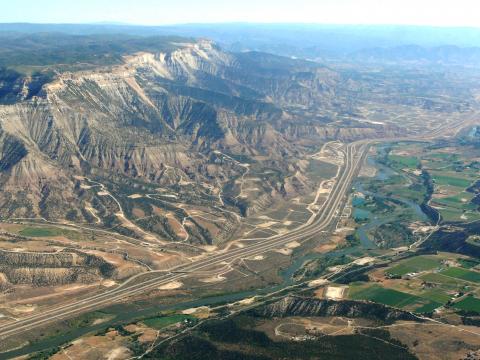
Oil and gas development at Colorado's Roan Plateau. Photo by Ecoflight.

Things are not going well for Bureau of Land Management fracking regulation . . .

A federal judge in Wyoming has struck down the Obama administration’s regulations on hydraulic fracturing, ruling that the U.S. Bureau of Land Management doesn’t have the authority to establish rules over fracking on federal and Indian lands.

In the ruling on Tuesday, U.S. District Judge Scott Skavdahl said Congress had not granted the BLM that power, and had instead chosen to specifically exclude fracking from federal oversight.

Skavdahl made it clear what he was — and wasn’t — considering in his ruling.

Read more . . .

Flathead Forest holds open house to discuss draft revised management plan

From a Headwaters Montana bulletin . . .

The Flathead National Forest has released its long-anticipated “Draft Revised Management Plan” for the 2.3 million-acre forest. This revised plan will set the course for forest management for the next 15-20 years. Because of the anticipated longevity, it’s very important that folks who enjoy and appreciate our local national treasure to show up and participate in the revision process.

You have two opportunities to attend an open house hosted by the Flathead Forest to learn more about the proposed plan and demonstrate your interest.

Kalispell
When: Monday, June 20, from 2-6pm
Where: The Flathead National Forest Supervisor’s Office, 650 Wolfpack Way

Missoula
When: June 22, from 2-6pm
Where:
Hilton Garden Inn, 3720 N. Reserve Street


Want to read up on the Forest Plan before you get there? Go here. (Hint: Start with the maps and Appendix G.)

Partnership works to keep collaborative efforts in final forest plan

Round 2 begins . . .

As the revised Flathead National Forest Plan enters the most recent phase of public comment, members of a diverse coalition of stakeholders who collaborated on the draft document are regrouping to weave a spirit of collaboration into the final plan.

Formed in 2012, the Whitefish Range Partnership is a coalition of longtime adversaries who banded together to help inform management of public lands on the Flathead National Forest.

After nearly three years of meetings and analysis, the Flathead National Forest released the draft version of its revised forest plan last month, unveiling a proposed blueprint for all aspects of management on the Flathead National Forest, from recreational opportunities to designated wilderness, timber production, wildlife and habitat.

Read more . . .


Want to read up on the Forest Plan? Go here. (Hint: Start with the maps and Appendix G.)

Glacier Lake Ecology BioBlitz students study in North Fork

An interesting item from the Daily Inter Lake . . .

The Crown of the Continent Research Learning Center in Glacier National Park hosted 45 students for the Glacier Lake Ecology BioBlitz on May 25 and 26.

The students were from Flathead and Columbia Falls high schools in Northwest Montana, De La Salle Collegiate High School from Warren, Michigan, and Luther College from Decorah, Iowa.

Students observed loons nesting, feeding, calling and interacting on lakes in the North Fork area of Glacier National Park.

Read more . . .

MWA: Zinke flip-flops on public lands transfer

Three Types of Public Lands
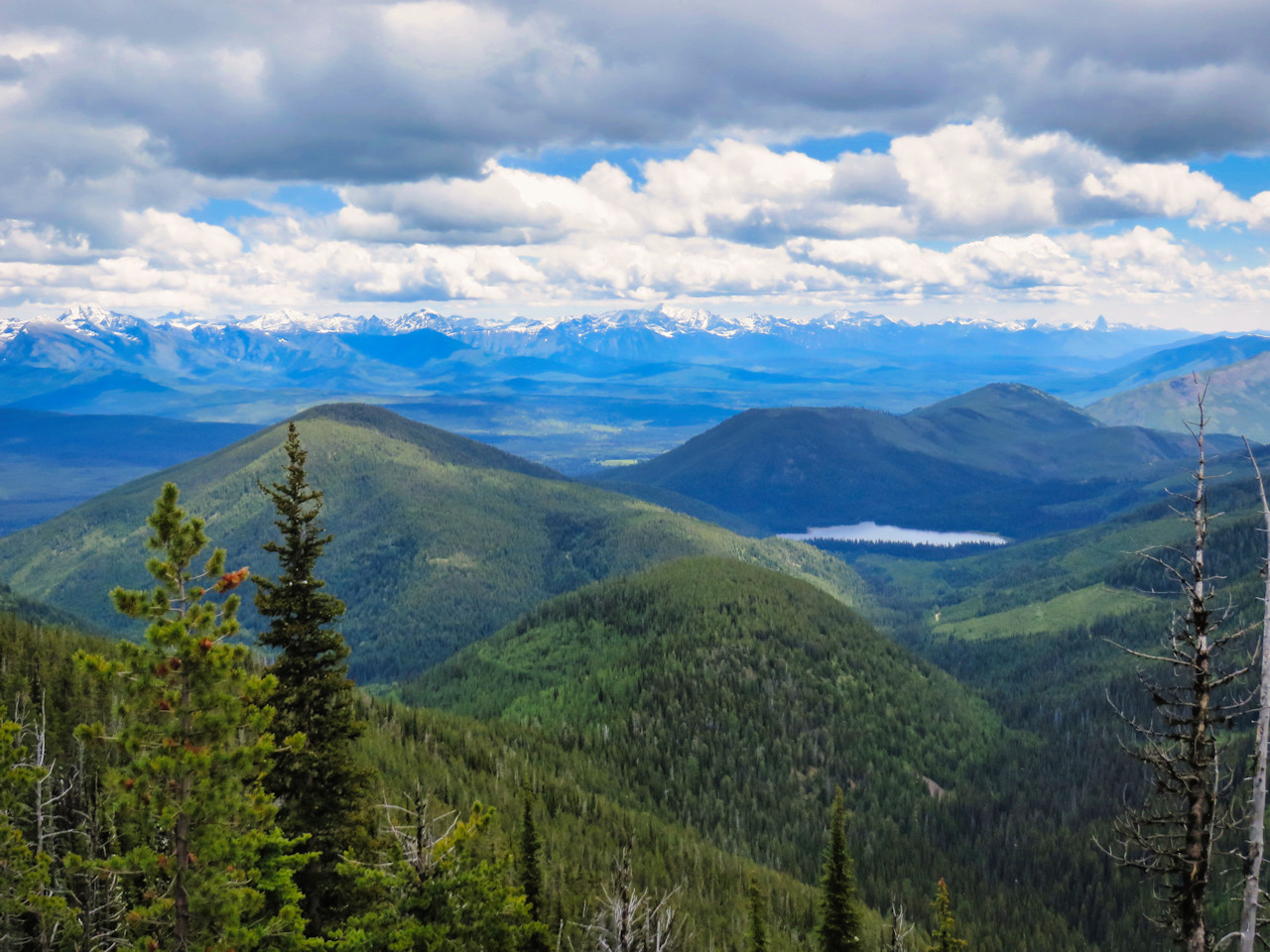
Three types of public lands: Flathead National Forest is in the foreground, left and right; Montana’s Coal Creek State Forest, including Cyclone Lake, is in the middle distance; Glacier National Park stretches across the background.

Rep. Ryan Zinke Voted in favor of an ill-considered public lands-related bill and the MWA is pretty annoyed. Election year posturing is such a pain . . .

In a recent op-ed, Congressman Ryan Zinke called himself a “Teddy Roosevelt conservationist.” He based that self-characterization on a few votes he made against the transfer and sale of public lands and for the Land and Water Conservation Fund. But his vote today in the House Natural Resources Committee in favor of H.R 2316 (the Self-Sufficient Community Lands Act) is far from Rooseveltian. In fact, it’s a direct attack on the legacy Teddy left us – our National Forest lands.

Read more . . .