Category Archives: Environmental Issues

Molly Absalon: What is sacred to some is just fun for others

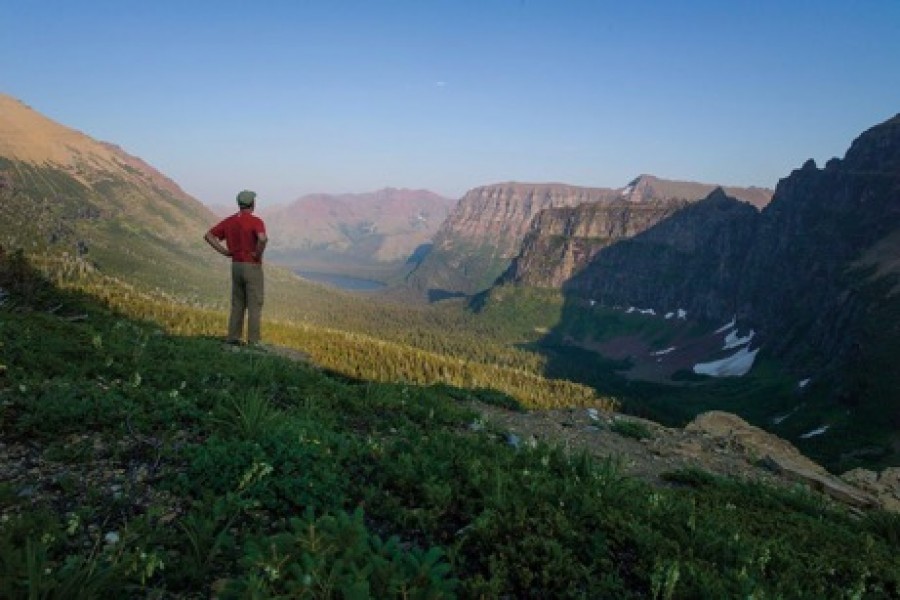
Hiking in GNP

Debo Powers passed along the following op-ed saying, “This is a beautiful article about wilderness written by a mountain biker who has realized that some places need to remain wild.”

Excellent essay. Recommended reading . . .

I grew up in the era of nature writers. In college I took a class called “Wilderness and the American Mind.” Most of my early exposure to wild lands took place on long, grueling backpacking trips during which we trudged for hours under heavy loads to reach magical places far from the madding crowd.

Wilderness served as my church. I found solace and inspiration sitting by an alpine lake, listening to the gentle lap of water on the rocks, watching the sky shift from cornflower blue to pink to purple as the sun sank behind the peaks.

But my relationship with wilderness shifted as my life changed. I found it harder to make the extended trips necessary to reach truly wild places. I grew weary of carrying heavy packs and opted instead for light, fast trips. My mountain bike became my preferred mode of transportation. That or a packraft. Somehow, without me noticing it, I began to view wild places as a place for recreation, a playground rather than a church.

Read more . . .

Second mine near Cabinet Mountains Wilderness nears approval

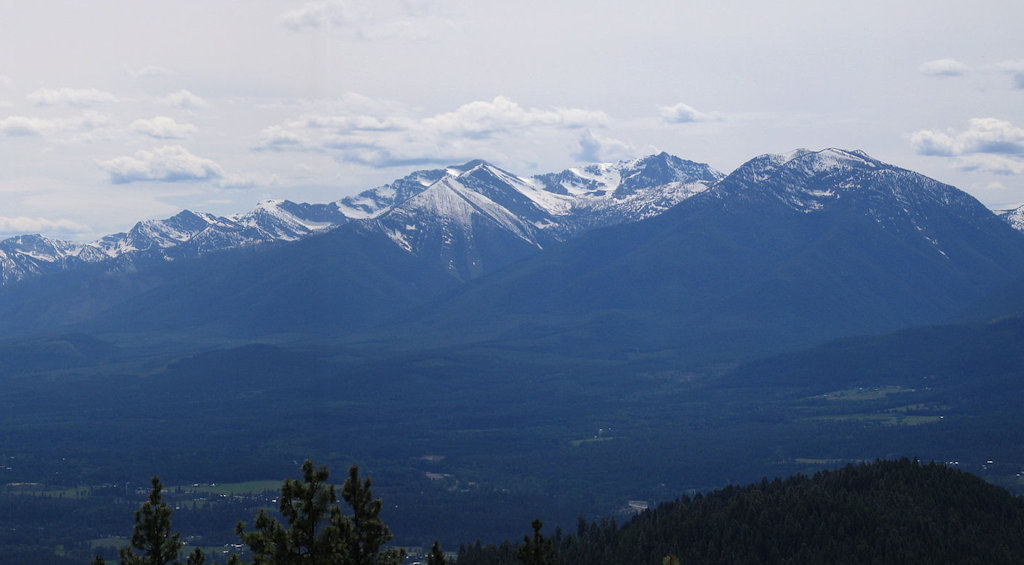
Southern Cabinet Mountains, as seen from Swede Mountain, near Libby

The second of two mines crowding the Cabinet Mountains Wilderness is getting closer to operational approval . . .

Days after one northwest Montana mining project won state approval to start operating near the Cabinet Mountains Wilderness, another expects to see its supplemental environmental impact statement arrive for public review this week.

Coeur d’Alene-based Hecla Mining Co. officials said they expected the environmental review to reach the U.S. Forest Service on Tuesday, with publication expected in the Federal Register on Friday. That starts a 45-day comment period.

Hecla took over Revett Mining Co. in June, paying Revett shareholders $20 million in Hecla stock in the deal. That spelled the closure of Revett’s Troy Mine, but gave greater impetus on opening the larger Rock Creek Mine project five miles northeast of Noxon, in Sanders County. That mine holds a purported 229 million ounces of silver and 2 billion pounds of copper.

Read more . . .

Montanore mine near Cabinet Mountains Wilderness gets partial approval

Southern Cabinet Mountains, as seen from Swede Mountain, near Libby

As expected, the proposed Montanore mine near the edge of the Cabinet Mountains Wilderness received only partial approval from the Montana Department of Environmental Quality . . .

Montana environmental regulators granted conditional approval Friday to a long-stalled silver and copper mine proposed beneath a federal wilderness area, saying the developer must show before mining can proceed that the $500 million project won’t drain overlying creeks.

Department of Environmental Quality Director Tom Livers said the agency was approving an air quality permit and a transmission line that would connect to the Montanore mine. Yet that leaves its operating permit still in question, drawing a backlash from Republicans in the state’s Congressional delegation who urged full approval.

Developer Mines Management, Inc. pledged to move forward despite the state’s concerns over water supplies in the Cabinet Mountains Wilderness.

Read more . . .

Fish & Wildlife Service may transfer National Bison Range to tribes

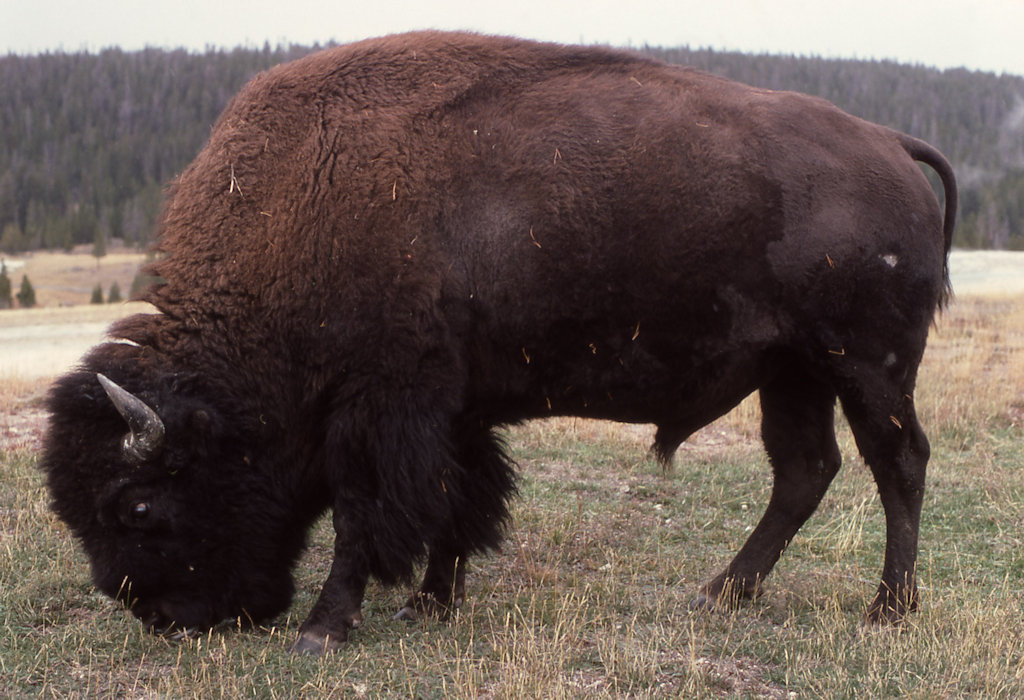
Bison grazing
Bison grazing

It should be interesting to watch this story unfold . . .

The U.S. Fish and Wildlife Service has begun negotiating a possible transfer of the National Bison Range to the Confederated Salish and Kootenai Tribes.

In an email sent to agency employees Friday, Fish and Wildlife Service Regional Director Noreen Walsh announced the opening round of discussions but provided few specifics.

“Given that we are today in a much better place regarding the future of bison … and that we want to strengthen our partnership with the CSKT, we believe that now is the right time to investigate the possibility of transferring the refuge, which was long ago carved out of tribal lands, into trust for the benefit of the CSKT,” Walsh wrote.

Her email also noted such a transfer would require an act of Congress.

Read more . . .

Lawsuit seeks tougher protections for grizzlies in Cabinet-Yaak

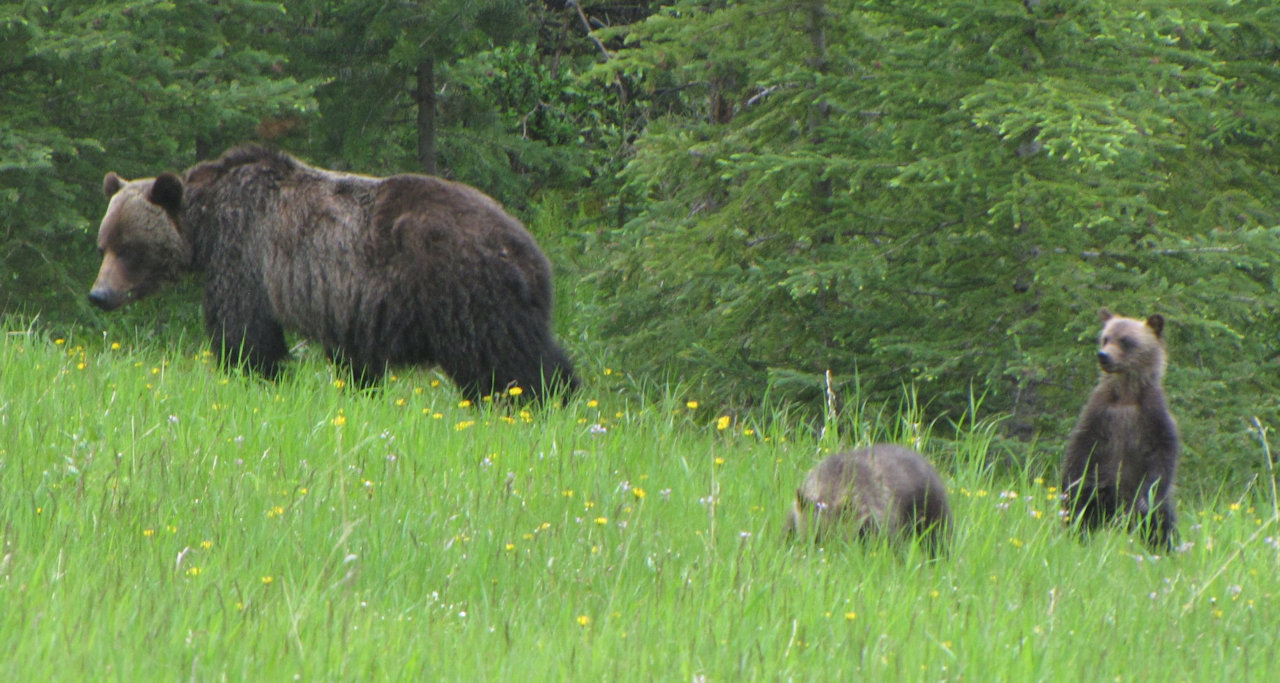
Grizzly Sow with Two Cubs - Wikipedia en:User Traveler100
Grizzly Sow with Two Cubs – Wikipedia en:User Traveler100

The US Fish and Wildlife Service continues to butt heads with conservationists over the status of the Cabinet-Yaak grizzly population . . .

The Alliance for the Wild Rockies on Tuesday filed a lawsuit in federal court to force the U.S. Fish and Wildlife Service to upgrade federal protections for grizzly bears in the Cabinet-Yaak ecosystem.

Grizzlies in the lower 48 states have been listed as “threatened” under the Endangered Species Act since 1975. One of five distinct populations, the bears in the Cabinet-Yaak ecosystem have struggled compared with the populations occupying areas near Glacier and Yellowstone national parks.

The Missoula conservation group’s lawsuit alleges that the Fish and Wildlife Service failed to use a scientific rationale in its 2014 decision not to reclassify the Cabinet-Yaak population as “endangered.”

Read more . . .

Wolverine case probes if feds made rational decision

Wolverine (Gulo gulo, female, born 1996) at the Helsinki Zoo

Here’s the latest on the fight over adding wolverines to the endangered species list. (Bonus fact: The judge has actually seen three of them.) . . .

In a room packed with wolverine legal experts, U.S. District Judge Dana Christensen may have had the best brief. He actually saw the rare carnivore on three separate occasions.

“I don’t know what the odds are of seeing a wolverine three times,” Christensen told the attorneys, “but there’s no reason for any of you to explain it’s a member of the weasel family with large feet that eats marmots. I’ve seen that.”

Christensen added he also had read the scientific reports on the wolverine’s habitat and population, was aware of how elusive the animal is and how hard it is to study. What he wanted to know in the case of Center for Biological Diversity et. al. v. Interior Secretary Sally Jewell was whether an agency decision denying Endangered Species Act protection to wolverines was reasonable or arbitrary.

Read more . . .

U.S. Forest Service strategy document paints bleak picture

The Forest Service has had a conflicting set of goals for the last few decades but, for Region 1 at least, things seem to be coming to a head . . .

A new strategy for managing public lands for recreation, heritage and wilderness paints a bleak picture of the U.S. Forest Service’s own ability to tackle the job.

“You could say this looks like a D-minus report card,” said George Bain, Forest Service Region 1 director of recreation, lands, minerals, heritage and wilderness. “To us, this is how it is. We wanted to take a good, hard look and develop a strategy for how to work in that world. We don’t have all the money we’d want. We don’t have all the workforce we’d want. We don’t have the ability to take care of everything the way we’d like. This is the landscape we’re working in. Let’s see how to address this.”

The 50-page document released last August got little notice outside the Region 1 Missoula headquarters. But it had been more than a year in the drafting, and it has been signed by Regional Forester Leanne Marten, her deputies and the supervisors of all 10 national forests that report to her.

Read more . . .

See also: The Northern Region Sustainable Recreation, Heritage, Wilderness (RHW) Strategy 2015-2020 (1.68MB, PDF)

Climate impacting trout populations worldwide

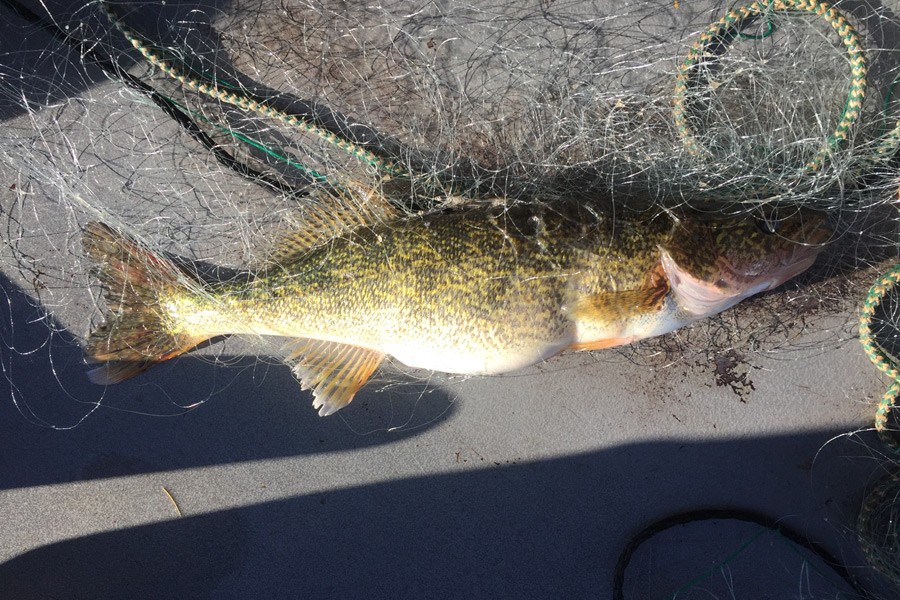
Native westslope cutthroat trout and bull trout stranded in a pool in Ole Creek. Courtesy Jonny Armstrong  USGS
Native westslope cutthroat trout and bull trout stranded in a pool in Ole Creek. Courtesy Jonny Armstrong USGS

Rising water temperatures and general problems with access to clean, fast running water are affecting trout populations globally . . .

Temperature-sensitive trout thrive in water that is cold, clear and abundant – not exactly groundbreaking news. But a recent study tracking the relationship between warming climes and the adverse effects on global trout populations is the first to establish a scientific connection.

A team of researchers with the U.S. Geological Survey – including two researchers based at Glacier National Park – found that climate directly and consistently influences trout populations worldwide, and published their finding recently in the international quarterly journal “Reviews in Fish Biology and Fisheries.”

In the study, titled “Impacts of Climatic Variation on Trout: A Global Synthesis and Path Forward,” lead author Ryan Kovach and his colleagues provide the first global synthesis of trout responses to climate change over time. Despite the economic, cultural, and ecological value of trout, Kovach said long-term data comparing the health of trout populations to changes in streamflow and water temperature are surprisingly limited.

Read more . . .

Bear hibernation linked to changes in gut microbes

Grizzly Bear - Thomas Lefebvre, via Unsplash
Grizzly Bear – Thomas Lefebvre, via Unsplash

Two years ago, we mentioned the weird stuff that goes on when bears hibernate. Here’s another article along those lines . . .

Each year, bears hibernate for the winter. They gorge themselves on food to pack on fat, but somehow avoid health consequences. Now, scientists have found that the bears’ shifting metabolic status is associated with significant changes in their gut microbes.

“The restructuring of the microbiota into a more avid energy harvester during summer, which potentially contributes to the increased adiposity gain without impairing glucose metabolism, is quite striking,” said Fredrik Backhed, one of the researchers, in a news release.

The composition of gut microbiota can influence the amount of energy harvested from the diet. In fact, microbiota shifts in people who are obese and in those with type 2 diabetes.

In this latest study, the researchers collected fecal samples from wild bears during hibernation and in the active period. Then, the researchers analyzed the microbes living within these sample. The scientists found reduced diversity in the hibernation microbiota…

Read more . . .

Montana state senator new CEO of lands privatization group

Montana state Sen. Jennifer Fielder, a Republican representing Thompson Falls, is the new CEO of the American Lands Council.  The ALC is one of the point organizations behind the movement to demand that federal lands be turned over to state control. The states, in turn, would auction management of these lands off to private control.

What we have here, folks, is a serious conflict of interest what with her being a legislator involved in public land study/bills and being CEO of a group that wants public lands to be transferred to states. Senator Fielder has already had issues with a legislative staffer being a paid lobbyist of ALC and other groups.

You just can’t make this stuff up.

The Salt Lake Tribune has more details . . .