Category Archives: Environmental Issues

Alberta to formally protect 250,000 acres north of Waterton-Glacier Park

Castle Wilderness, Alberta, Canada


Well, this is good news. Alberta is implementing protections for the entire Castle Watershed, just north of Waterton Park . . .

The Alberta government announced Sept. 4 that 250,000 acres just north of Waterton-Glacier International Peace Park will be protected from logging and development.

The area, which encompasses the entire Castle Watershed, is part of the Crown of the Continent Ecosystem, which spans northwestern Montana, southeastern British Columbia, and southwestern Alberta.

Efforts to protect the area date back decades, and on Friday the Canadian government announced the expansion of the existing Castle Wildand and creation of a new provincial park on the Alberta front range. Supporters said the designation will preserve the area’s ecological integrity and offer increased protection for wildlife populations, including trans-boundary grizzly bears, wolverines and cutthroat trout.

Read more . . .

Love the Badger-Two Medicine? Don’t Miss This!

Stolen shamelessly from an announcement sent out by Dave Hadden of Headwaters Montana . . .

Blackfeet Tribal leaders and conservationists have made significant progress in recent months toward permanent protection of the Badger – Two Medicine sacred landscape.

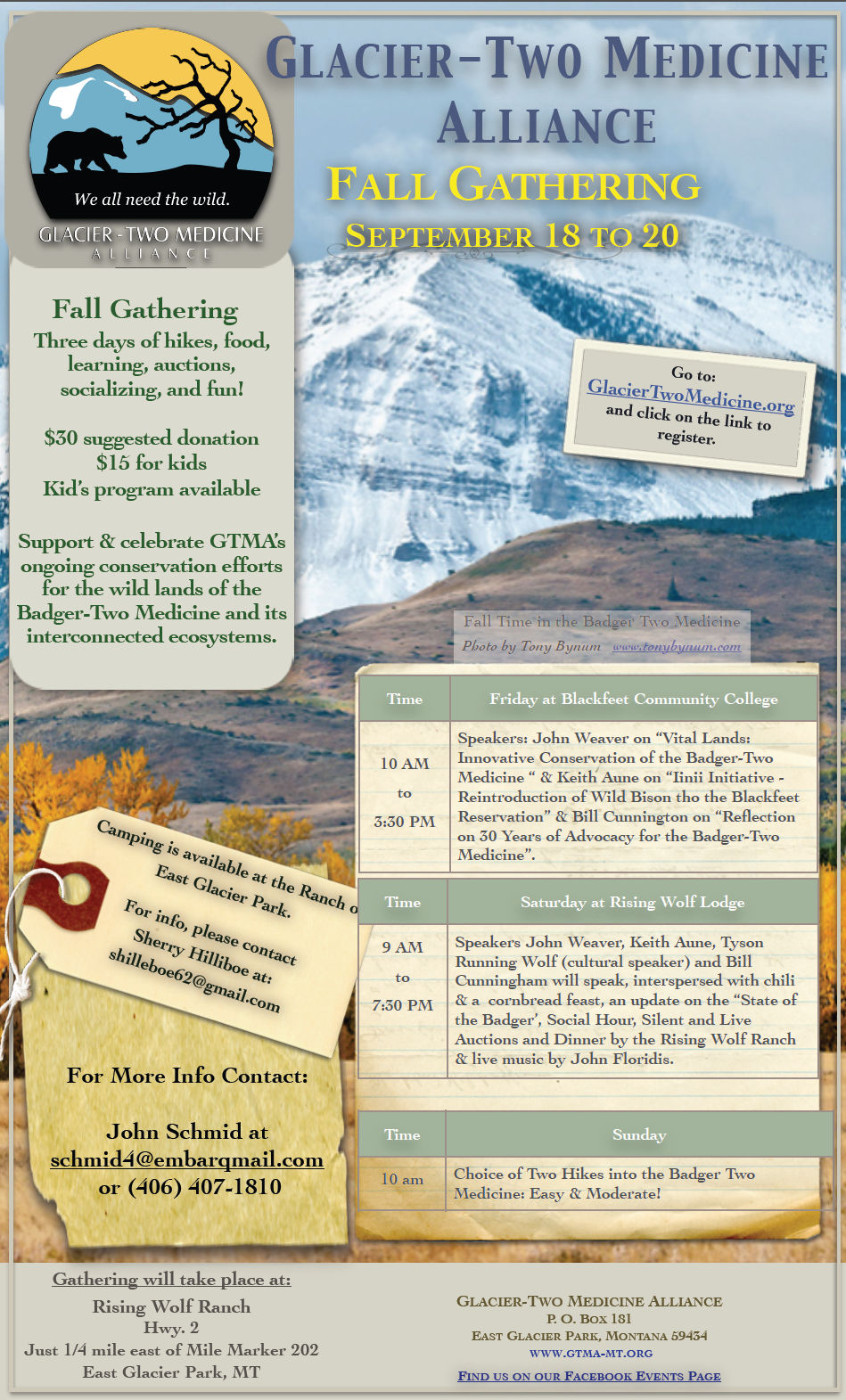
The Glacier Two Medicine Alliance’s annual Fall Gathering is well worth attending and supporting.  Good food, good music and GREAT people.  (See poster below.)

Put this event on your fall calendar and contribute your energy to a positive future for this place.

Glacier-Two Medicine Alliance 2015 Fall Gathering Poster

NFPA speaks up for the Badger-Two Medicine

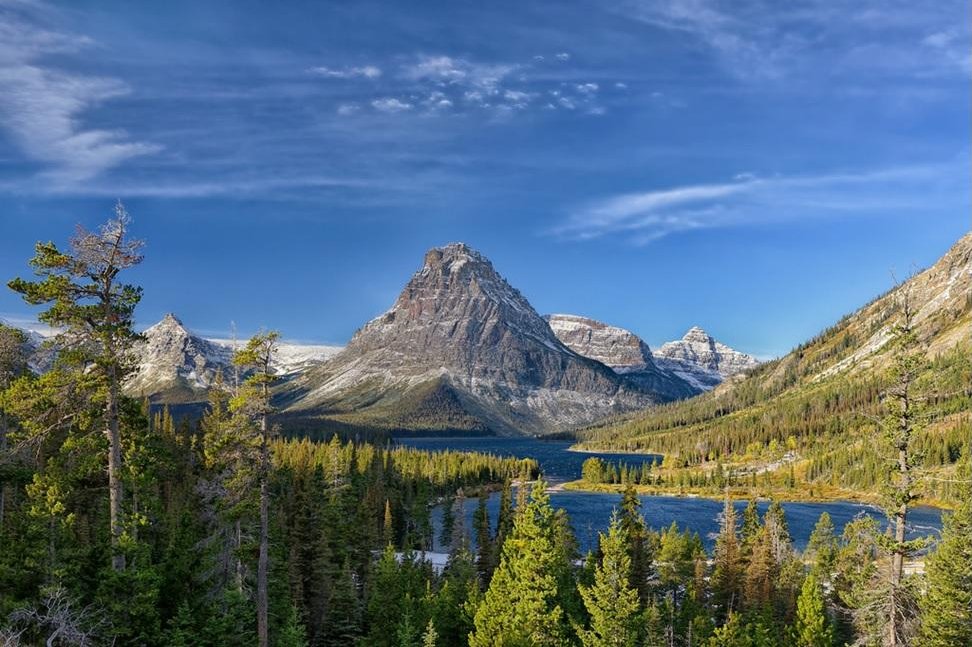
Two Medicine Lake
Two Medicine Lake

Here’s a report from NFPA president Debo Powers on yesterday’s meeting in Choteau concerning drilling leases in the Badger-Two Medicine . . .

On Wednesday, September 2, an independent federal agency called the Advisory Council on Historic Preservation (ACHP) traveled to Choteau, Montana to hear from the public about proposed oil and gas development in the Badger-Two Medicine. The hearing was preparation for the ACHP’s recommendation to the U.S. Forest Service concerning whether or not the impacts of drilling can be mitigated.

Three members of the North Fork Preservation Association traveled four hours each way to attend the public hearing and stand in solidarity with the Blackfeet Nation who say that the Badger-Two Medicine is sacred and central to their culture.

The large meeting room at the Stage Stop Inn was packed with both native and non-native Montanans who showed their support for cancellation of the leases.  The testimony took two and a half hours with each speaker having 2 minutes to speak. The only person who spoke in favor of drilling was the attorney for the company who holds the leases.

One member of the ACHP told me afterwards that it was impressive to see the non-native support for native people and their culture. He commented that common interests can bring people together.

Grizzly ‘security zones’ approved on state lands west of Glacier Park

Cinca, May 5, 2015 by W. K. Walker

Grizzly bears are getting better guarantees of safe passage through state lands in the Whitefish Range . . .

The state Land Board on Monday approved a proposed lawsuit settlement between Montana and three conservation groups that would protect grizzly bears while still allowing logging in two state forests west of Glacier National Park.

The settlement would create restrictions designed to minimize disturbances to grizzly bears in seven “security zones” totaling 34 square miles within the Stillwater and Coal Creek state forests.

If a federal judge approves the settlement, six timber projects that have been on hold for a year will be allowed to go forward, said Sonya Germann, forest management bureau chief for the state Department of Natural Resources and Conservation Forest’s trust land management division.

Read more . . .

More reading: Grizzly bears ensured safe passage on Glacier Park’s western edge (Missoulian)

Speak up for the Badger-Two Medicine

Here’s an important message from our friends at the Montana Wilderness Association for anyone concerned about the potential for drilling activities in the Badger-Two Medicine region. Note that Debo Powers (debopowers@gmail.com) is organizing a car pool to attend the meeting in Choteau . . .

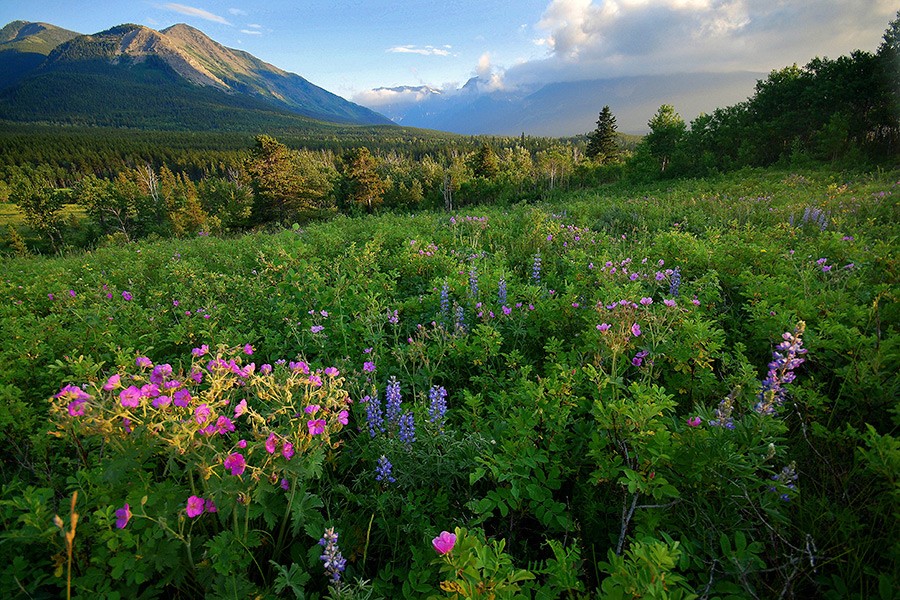
The Badger-Two Medicine (photo courtesy of Leanne Falcon and Glacier-Two Medicine Alliance)

On September 2, 2015, the Advisory Council on Historic Preservation (ACHP) travels to Choteau, Montana to hear from the public about proposed oil and gas development in the Badger-Two Medicine. ACHP is an independent federal agency that promotes the preservation, enhancement, and productive use of our nation’s historic resources. In this case, the council will advise the U.S. Forest Service (USFS) whether the negative impacts of proposed drilling in the Badger-Two Medicine can be mitigated to avoid damaging the Badger’s sacred, cultural, and historical values.

We have a very simple message for the ACHP: any development in the Badger-Two Medicine will bring irreparable damage. The only recommendation the ACHP can make for preventing damage and desecration to this sacred area is this: Cancel the illegal leases.

We need your help to make this message loud and clear to the ACHP.

The USFS must consider ACHP’s recommendation in making its final determination about oil and gas drilling in the Badger. If the ACHP tells the USFS that the agency should carefully consider lease cancellation because the impacts cannot be mitigated, it strongly bolsters the case we have been making – that lease cancellation is the only good option for the Badger. But if ACHP proposes that the development can somehow be mitigated to decrease damage to the cultural property, it leaves the door open for drilling across the Badger. Encouragingly, the USFS last week recognized, in its response to a U.S. District court order, that cancellation is an option the agency could pursue.

The ACHP needs to hear from all Montanans about why the Badger-Two Medicine is an invaluable piece of Blackfeet, Montana, and American history.

We’re asking people to attend the meeting in Choteau on Wednesday, September 2 or else submit a written comment to ACHP, or both.

The meeting takes place in Choteau on September 2 from 3 to 6 p.m. at the Stage Stop Inn, 1005 Main Ave. North.

ANYONE WHO WOULD LIKE TO CARPOOL FROM THE NORTH FORK TO CHOTEAU ON SEPTEMBER 2 TO ATTEND THIS MEETING, PLEASE CONTACT DEBO AT debopowers@gmail.com

If you would like to speak at the meeting, you can pre-register to do so by contacting Katry Harris at 106permittodrill@achp.gov. People who have not pre-registered will be allowed to speak if time permits.

To submit a written comment, email it to Katry Harris at 106permittodrill@achp.gov or mail her your comments to:

Advisory Council on Historic Preservation
401 F Street, NW, Suite 308,
Washington, D.C. 20001-2637

All comments must be submitted by 3 p.m. (MST), September 4, 2015.

Here are some comment suggestions:

  • The Badger-Two Medicine area holds significant cultural and historical importance to the Blackfeet people, to the people of Montana, and to all citizens. Sacred lands should be protected from industrialization for posterity. What does the Badger mean to you and your family?
  • The Badger-Two Medicine is a living cultural landscape and an intact ecosystem. Its cultural value cannot be separated from its ecological integrity.
  • The ACHP should avoid making recommendations that suggest that the negative impacts of oil and gas exploration can be mitigated or avoided, because that is not possible.
  • The only option to avoid permanent damage to the Badger-Two Medicine is to not drill and to encourage the federal land managers to work together to cancel all of the remaining leases.

Casey Perkins, MWA’s Rocky Mountain Front field director

Debo Powers: Is Canadian logging a threat to pristine drainage?

Debo Powers, president of the North Fork Preservation Association, had an excellent op-ed on the Daily Inter Lake yesterday talking about heavy logging in the Canadian Flathead drainage . . .

The North Fork of the Flathead River has long been recognized as an internationally special stream, both in Canada and the United States. As such, the drainage has been managed with unusual care and attention on both sides of the international line.

But recent activity on the British Columbia side of the North Fork Valley should have all of us on alert. Especially those of us who care deeply about clean water, native trout, Glacier Park and Flathead Lake.

Over the past decades, much of the concern over the North Fork of the Flathead has focused on energy and coal development. And rightly so. Mountain-removal coal mining would have had devastating effects on the clean water that pours out of Canada, into Northwest Montana.

Thankfully, we’ve put that concern behind us via international agreements. But now we need similar, international agreements on how the North Fork of the Flathead Valley is going to be logged, particularly north of the border.

Obviously, logging does not have nearly the impact of coal mining. Trees grow back. Timber harvest can be compatible with keeping the North Fork healthy. But it’s compatible only if done correctly, up to modern scientific standards and with full transparency.

Two companies, Canfor and Jemi Fibre, are cutting or plan to cut large swaths of forest in the British Columbia Flathead. It’s worth noting that clearcut logging of such massive scale would simply not be allowed in the United States. In addition, the United States would have much stricter guidelines — such as how heavy equipment is used and requiring buffer zones around streams.

These are not just any streams. The logging is proposed around Foisey and McClatchie Creeks. These are major tributaries of the North Fork. Not only are they the source of clean water that eventually flows into Flathead Lake, they are major spawning tributaries for bull trout migrating out of Flathead Lake.

In particular, Jemi Fibre’s plans to log “Sportsman’s Ridge” are of particular concern. This area produces 30-40 percent of the bull trout in the North Fork. As the name implies, it is rich with wildlife.

On July 17, Sen. Jon Tester wrote Secretary of State John Kerry asking him to broach the subject of watershed management in the North Fork with the Canadian Minister of Foreign Affairs.

Sen. Tester wrote, “…proposed logging in the Canadian Flathead near McLatchie and Foisey Creeks [major tributaries to the North Fork] have Montanans and federal agencies very concerned about adverse downstream impacts on water quality and wildlife… Sedimentation from large-scale timber harvest has great potential to negatively affect” the North Fork.

Flathead Trout Unlimited raised the alarm on Canadian logging in the watershed. I am grateful for their vigilance.

Please note that no one is saying the North Fork should be entirely off-limits to logging. There is room for sustainable timber harvest here, and we know logging can be light on the land and even beneficial for some wildlife species. We are simply saying that Canada and Montana should be good neighbors when planning this logging.

Experts from both countries should carefully think out logging plans. Those plans should employ the latest science and the best management practices to protect the wildlife, fish and water we share. After all, those resources move freely over the international border.

The North Fork of the Flathead Valley is a truly special place. Generations of Montanans and Canadians have worked together to keep it that way. Ultimately, the citizens of each nation have the final responsibility to be good stewards, and good neighbors.

I encourage Montana’s entire congressional delegation and Gov. Steve Bullock to speak clearly and respectfully to their Canadian counterparts: Let’s work together to keep the North Fork special, before it’s too late.
Record low streamflows for North and Middle Fork

Creeks and rivers are very low across this corner of Montana . . .

The two primary tributaries of the Flathead River have the lowest streamflows on record for late August, further reflecting the extreme drought conditions that are tormenting the region in a year being defined by smoky skies and stingy weather.

Entering the final days of August, the Middle Fork Flathead River was running at 470 cubic feet per second, a new record surpassing the previous low set in 1940, according to the National Weather Service. The median flow for this time of year is 977 cfs.

The North Fork Flathead River was running at 628 cfs, surpassing the 2001 record low. The median flow is 1,260 cfs. The streamflows are the lowest since monitoring gauges were established 75 years ago, according to Ray Nickless, NWS hydrologist.

Read more . . .

FWP bear managers ask residents to secure attractants

From a recent Montana Fish, Wildlife and Parks press release . . .

FWP bear managers are asking residents in northwest Montana to secure garbage, pet food and other attractants in light of recent conflicts in the Whitefish area. Bear and Lion Specialist Erik Wenum notes that several black bears have been accessing unsecured garbage particularly in the Lion Mountain and Whitefish State Park Road areas.

“If residents secure garbage it would take care of most of our problems there,” says Wenum. He advises the following:

  • Secure garbage inside a garage or secure shed
  • Bring pet food in at night
  • Clean up livestock food
  • Bring in bird feeders, clean up spilled seed

When bears access garbage they can become food conditioned and can potentially be dangerous. Wildlife biologists usually have to kill food conditioned bears in the interest of public safety.

For information or to report a problem, call:
Erik Wenum, FWP Bear and Lion Specialist; 756-1776.


See also:

Black bears ‘pour down’ on western Montana valleys for apples, berries (Missoulian)

Hungry bears create problems across Flathead (Daily Inter Lake)

Montana senators, others meet to celebrate North Fork protection

Besides smoke and fires, there has been some other North Fork-related news. Most notably, there was a meet-n-greet last Monday at the Blankenship Bridge to celebrate passage of the North Fork Watershed Protection Act. Included were Montana’s Senators Jon Tester and Steve Daines, Marcy Grossman, Canadian Consul General for the Rocky Mountain Region, and several other speakers. There was a substantial North Fork contingent present and lots of press.

They also had munchies and coffee. Pretty good munchies and coffee, in fact.

Anyway, here are links to most of the press coverage . . .

On a smoky day, celebrating the North Fork (Hungry Horse News and Daily Inter Lake)

Bipartisan Collaboration Preserves the North Fork (Flathead Beacon)

Montana Senators Celebrate North Fork Protection (ABC-fOX)

North Fork Flathead protection celebrated by Tester, Daines, others (Missoulian)

Timeline submitted for decision on Badger-Two Medicine drilling leases

Two Medicine Lake
Two Medicine Lake – Flikr User Phil’s Pixels

The feds have decided to make a decision about energy leases in the Badger-Two Medicine region. By November 30, they will either commence to cancel the leases …or not.

This would be funny if the consequences weren’t so serious. Just read the darn article while I go bang my head on my desk . . .

Public land managers have submitted a court-ordered schedule framing the steps they’ll take to either lift a suspension of oil and gas drilling on a prized and culturally sacred landscape adjacent to Glacier National Park or cancel the energy leases outright.

In setting the schedule, federal land managers for the first time are considering the dissolution of energy leases in the Badger-Two Medicine area as an option to settle a dispute over whether they were granted illegally, as leaders of the Blackfeet Nation contend. The Badger-Two Medicine is home to the Blackfeet creation story and is at the center of a hard-fought legal battle, with the lease-holder calling for the drilling suspension to be lifted on one side and a vast coalition of tribes, conservation groups and Montana politicians urging permanent protection on the other.

The timeline to resolve the decades-old suspension of an energy lease in the Badger-Two Medicine was drafted after a federal judge ordered the U.S. Department of Justice, the Bureau of Land Management and the U.S. Forest Service to draft a schedule for the agencies to complete their review.

Read more . . .