Here’s an excellent article on the efforts to restore the whitebark pine population . . .
It’s a late September day, threatening to rain, and the mountainsides around Whitefish, Montana are popping with red huckleberry leaves, mountain ash, and maple. “We’re almost to the whitebark zone,” Melissa Jenkins announces as the ski lift ascends over Whitefish Mountain Resort and the air temperature drops. As we near the summit, she points out the towering, gray skeletons of dead trees poking out of the shrubby understory.
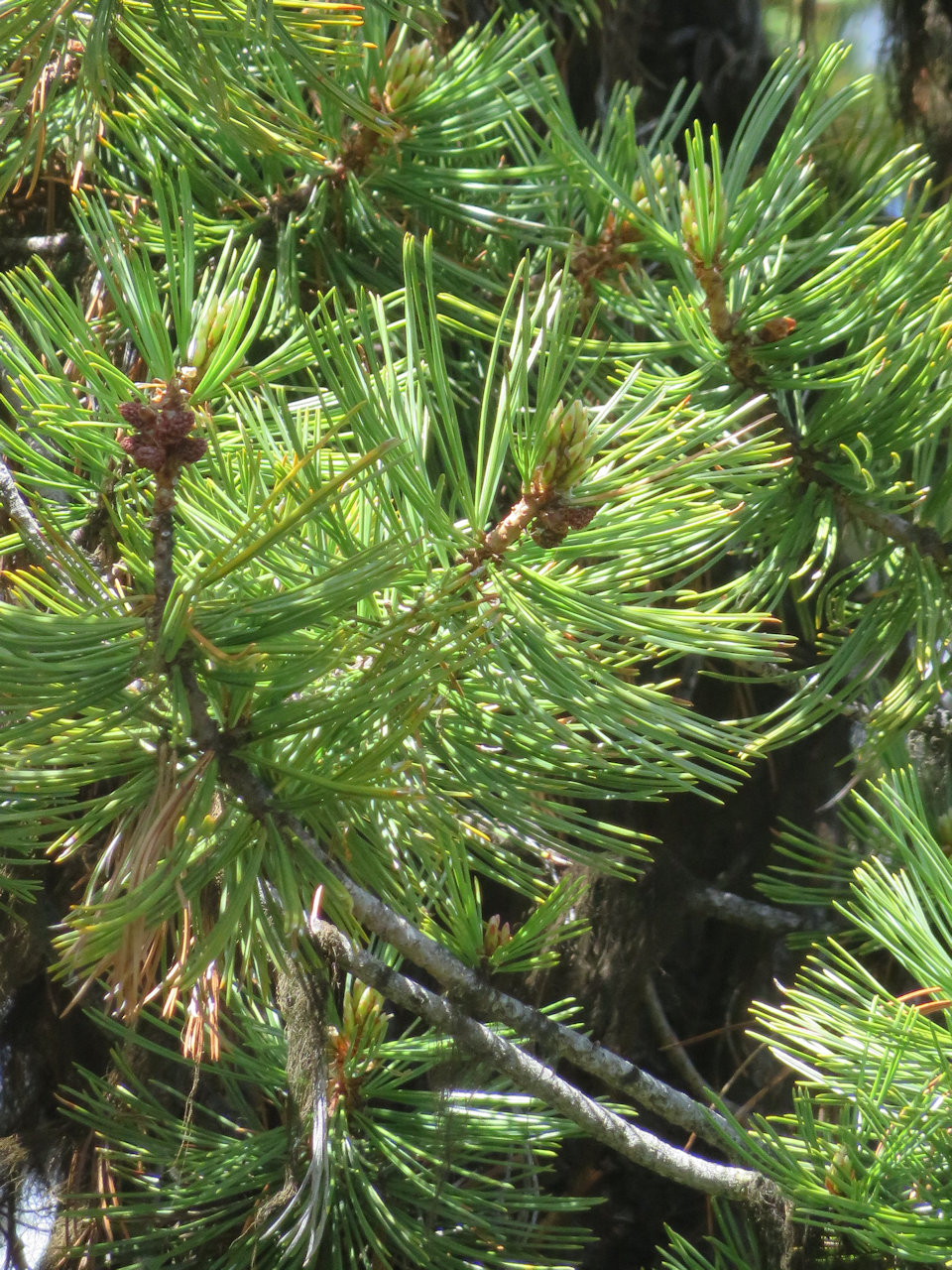
Jenkins explains that whitebark pines (Pinus albicaulis) once dominated the upper mountain here. The trees make a living in the higher elevations of the Sierra Nevada, the Cascades, and in the Rocky Mountains as far south as Wyoming. But in the 1920s, a rust fungus introduced from Asia started appearing in the northern Rockies. Blister rust (Cronartium ribicola) hit whitebarks hardest in northern Montana and Idaho, southern Alberta, and British Columbia. By the time Jenkins, who oversees forest management activities on the Flathead National Forest, arrived in 2008, blister rust had killed 80 percent of the region’s whitebark pines.
The species’ outlook has grown increasingly dire over the past 20 years. Blister rust has been a big part of that problem. So have unprecedented, climate-driven outbreaks of native bark beetles. Fire suppression has also allowed shade-tolerant tree species to crowd out whitebarks. In 2011, the whitebark pine became the first widely distributed tree considered for protection under the Endangered Species Act. Although the U.S. Fish and Wildlife Service said the tree warranted listing as a threatened or endangered species, limited resources have kept it from being prioritized for protection. Canada declared it endangered under the Species at Risk Act in 2012.
Devon Energy relinquished its 15 oil and gas leases in the Badger-Two Medicine region. All that’s left now is the ongoing battle with Solonex over their two leases . . .
U.S. officials cancelled 15 oil and gas leases on Wednesday in an area bordering Glacier National Park that’s considered sacred to the Blackfoot tribes of the U.S. and Canada.
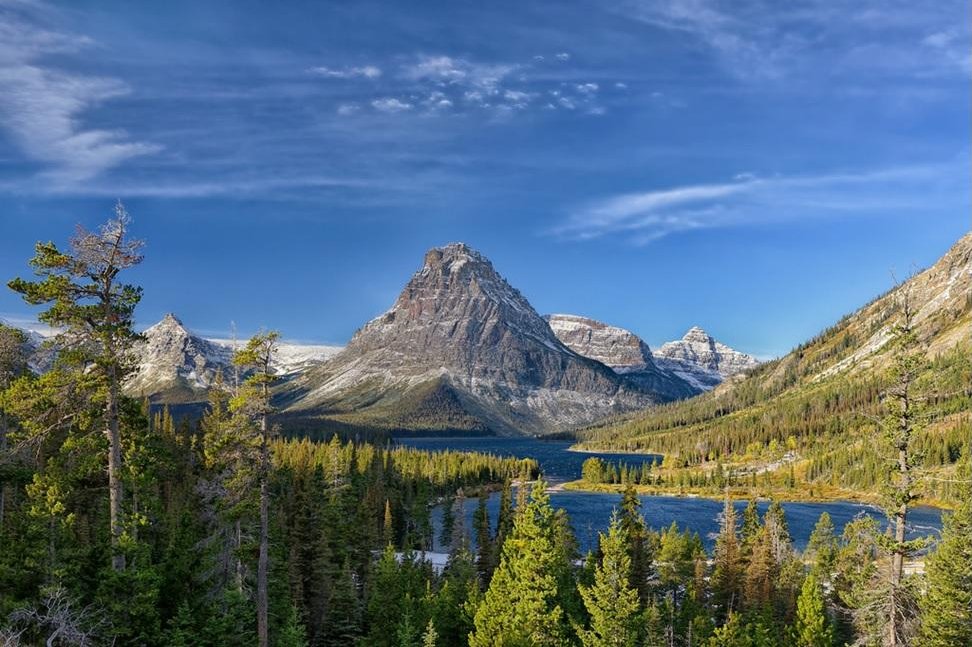
The cancellation was aimed at preserving the Badger-Two Medicine area, a largely-undeveloped, 130,000-acre wilderness that is the site of the creation story for members of Montana’s Blackfeet Nation and the Blackfoot tribes of Canada.
“It should not have been leased to begin with,” Interior Secretary Sally Jewell said in announcing the cancellations at her agency’s headquarters in Washington, D.C. “This sets the right tone for how business should be done in the future.”
Yet another meeting to discuss removing Yellowstone area grizzlies from the Endangered Species List . . .
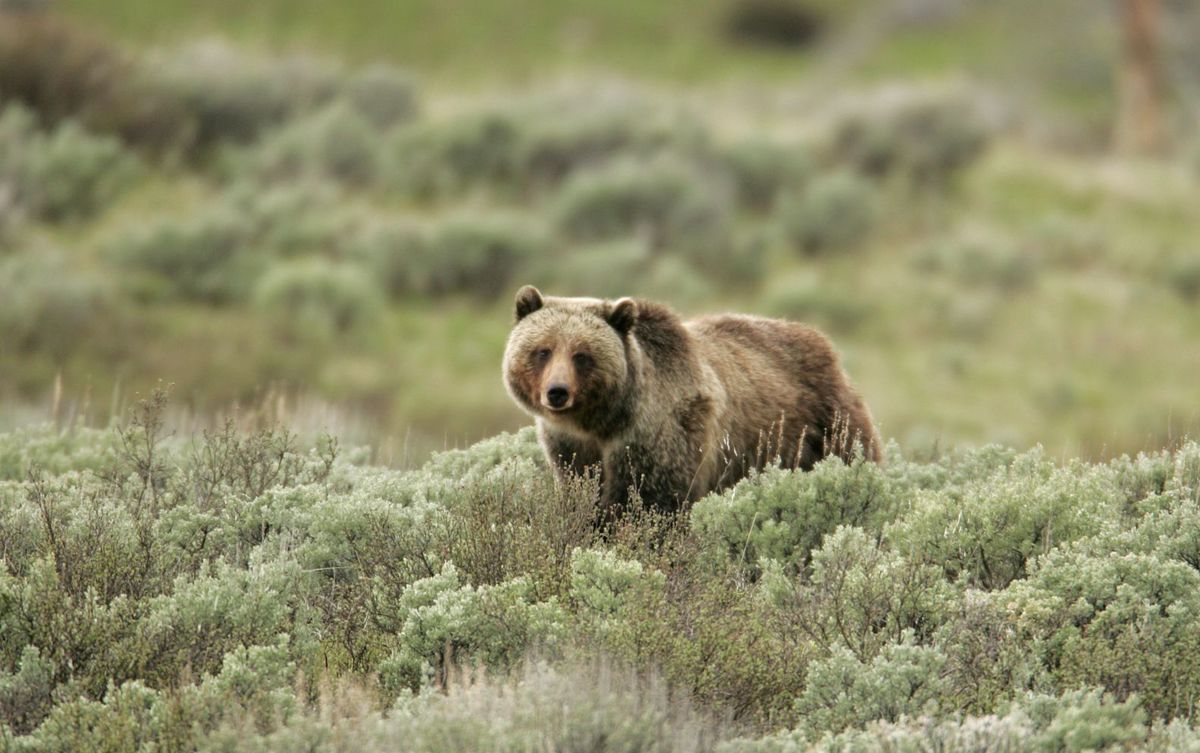
State and federal wildlife managers are considering removing Endangered Species Act protections from grizzly bears living in Yellowstone National Park.
Officials are meeting in Cody on Wednesday and Thursday to discuss post-delisting management plans. The member agencies of the Yellowstone Ecosystem Subcommittee had hoped to approve a final draft of the post-delisting management plant, but officials say it’s unclear that will happen.
The U.S. Fish and Wildlife Service proposed lifting the federal protections for the Yellowstone bears in March. Grizzly bears were first listed as threatened in 1975 when the Yellowstone population was estimated to have as few as 136 bears. Recent estimates say the population has now climbed above 700.
Looks like more lease cancellations in the Badger-two Medicine region are likely . . .
Blackfeet tribal leaders, conservationists and cultural preservationists have made numerous pilgrimages to Washington, D.C. this year in hopes of furnishing permanent protections on the wild and sacred Badger-Two Medicine region, which for more than three decades has been threatened with industrialization.
This week, their efforts are expected to pay off.
Chief Earl Old Person and the Blackfeet Nation’s elected leadership arrived in the capital this week to underscore their long-standing request that federal land managers cancel a suite of remaining undeveloped oil and gas leases on the 130,000-acre Badger-Two Medicine, which lies on the Rocky Mountain Front, bounded on the north by Glacier National Park and the east by the Blackfeet Indian Reservation.
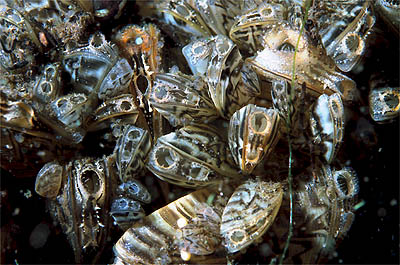
In response to the recent detection of invasive mussel populations in central Montana, Glacier National Park is issuing an interim boating closure within all park waters, in accordance with the park’s Aquatic Invasive Species (AIS) Action Plan. The closure includes both motorized and hand propelled watercraft.
The 2014 plan calls for this immediate closure when invasive mussels are detected within a waterway in the State of Montana, as was announced on November 9 by Montana Fish Wildlife, and Parks.
The park will begin an assessment period to conduct testing, inspect park boats, and evaluate the risk boats pose to park waters and waters downstream from the unintended introduction of invasive mussels. The assessment will likely include the evaluation of further tests of waters across the State of Montana during the summer of 2017. The closure will remain in place during the assessment period, which will extend until the nature of the threat is better understood.
“Park scientists will work diligently with the State of Montana and other water quality experts to understand the scope of this threat, and identify steps the park will take to further protect our waters in the Crown of the Continent,” said park superintendent Jeff Mow.
Glacier National Park sits at the top of three continental scale watersheds. Water from the park drains into the Columbia, Missouri, and South Saskatchewan Basins. Protecting park waters from an infestation is important not only for the park’s ecosystem, but also to economic and ecological interests downstream.
Beginning in 2011, the park initiated a mandatory boat inspection and launch permit program to reduce the risk of infestation of park waters by invasive mussels. Since that time, approximately 1,000 motorized boat permits were issued annually. The park also required self-inspection and AIS-free certification of non-motorized watercraft. These boats come from many states across the country, including those with established populations of invasive mussels.
In 2016, launch permits were issued to boats registered in 13 mussel positive states following inspection.
It’s that time of year. Montana Fish, Wildlife and Parks is busy dealing with nuisance grizzlies as they fatten up ahead of winter hibernation. One two-year-old delinquent was captured near the county landfill and turned loose up the North Fork’s Whale Creek drainage . . .
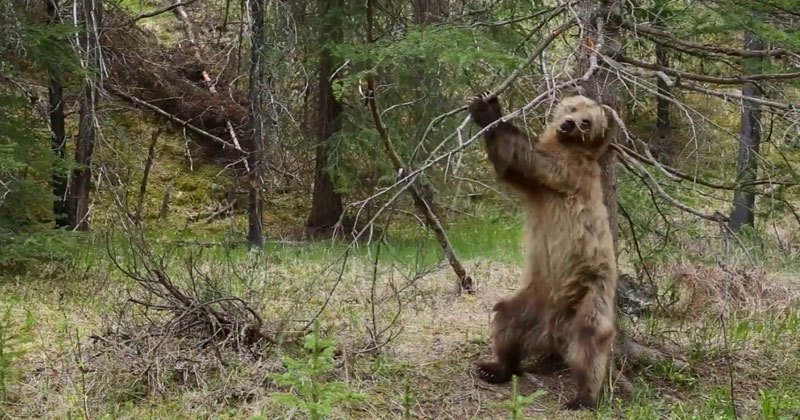
Wildlife managers captured a 5- or 6-year-old, 365-pound, adult male grizzly bear above Lake Blaine on the east side of the Flathead Valley Oct. 19 after the bruin was reported to have been damaging fruit trees in the area.
Officials with Montana Fish, Wildlife and Parks relocated the bear to the east side of Hungry Horse Reservoir. It was fitted with a GPS collar and had not been captured previously
Meanwhile, managers also caught a 2-year-old male grizzly across U.S. Highway 93 from the Flathead County Landfill after the bear was reportedly eating apples at a residence.
So… USFWS is now accepting comments on a proposed rule to list the wolverine as threatened. Here’s the meat of the official press release, which includes instructions on how to submit comments regarding the proposal. Note that the deadline is November 17, 2016 . . .
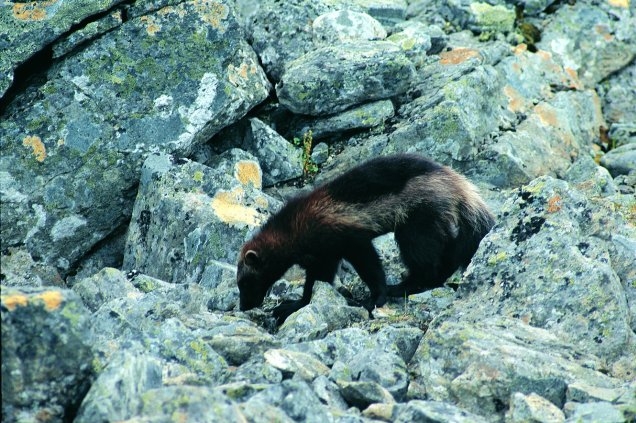
The U.S. Fish and Wildlife Service (Service) is reopening the public comment period on a proposed rule to list the North American wolverine as threatened under the Endangered Species Act (ESA).
The Service had proposed to list the North American wolverine, which is a Distinct Population Segment of wolverines found in the lower 48 states, but withdrew its proposal in 2014 after concluding that the factors affecting it were not as significant as were once thought.
However, the District Court for the District of Montana overturned the Service’s withdrawal, effectively returning the wolverine population to the point at which it was proposed for listing as threatened. A threatened listing would mean this wolverine population is likely to become endangered within the foreseeable future throughout all or a significant portion of its range.
The Service has considered the North American wolverine as proposed for listing since the April court decision. This Federal Register Notice is an administrative step to implement the court ruling.
The Service will be starting a new review on the wolverine population to determine whether it meets the definition of a threatened or endangered species, or if the animal is warranted for listing at all. Any decision on whether to list or not list the wolverine under the ESA will be based on the best scientific and commercial information available. We anticipate new climate change information will assist us in this decision.
The Service is asking for any scientific or commercial information on the North American wolverine population during the 30-day public comment period that closes November 17, 2016.
Or, you can mail comments to: Public Comments Processing, Attn: Docket No. FWS–R6–ES–2016–0106, U.S. Fish & Wildlife, MS: BPHC, 5275 Leesburg Pike, Falls Church, VA 22041-3803.
The Service will post all information received on https://www.regulations.gov, including any personal information provided.
Wolverines look like a small bear with a bushy tail, and each of its five toes is armed with curved, semi-retractile claws. In the lower 48 states, they live in the Pacific Northwest and Northern Rocky Mountains, with occasional sightings in Colorado, California, and Nevada. Learn more at https://www.fws.gov/mountain-prairie/species/mammals/wolverine/.
The mission of the U.S. Fish and Wildlife Service is working with others to conserve, protect, and enhance fish, wildlife, plants, and their habitats for the continuing benefit of the American people. We are both a leader and trusted partner in fish and wildlife conservation, known for our scientific excellence, stewardship of lands and natural resources, dedicated professionals, and commitment to public service.
From an MWA announcement released this morning . . .
Our Last Refuge documentary
Don’t miss the Kalispell screening of “Our Last Refuge,”a documentary film about the sacred Badger-Two Medicine area and the decades-long struggle to protect it from oil and gas development.
The film features voices from all sides of the struggle — Blackfeet elders, local conservationists, and even the law firm pushing for oil exploration. All together, they chronicle the epic saga of this unique landscape and the current legal challenge over it, the outcome of which could determine the fate of sensitive and sacred lands nationwide.
“Our Last Refuge” is the first in-depth telling of this critical story at a moment in time when the stakes are at their highest.
Thursday, October 20, 6:30 – 8 p.m.
Flathead Valley Community College
Large Community Room, Arts & Technology Building, Room 139
777 Grandview Drive, Kalispell, MT 59901
For more information, contact Casey Perkins, MWA Rocky Mountain Front field director, at (406) 466-2600 or at cperkins@wildmontana.org.
Note: There is also a free panel discussion in Missoula on Tuesday, October 18, from 6:30 – 8:30 p.m. featuring Blackfeet Tribal members speaking about the Badger-Two Medicine area of the Rocky Mountain Front and the efforts of the Blackfeet and others to protect this sacred and wild area from oil and gas development.
Hosted by the UM Native American Studies program, the event will feature scenes from the “Our Last Refuge” documentary about the Badger and the fight save it.
The event will be held at University of Montana – The Payne Family Native American Center – Rm. 105 32 Campus Drive, Missoula, MT 59812
Here’s a well-researched piece by Rob Chaney of the Missoulian. It discusses the status of the ‘lynx rule,’ which recently survived a whole series of judicial appeals . . .
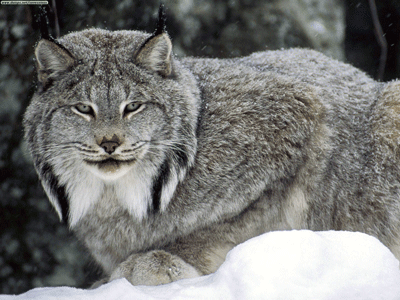
A court order to do more work on protecting Canadian lynx in Rocky Mountain forests could become a late-season battleground for congressional action this winter.
Last week, the Supreme Court let stand a U.S. 9th Circuit Court of Appeals ruling that the U.S. Forest Service has to take a big-picture look at how it protects critical lynx habitat across 12 million acres touching 11 national forests. While wildlife advocates claimed a major win for the Endangered Species Act, timber industry supporters vowed to rewrite laws to speed up logging projects.
“It’s now known as the Cottonwood decision, and it affects pretty much the whole Nort
hwest,” said Julia Altemus of the Montana Wood Products Association. “I’m hoping we can find a path forward, either legally or by a congressional path.”